The Ayamaya Story 2012-2025
Here is the story, in text, photos and videos, of how we built our house(s) out of thin air! Each year has a guestbook too, hungry for some entries from those who have been involved or just interested in our endeavours throughout the years.
2012 — First steps
We had been dreaming, talking, drawing plans, and we could not wait any longer. Now we had to build the house. Right now! In winter we would “take” the logs from our home forest. In spring we would start building immediately. In April the foundation, May–June the walls, July–August the roof on. In September we would do landscaping work on the property and move in for the winter. At least that was the original hyper-optimistic and “slightly” naive plan. Here you can find the story of what happened next.
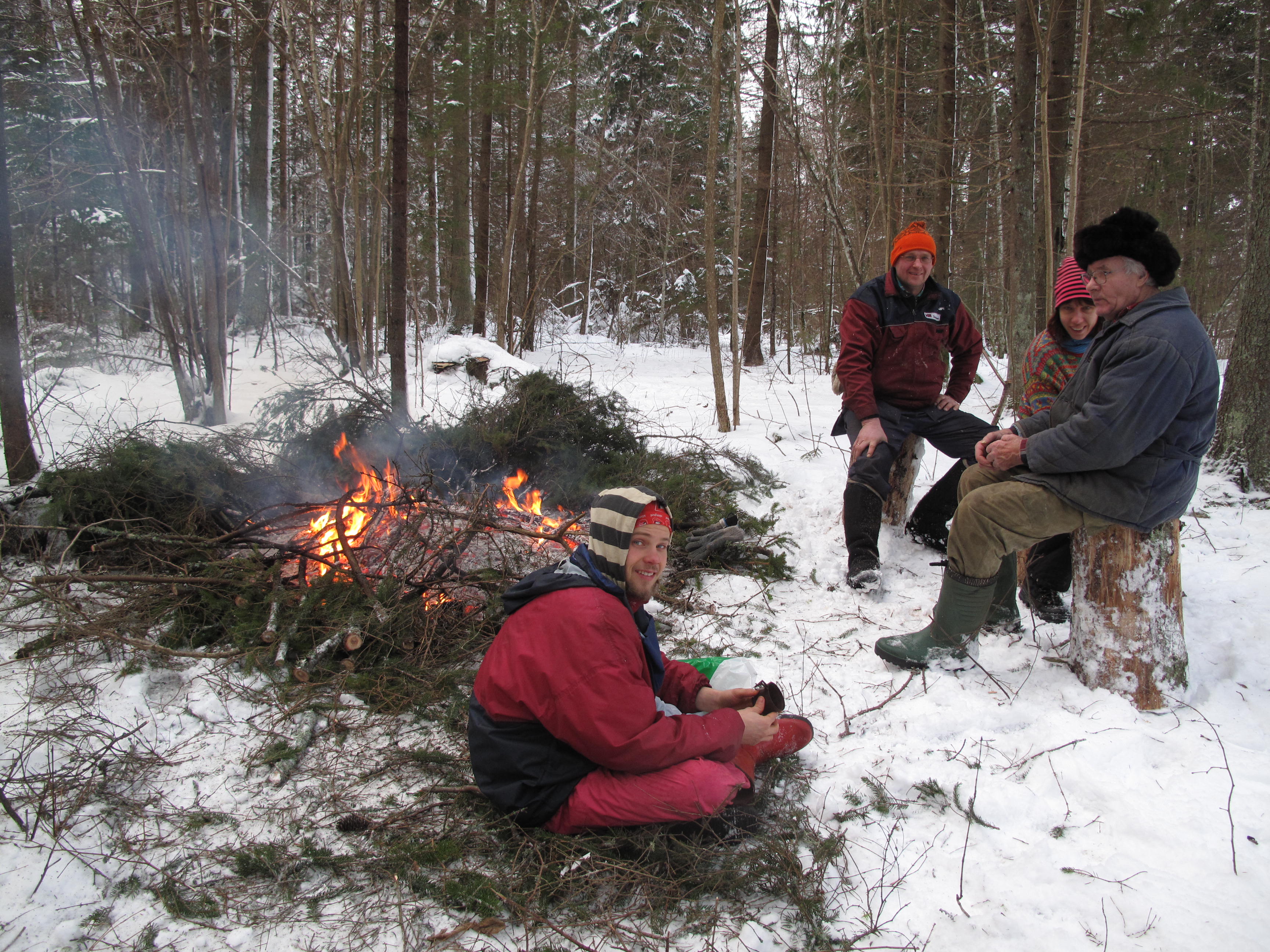
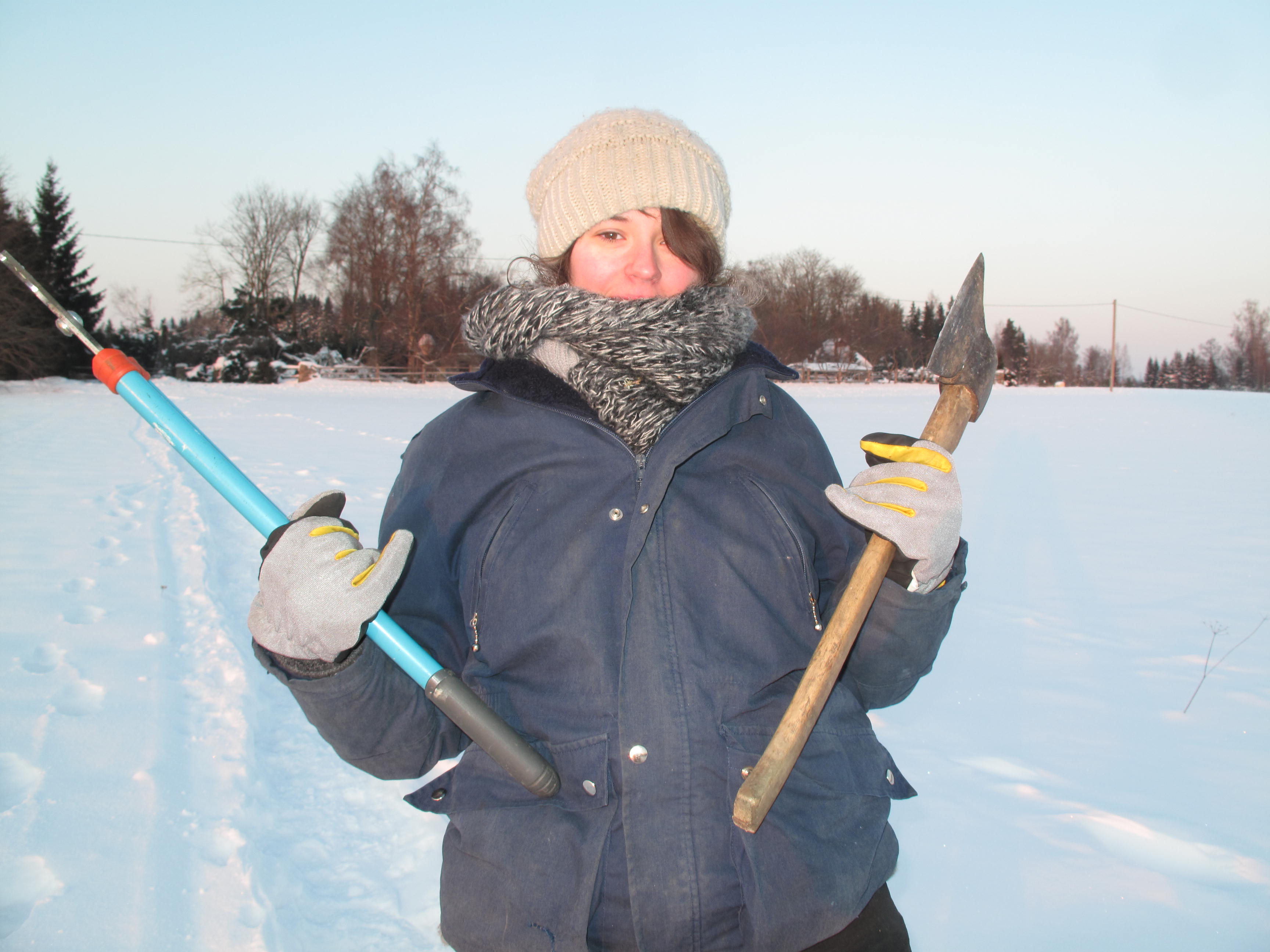
So we went to the forest. Winter was cold and crisp. At Kuusiku farm we usually do not stay overnight in winter. We fired up the big stove, slept on the loft, and worked the saws hard. Weekend after weekend, defying -20°C frost. With the help of a neighbour’s tractor, we brought out more than 100 spruce logs. In spring we held big log-debarking work parties.
Special thanks to the helpers in the forest: Agnes, Peeter, Henno, Siiri, Egon, Priidik, Annabel, Meril; and for debarking the logs: Peeter, Agnes, Henno, Egon, Mihkel, Jaanus, Oskar, Filipp, Vaarika, Aivar.
Leave a comment
2013 — Doubts and the hunger for adventure
Were we really ready to tie ourselves to each other and to this land so deeply? In truth, the logs should have dried for a few more years. PAUSE! Instead, we went to the Americas for 1.5 years. If, when we came back, we were still together as a couple and the desire to build a house was the same, then we would move forward!
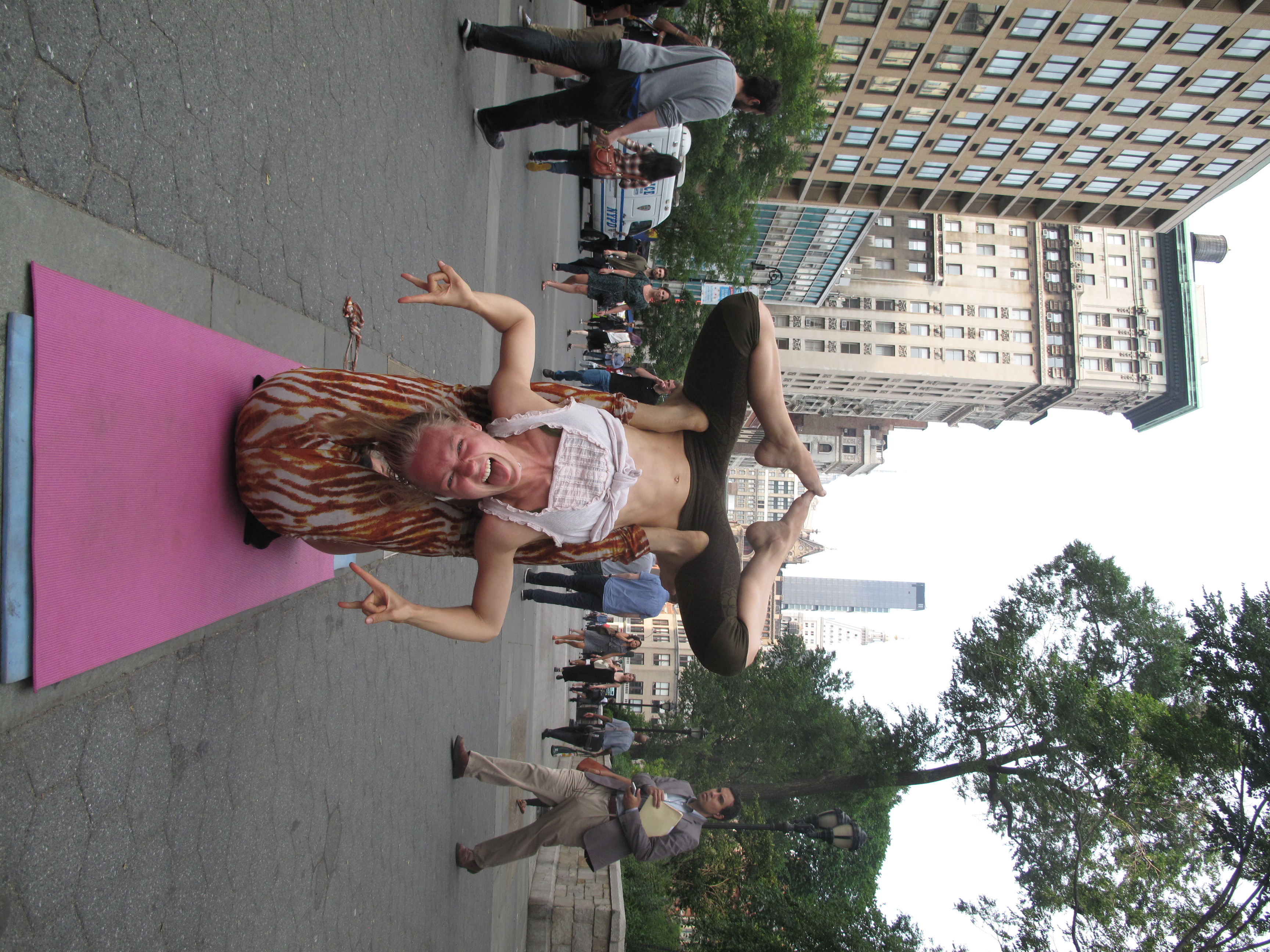
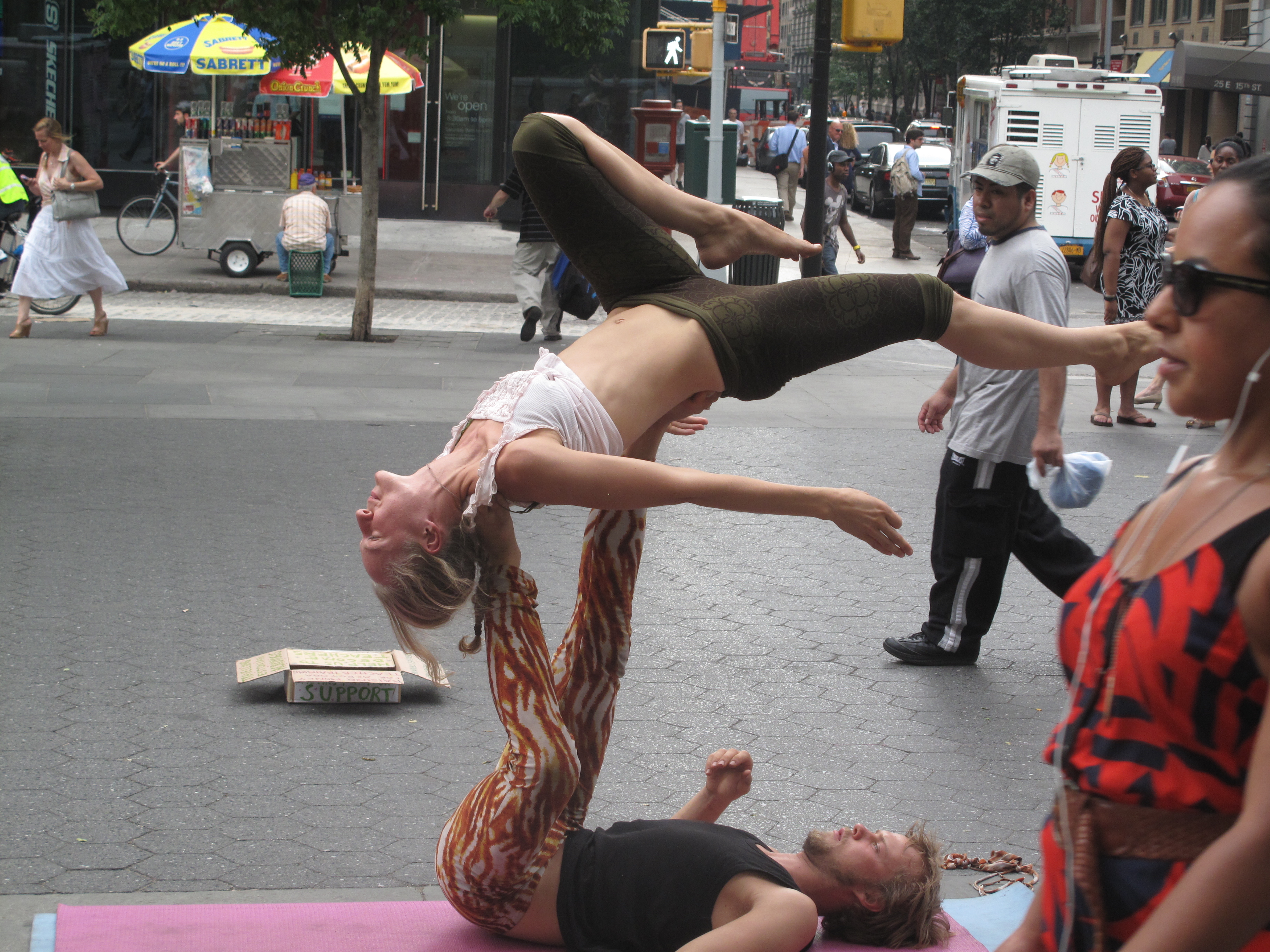
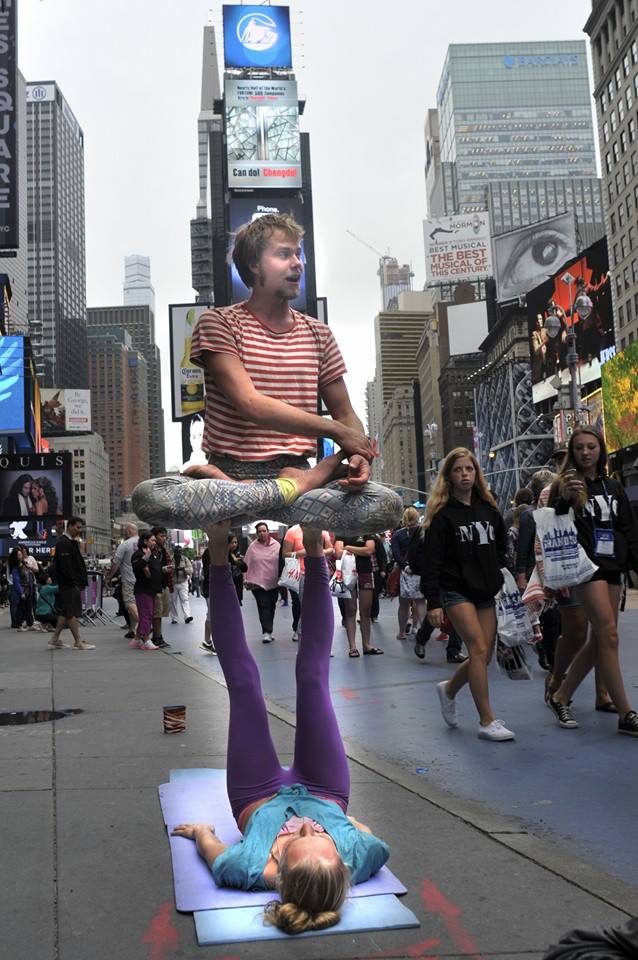
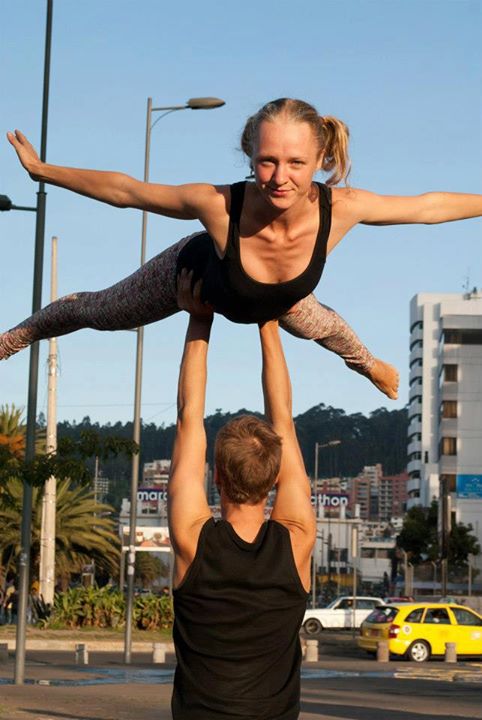
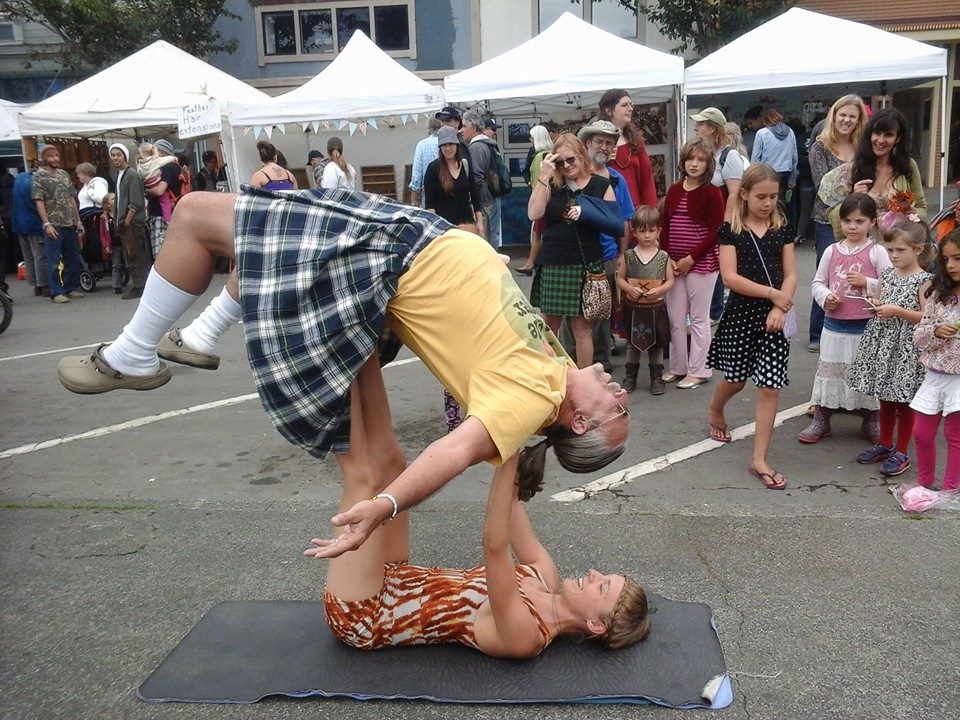
We started in Colombia and Ecuador with acroyoga street performances. Later we spent all the savings we had gathered for building our house to travel through the USA to Canada and train as teachers at AcroYoga Montreal. Our best street-performing income: New York City, Times Square.
Leave a comment
2014 — A warm-up
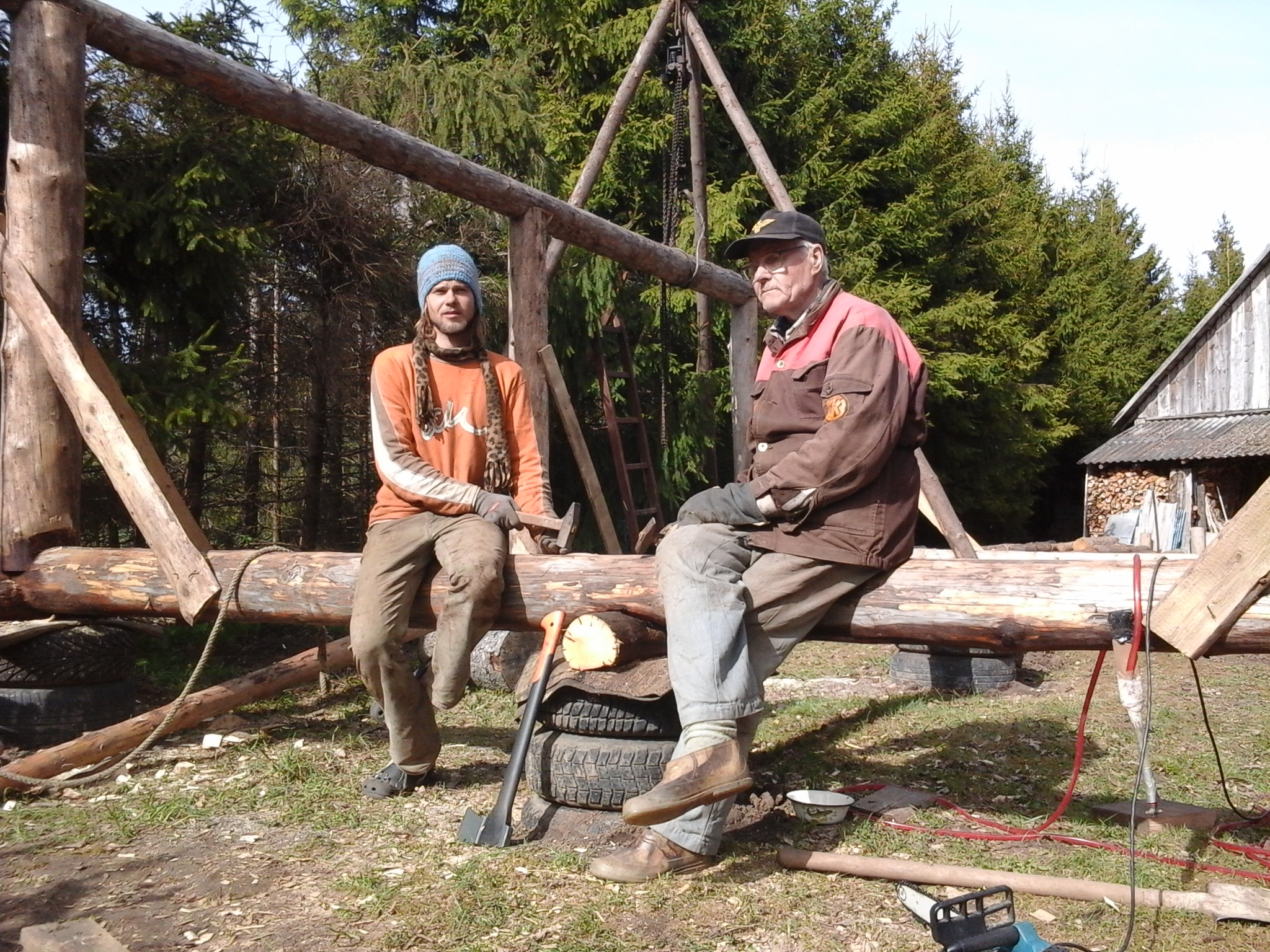
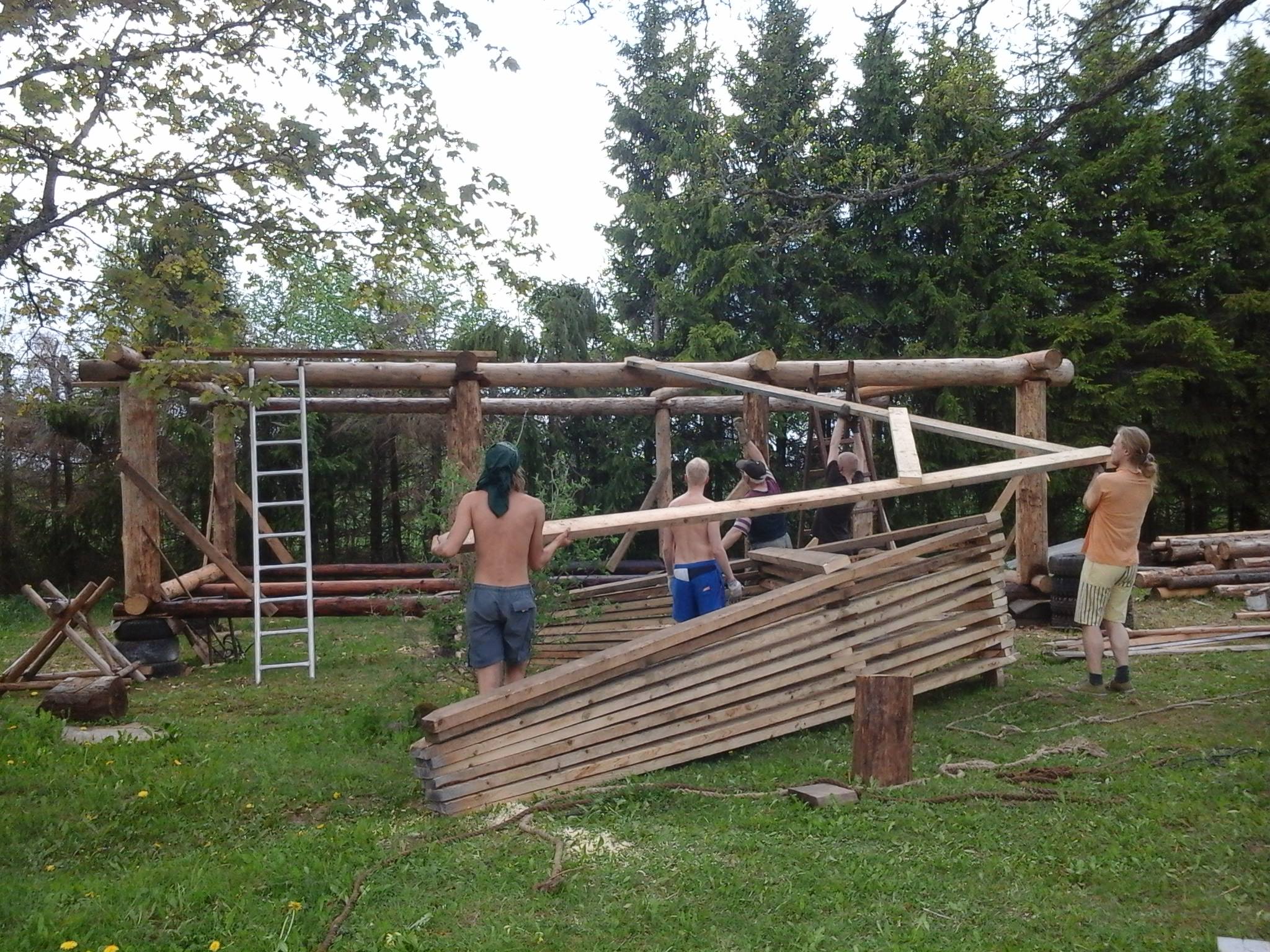
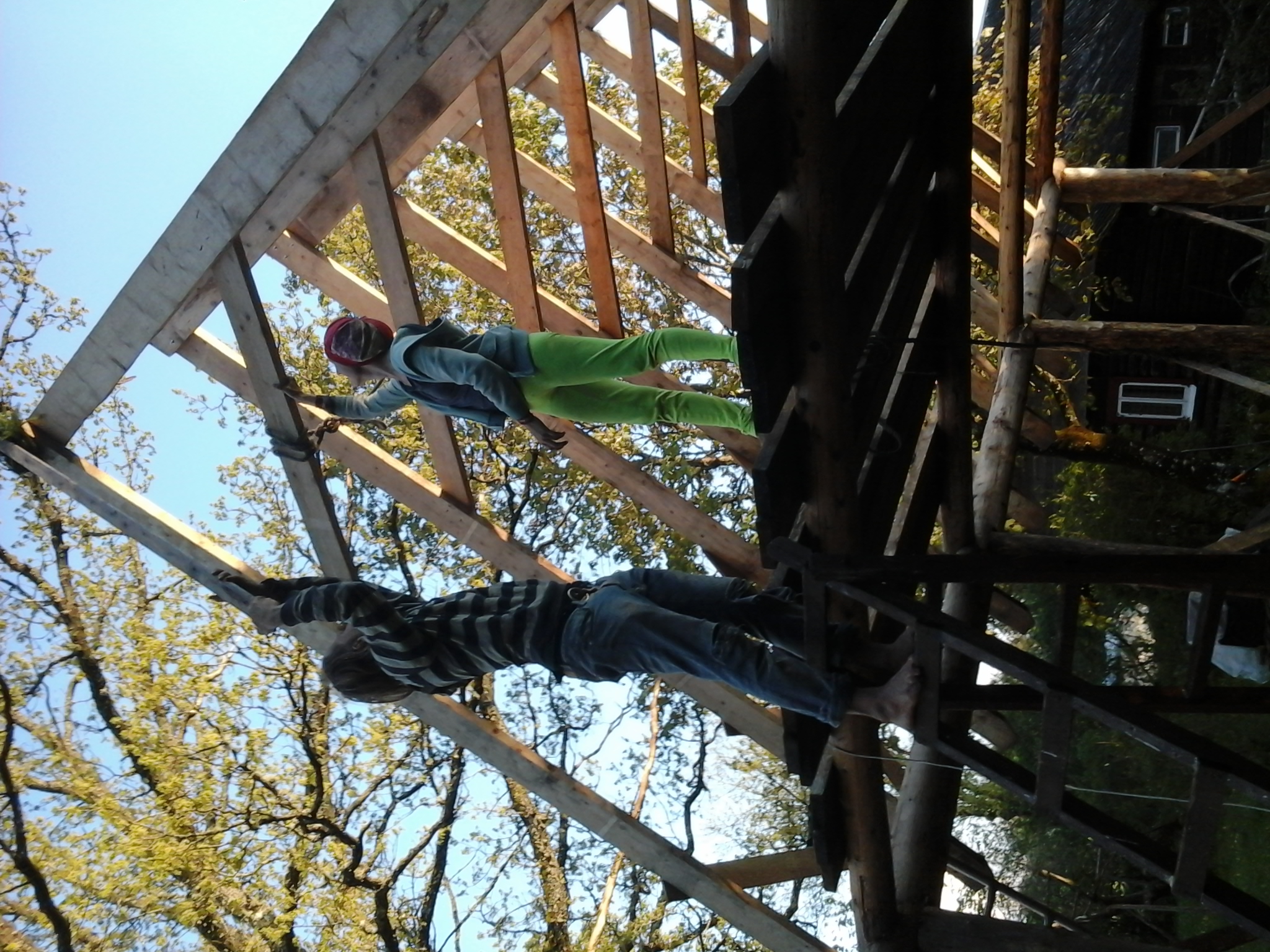
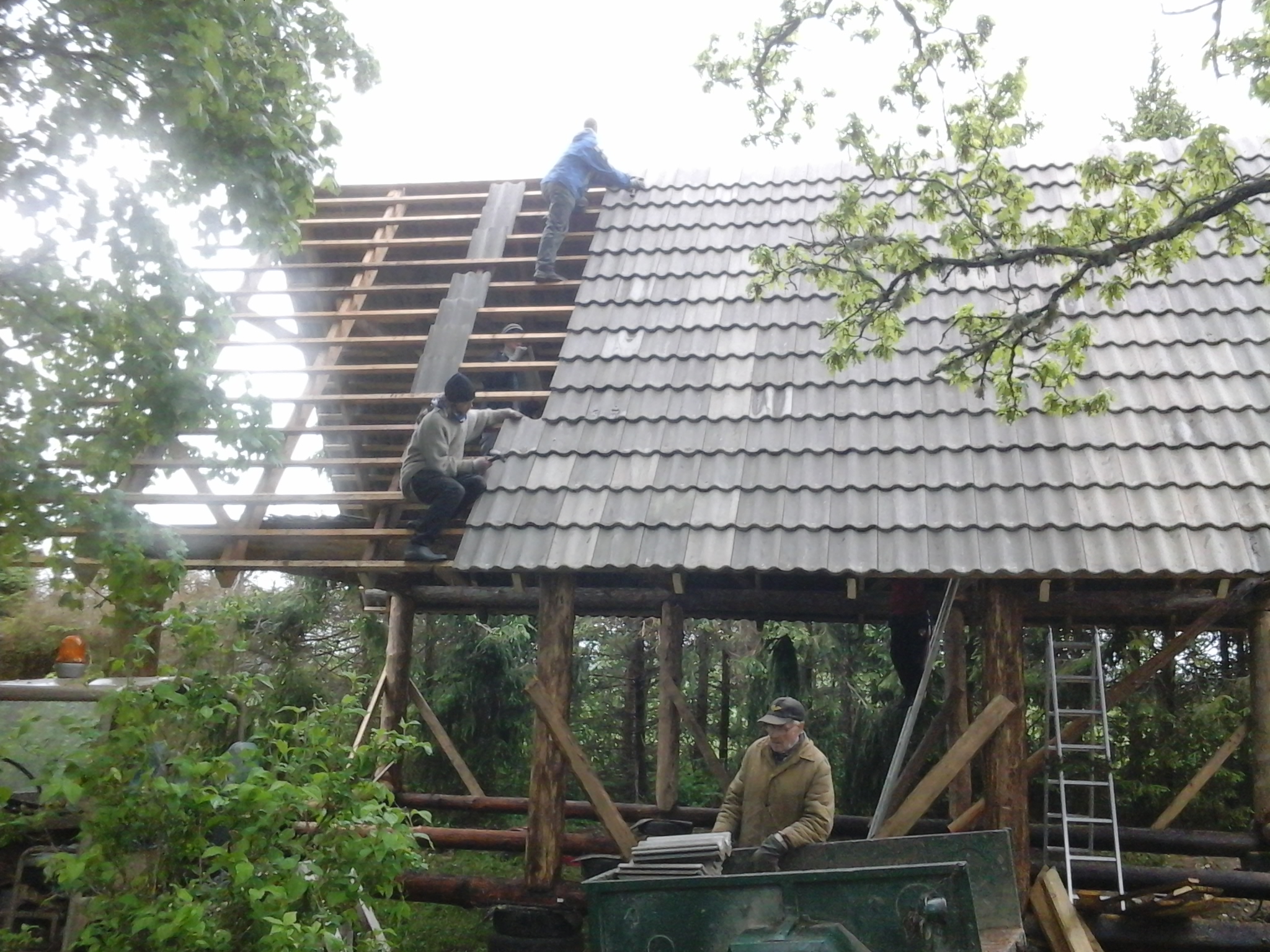
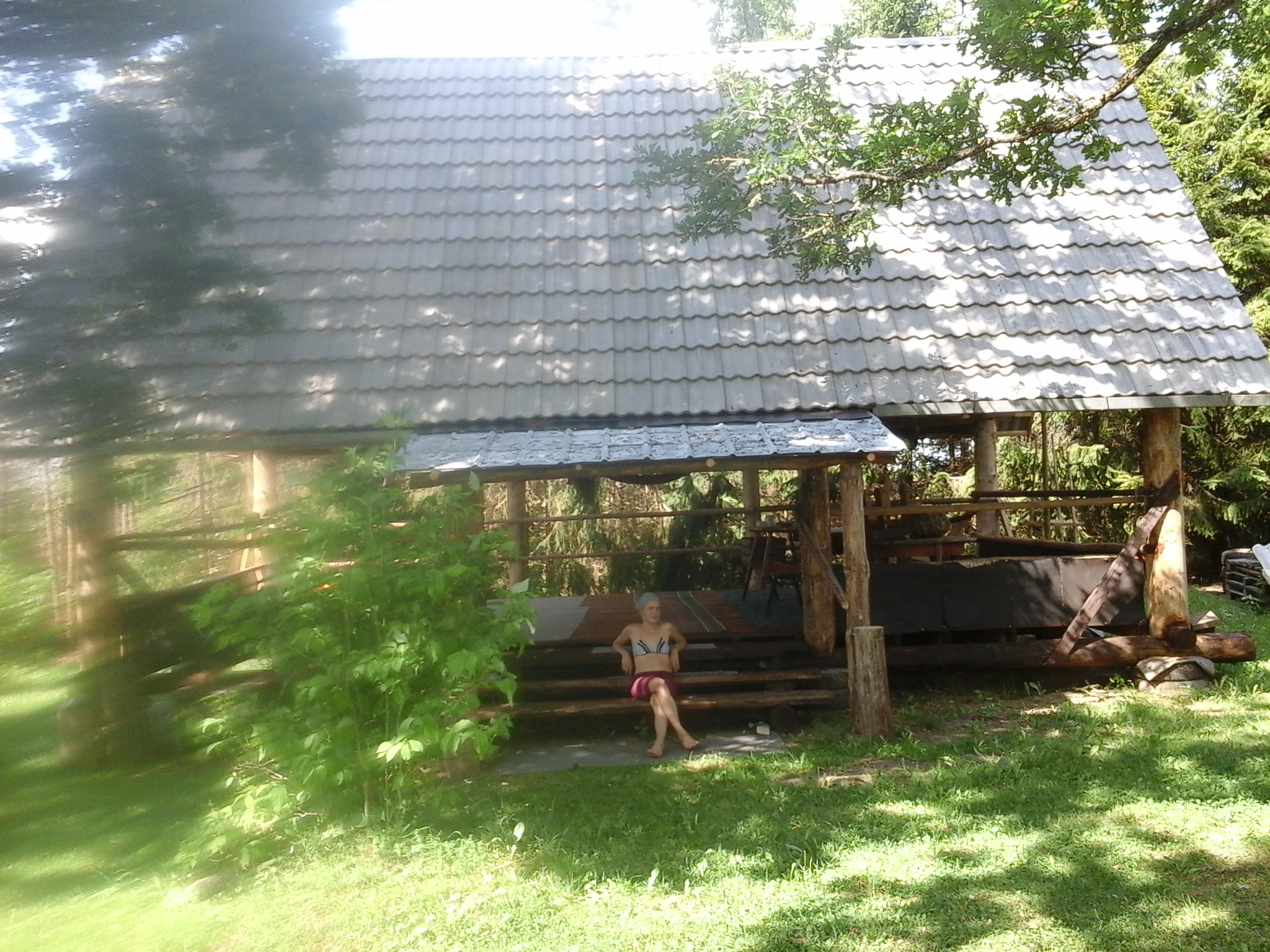
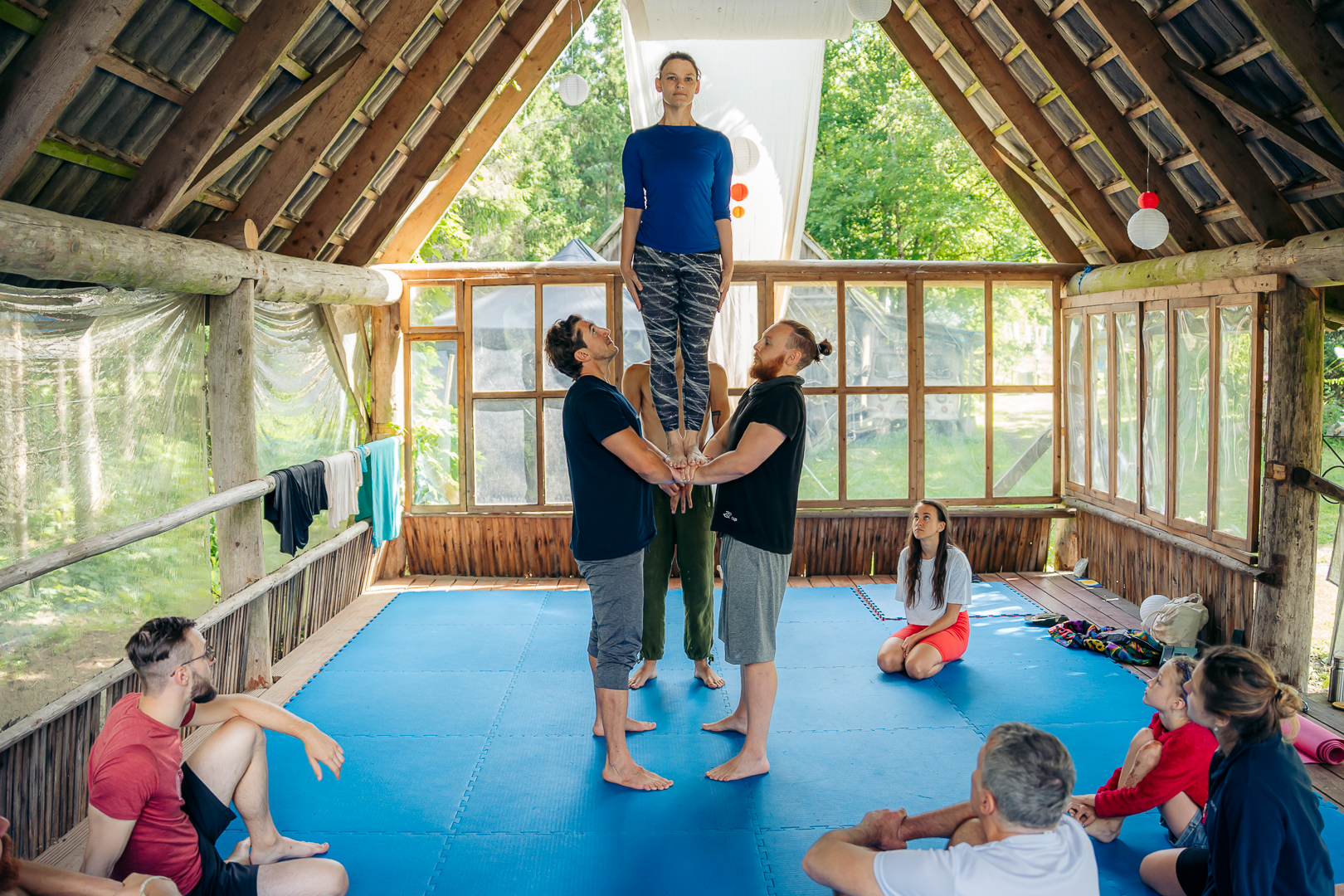
Back home. The spruce logs were still drying. The urge to create a home was still strong. We organised AcroFestonia for the first time. For that, we needed to build an outdoor studio — the Akropol. We grabbed some logs from the stack and warmed up our hands.
Thanks: Henno, Tiiu Harri, Egon, Priidik, Tauno
Leave a comment
2015 — Dig in!
The logs kept drying, some were already getting mouldy. We wanted to live in the countryside year-round, in our own house. By now we felt more certain — it was time to dig in.
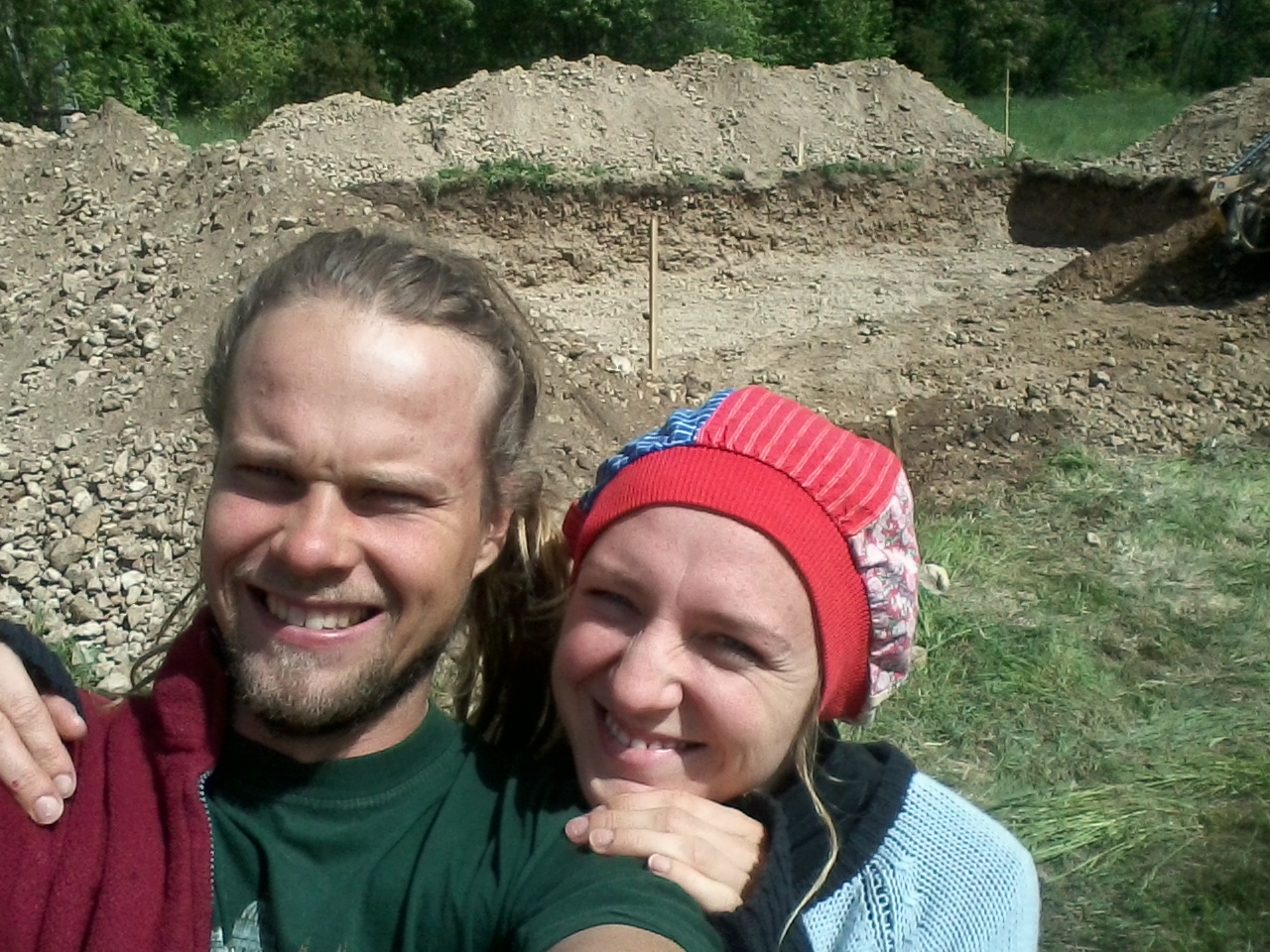
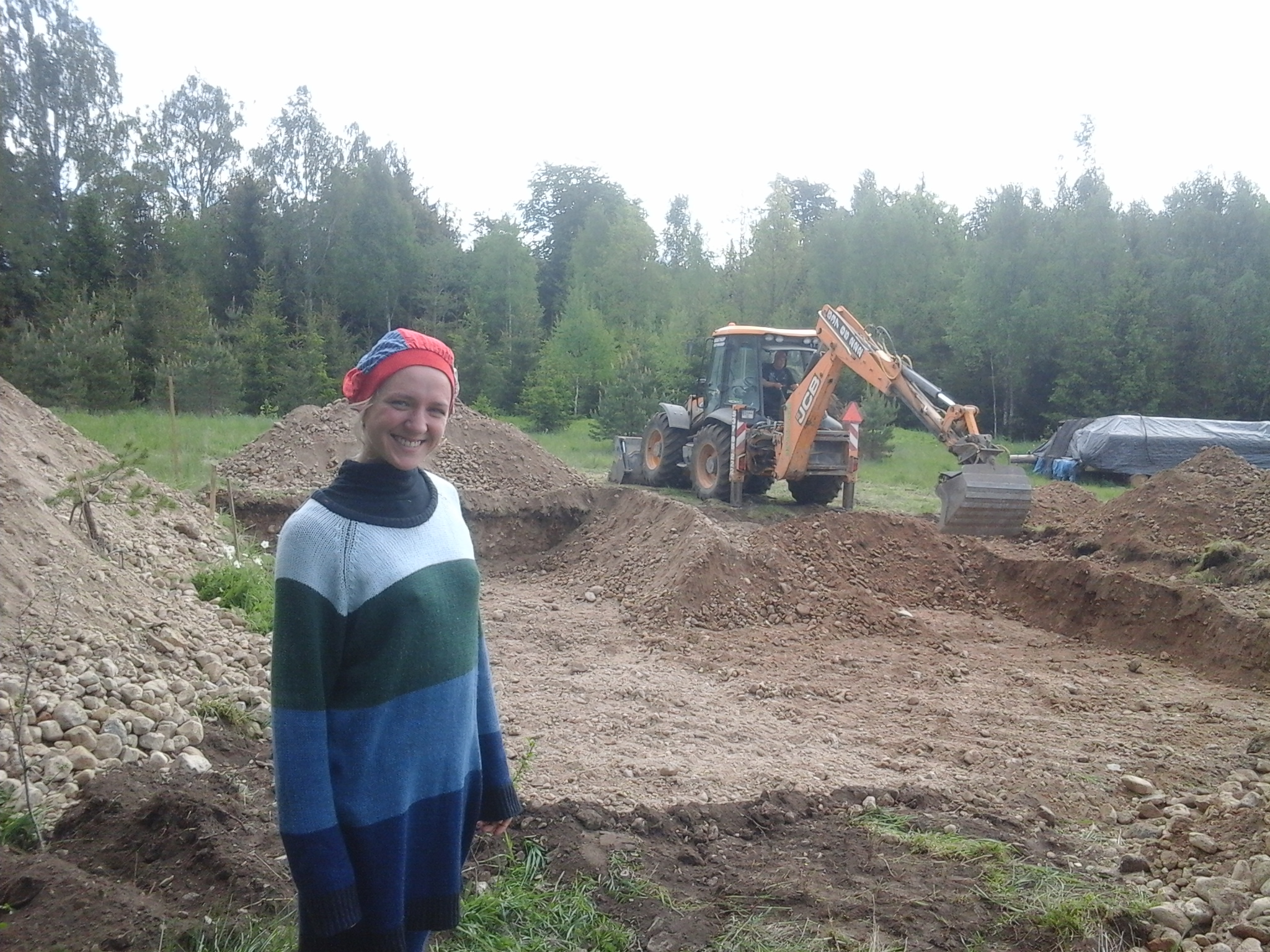
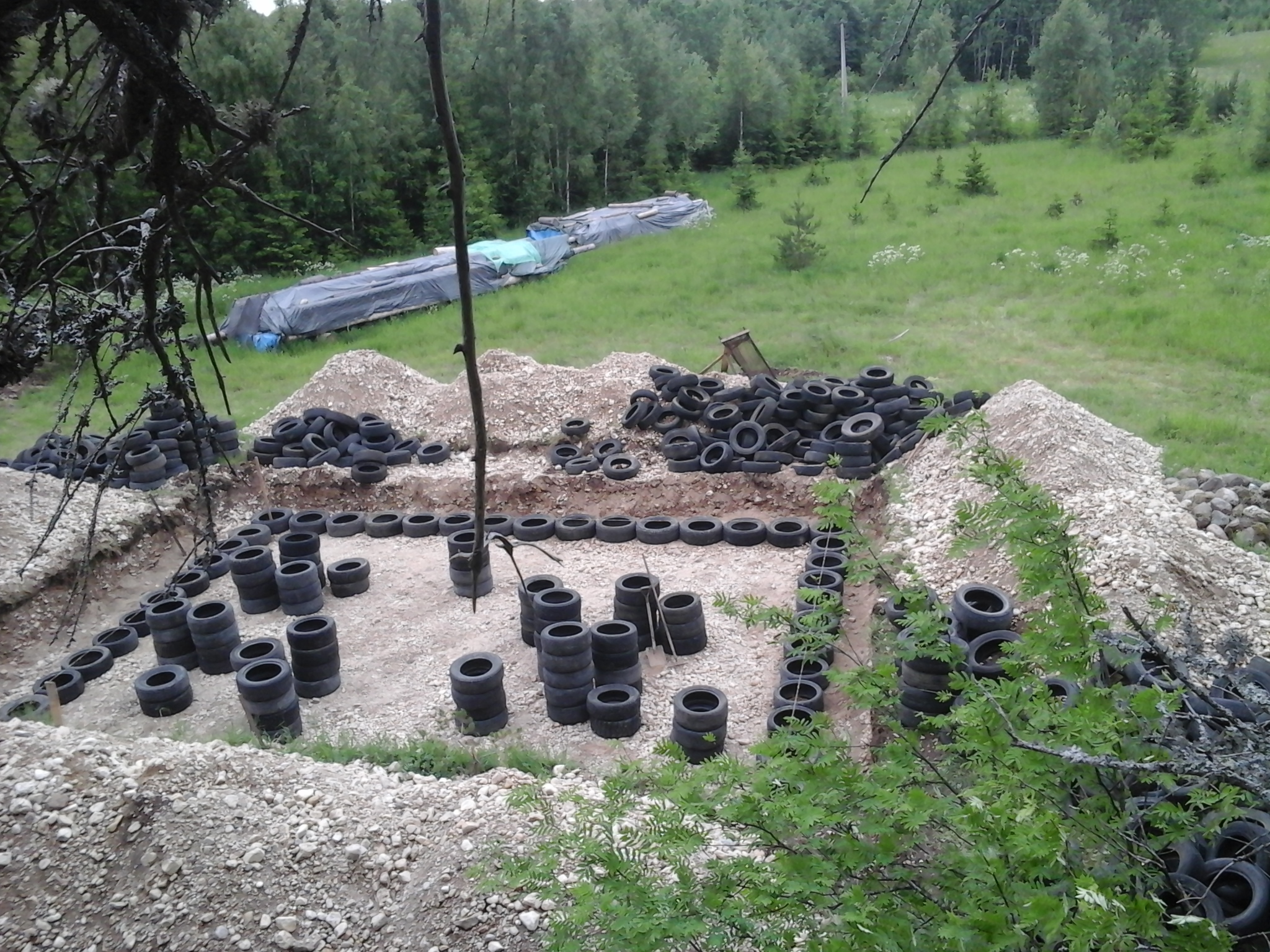
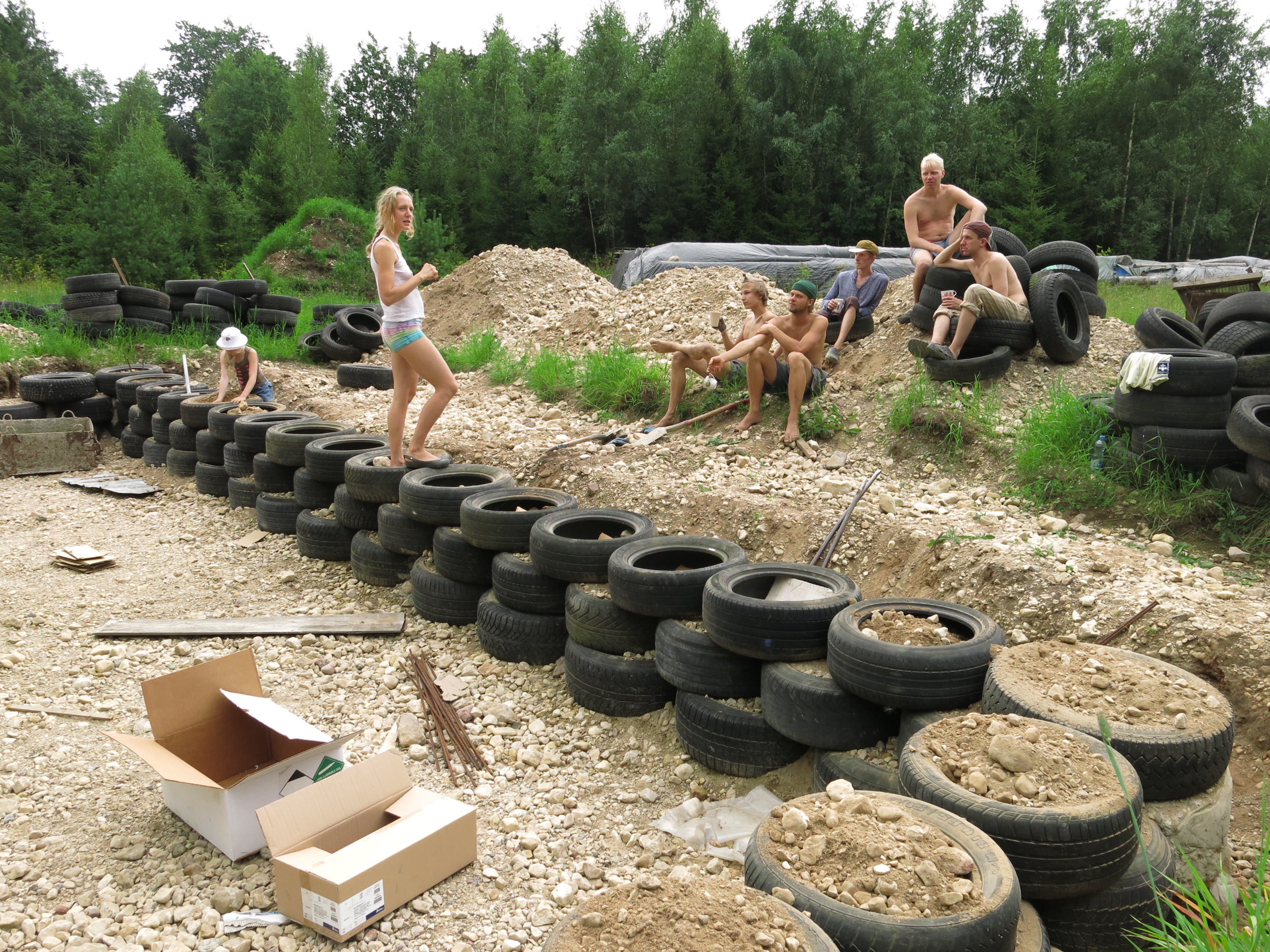
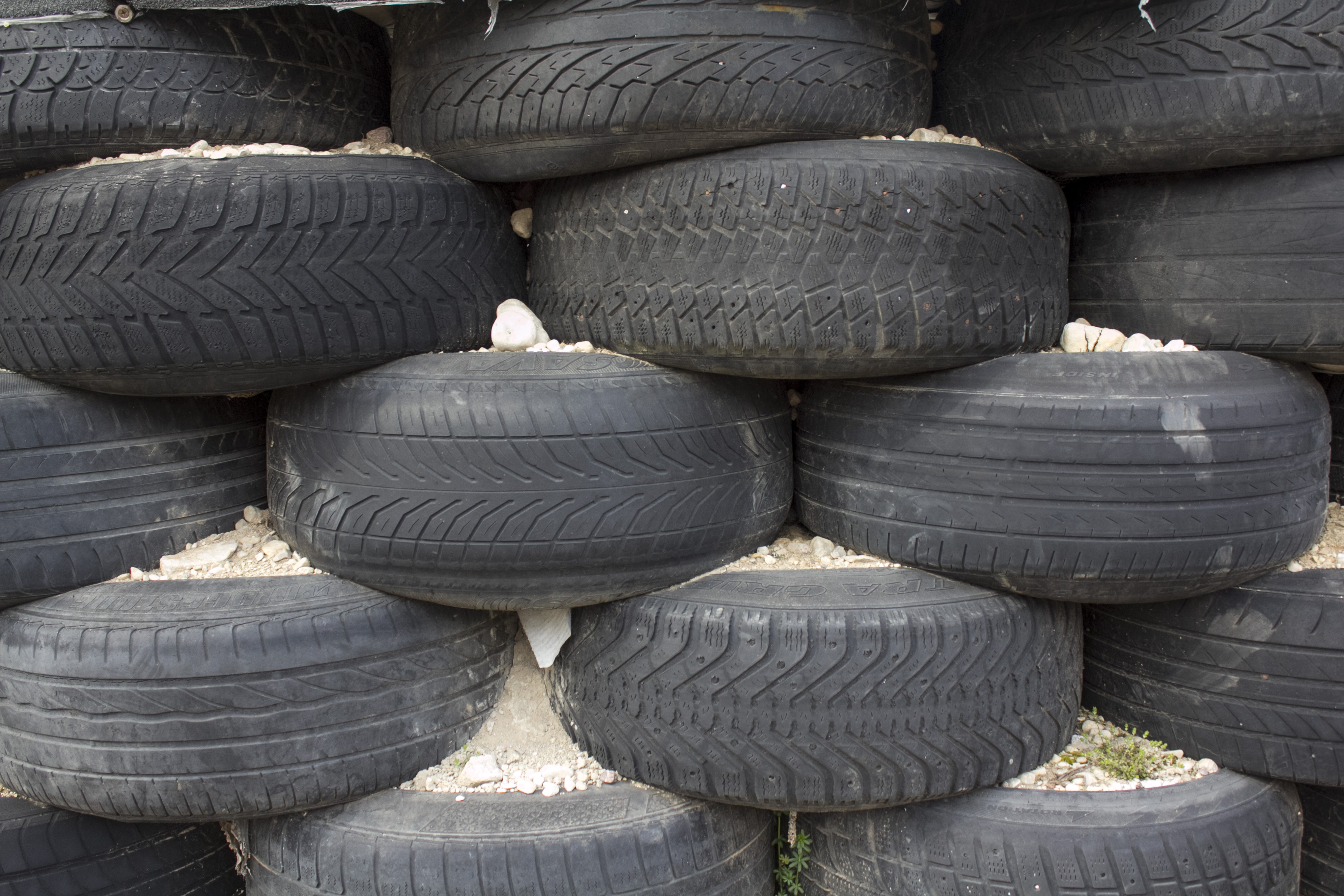
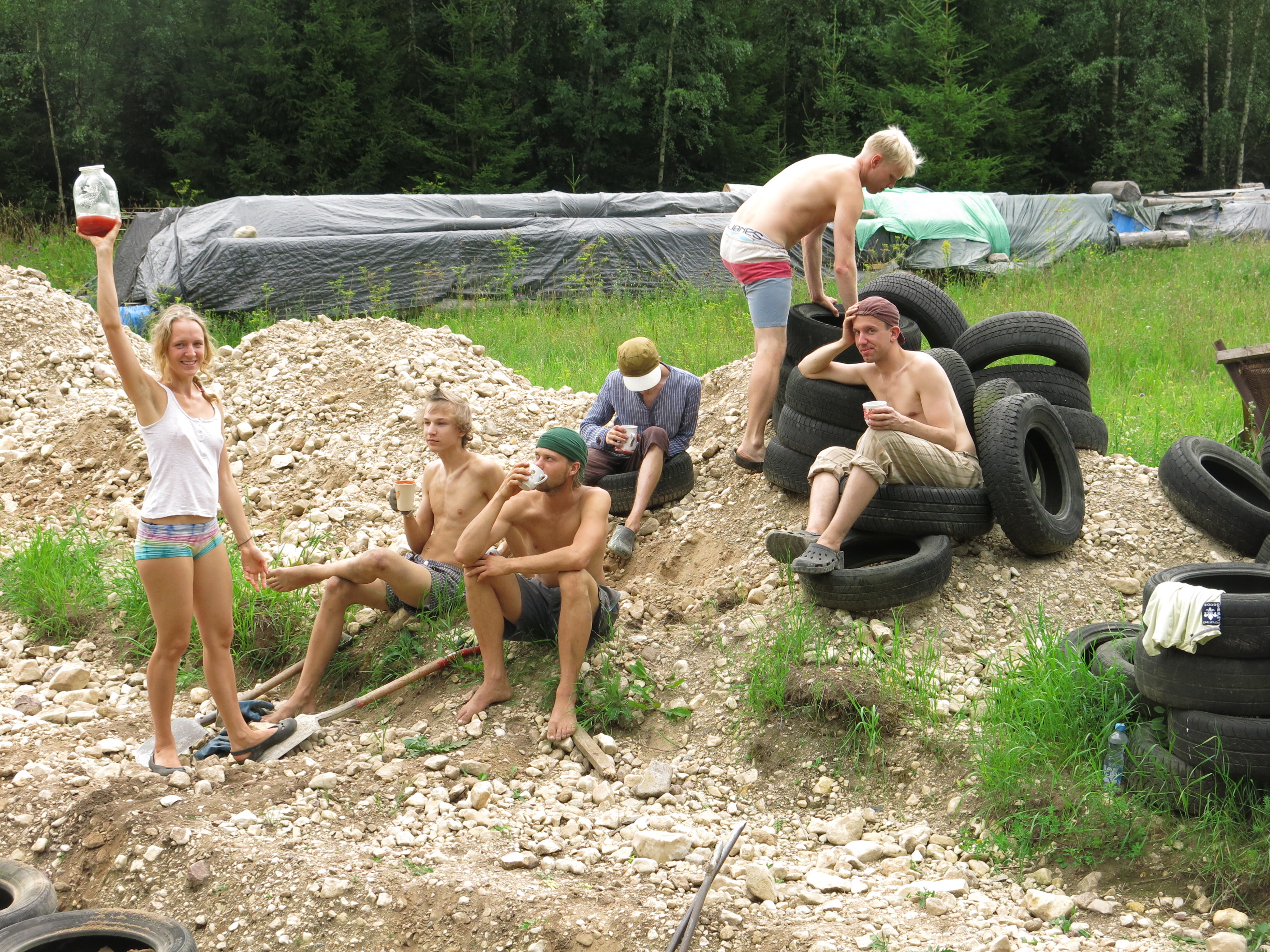
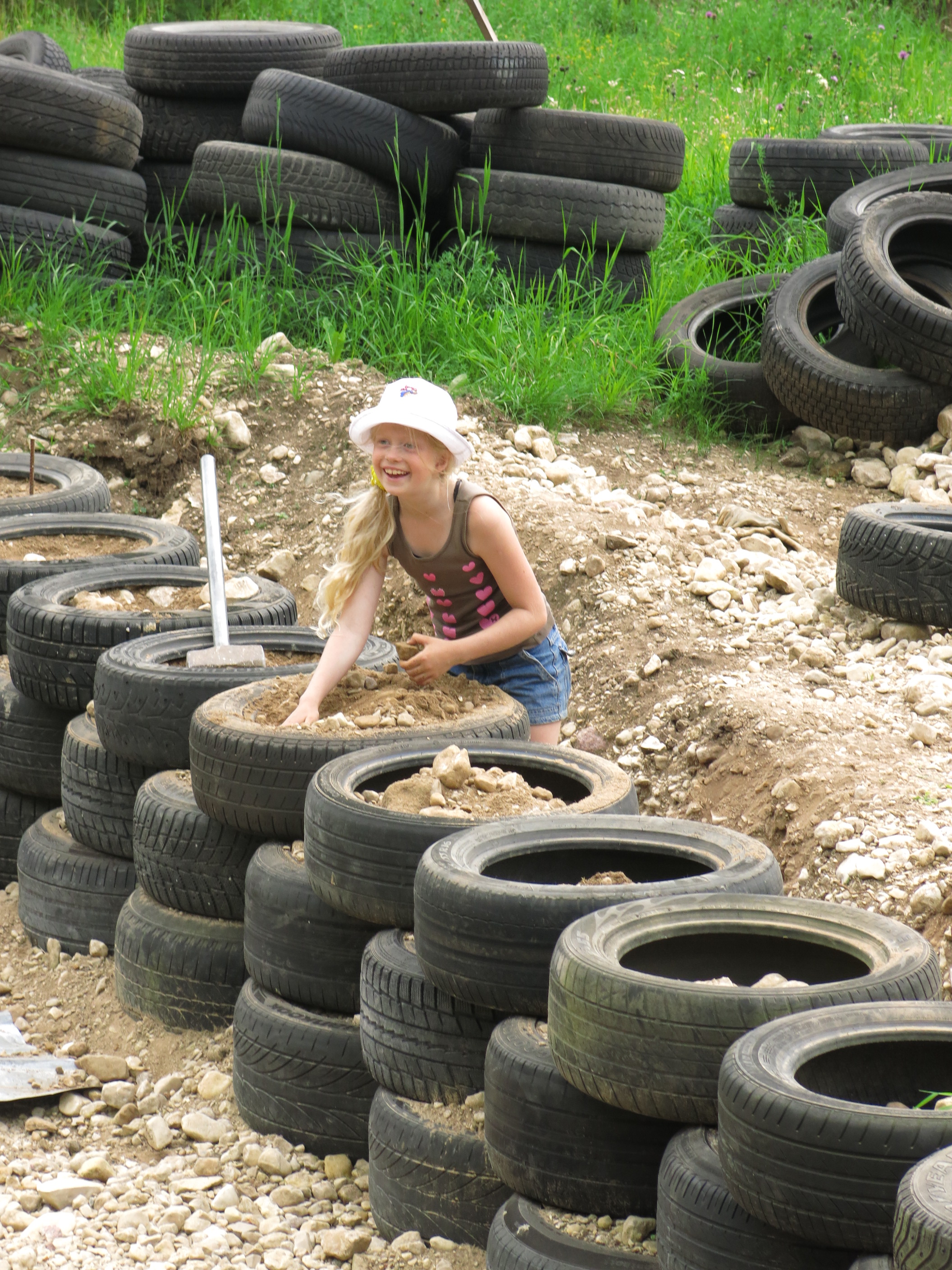
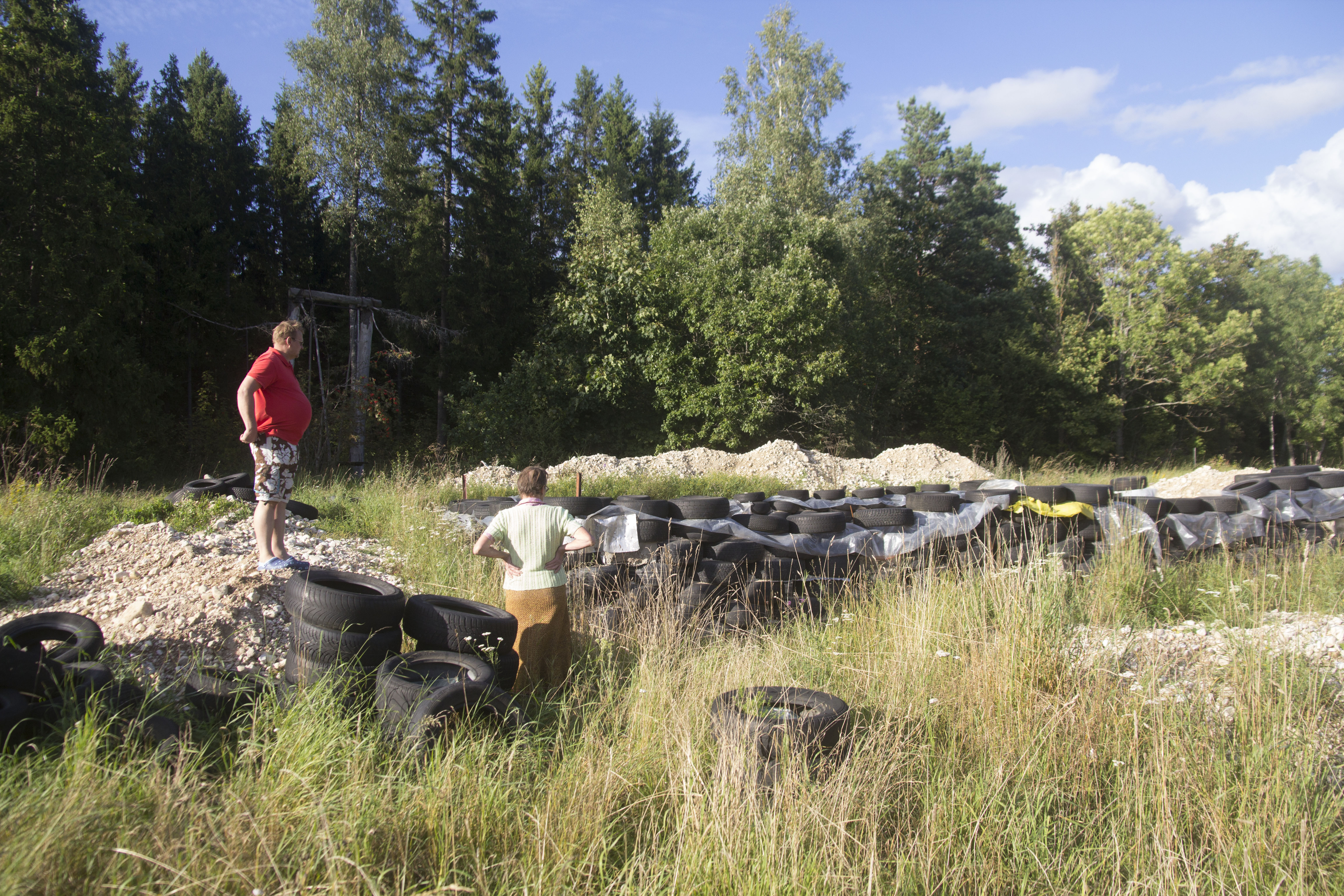
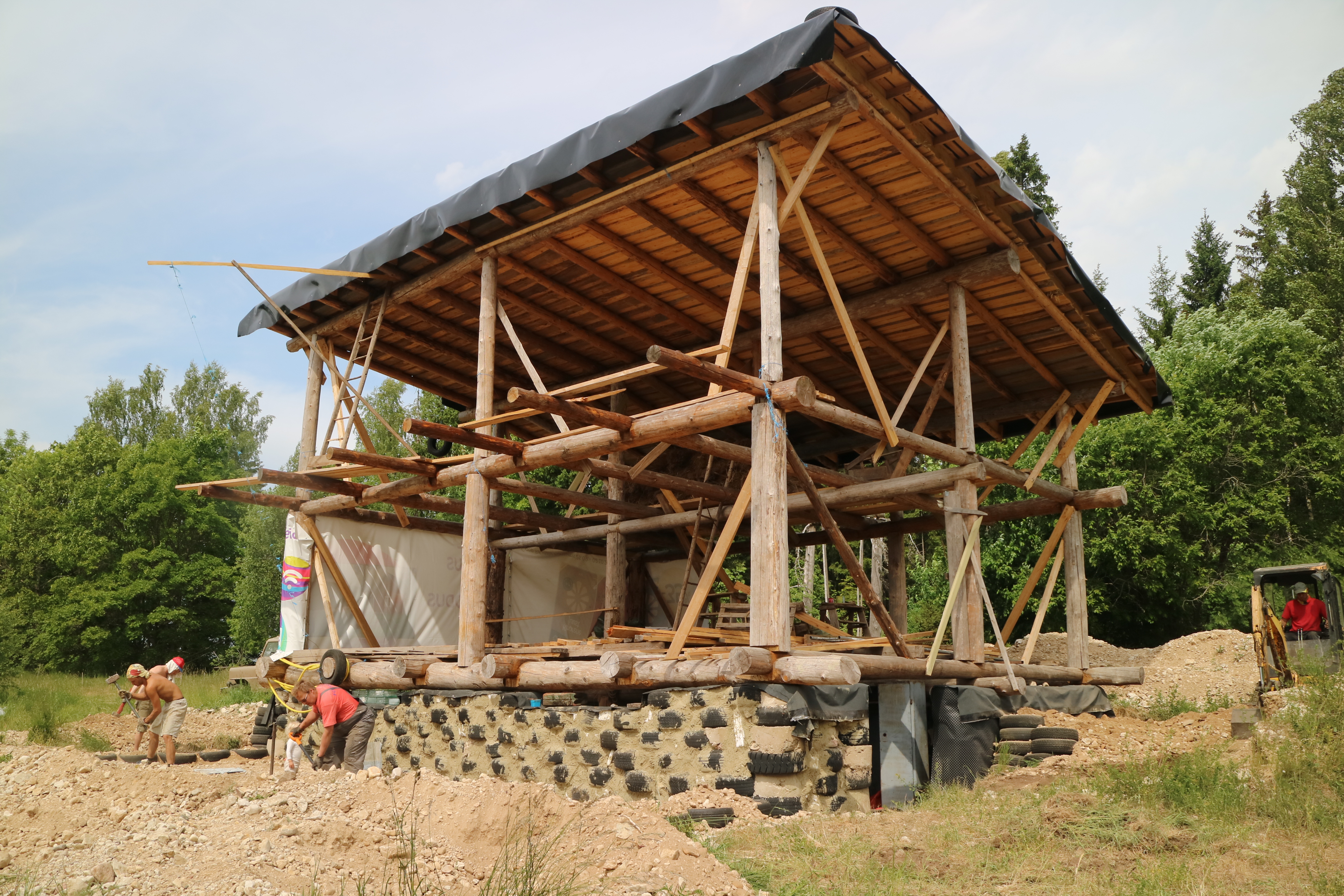
The foundation (like everything else) had to be affordable, because we did not have big savings and we did not want a loan. We decided to build the foundation from what nature provides in abundance: gravelly soil dug out of the foundation pit, and used car tyres. I asked my grandfather whether this was a good idea. He had not heard of this building method before, but after a short pause he said: “It fits — it doesn’t sprout and it doesn’t rot!”
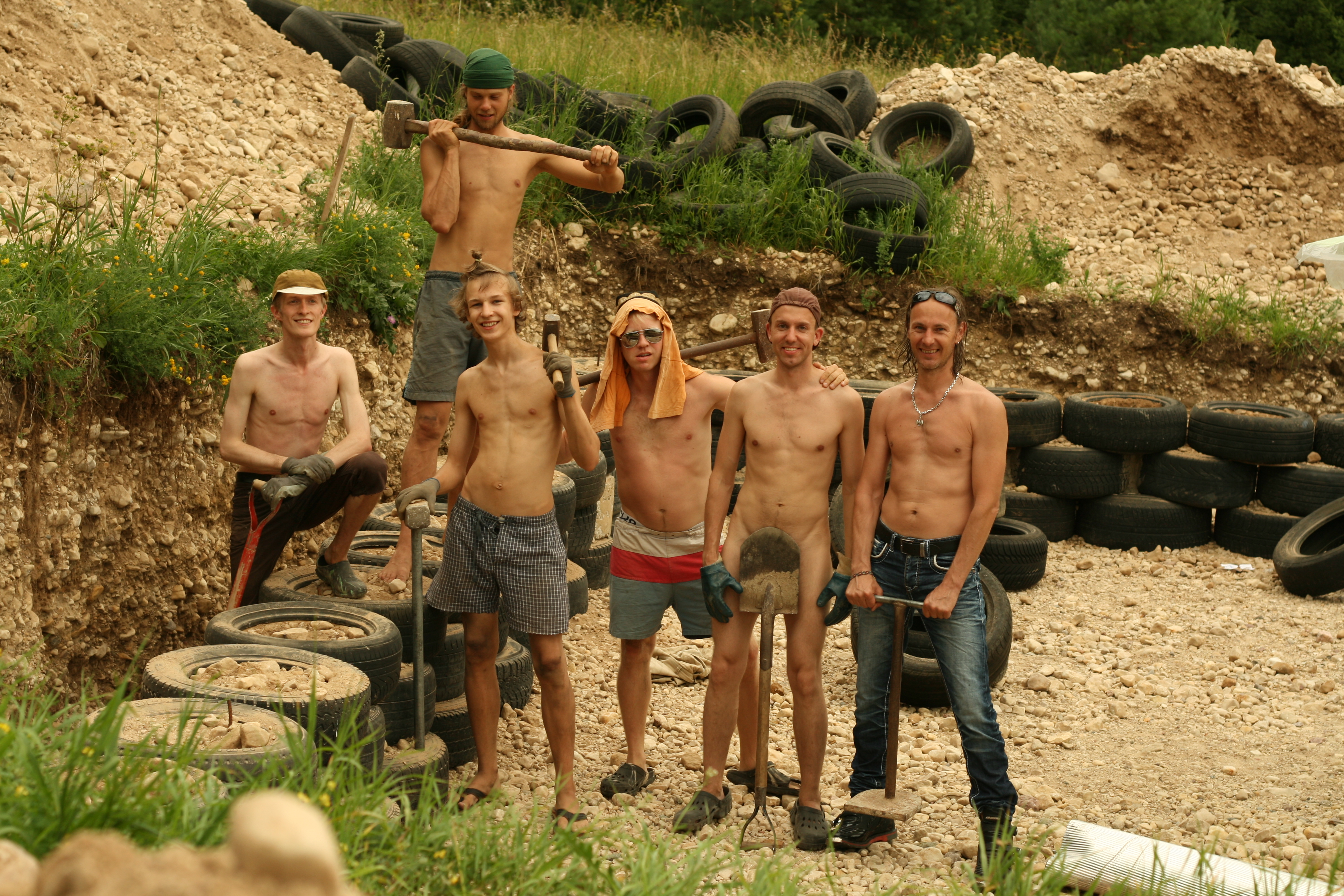
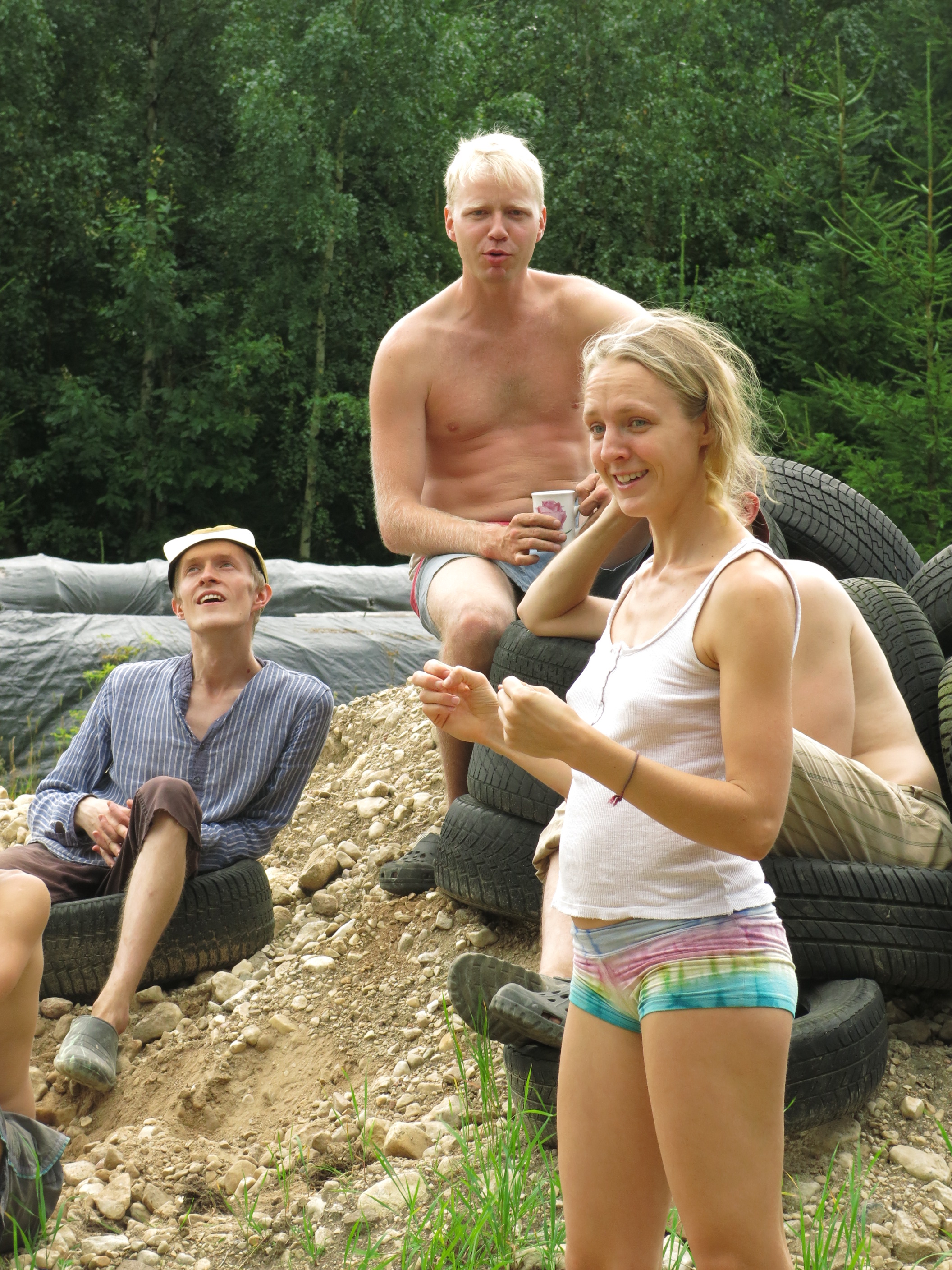
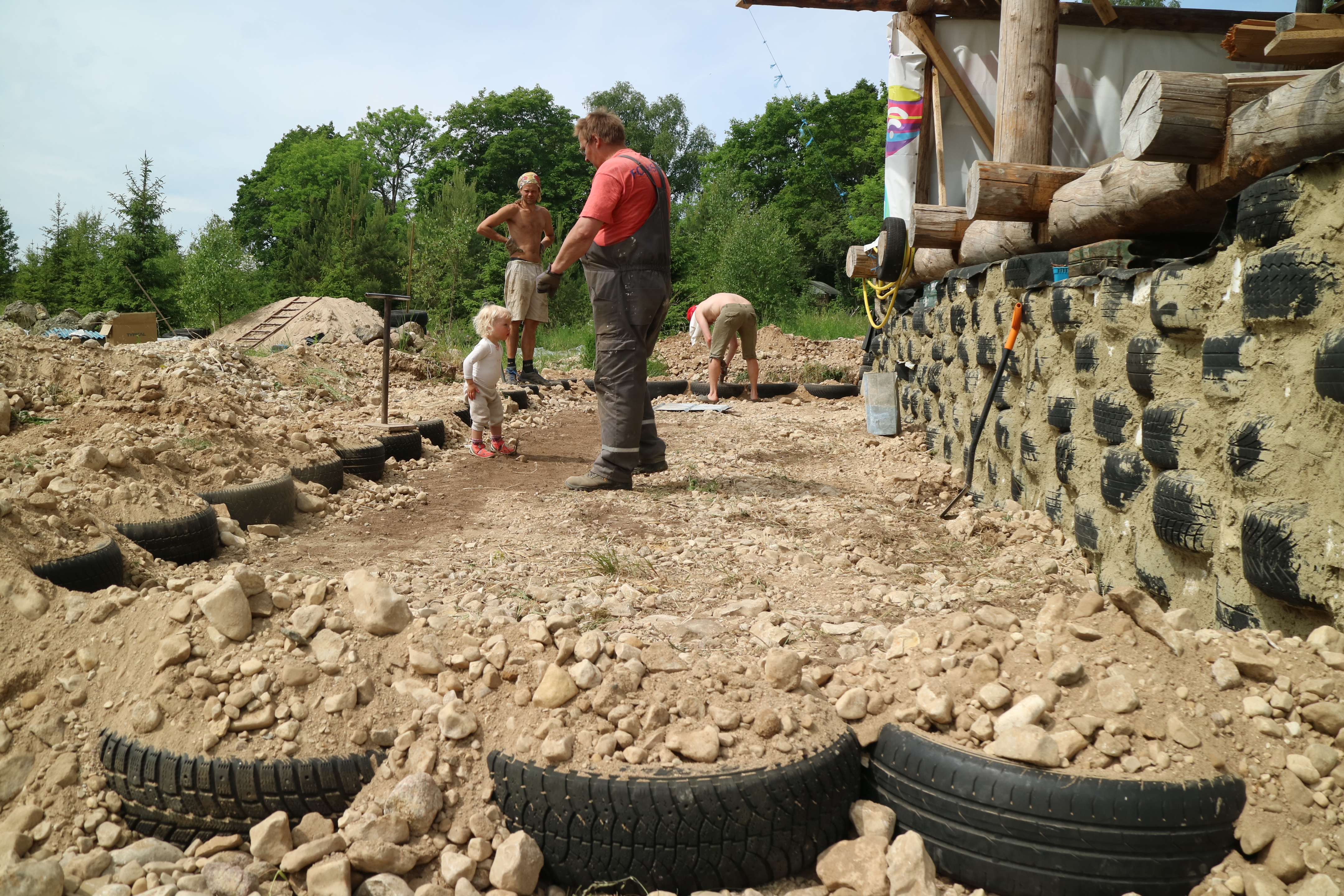
In the summer of 2015, we held “grounding work parties” five times — a huge tyre-pounding marathon. For 2–3 days in a row, we poured gravel into empty car tyres and compacted it by hitting it with sledgehammers and mallets. We pounded about 400 tyres, forming the basement level of our future home.
Helpers: Peeter, Agnes, Henno, Tauno, Eva, Indrek, Egon, Oskar, Ragnar, Mann, Maari, Tuule-Liis, Rety, Hando
Leave a comment
2016 — A pause year, a summer kitchen, Saskia
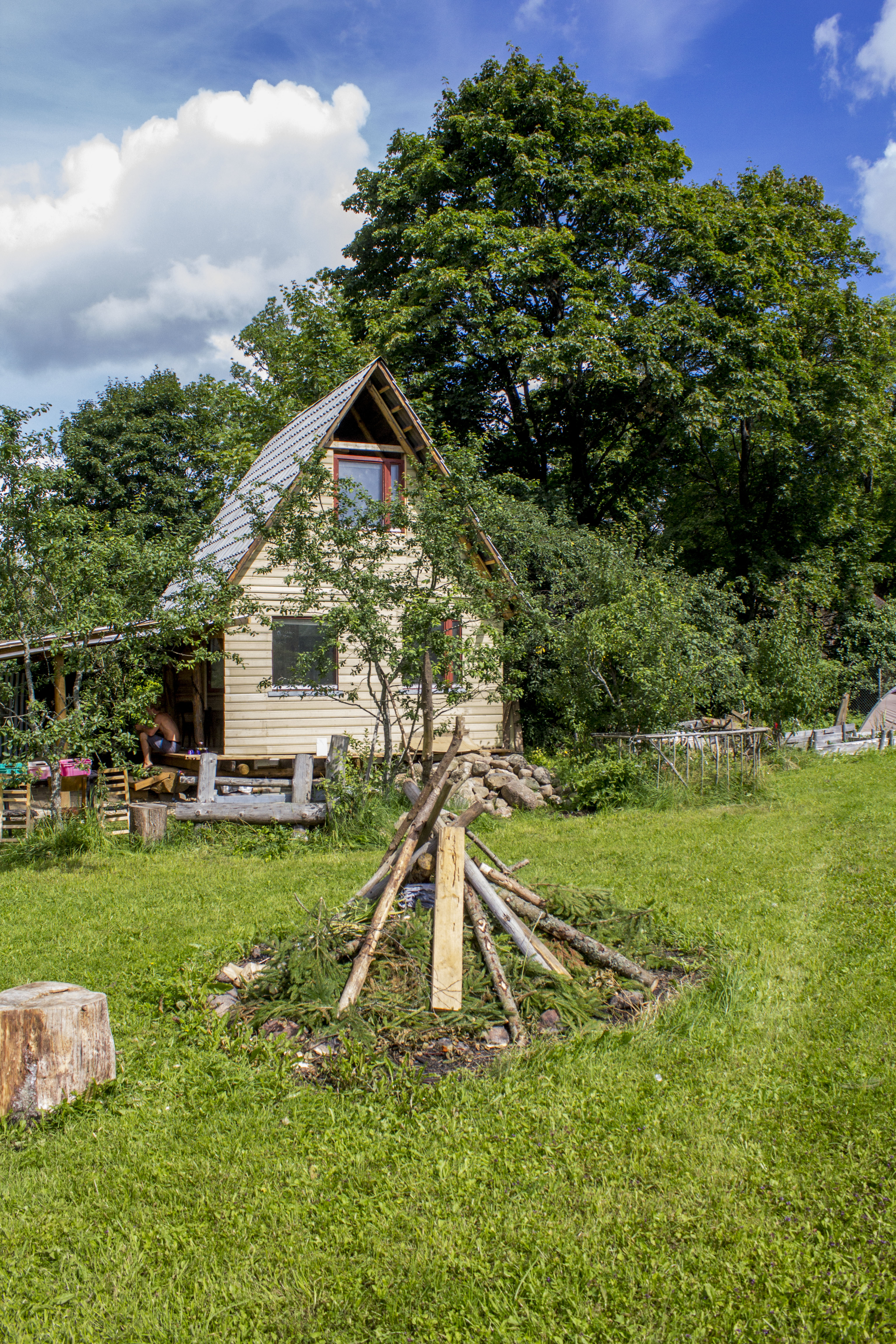
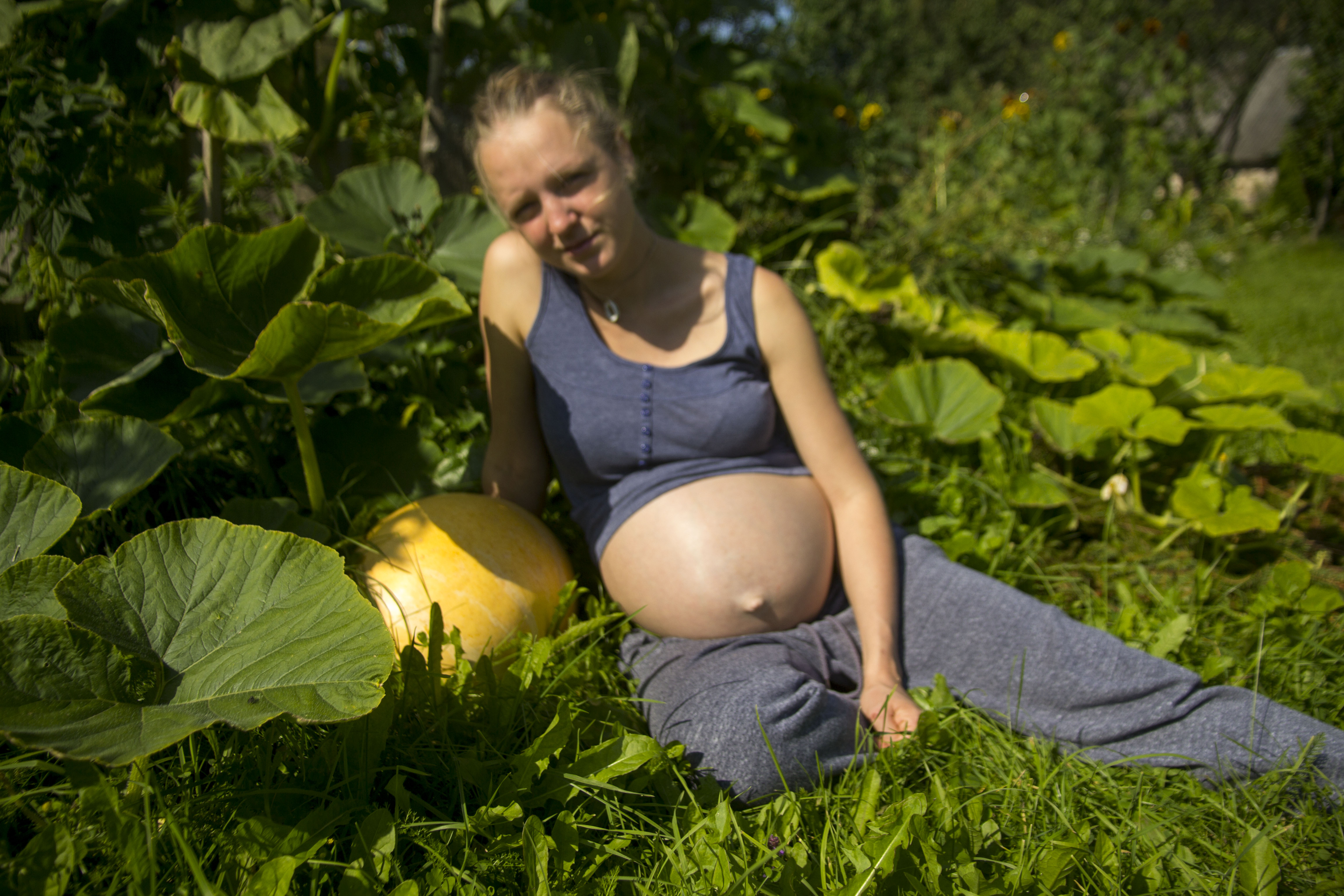
We kept building the house in thoughts and plans. We gathered materials. We practised more and built a 20 m² summer kitchen, because Kuusiku farm had already started to feel too small. It felt even smaller in September, when our daughter Saskia was born. The need for our own home kept growing and pushed us to keep dreaming and doing, despite all difficulties (read: lack of money).
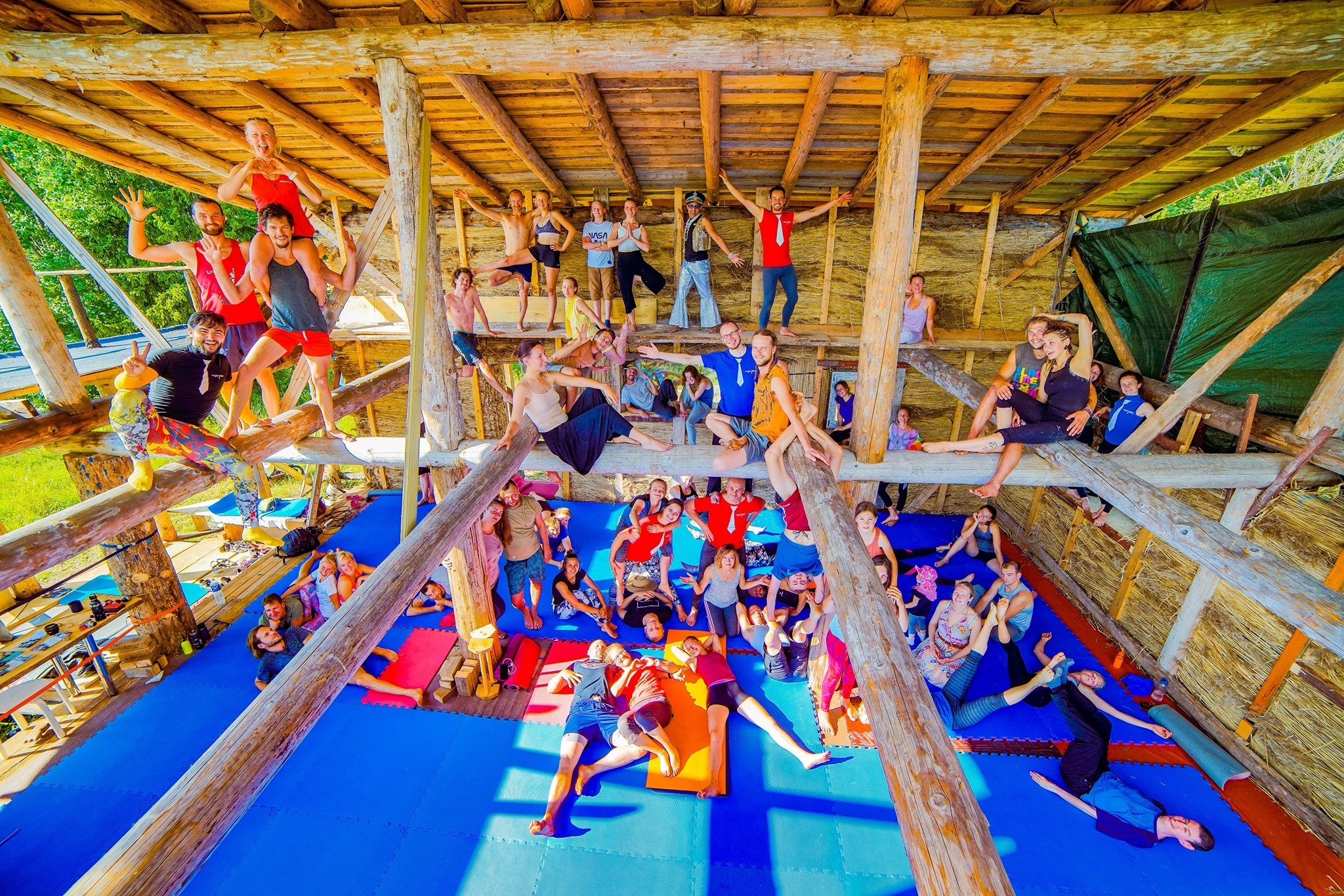
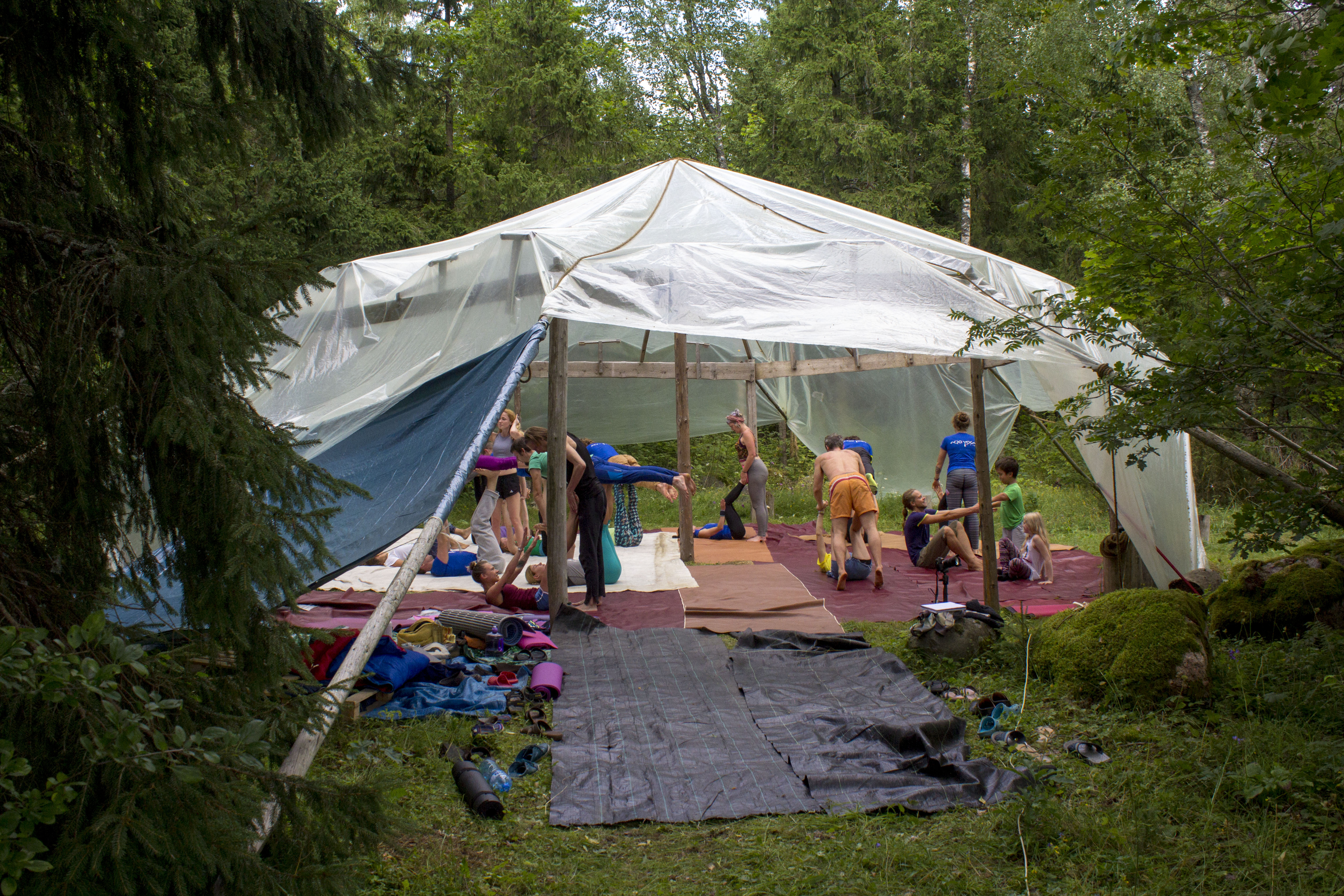
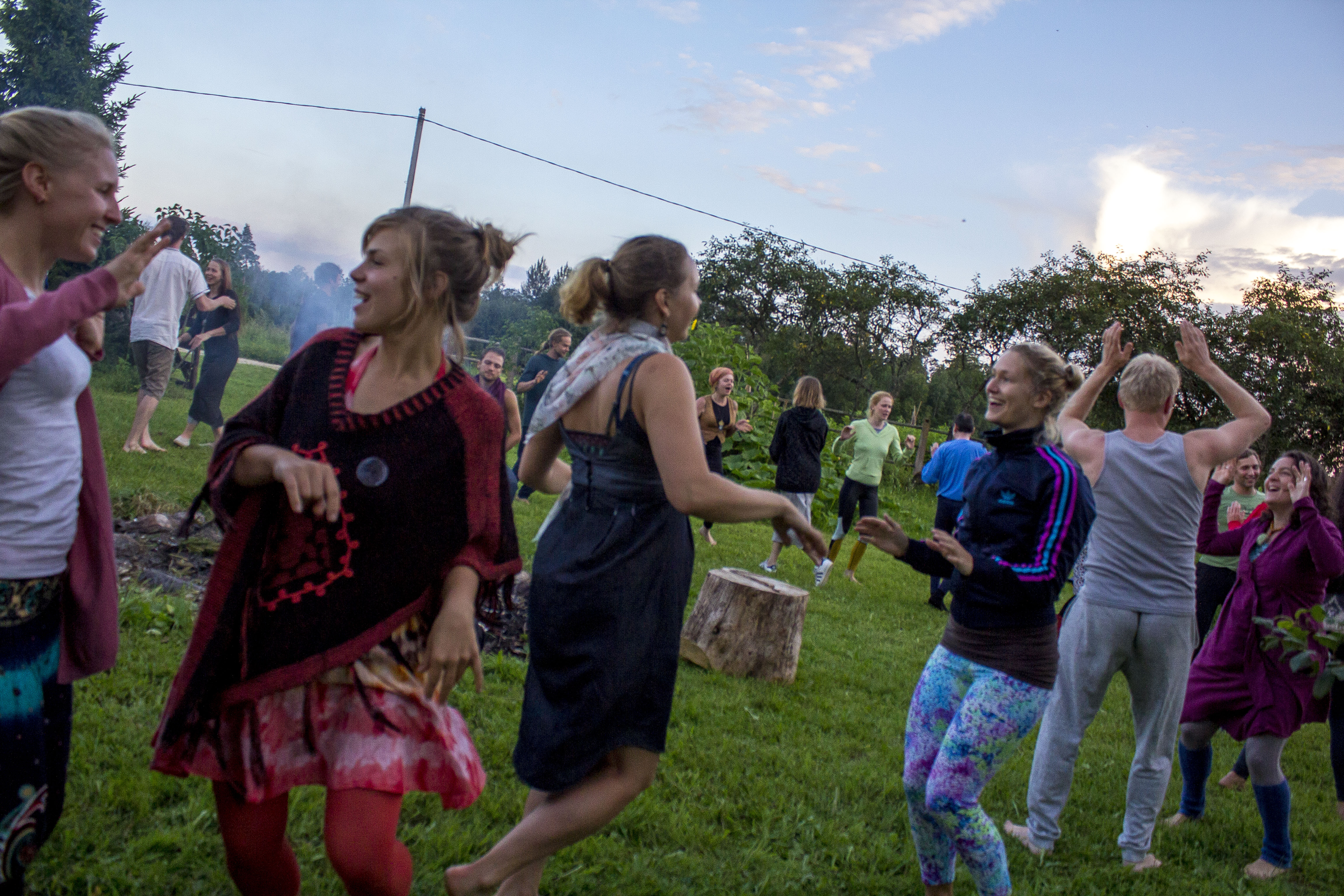
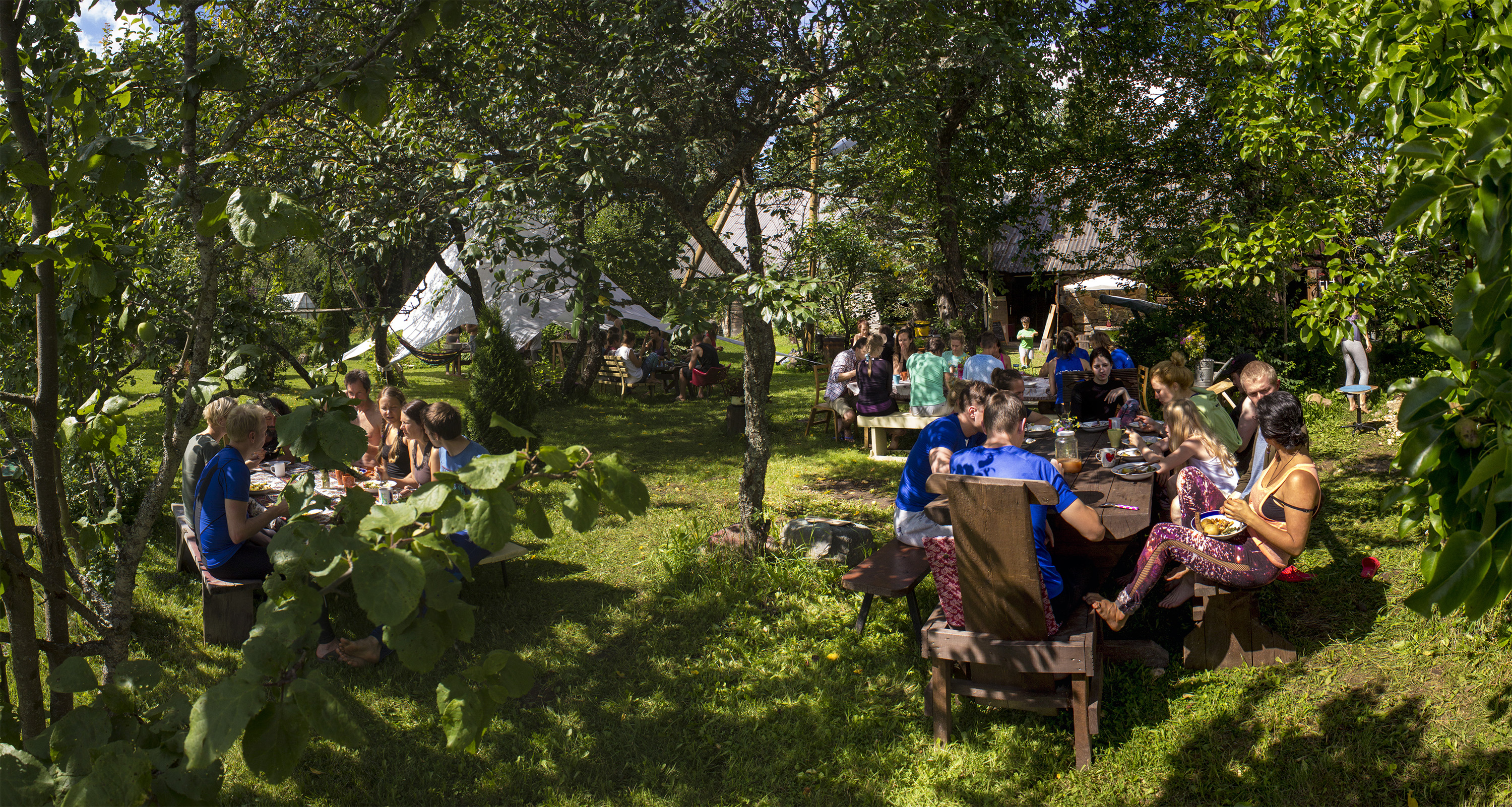
AcroFestonia had 50 people and two parallel workshops — one in Akropol and the other under a temporary roof in the forest — Octopus.
Leave a comment
2017 — The carpentry year
The logs — now a reduced “team” (since we had built Akropol and the summer kitchen in the meantime) — had dried for five years (and some had started to rot a bit) and were ready to fulfil their purpose.
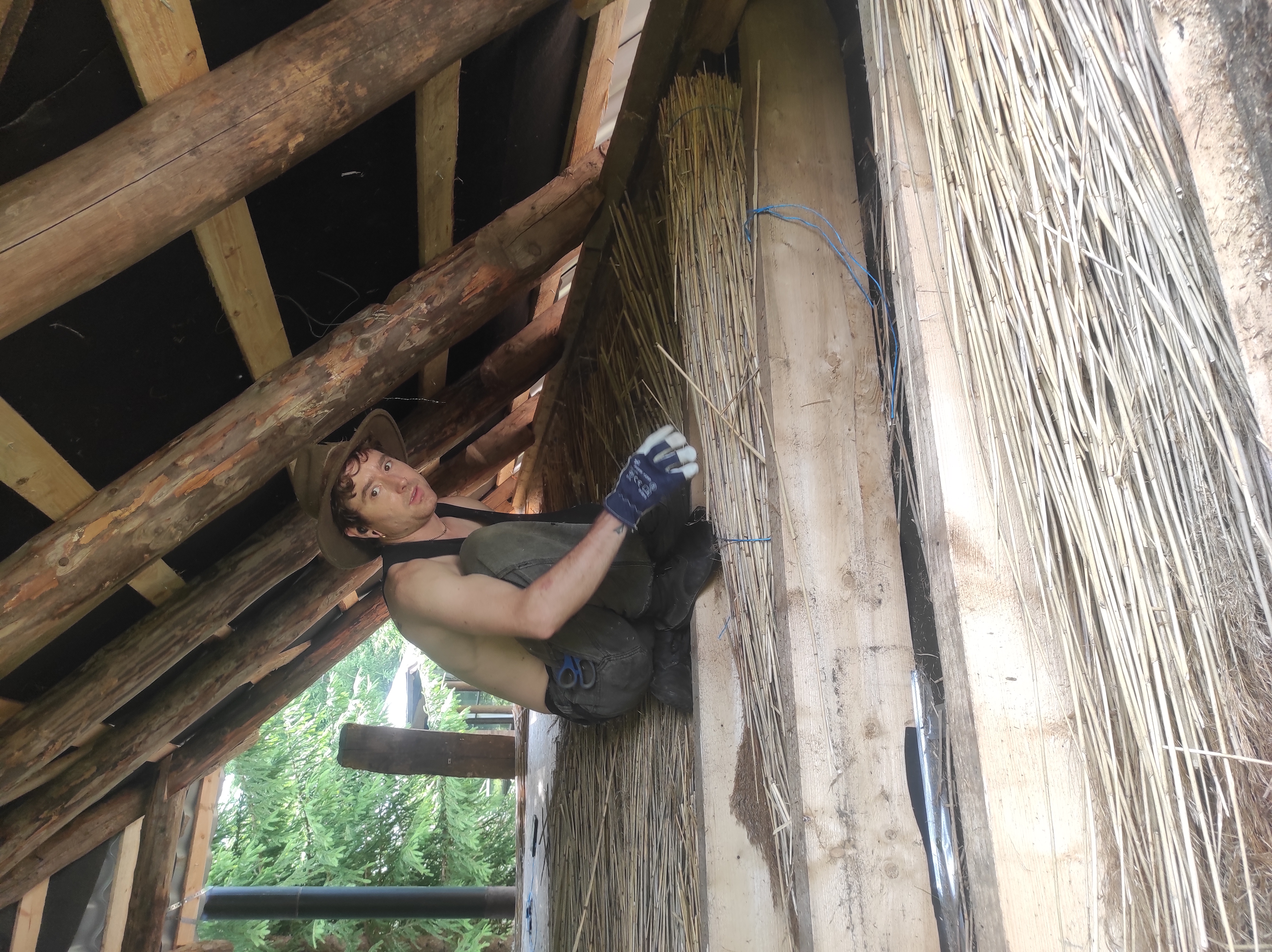
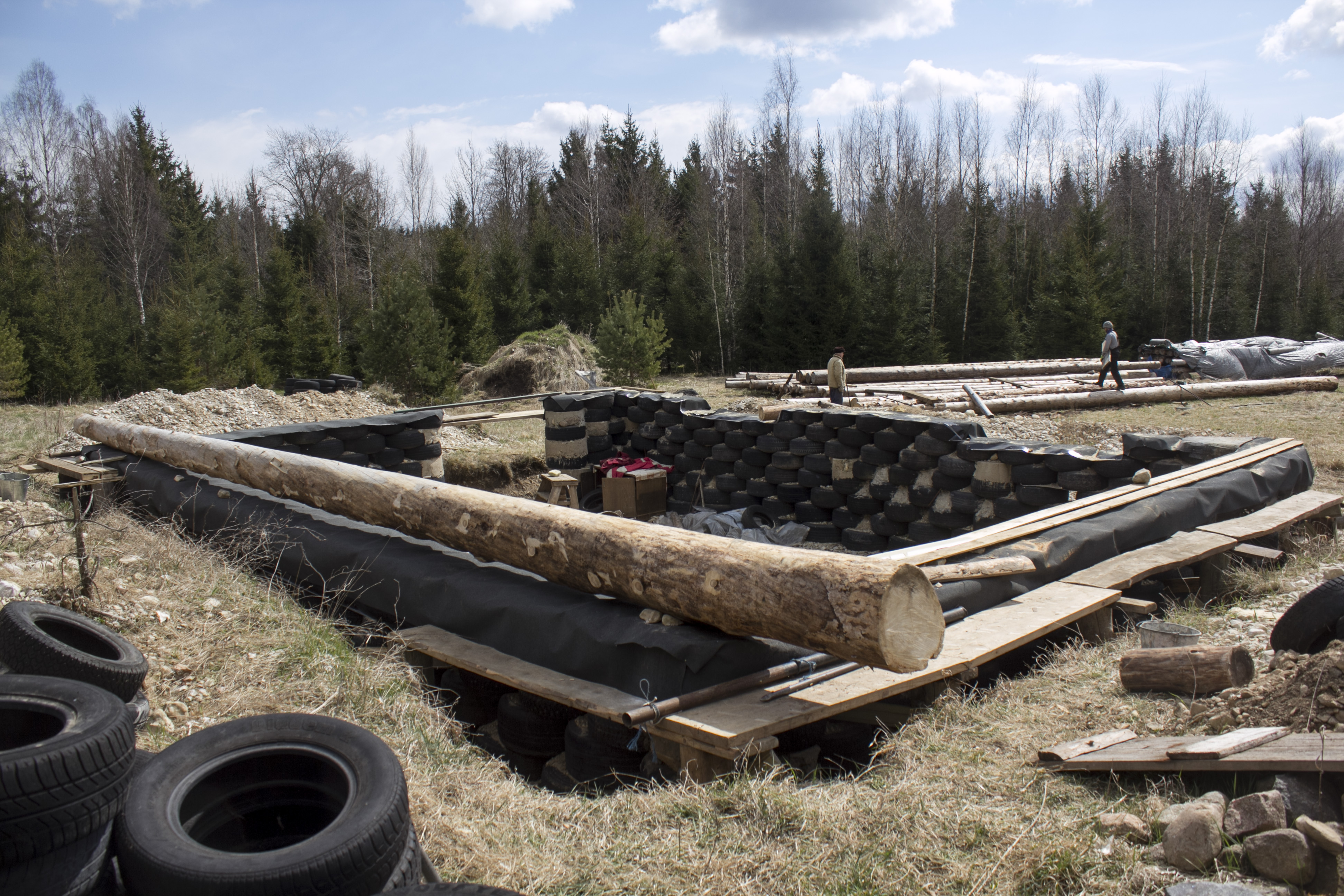
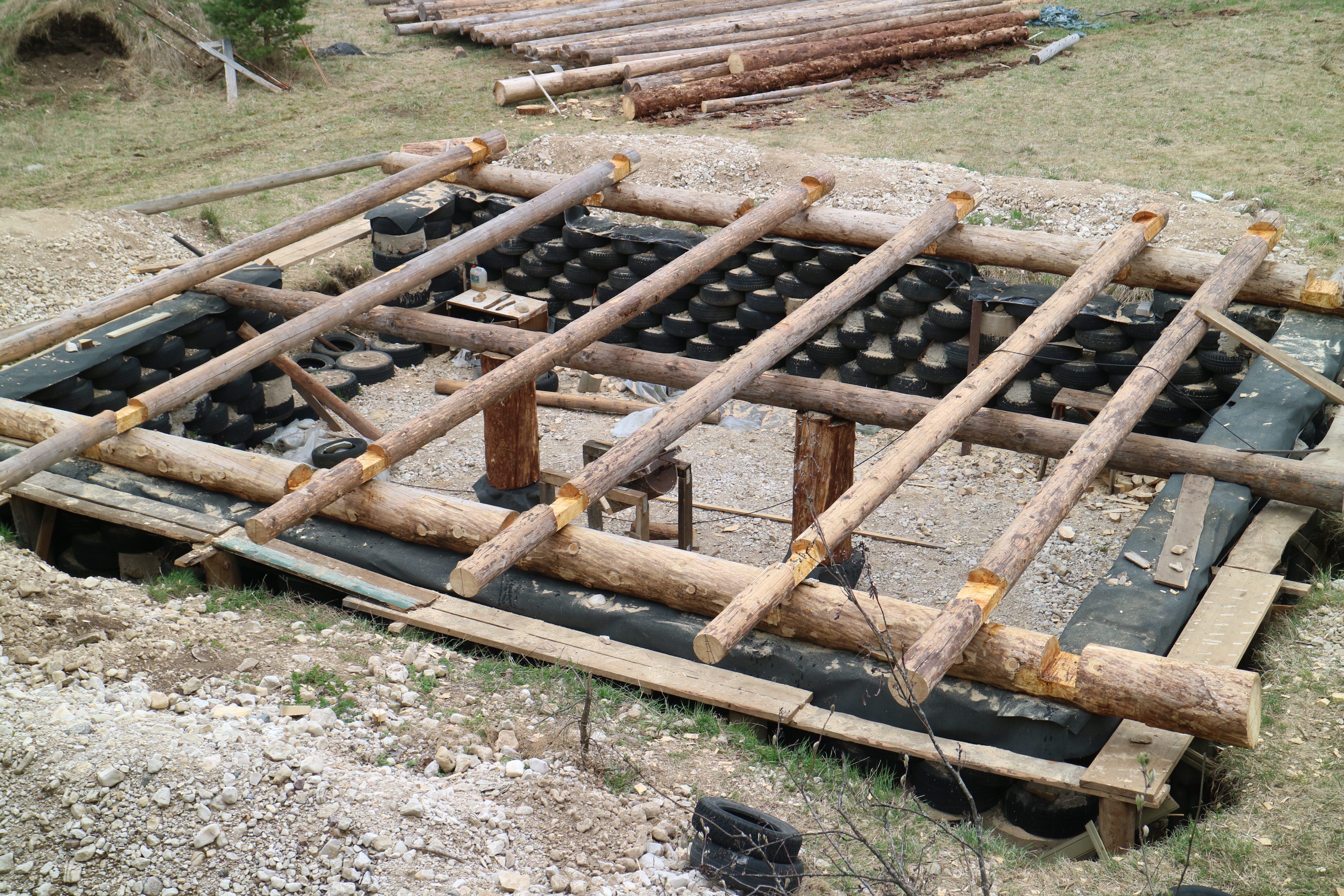
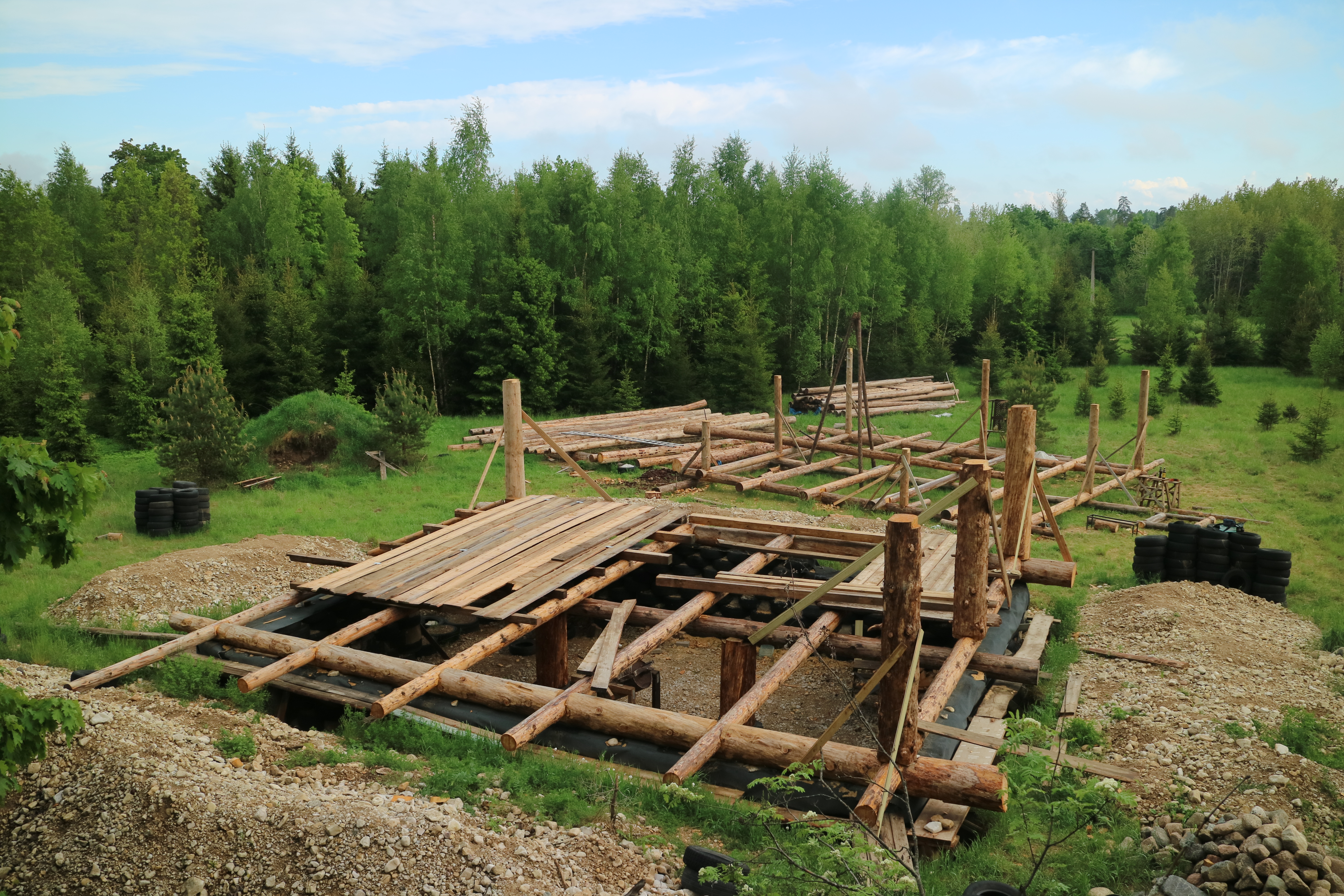
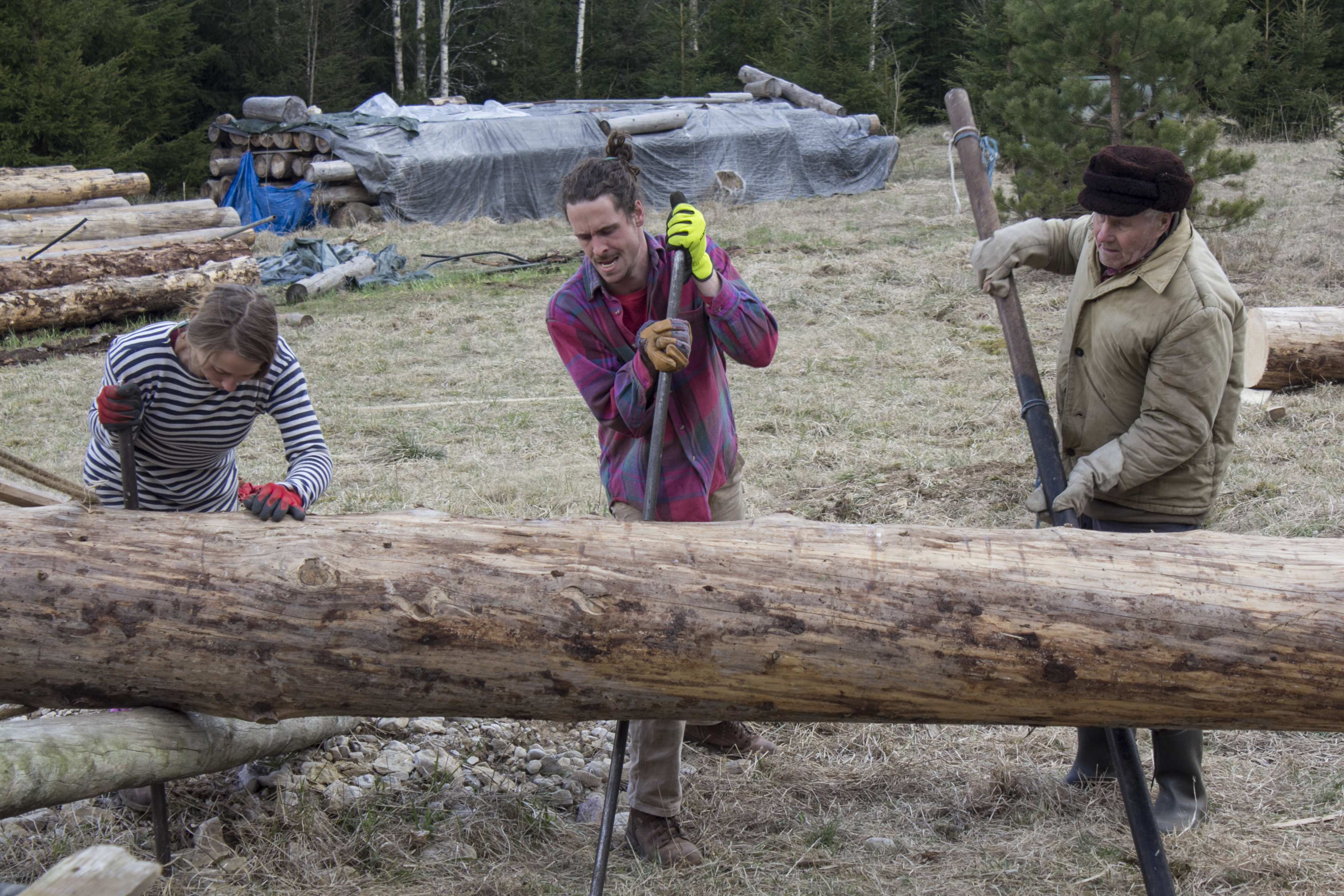
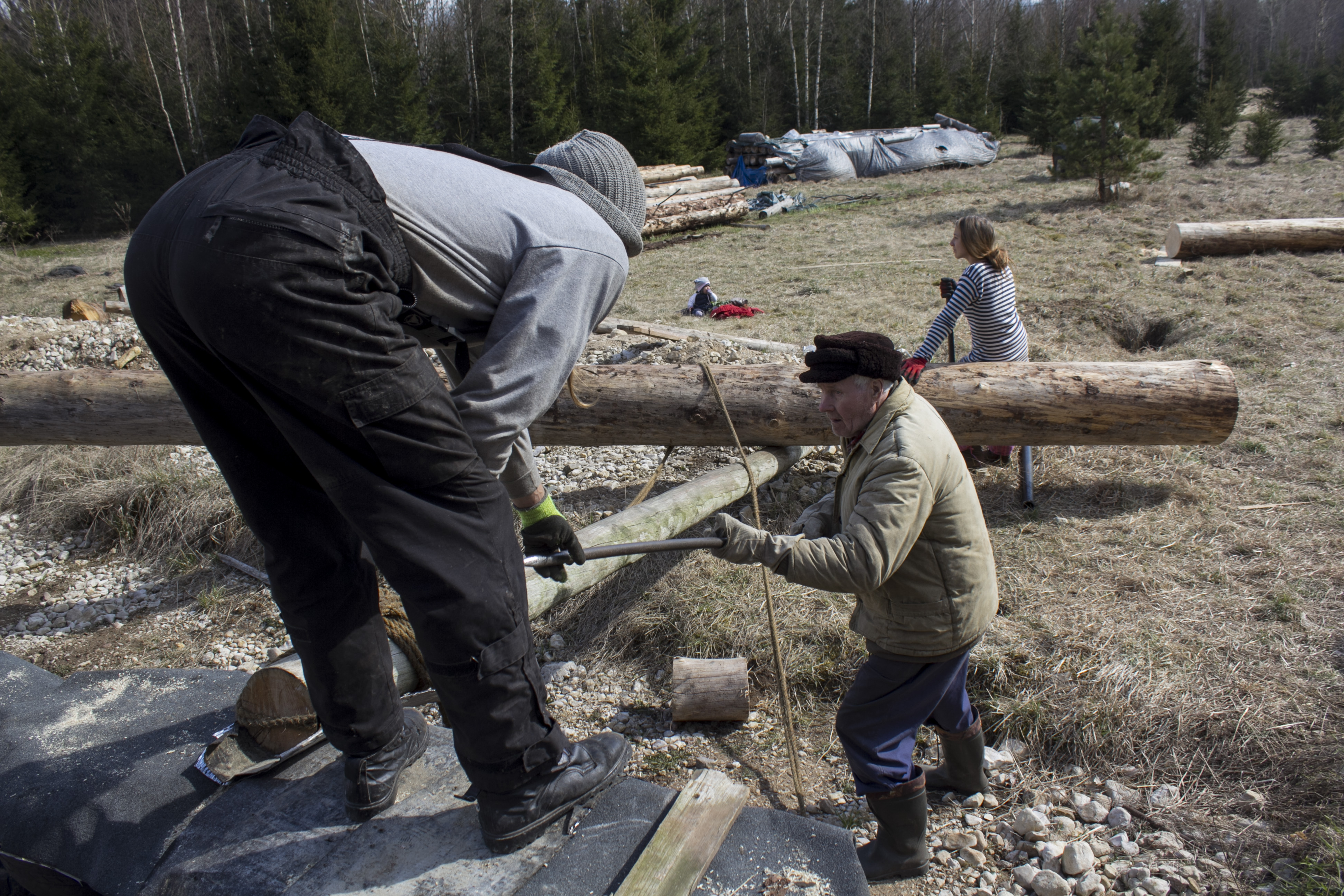
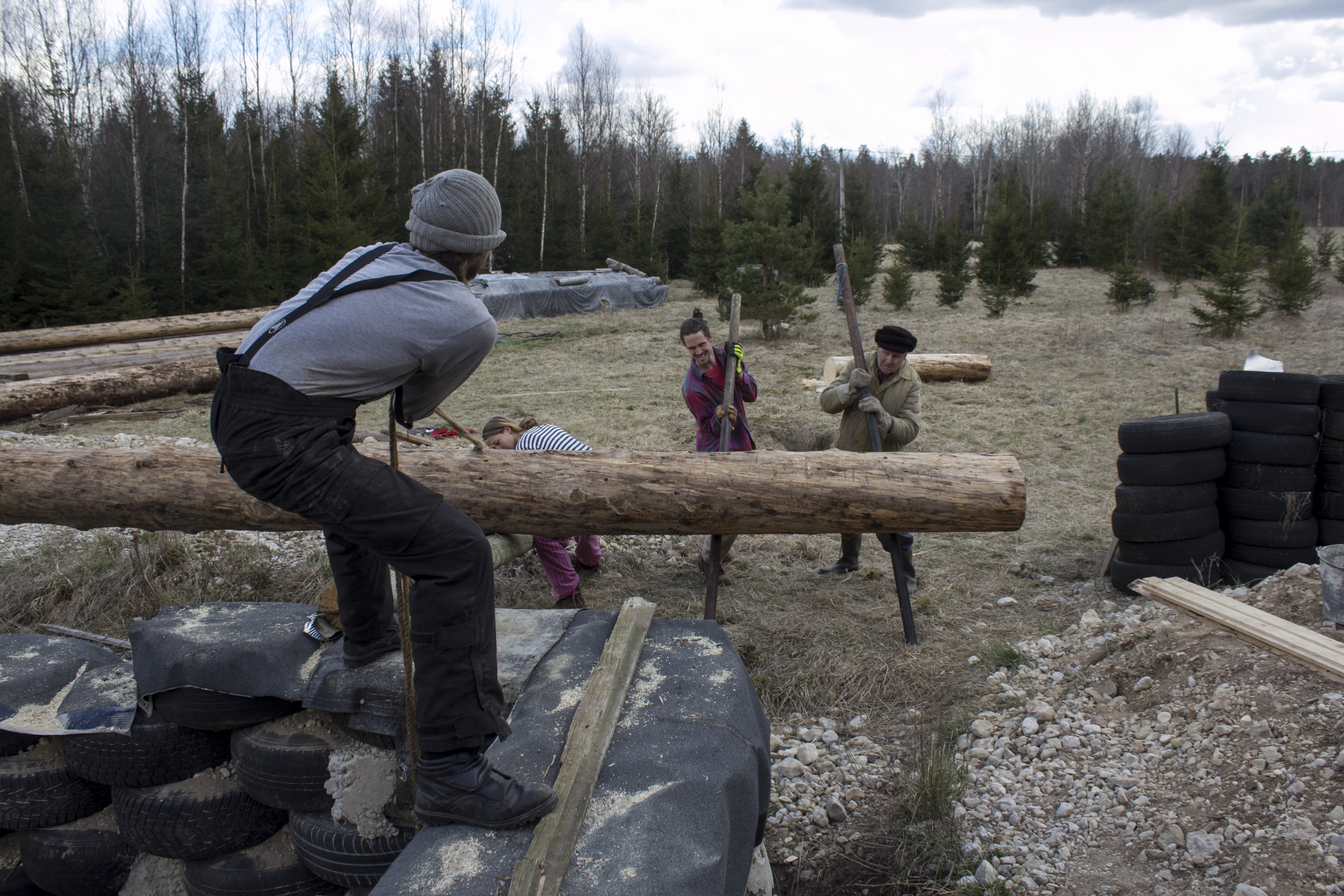
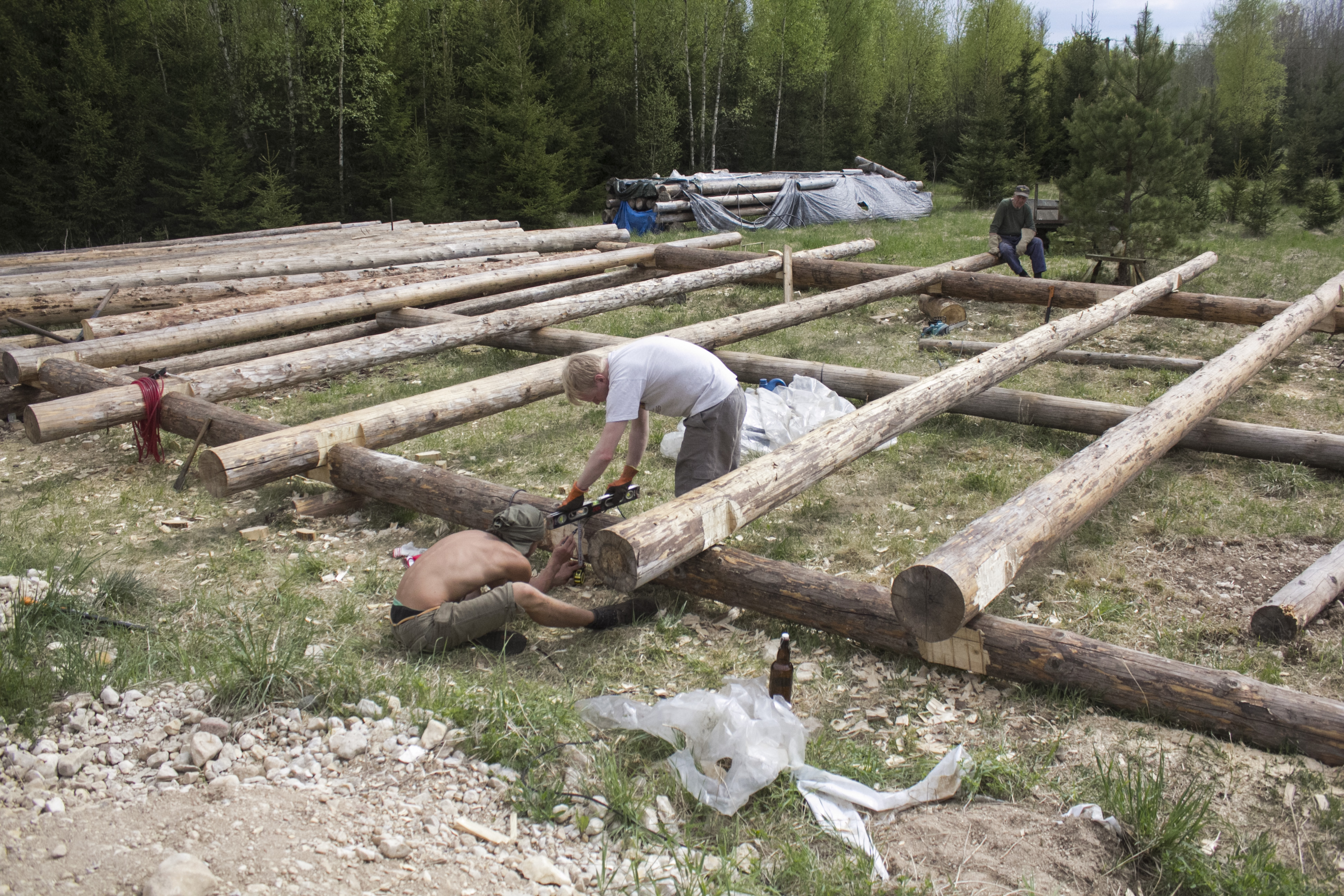
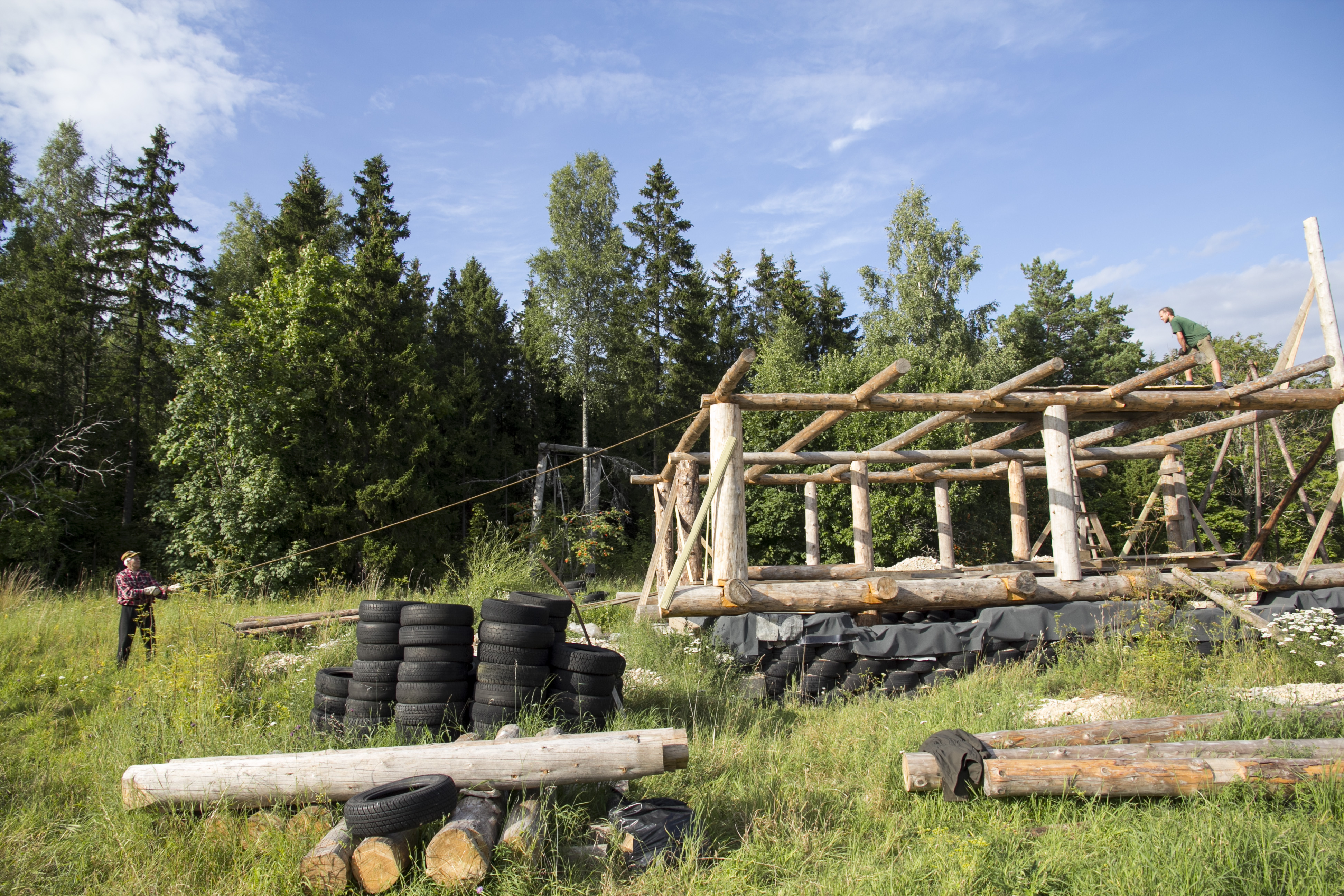
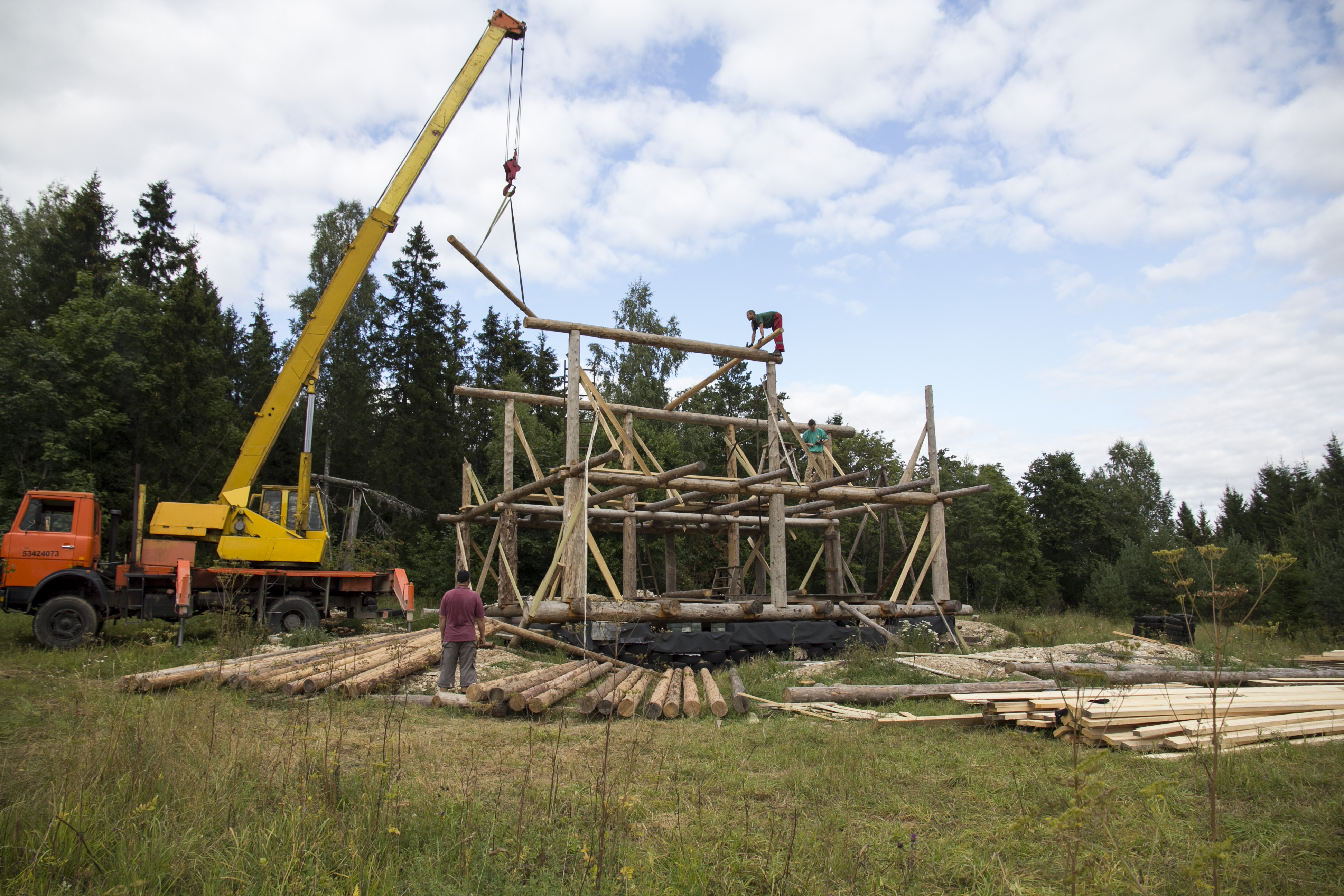
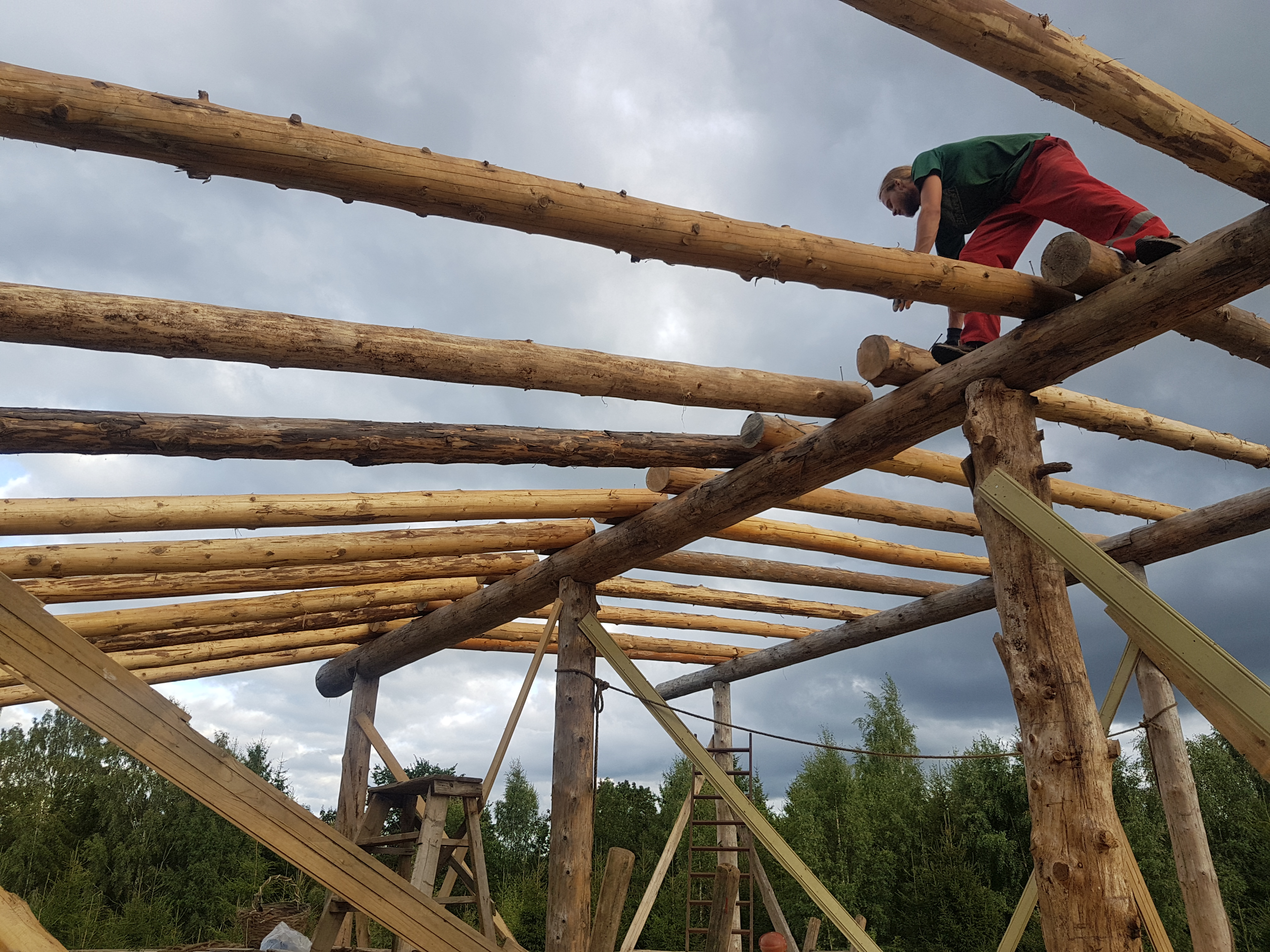
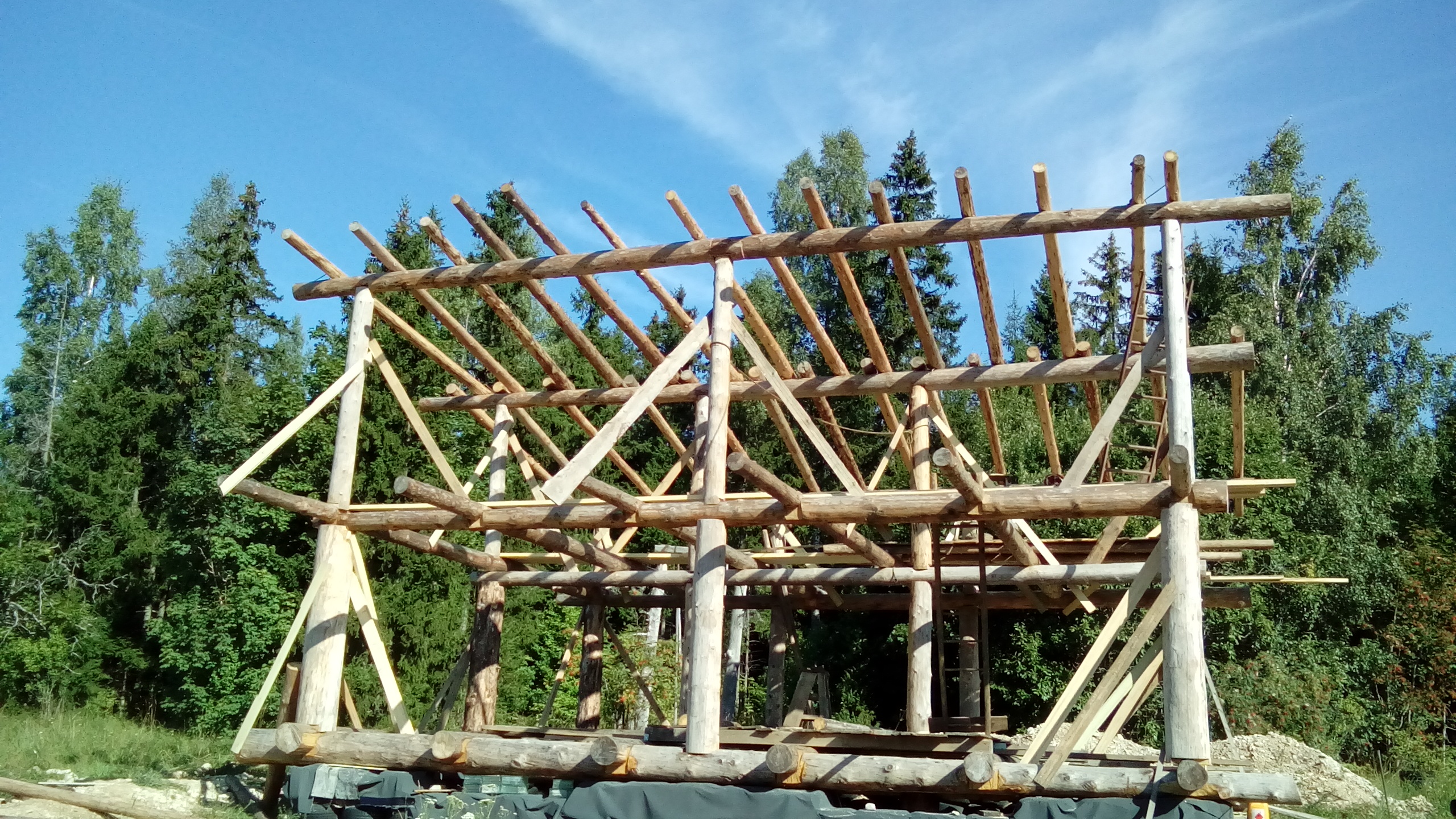
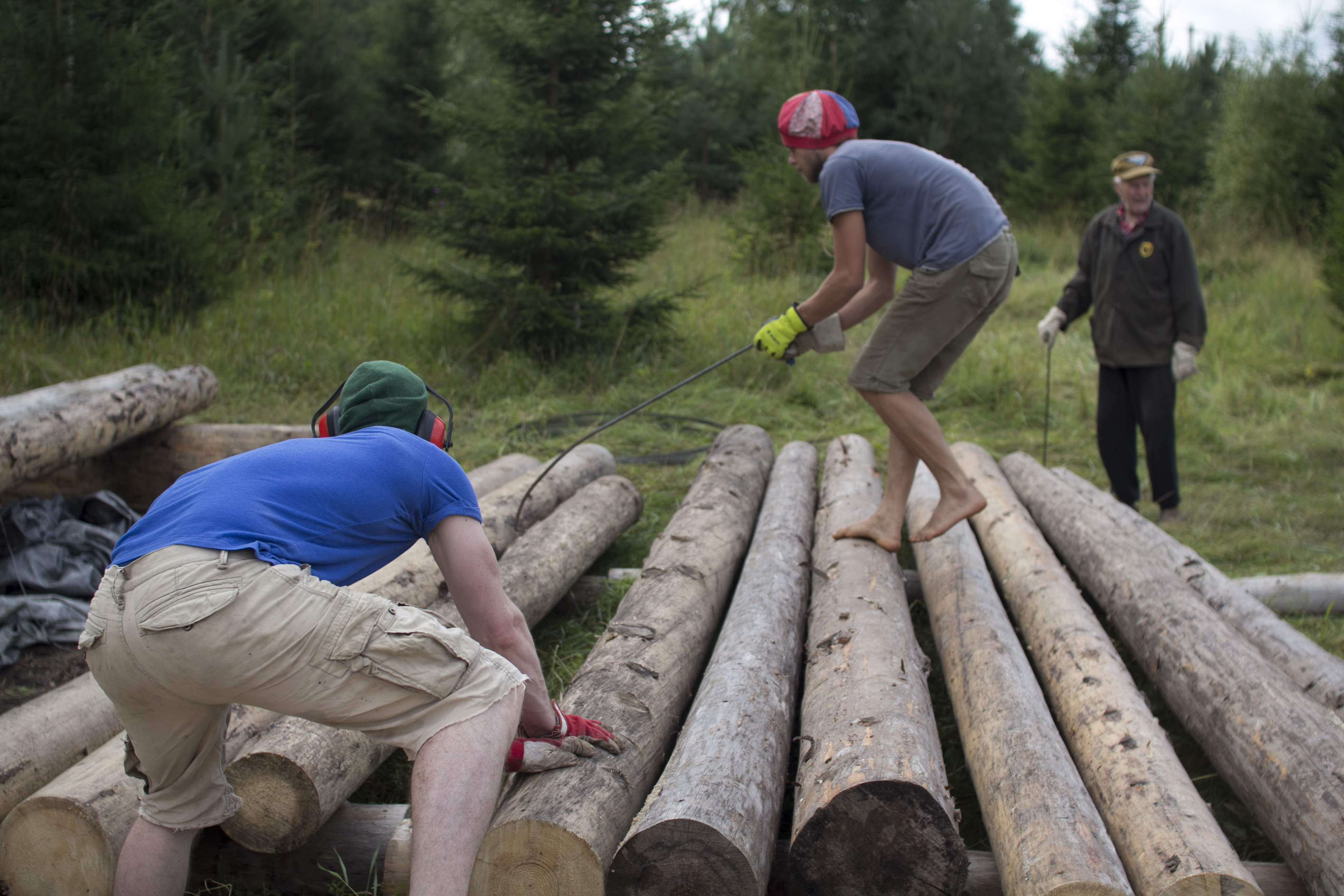
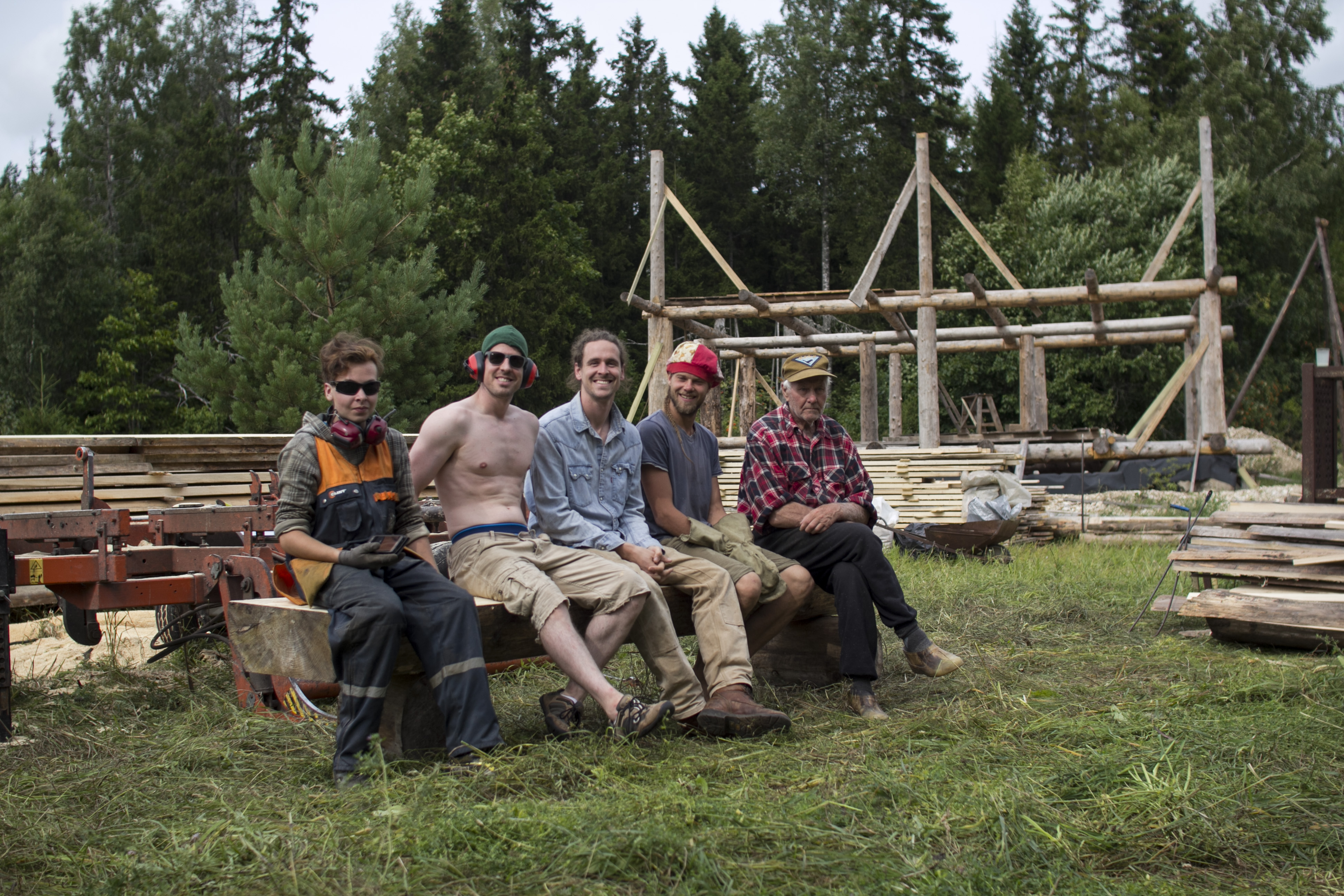
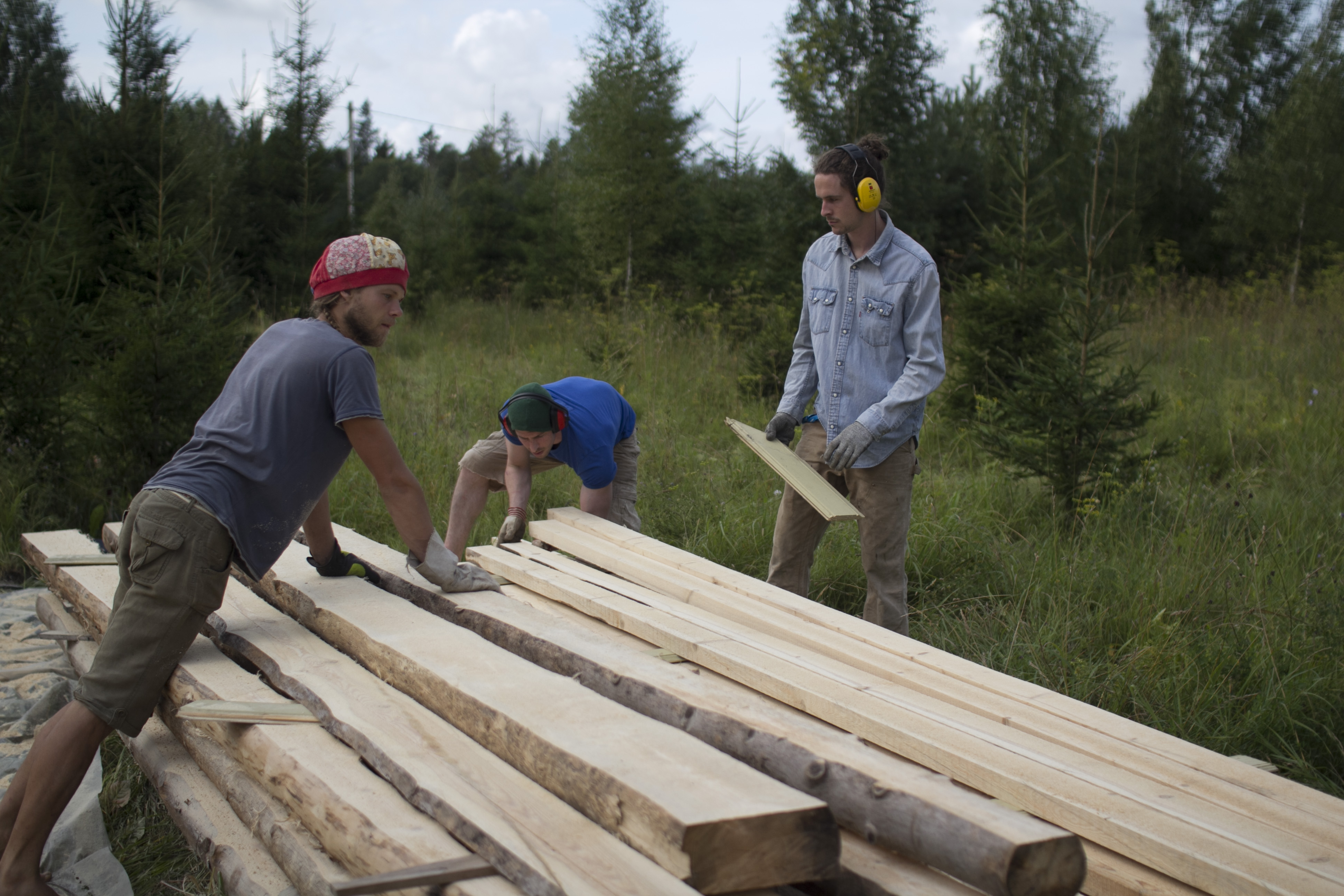
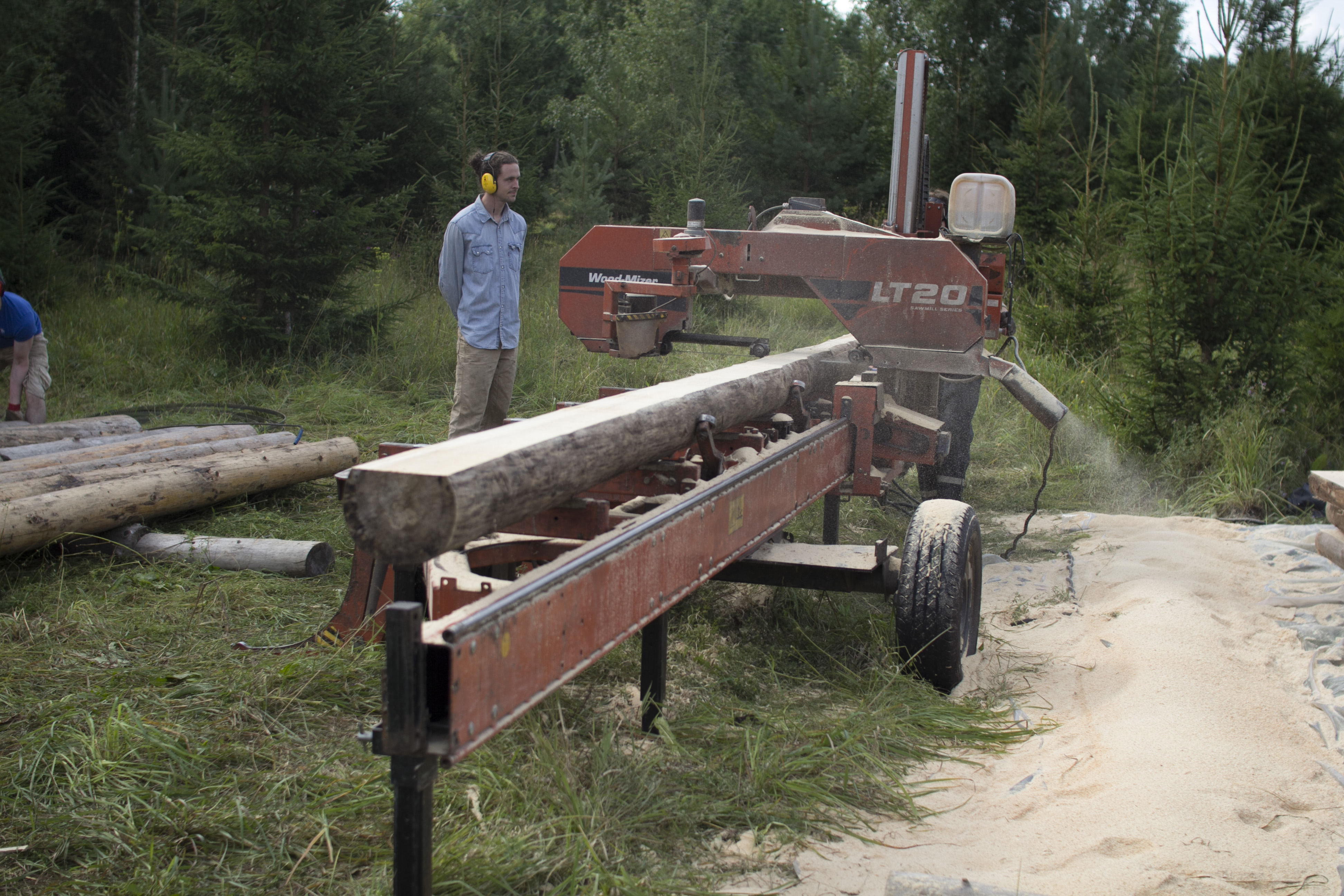
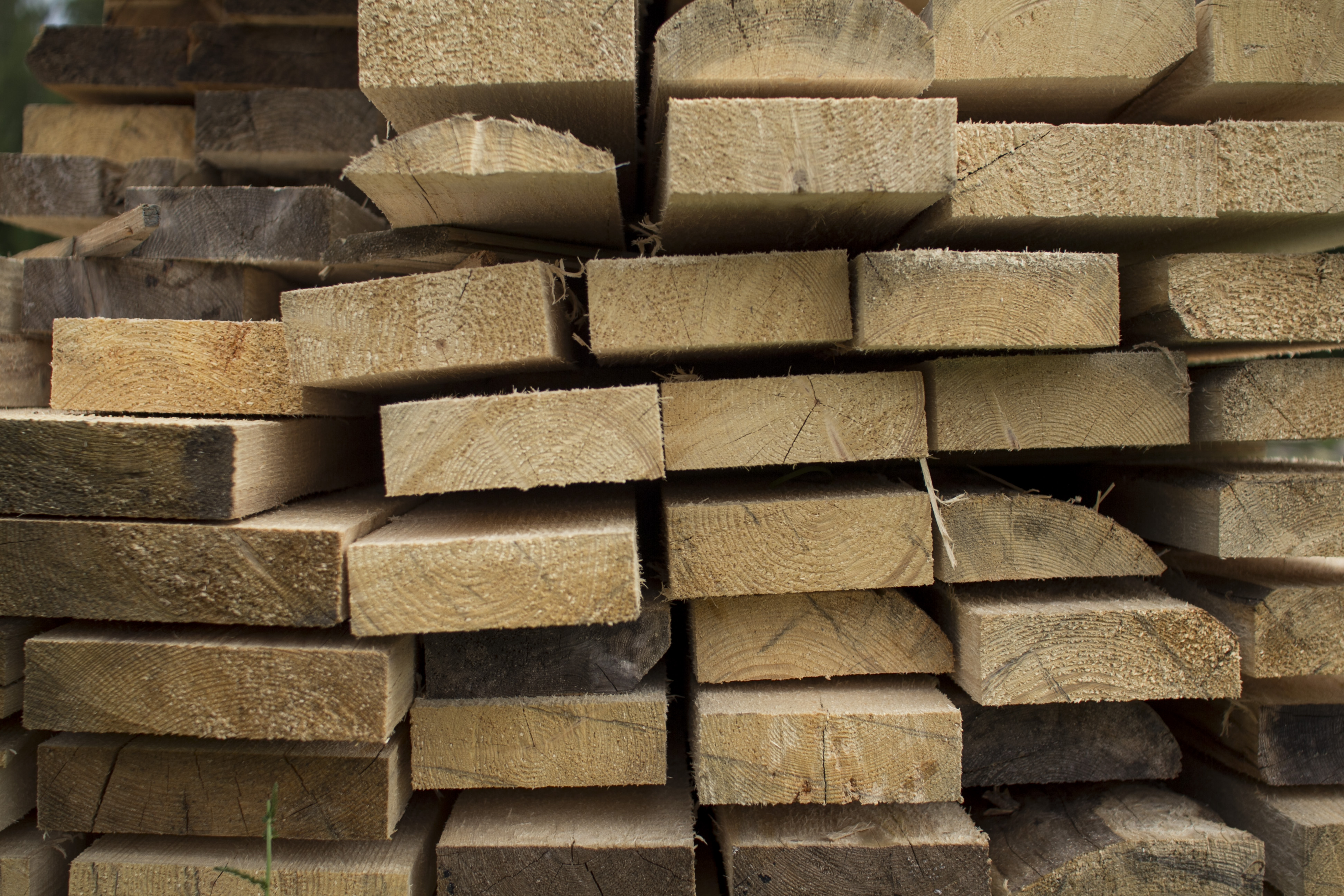
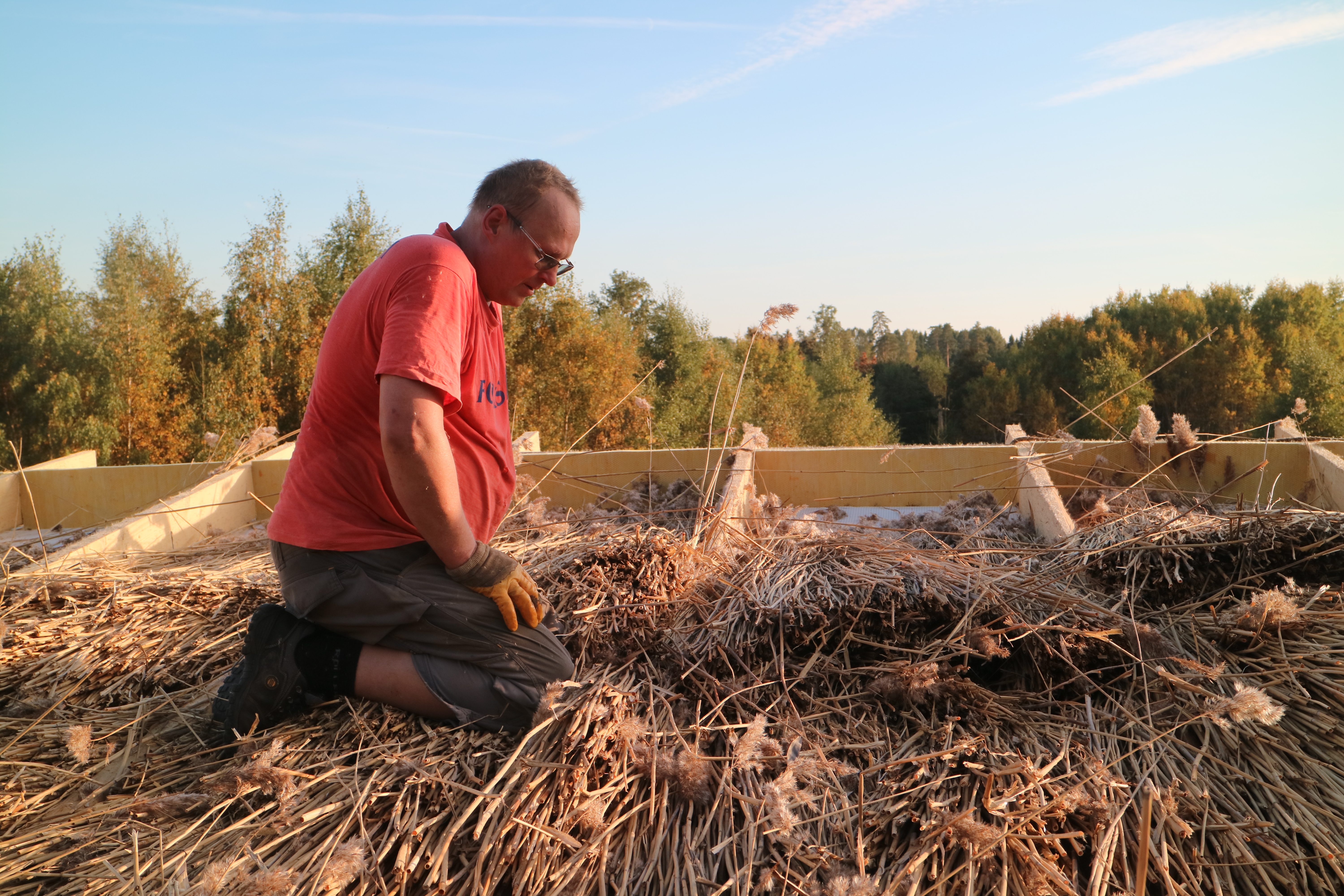
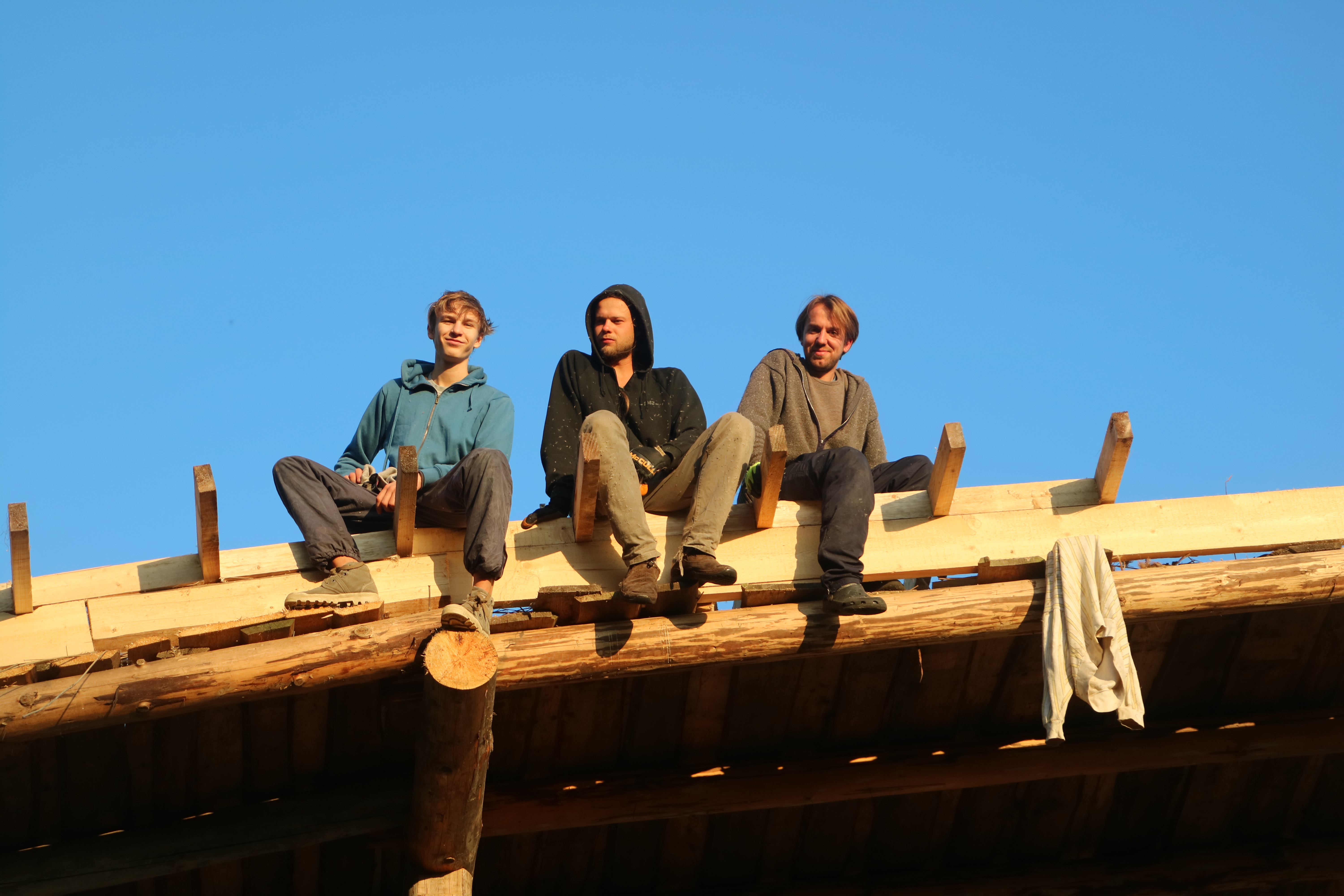
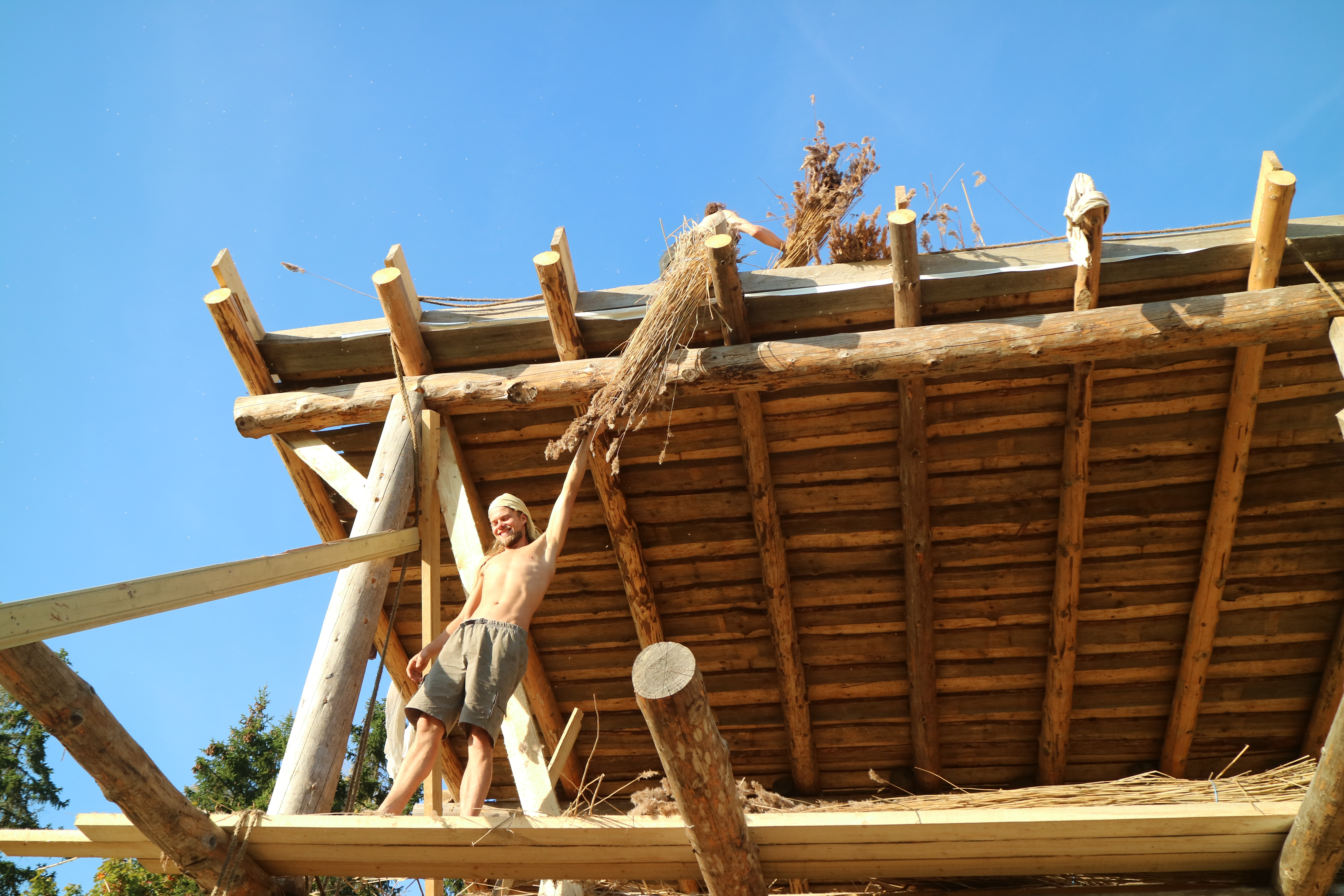
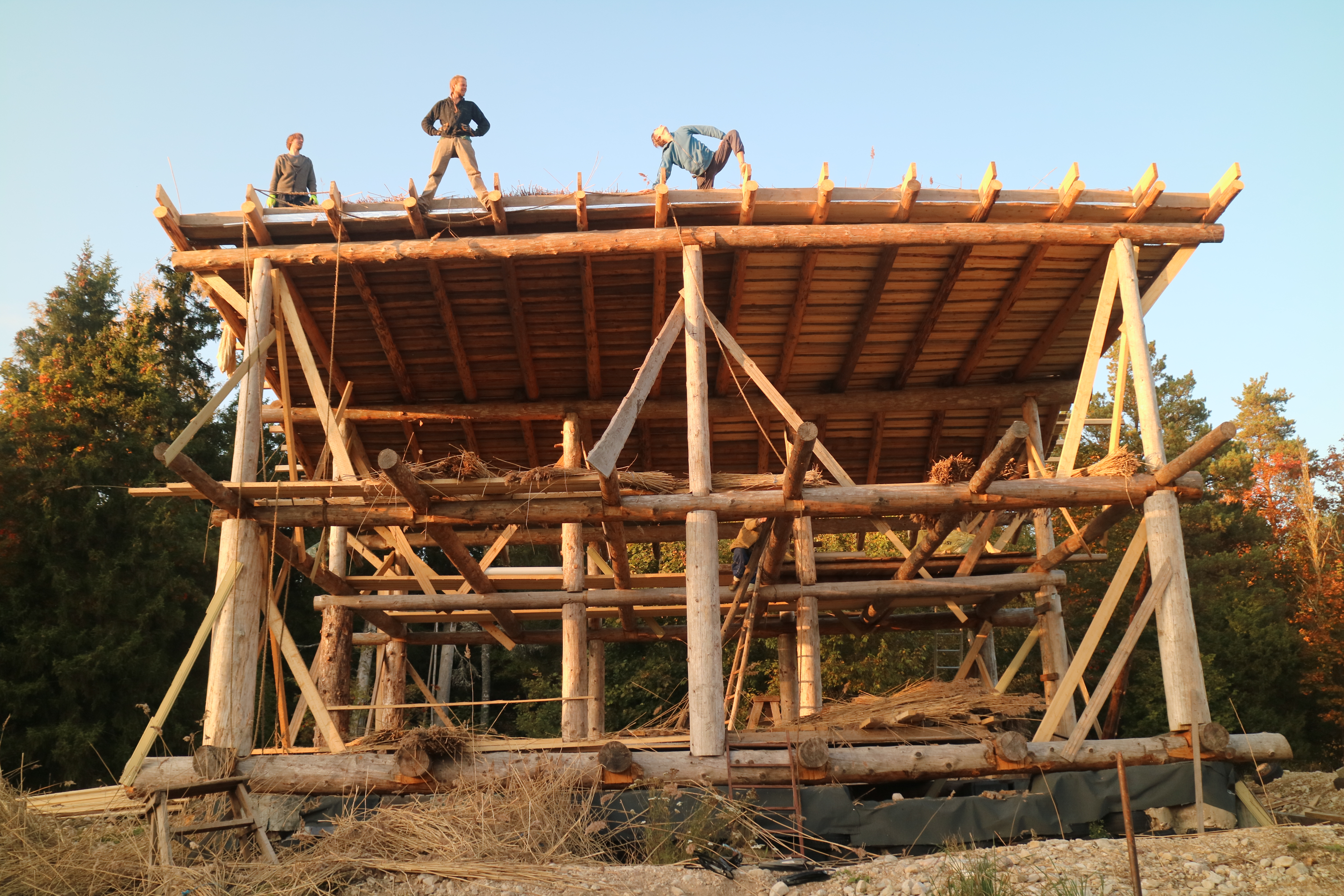
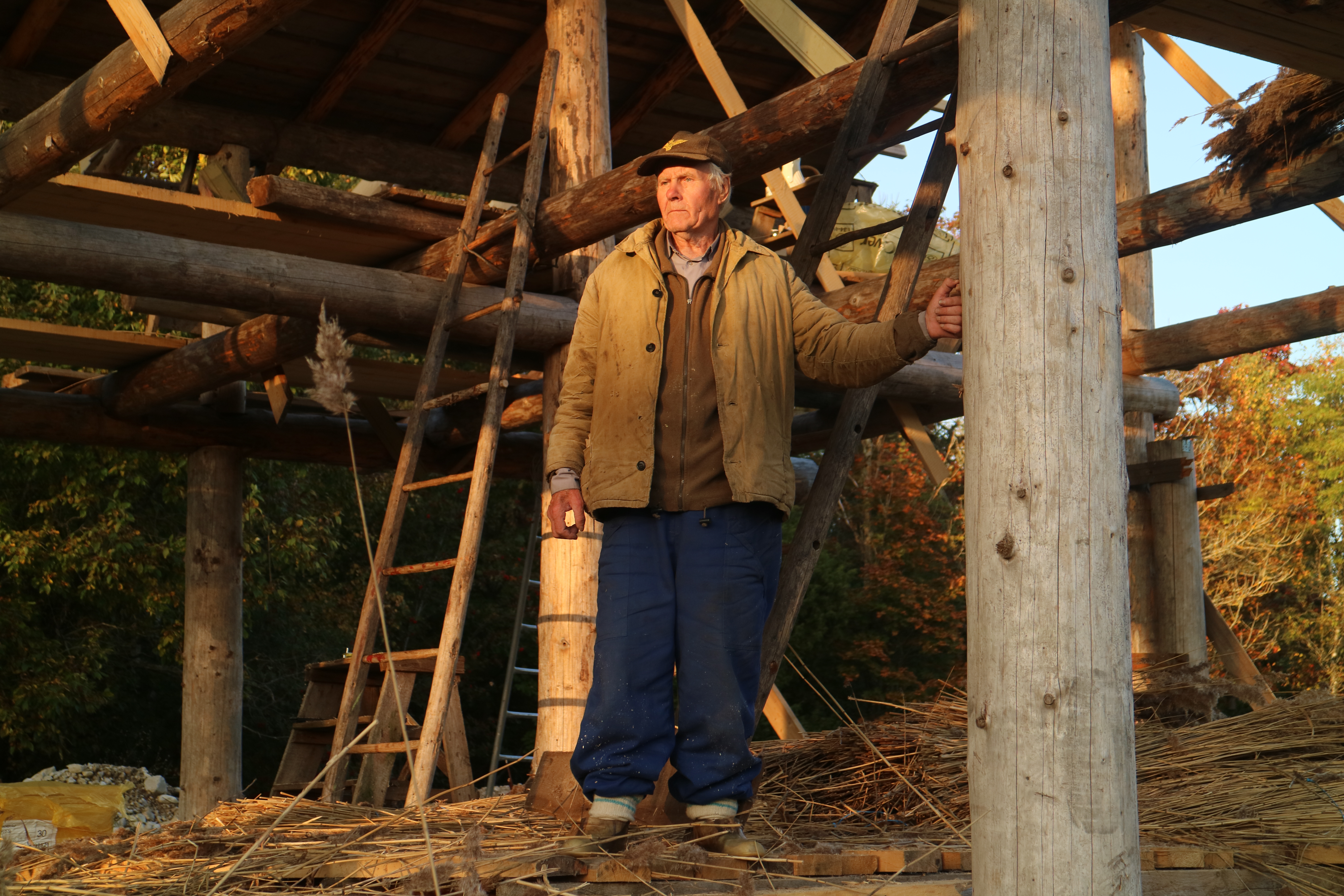
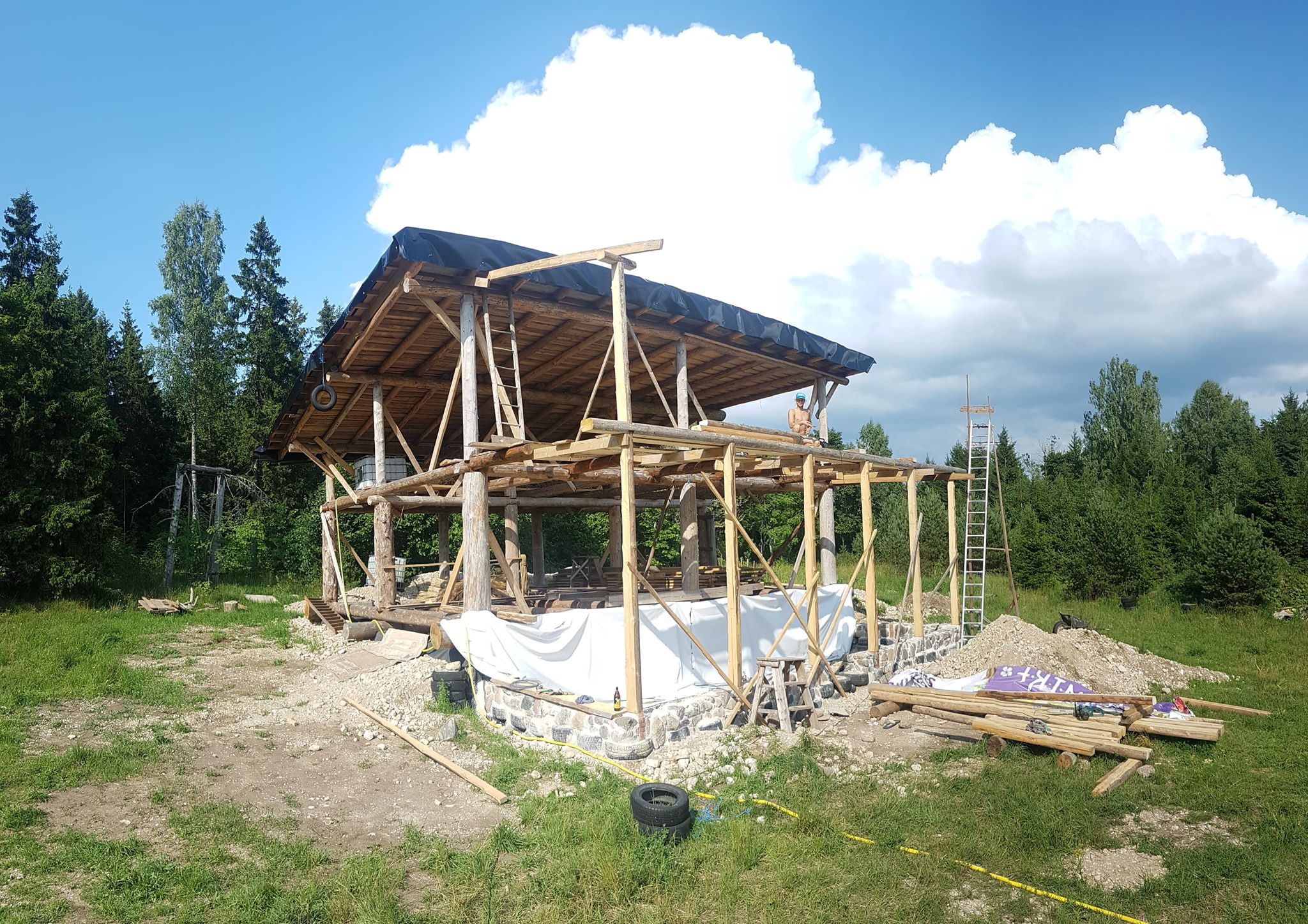
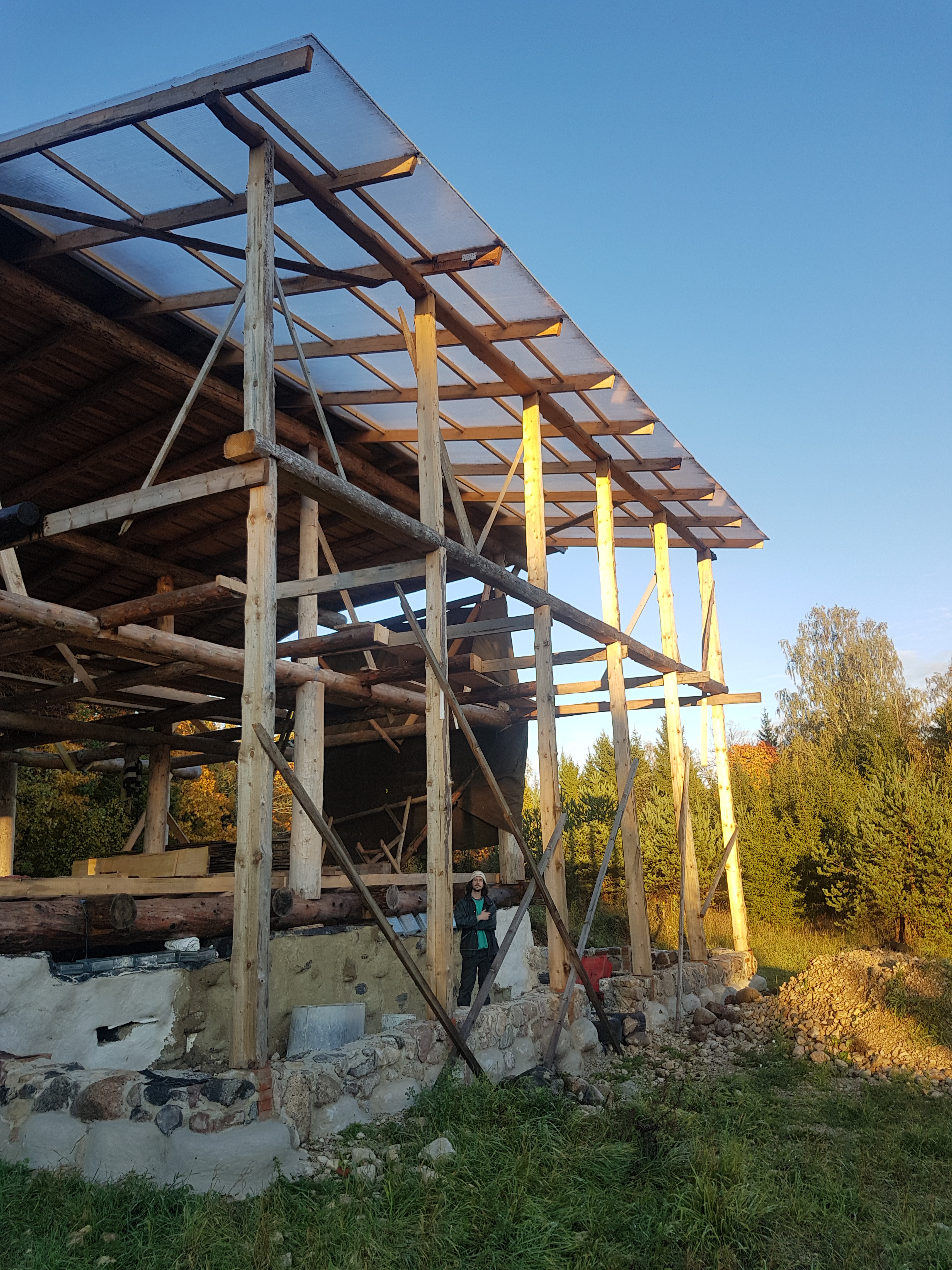
We built the first-floor round-log frame on top of the tyre foundation. The second-floor frame was built on the ground on a flat area next to the house. Later we took it apart into sections and lifted it up with a crane. The roof was insulated with 700 bundles of reed. Due to some interesting synchronicities, the roof covering became an HDPE geomembrane, because the plan is to build a sod roof on top one day. When the house frame was complete — with all posts, beams, and rafters — we ordered a mobile sawmill to cut the remaining logs into beams, planks, and boards.
Thanks: Rob, Peeter, Agnes, Maarja, Henno, Egon, Oskar, Taavi, Heikki, Ragnar, Tauno, Indrek, Rick
Leave a comment
2018 — All-in on clay
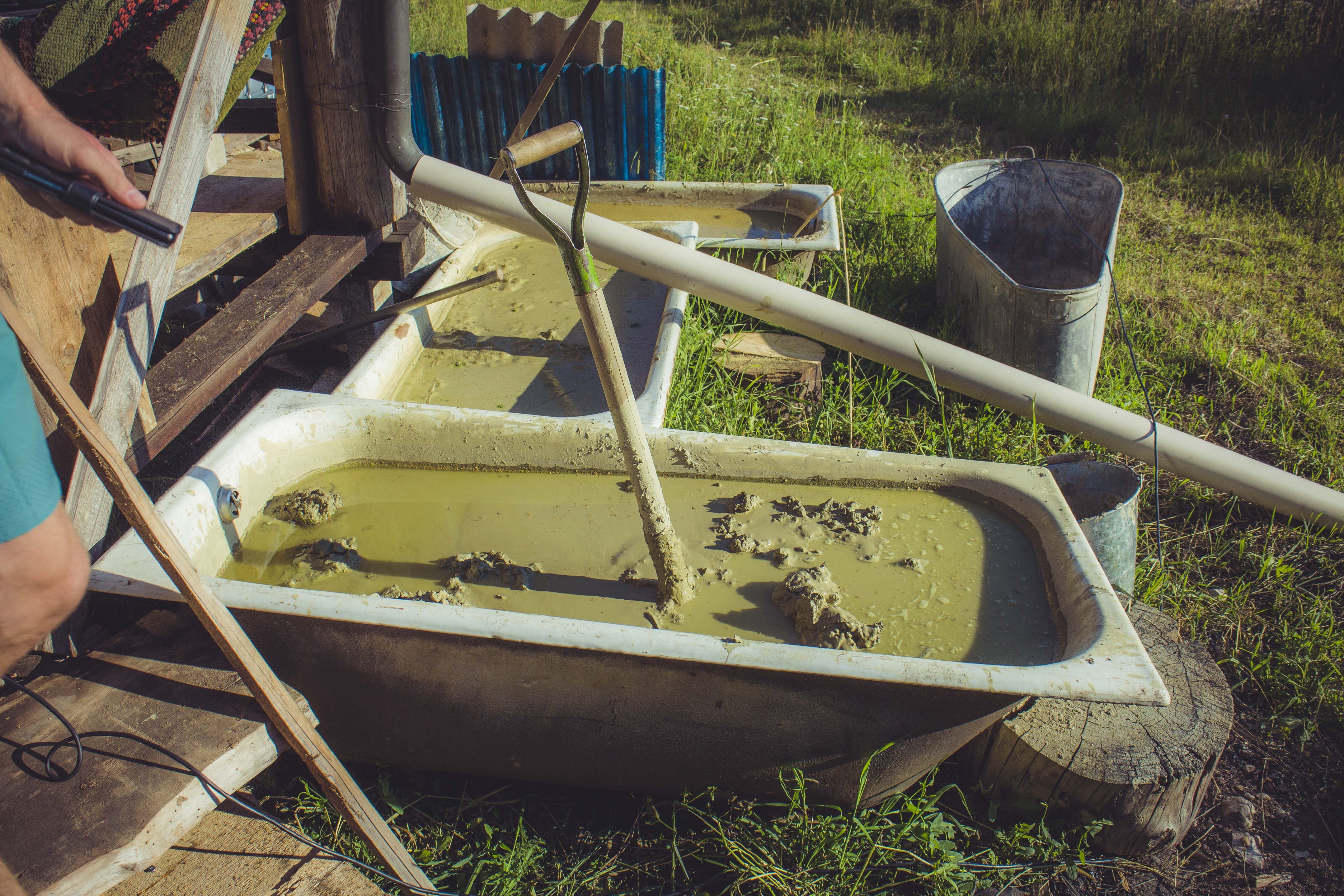
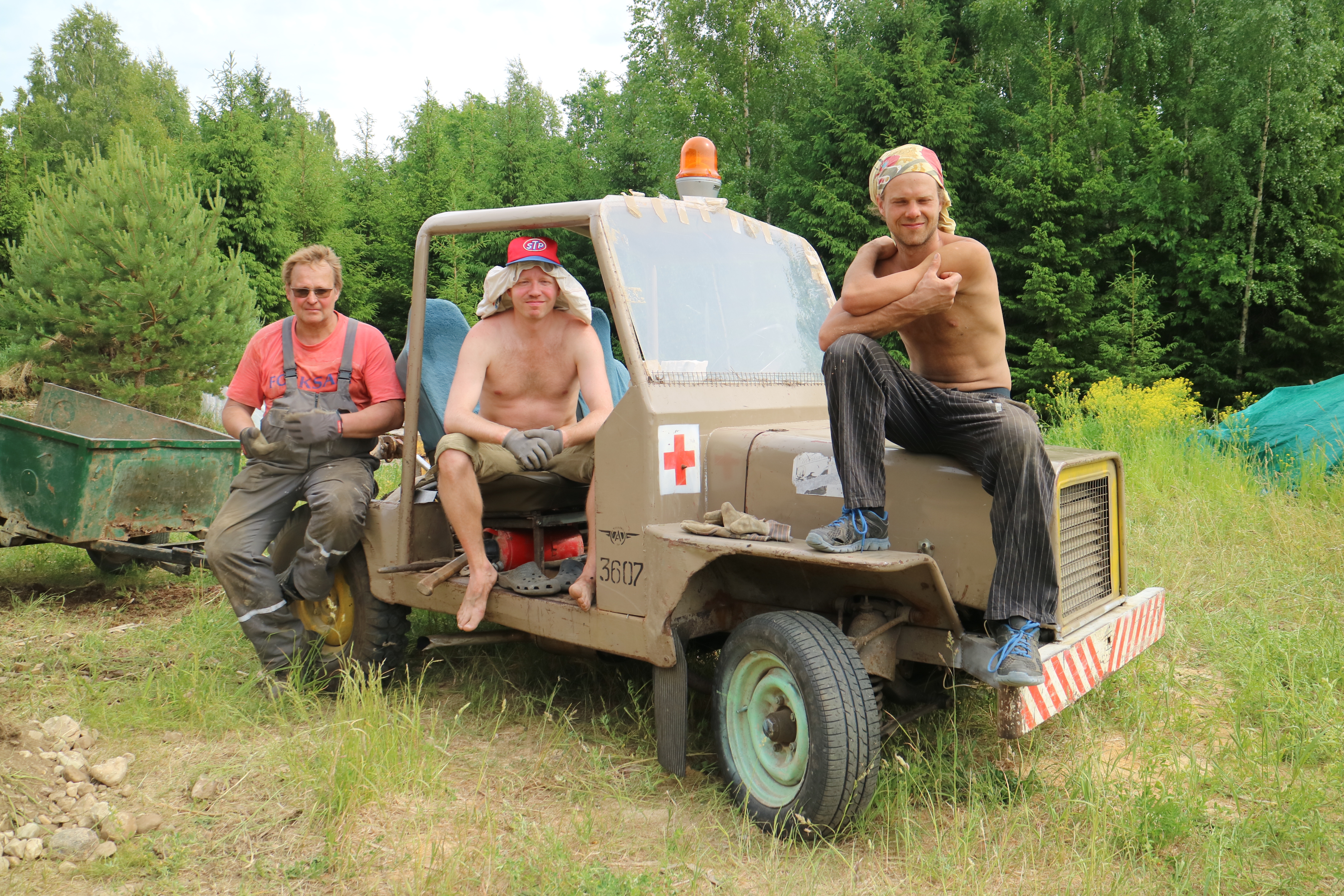
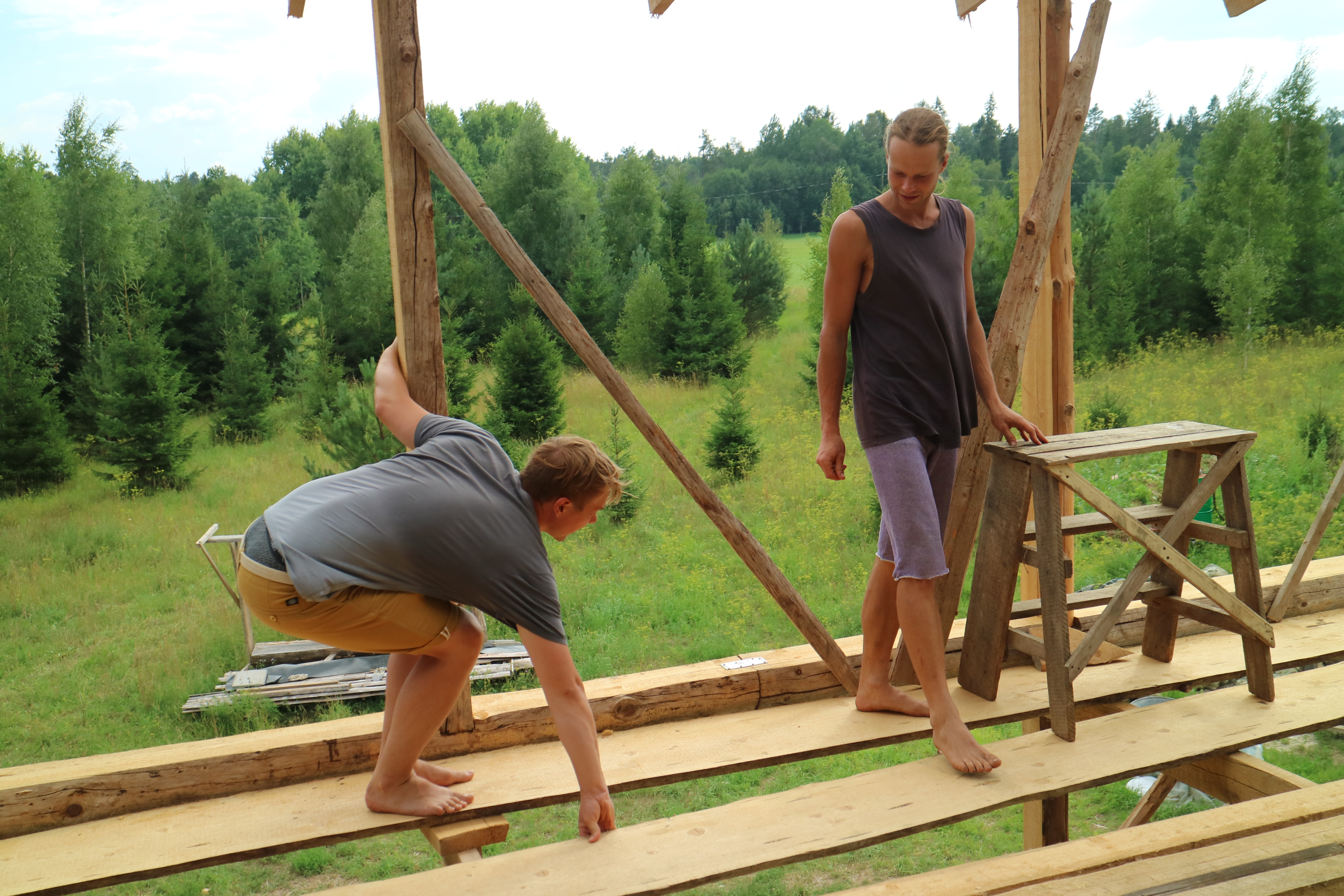
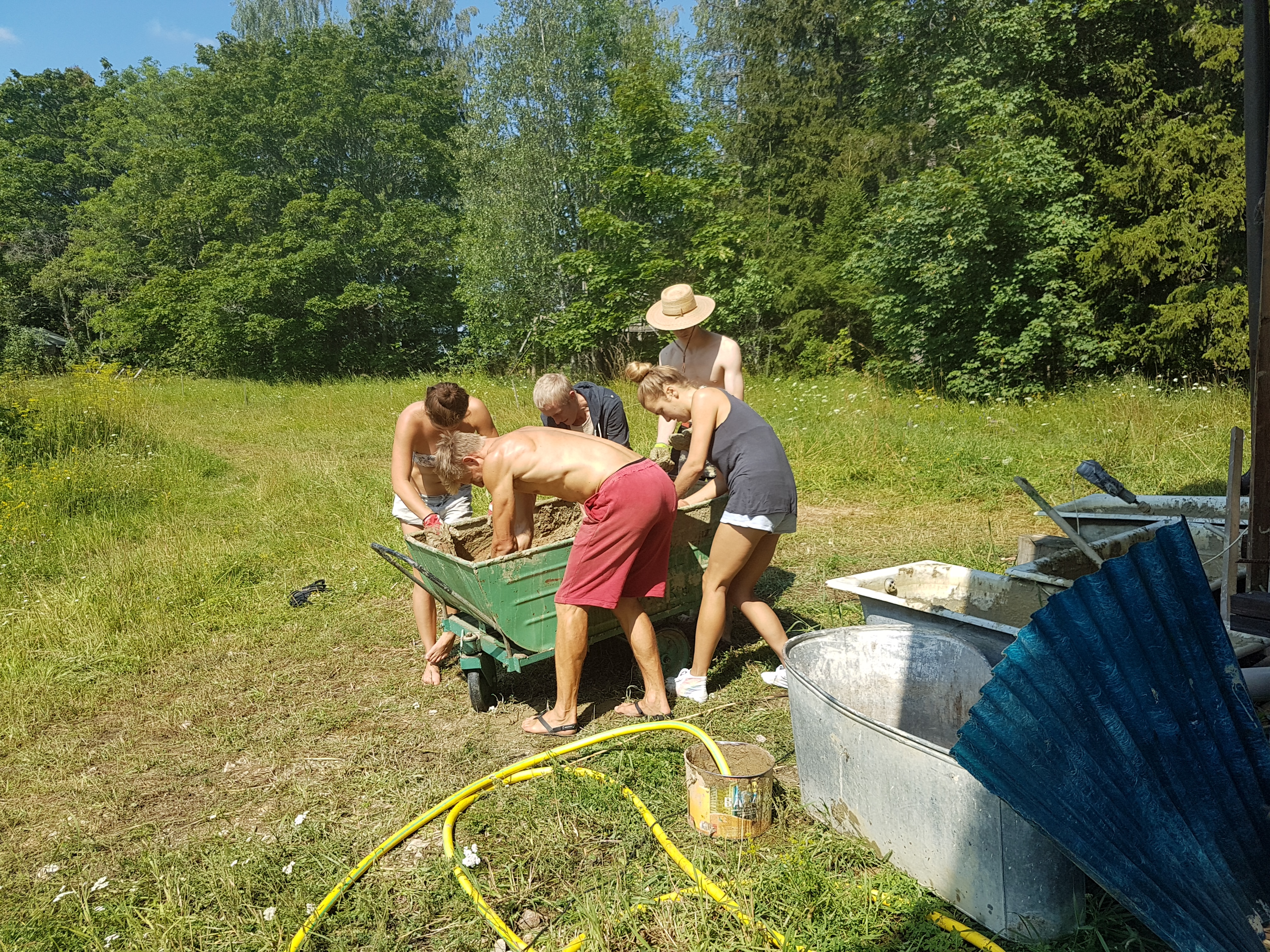
In spring, 10 tons of raw clay arrived in our yard from Viimsi! We soaked the clumps in cast-iron bathtubs, mixed and blended them now and then, until finally we had a smooth and even purée. We could start experimenting with clay, and as our first clay job we “plastered” the foundation from the outside. The mix: 1 part clay purée, 2–3 parts sand, plus a binder (for example reed chaff, which lies around everywhere). Saskia also got her hands dirty at the building site.
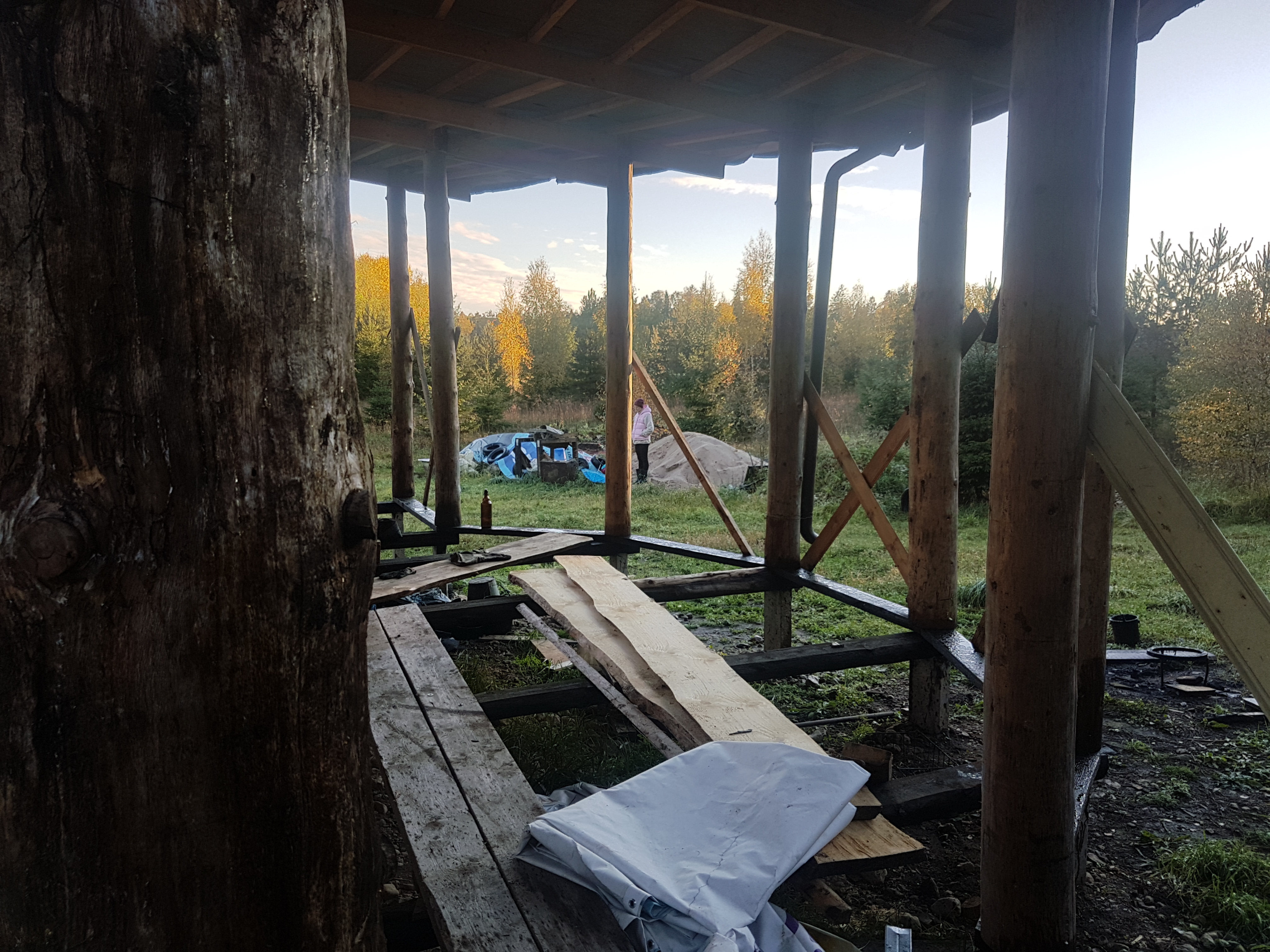
Next we built the frames of the greenhouse and the entryway.
It was an exceptionally warm summer. For weeks the temperature stayed around 30°C, and long dry periods required a lot of watering in the garden. July was the hottest in the last 50 years…
Thanks: Saskia, Ester, Henno, Peeter, Agnes, Maarja, Rob, Indrek, Egon, Heikki
Leave a comment
2019 — dumpster diving, reed improvisation
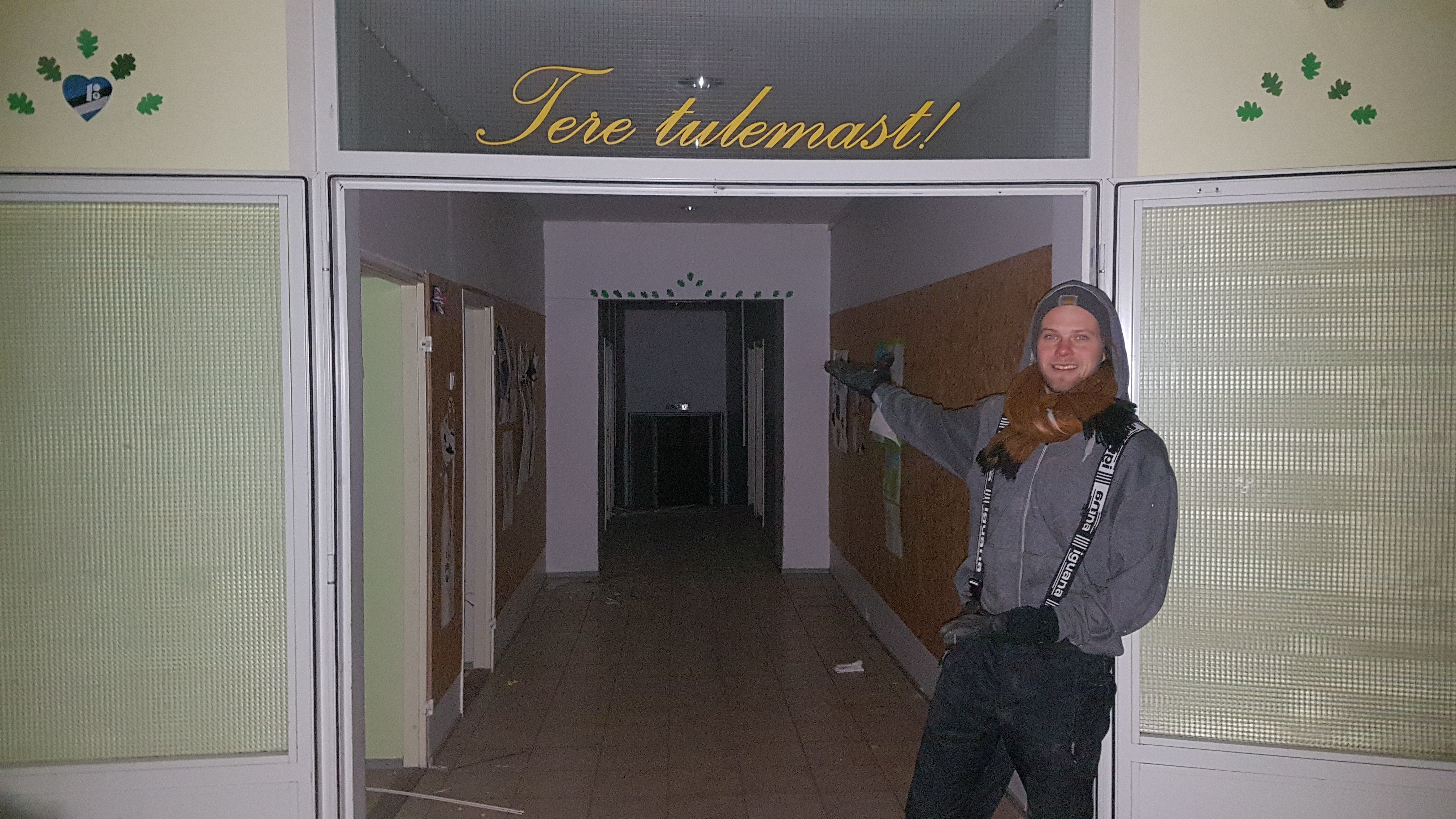
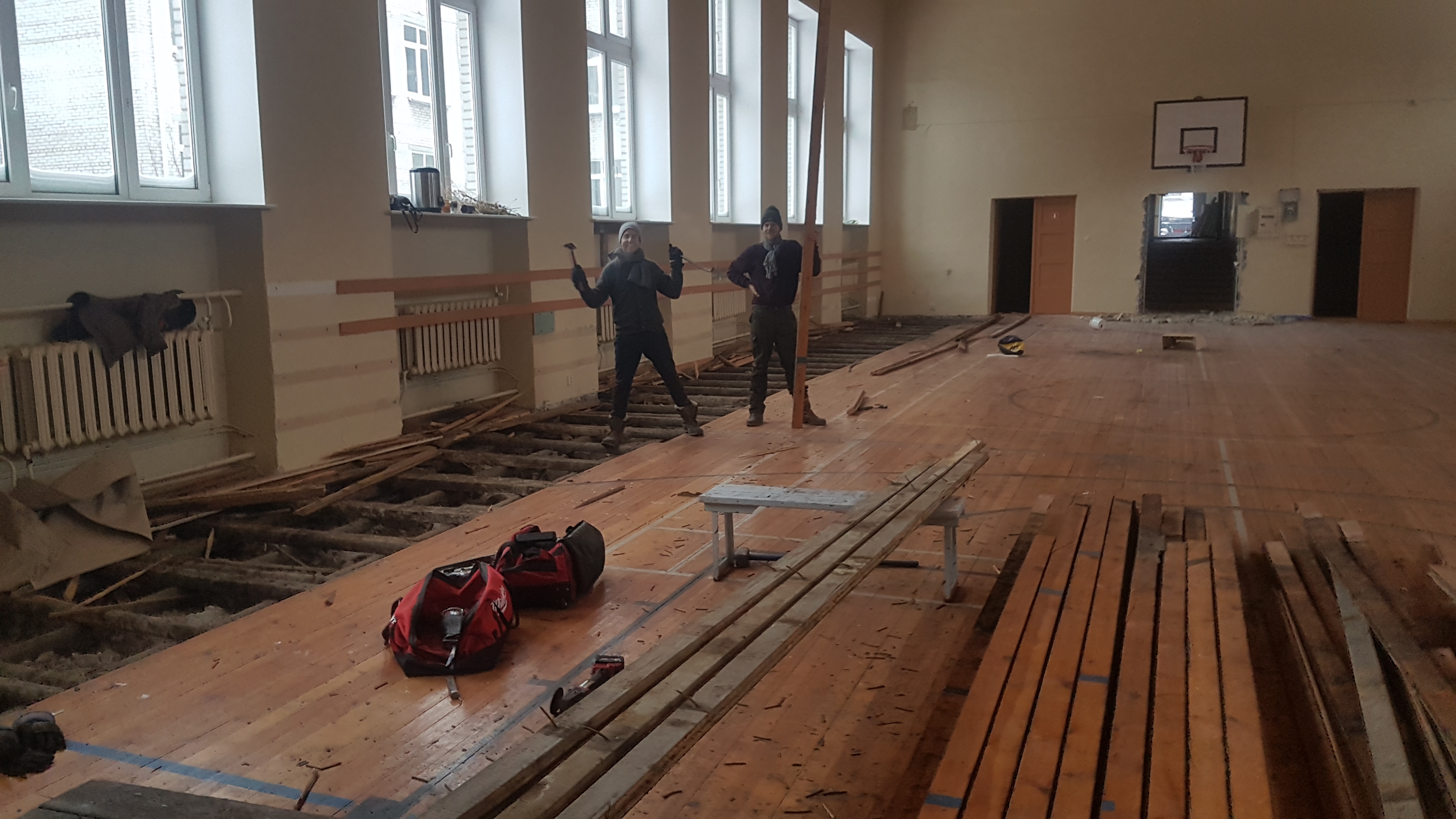
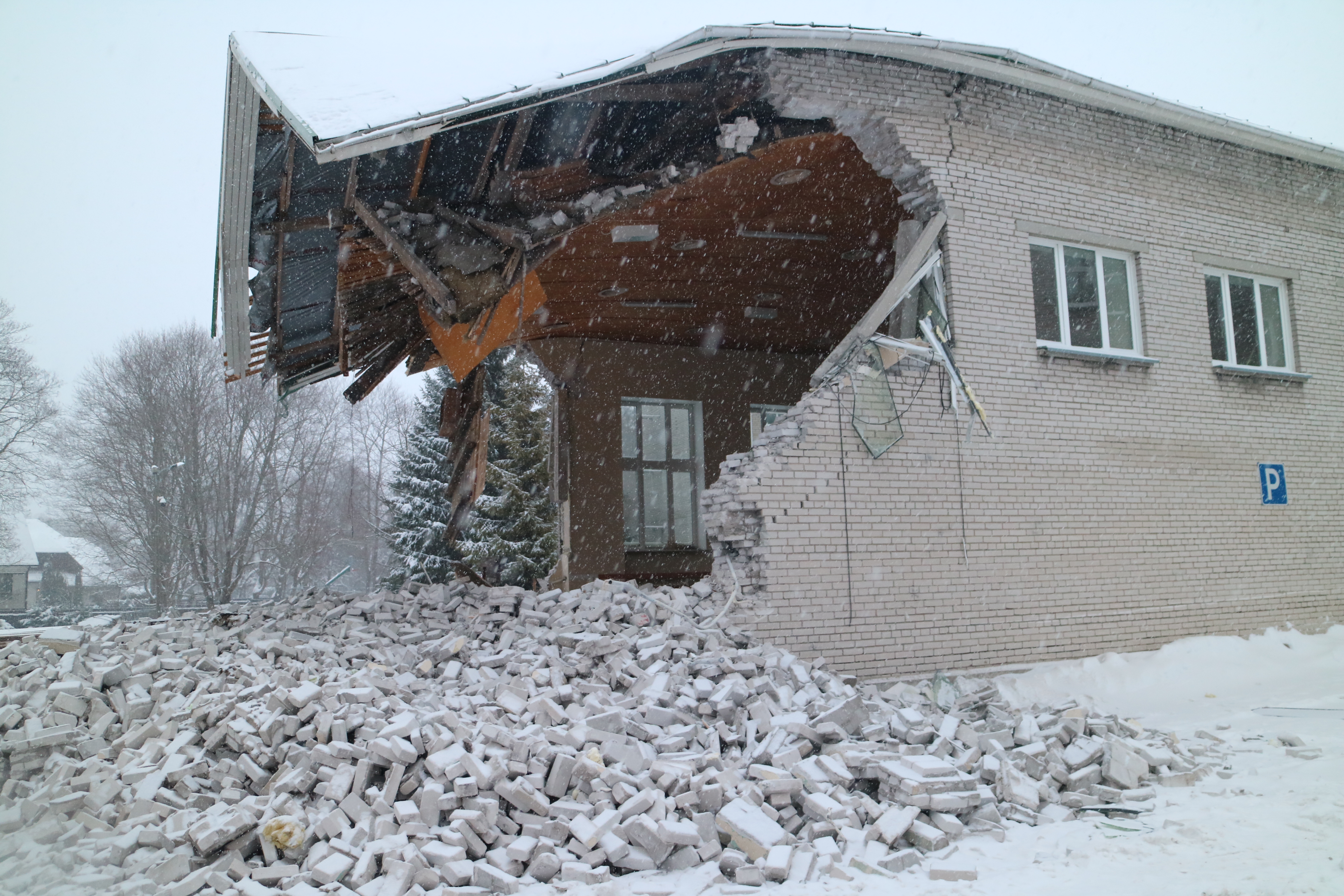
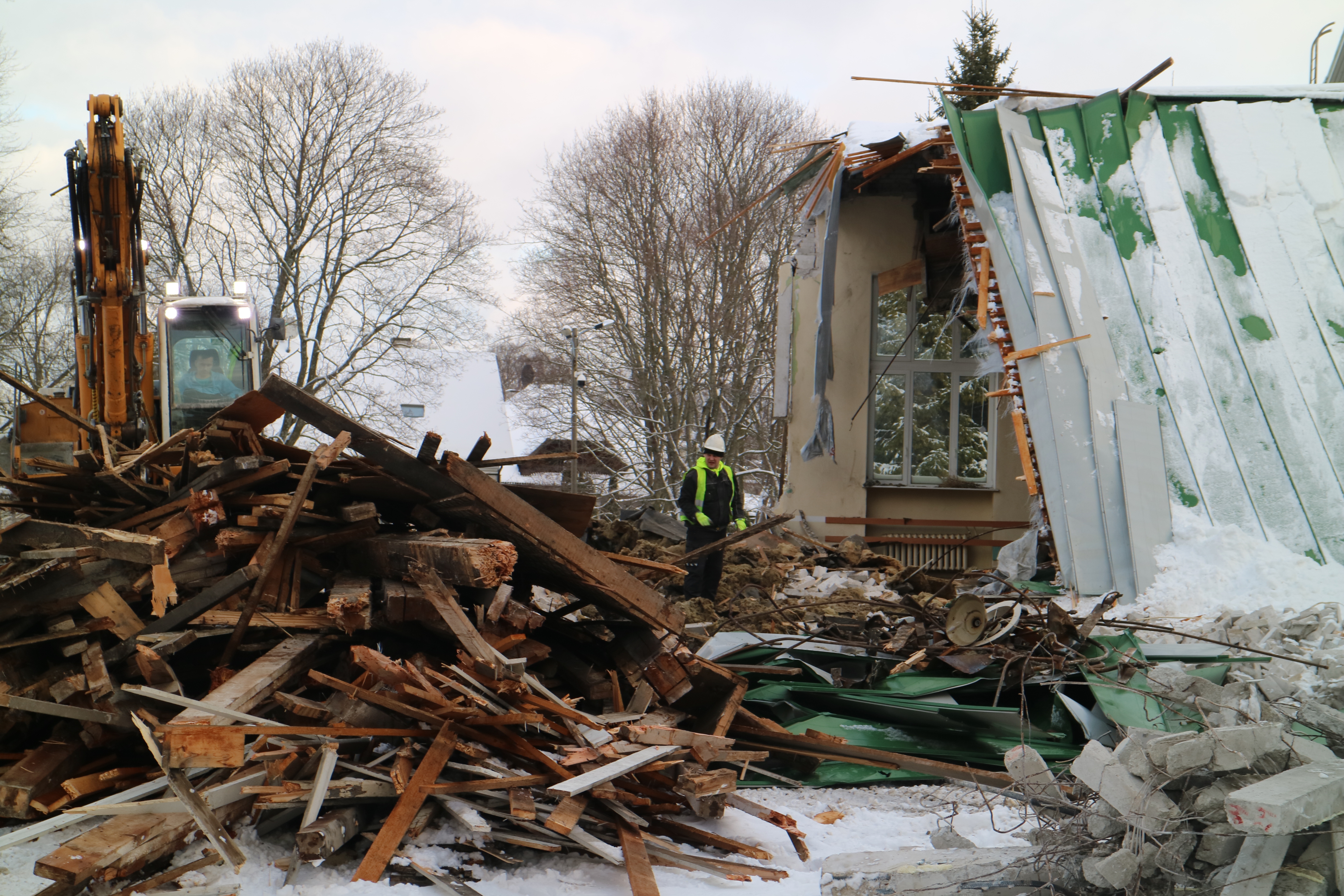
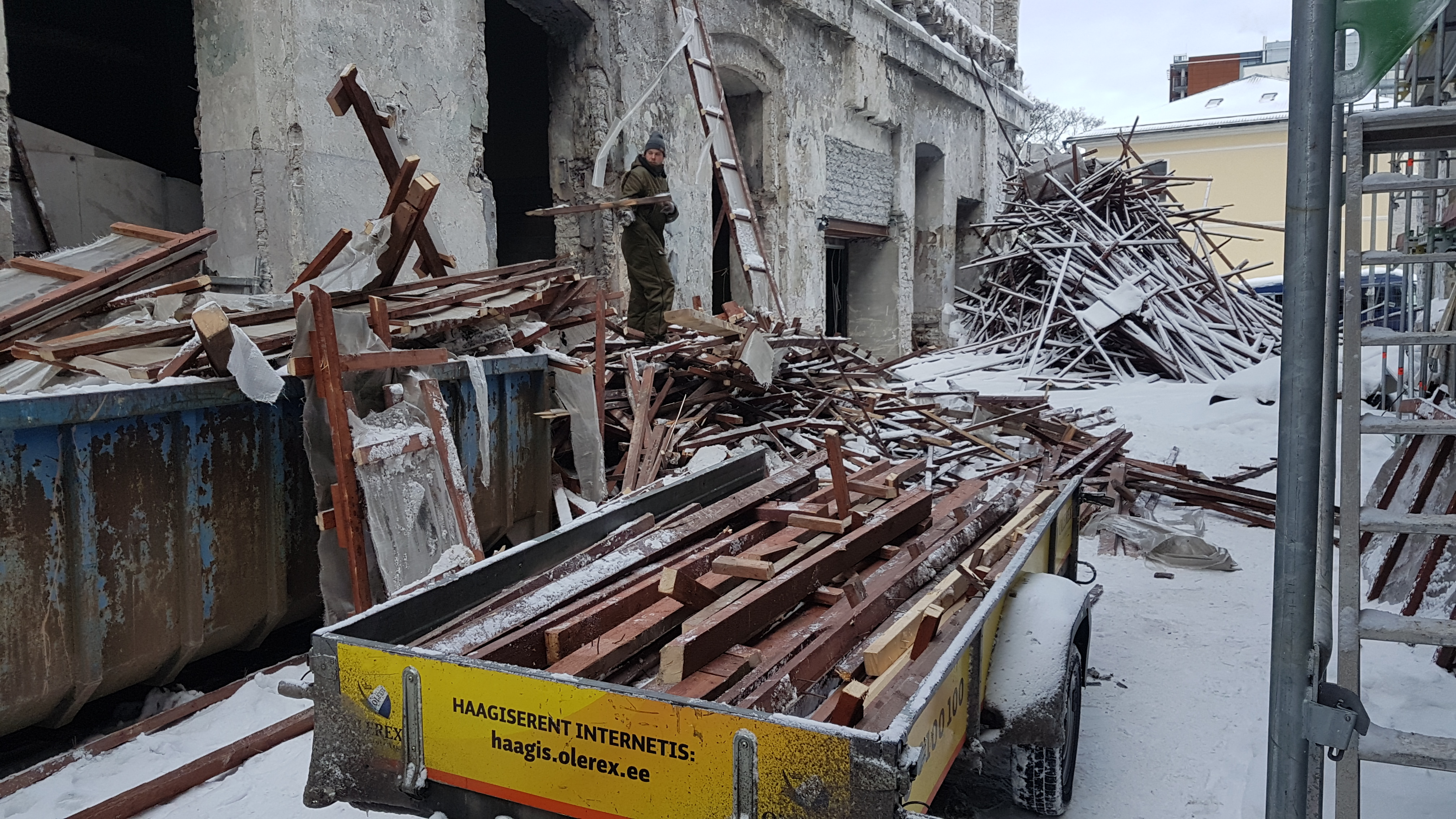
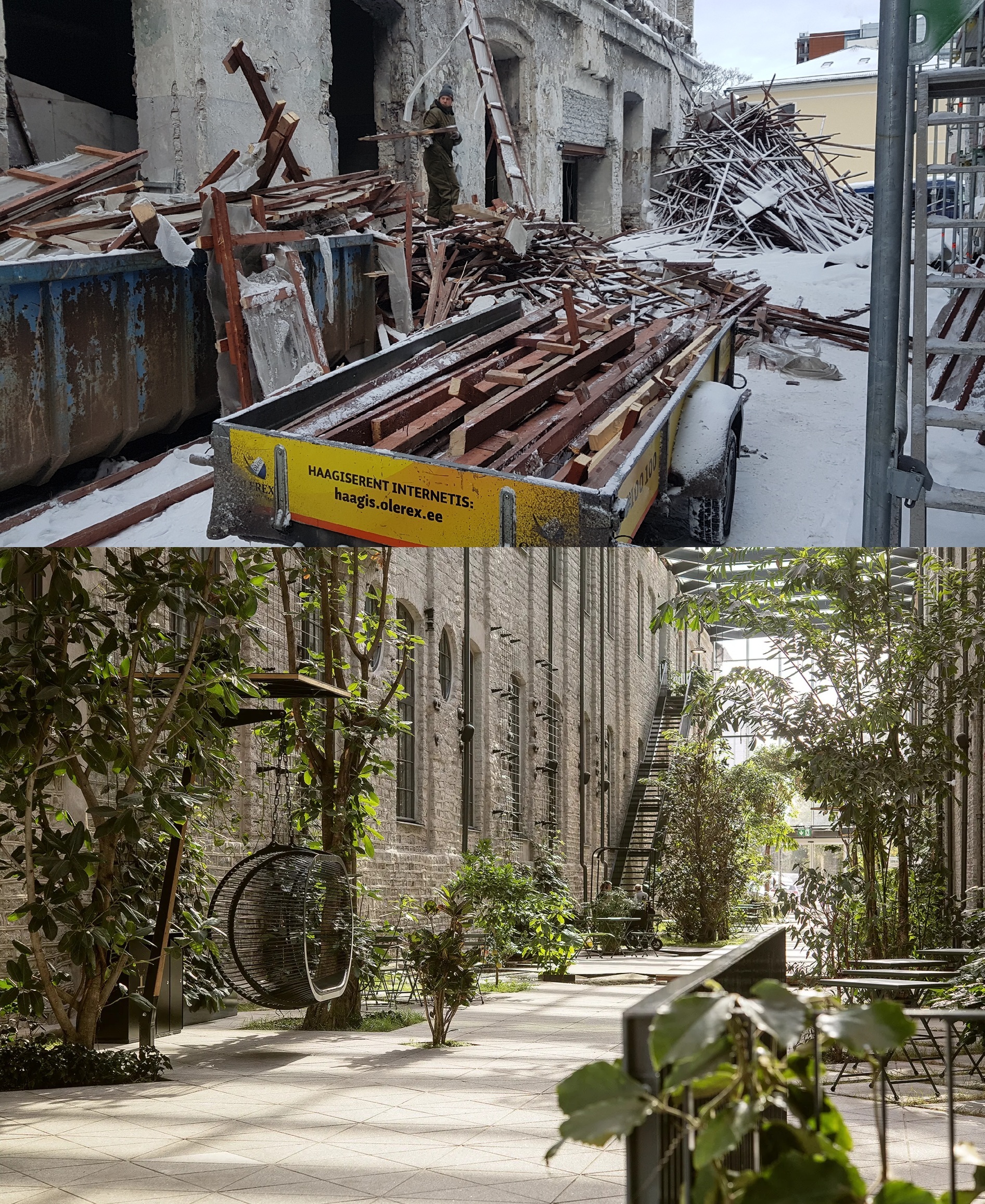
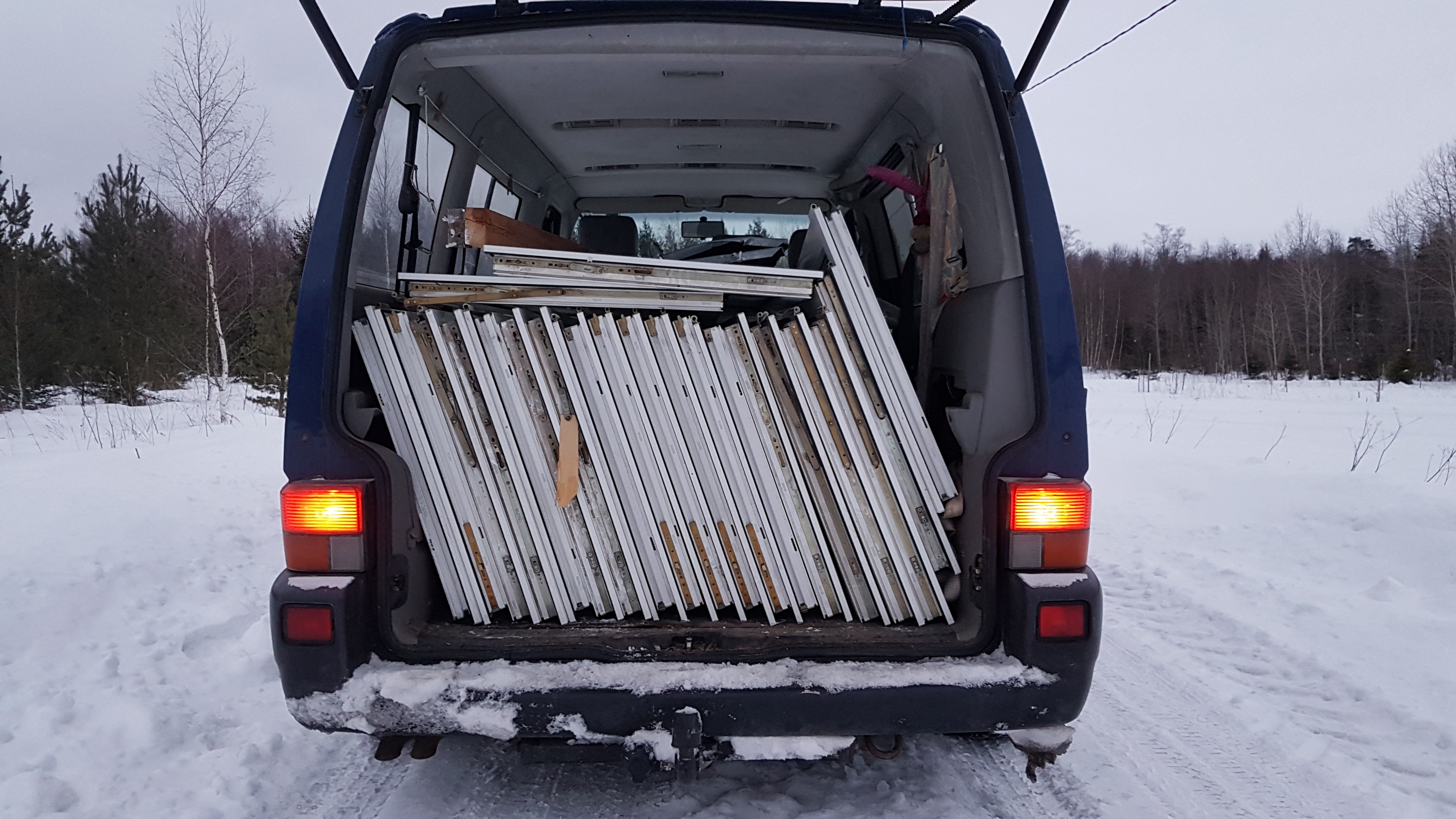
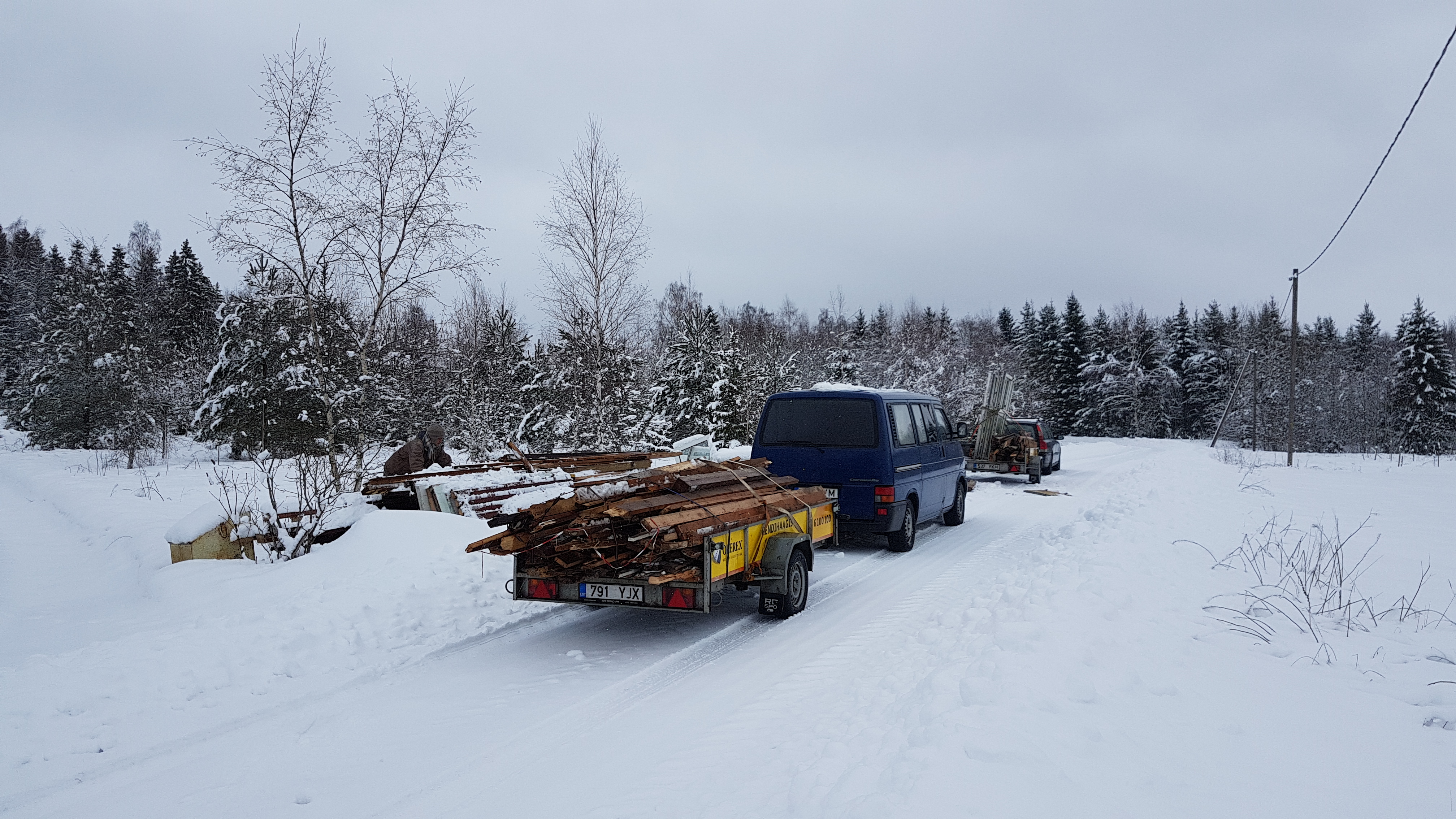
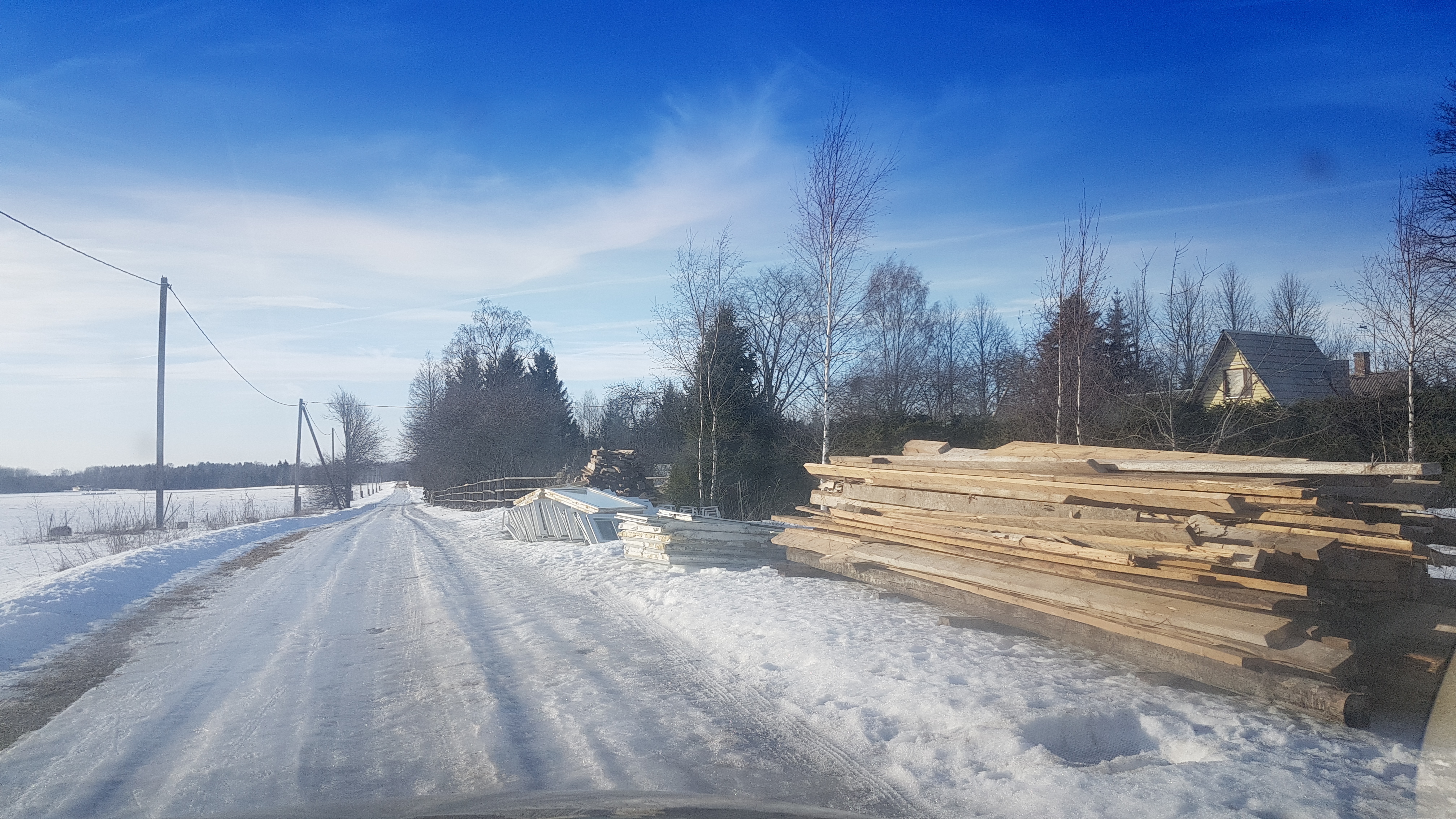
Living in the city during winter, you start noticing construction and demolition sites everywhere. You don’t get punished for asking! Tondi School was being “renovated”. The site boss gave us free hands in the whole building — everything was going to be torn out, take whatever you can. We got enough floorboards and floor joists for an entire gym, dozens of windows, beams, cladding, and a big map of Estonia from a geography classroom. There were other sites too — for example the future Fahle Gallery in the cellulose factory.
Thanks: Rob, Peeter, Agnes, Liisi, Egon, Eeri (who installed part of the gym floor and a basketball hoop for the “Balta Chill” bar)
We arrived in Kuusiku record-early — already in March. Sassu went to daycare in Kohila. We were expecting a new baby. Every couple of days we fired up the big stove and made a prehistoric sauna behind it.
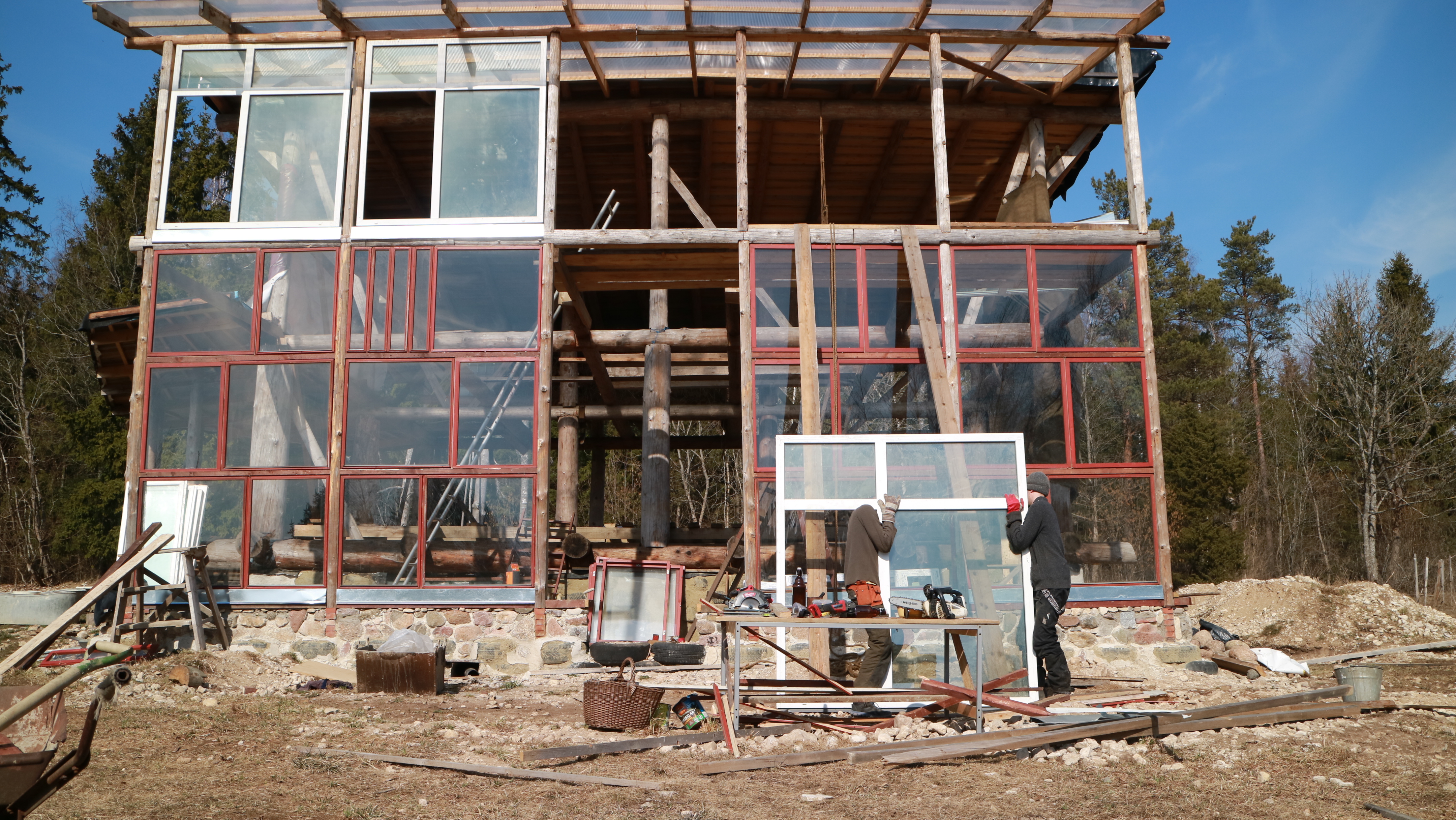
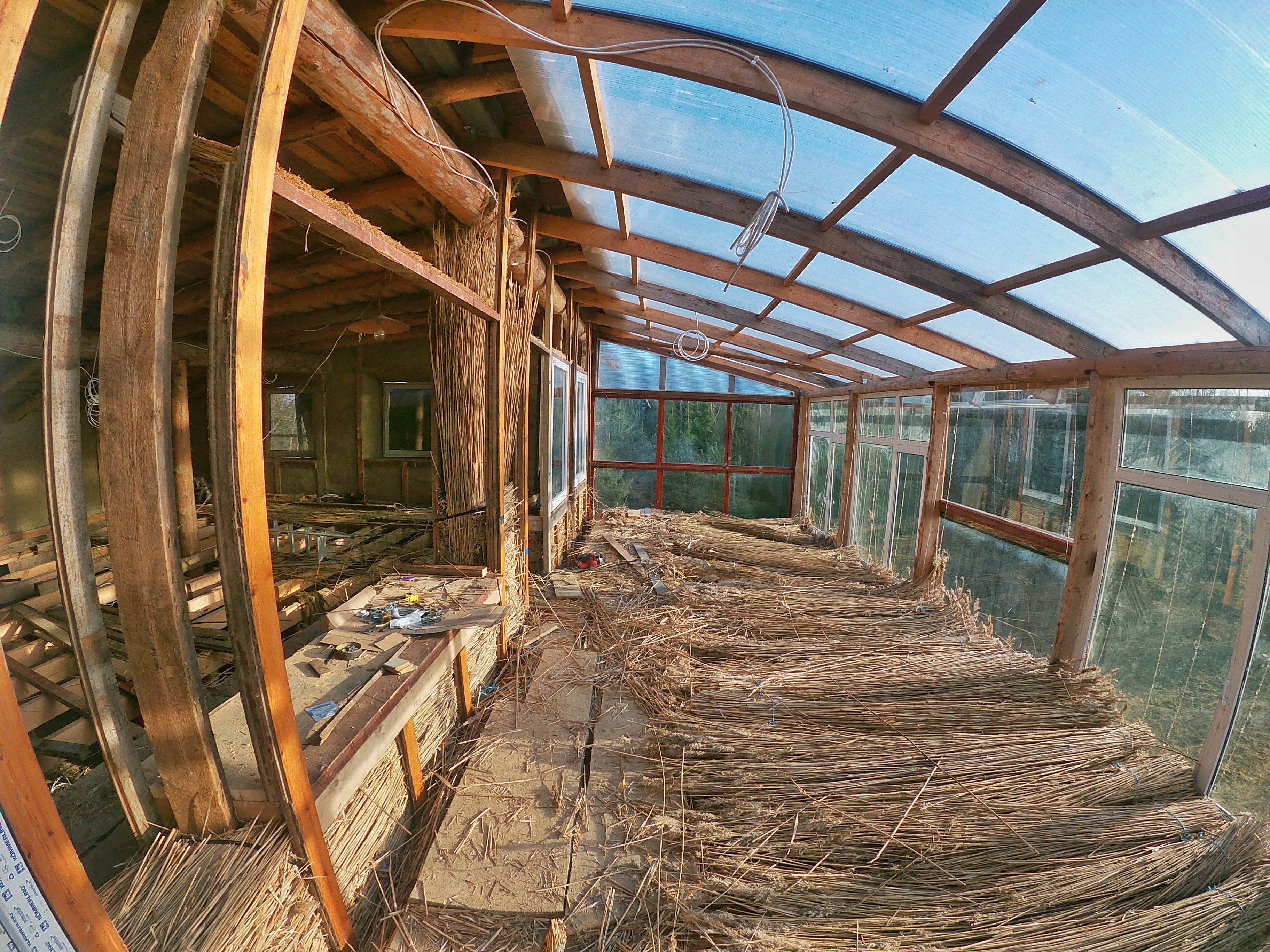
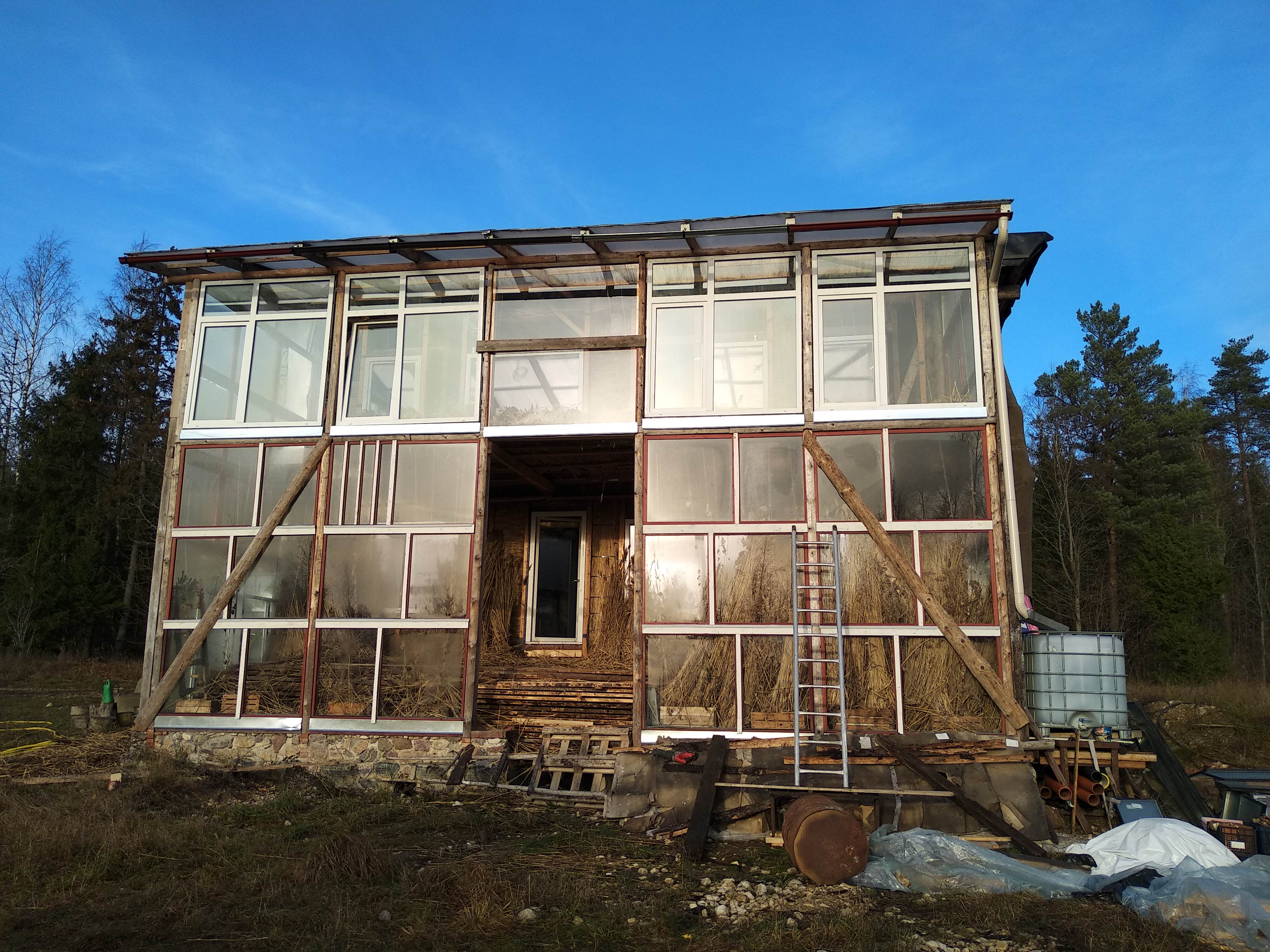
In April we worked on the winter garden/greenhouse and filled all openings with windows scavenged from different places. Egon started building his little hut in our yard and helped constantly — both with the house and in the garden.
On April 30, Kiijo-Piitre arrived, who later became Leonhard. He has stayed with us ever since.
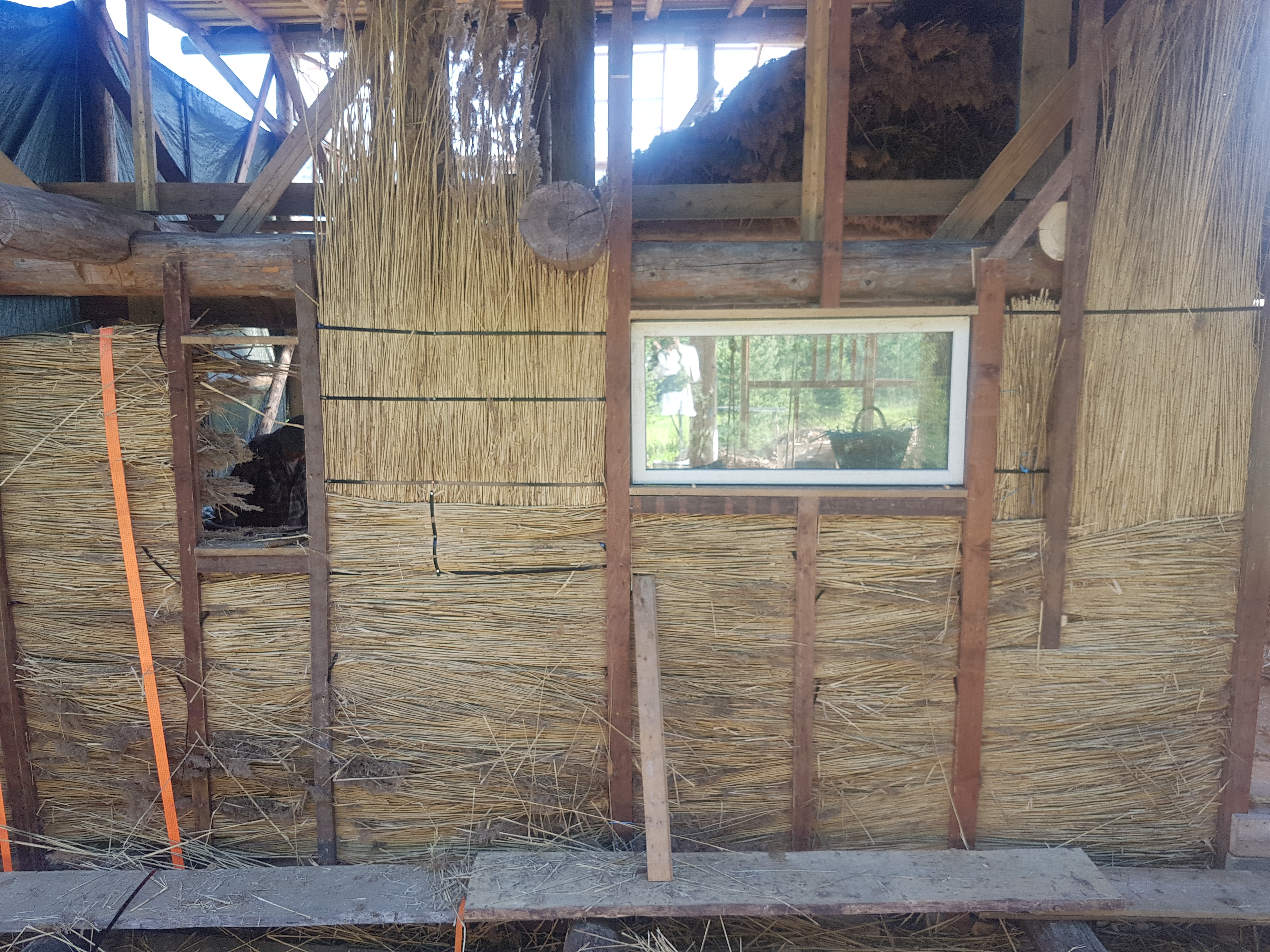
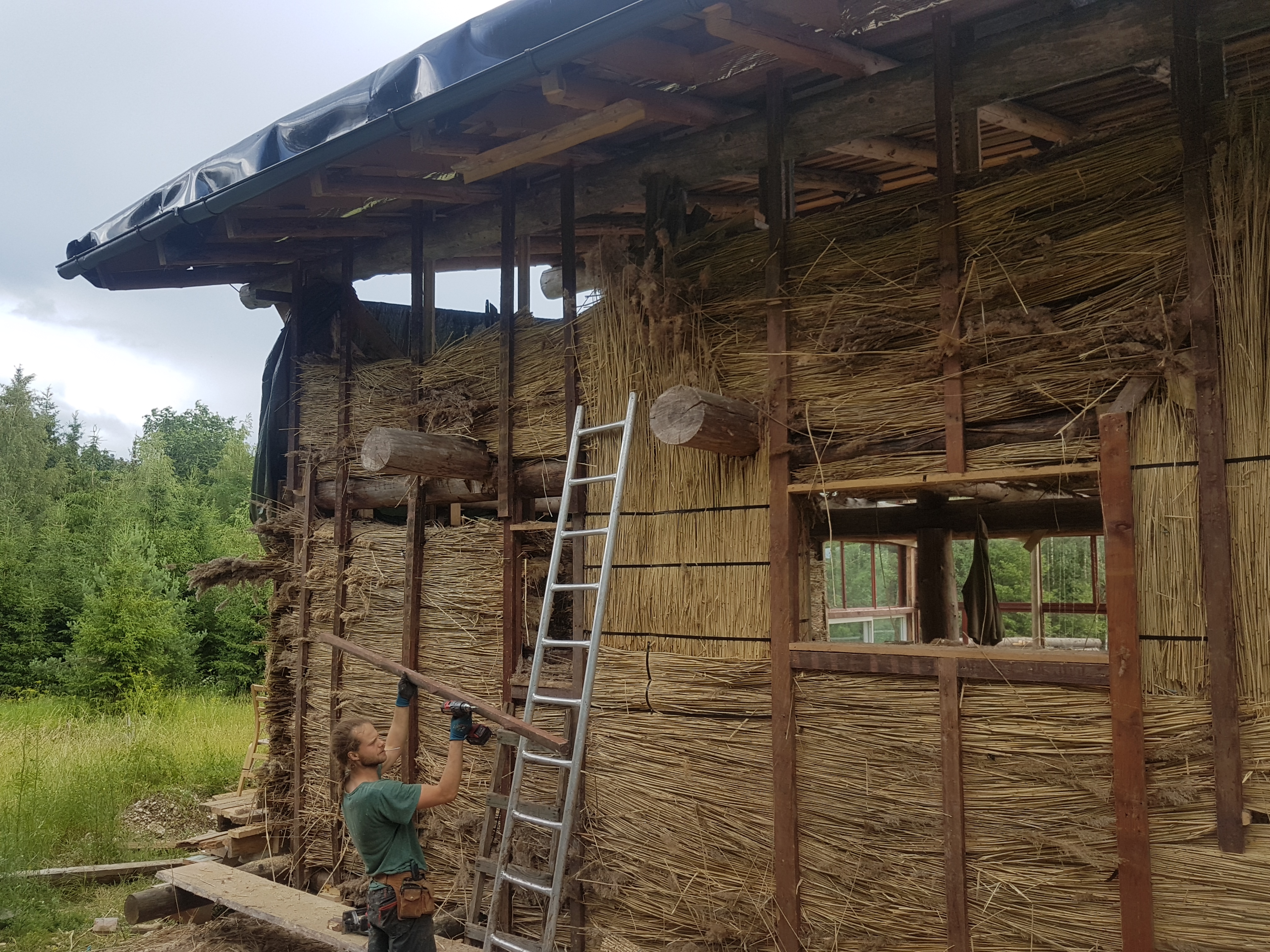
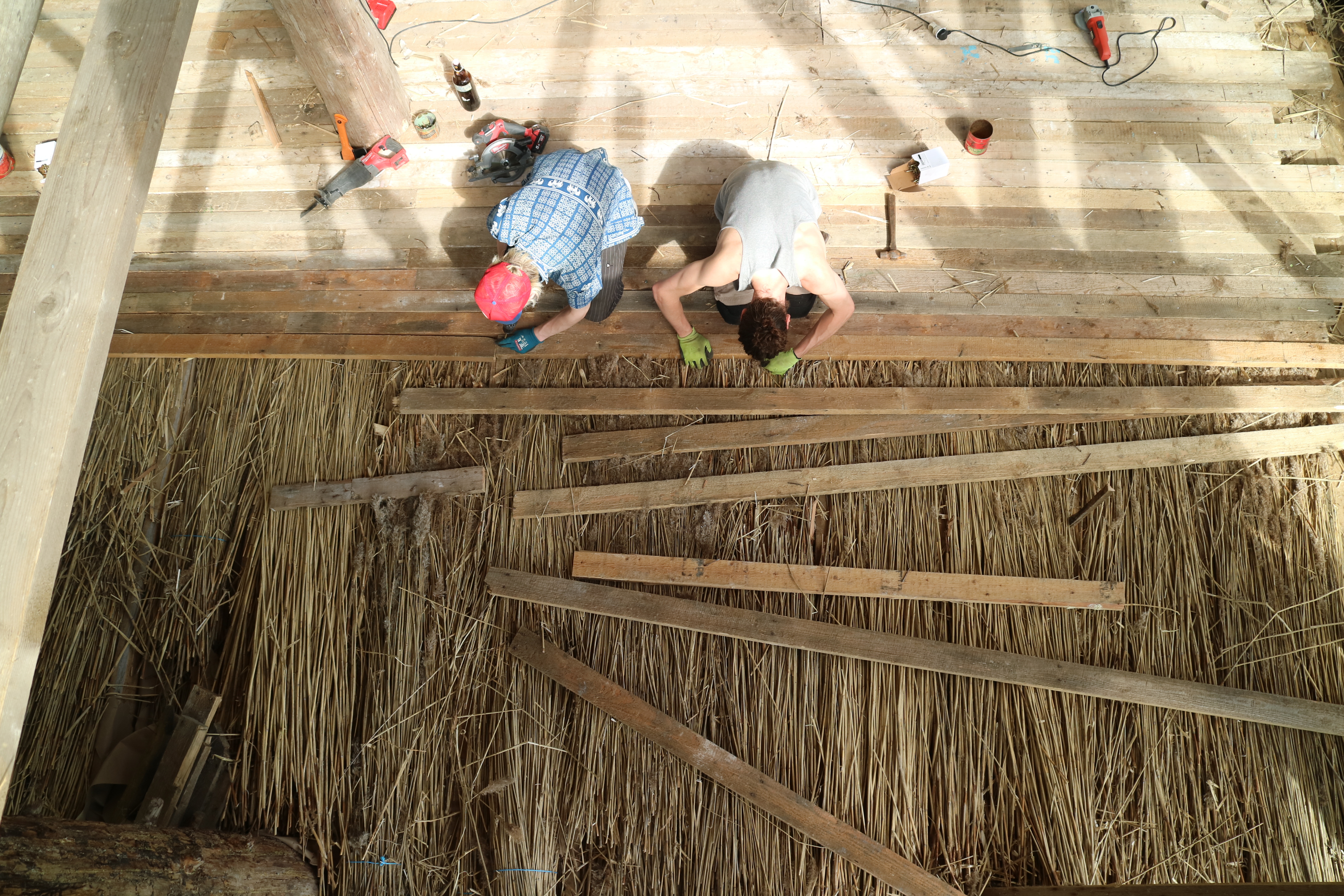
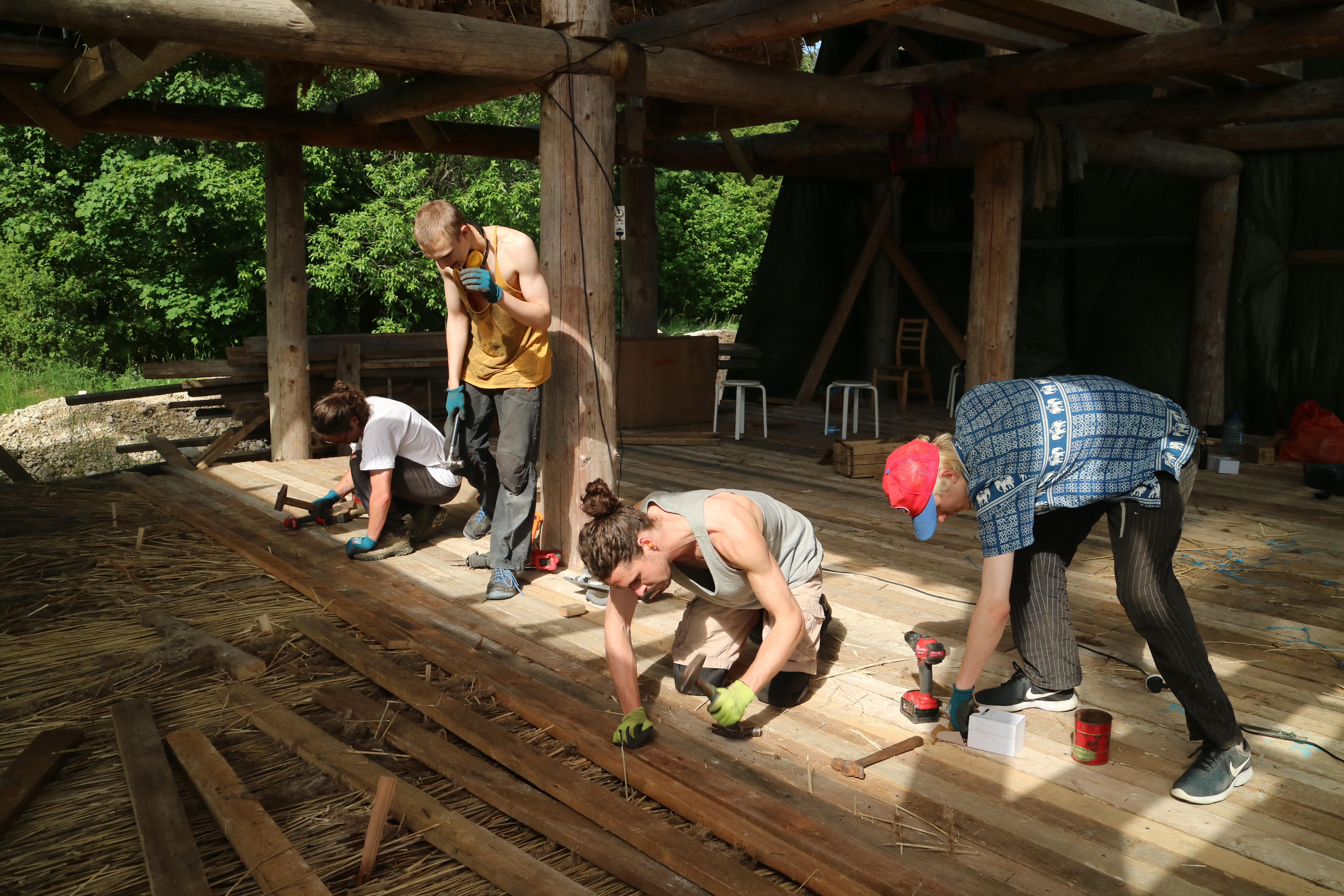
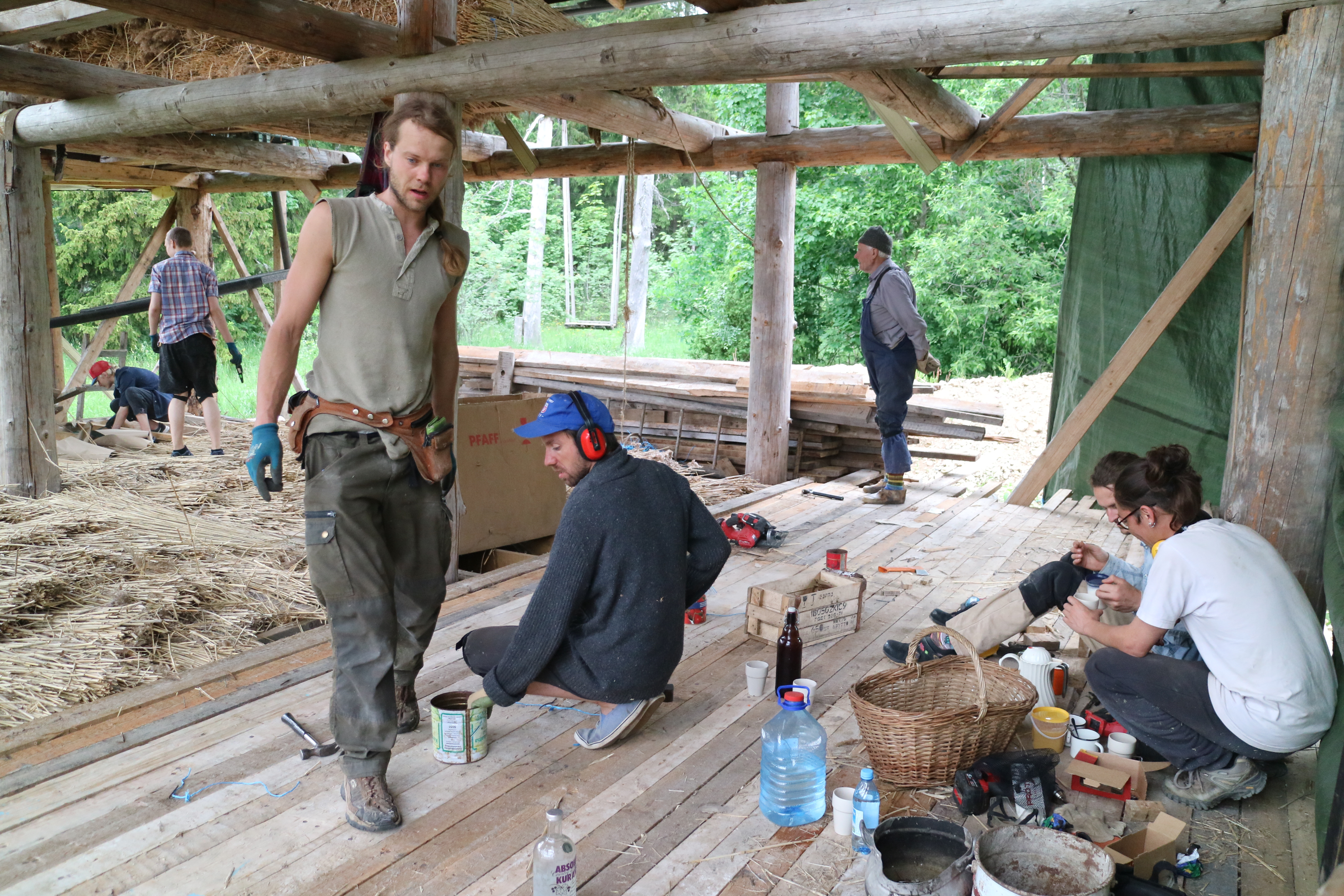
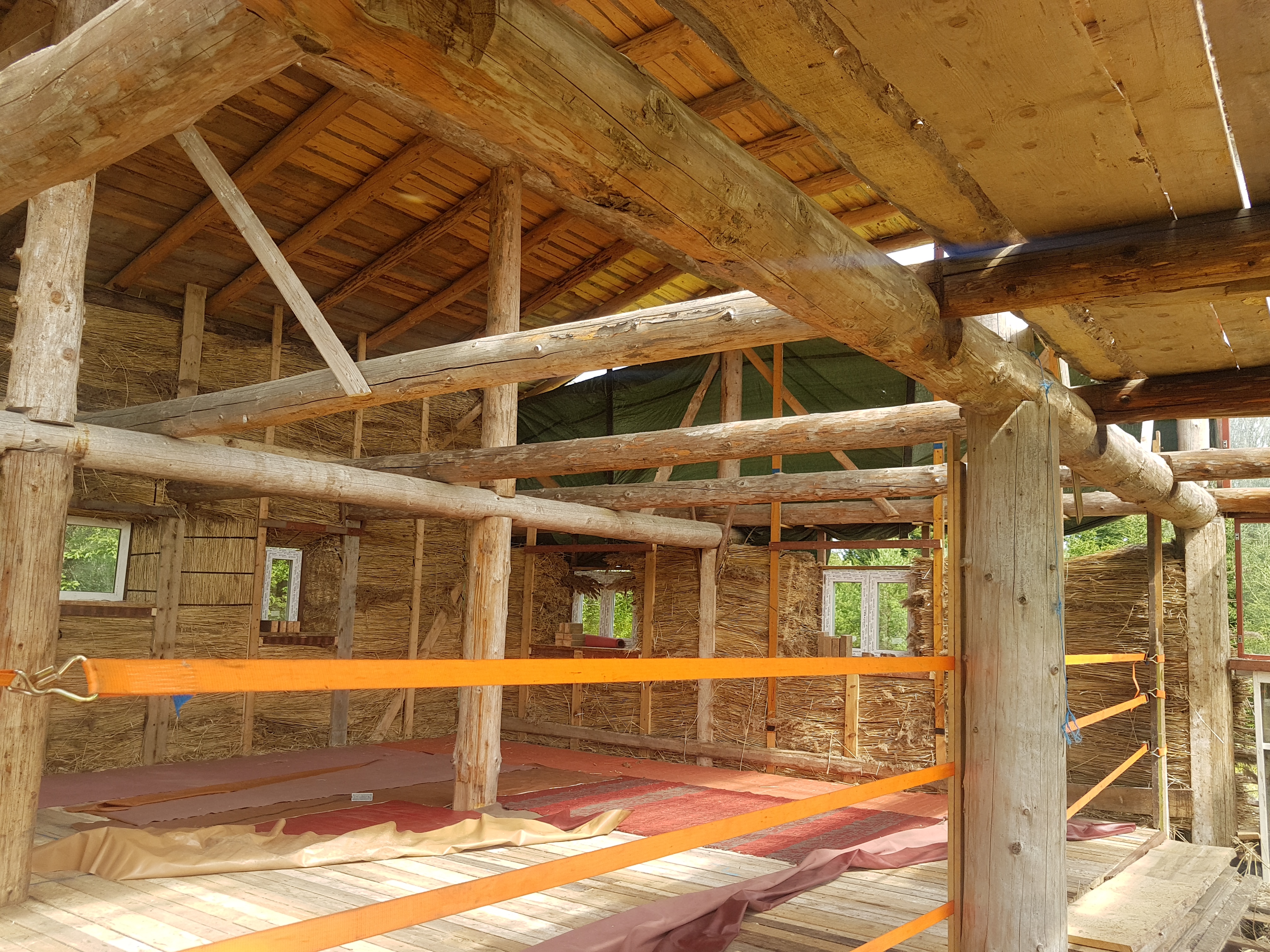
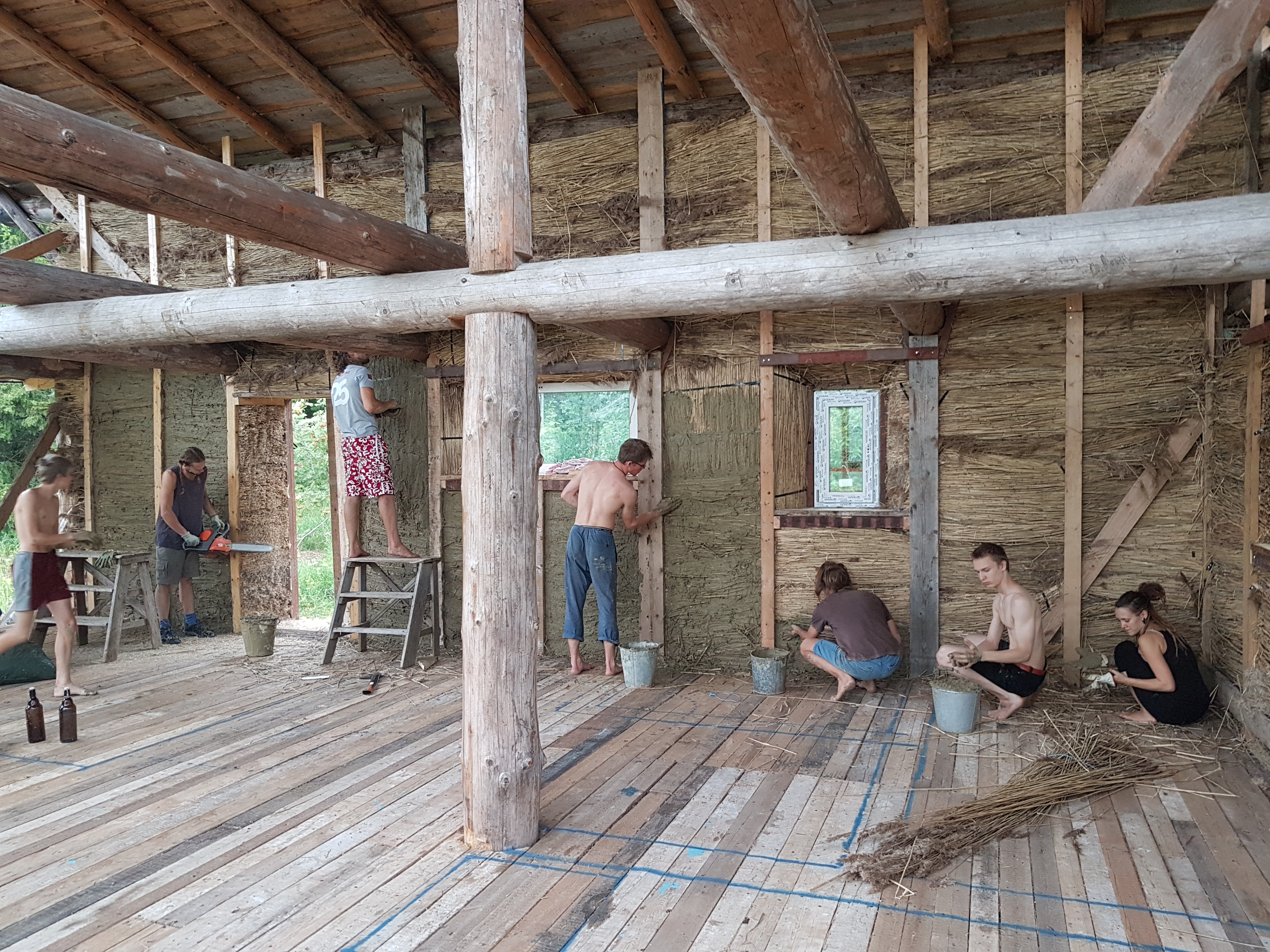
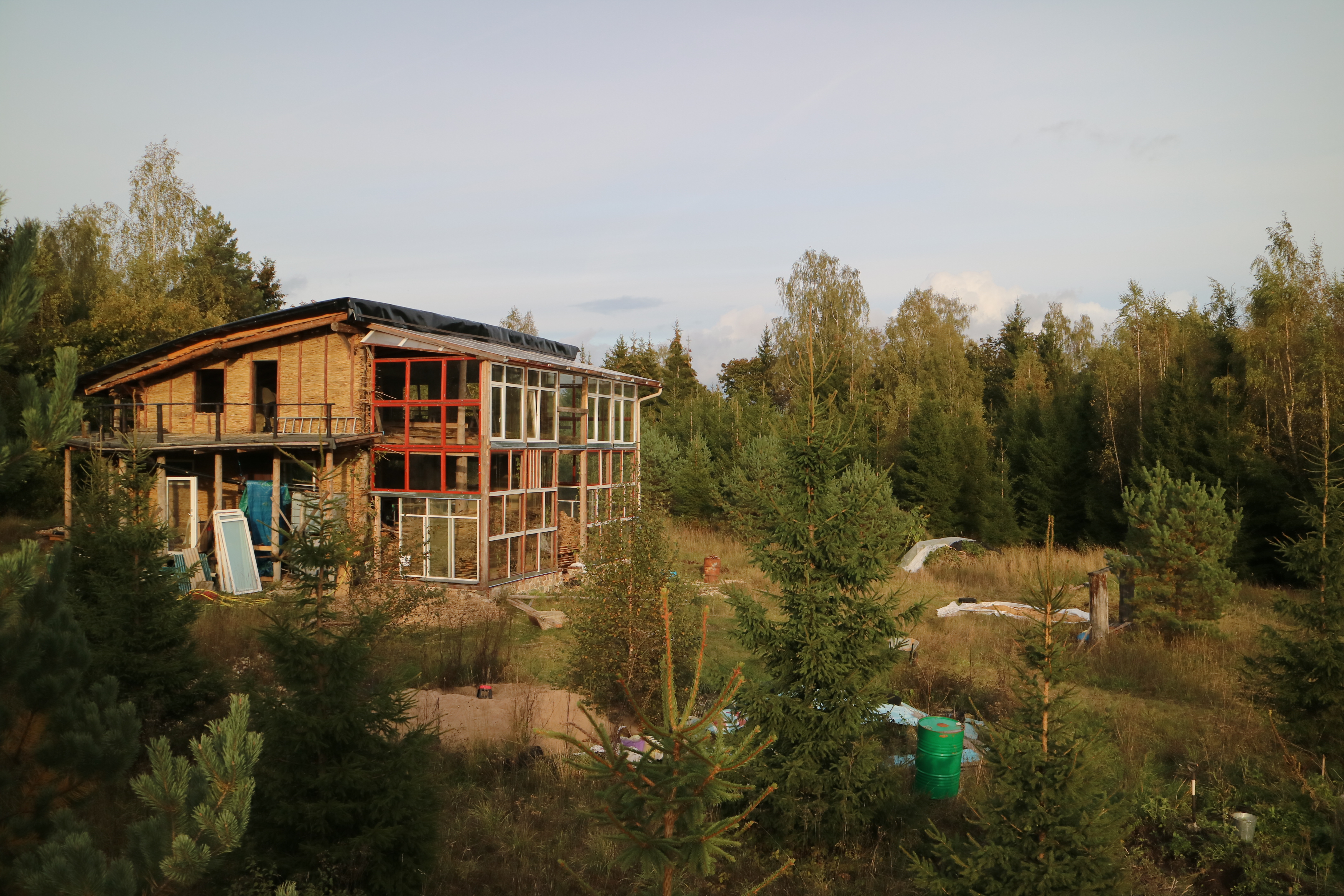
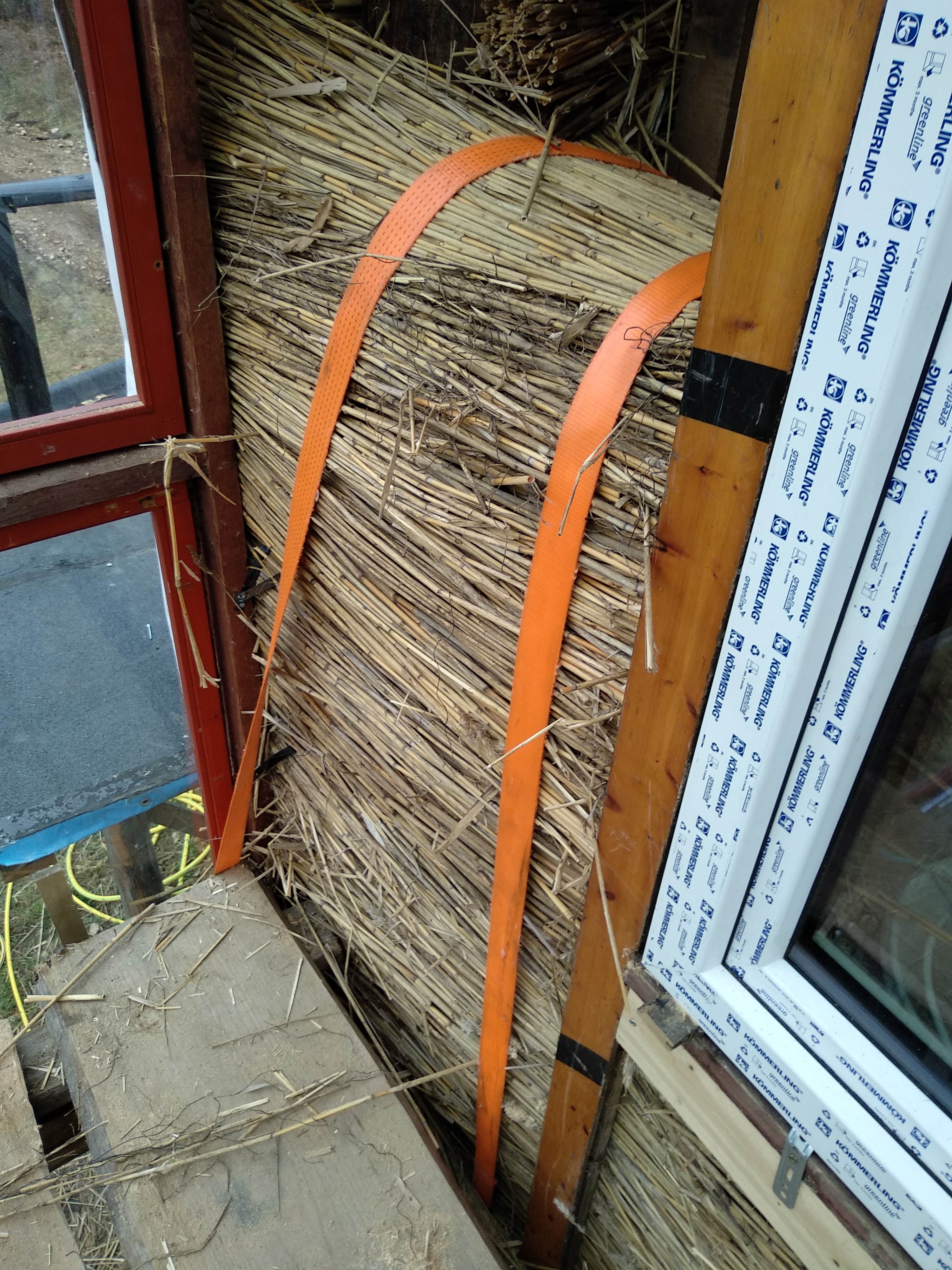
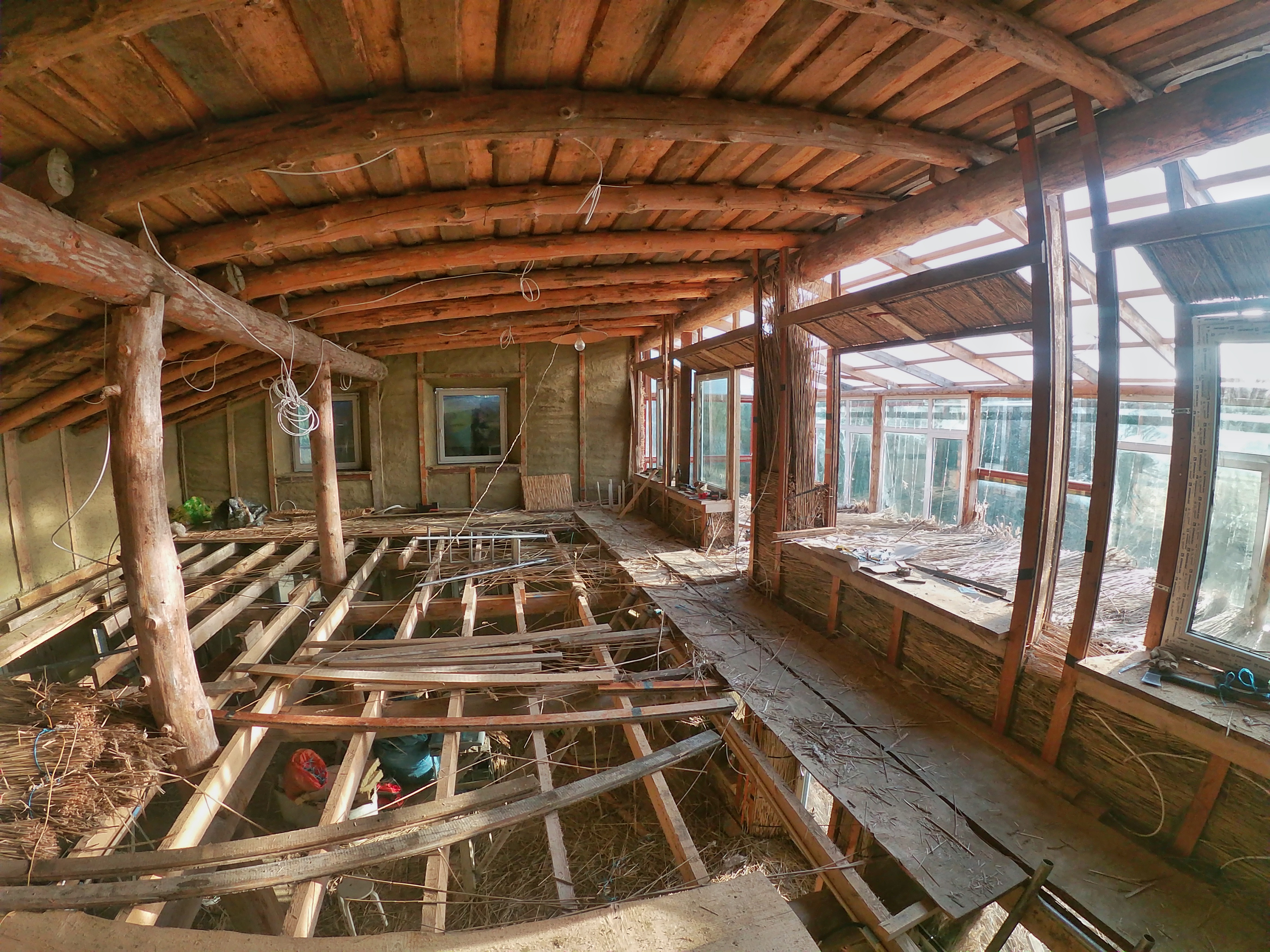
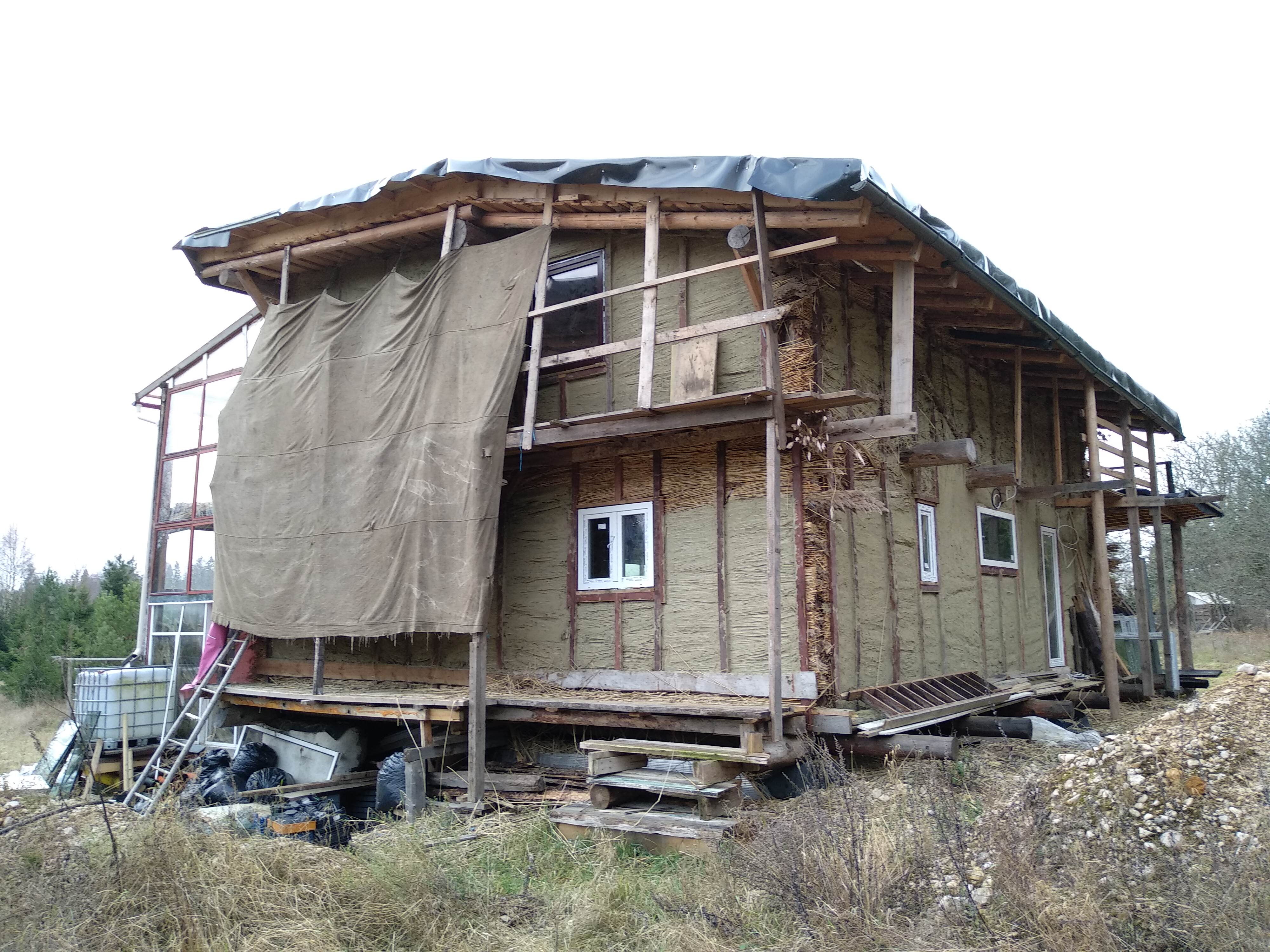
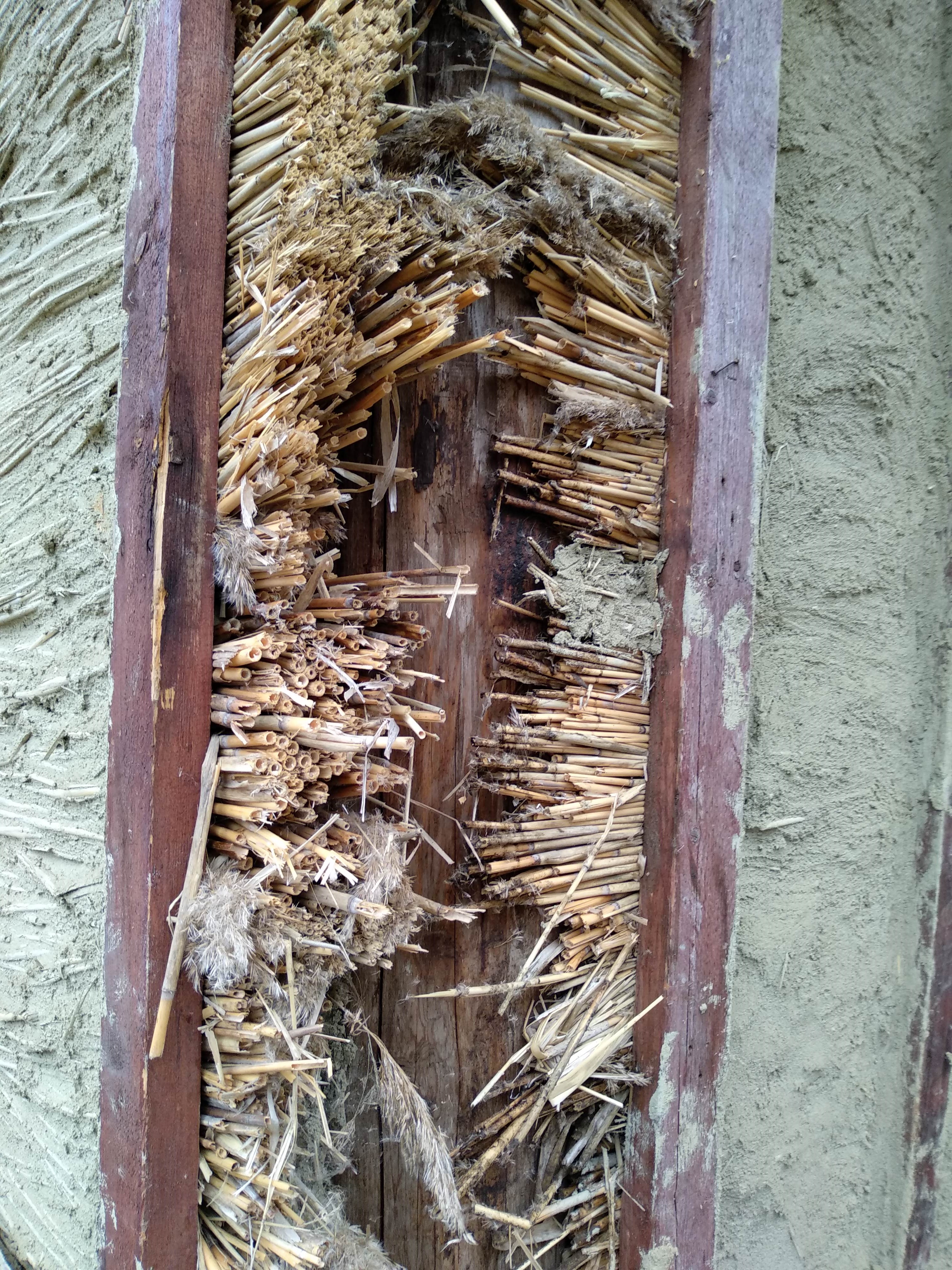
In June a truckload of 1800 bundles of reed arrived from Lake Võrtsjärv. This became the insulation for our walls and floors. We started inventing a method for packing the reed tightly into the walls. It turned into a big process of stuffing, pressing, and fiddling.
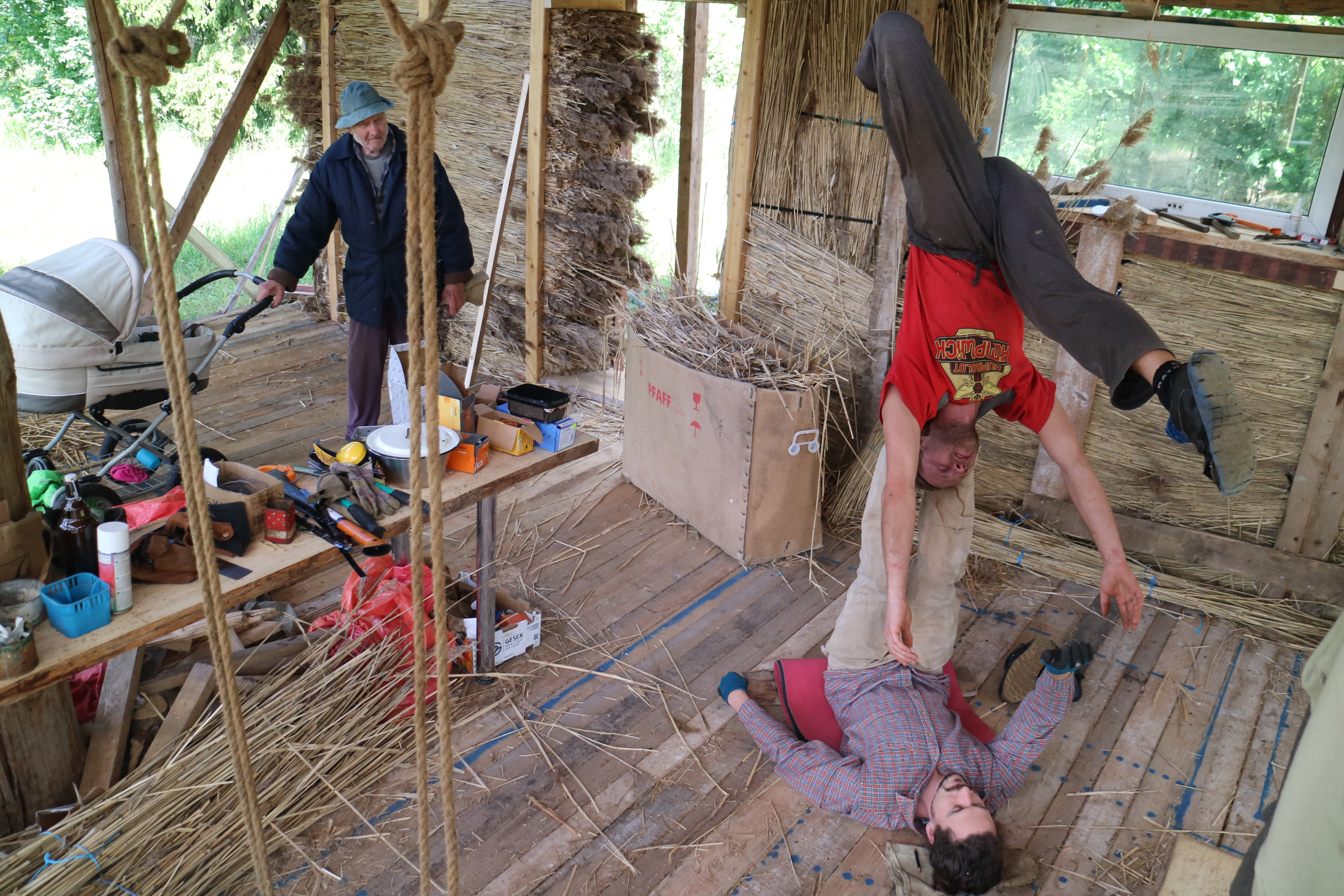
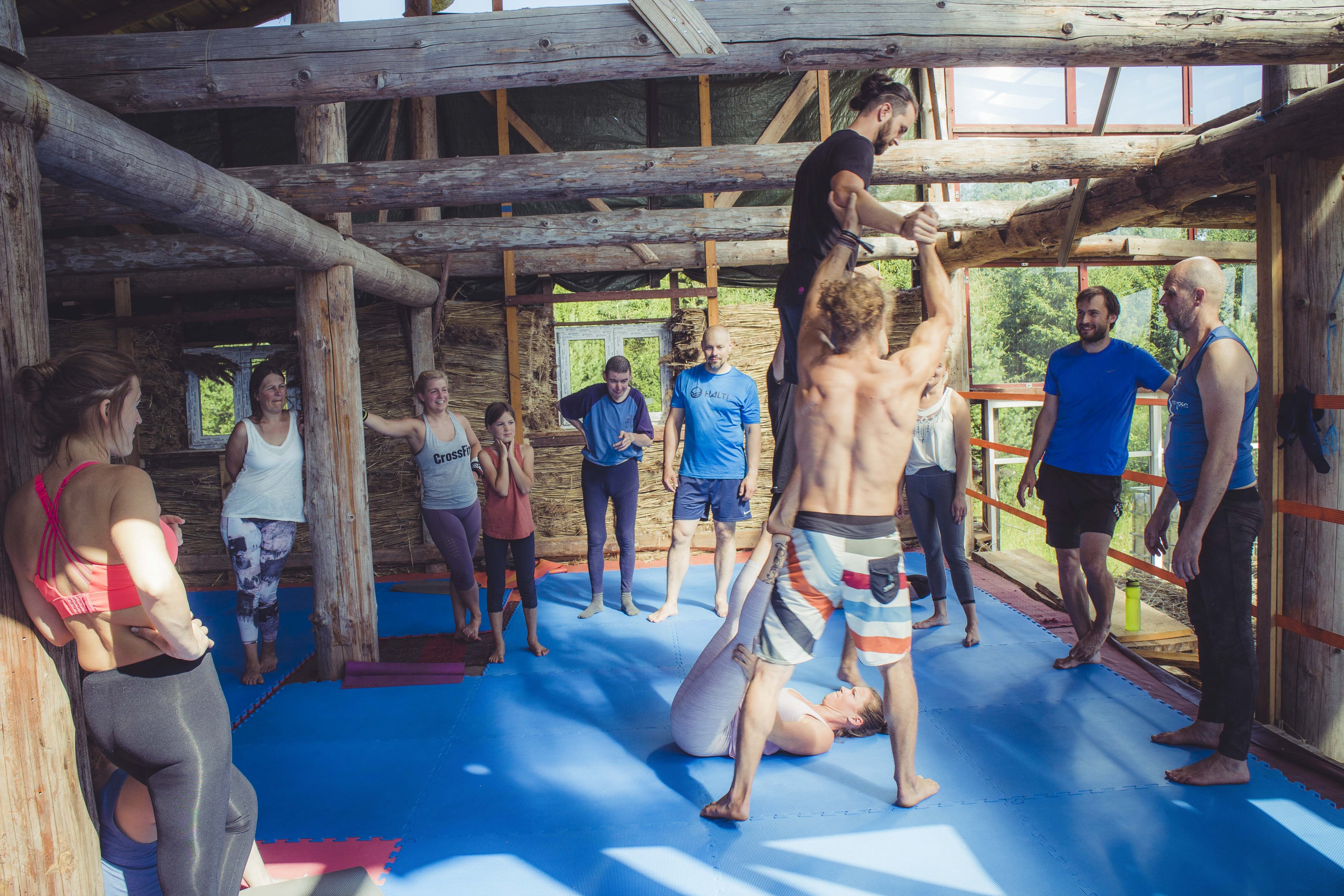
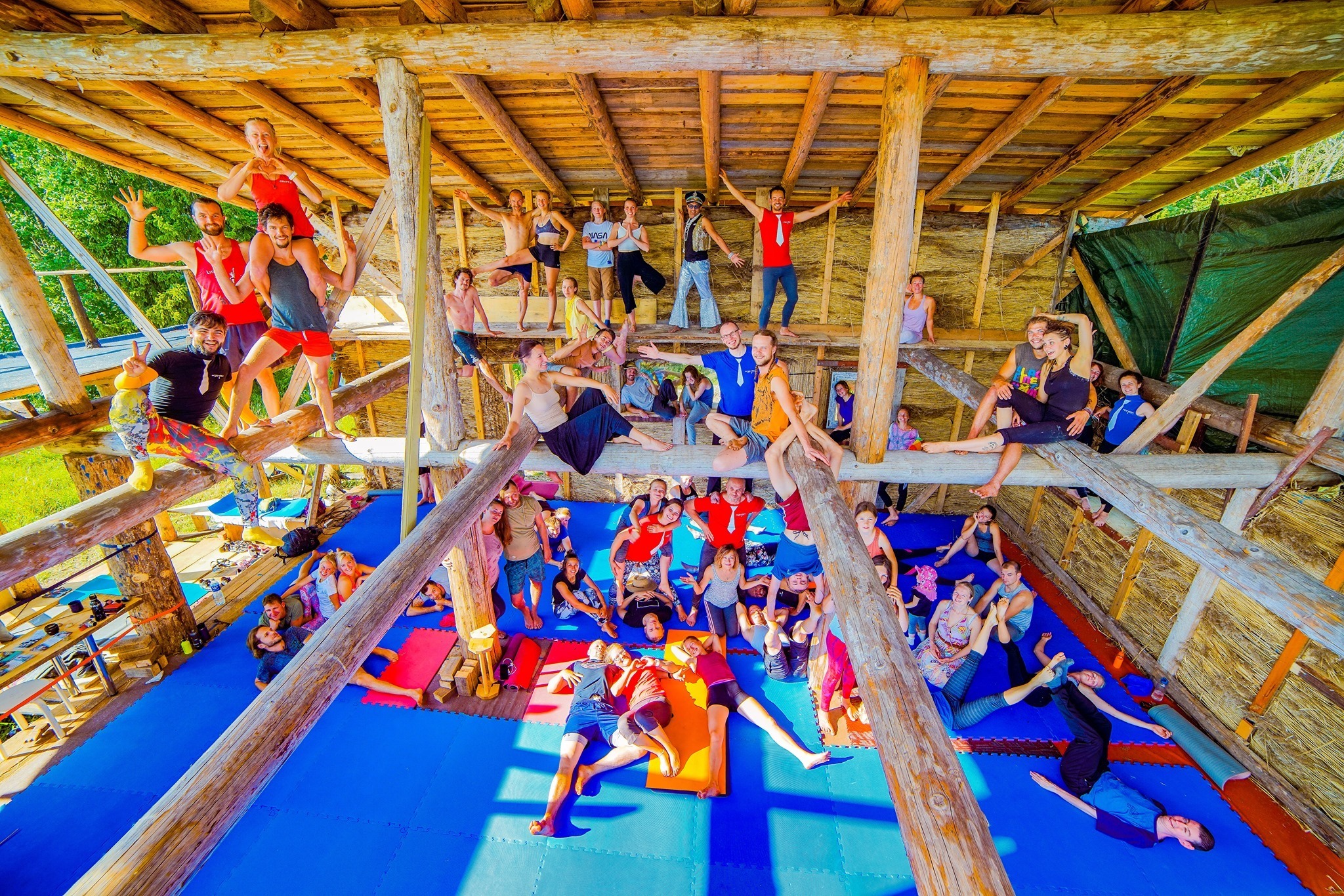
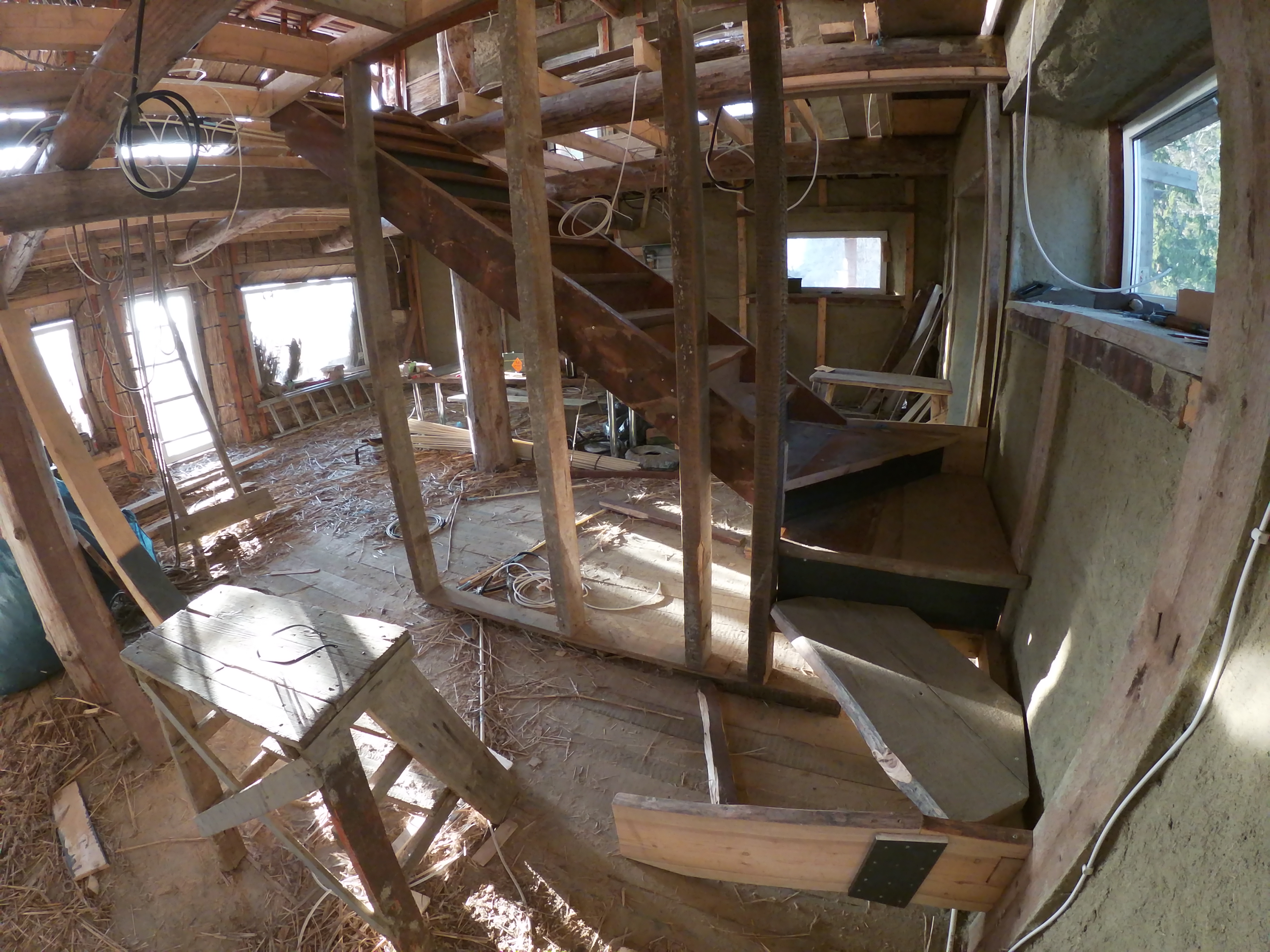
We prepared for the festival — we built a black subfloor on the first floor so the space could be used for workshops. The north and east walls were filled with reed to protect the gymnasts from the wind. AcroFestonia was awesome, as always. We even managed to recruit volunteers from among the participants — they began clay-plastering the finished walls.
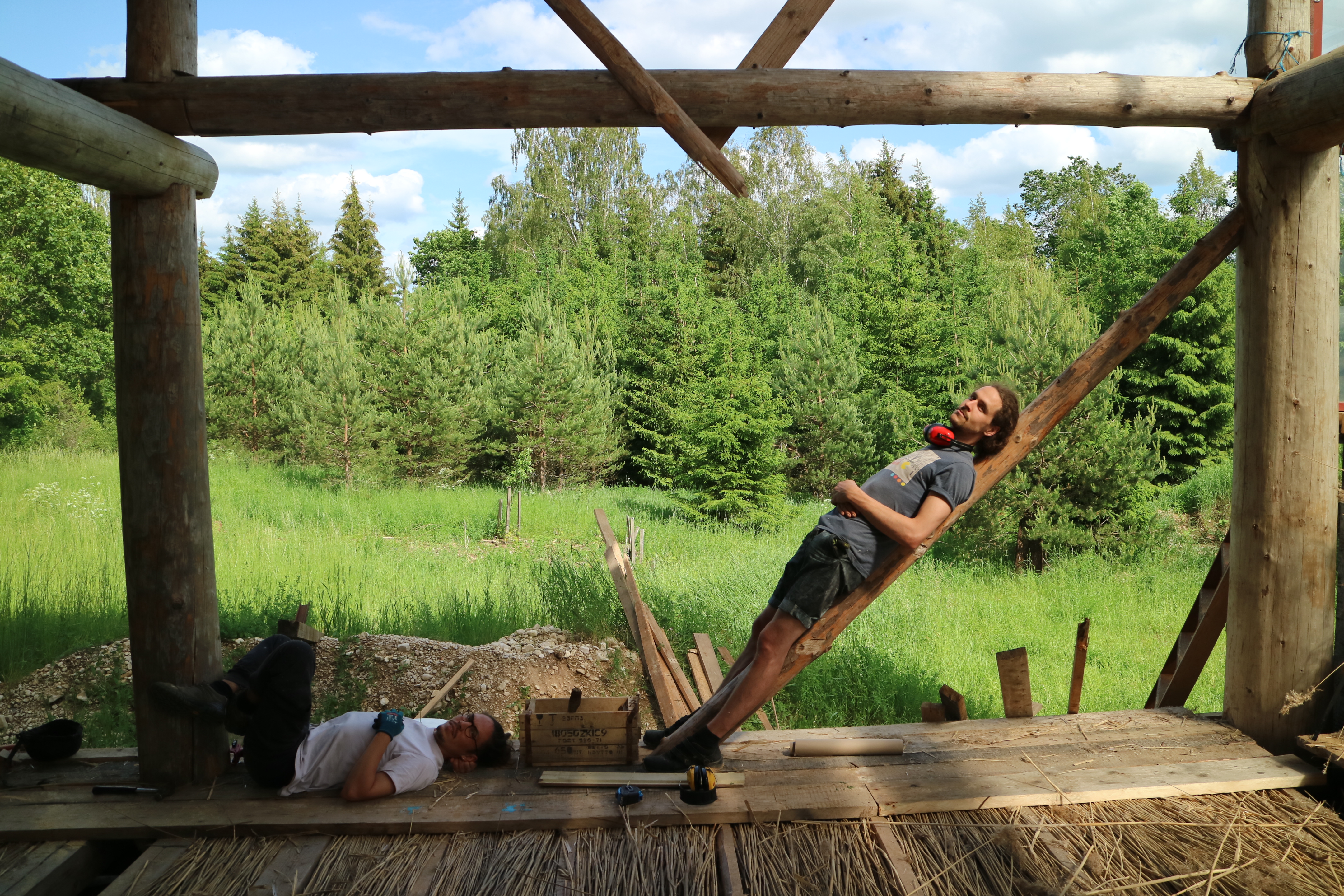
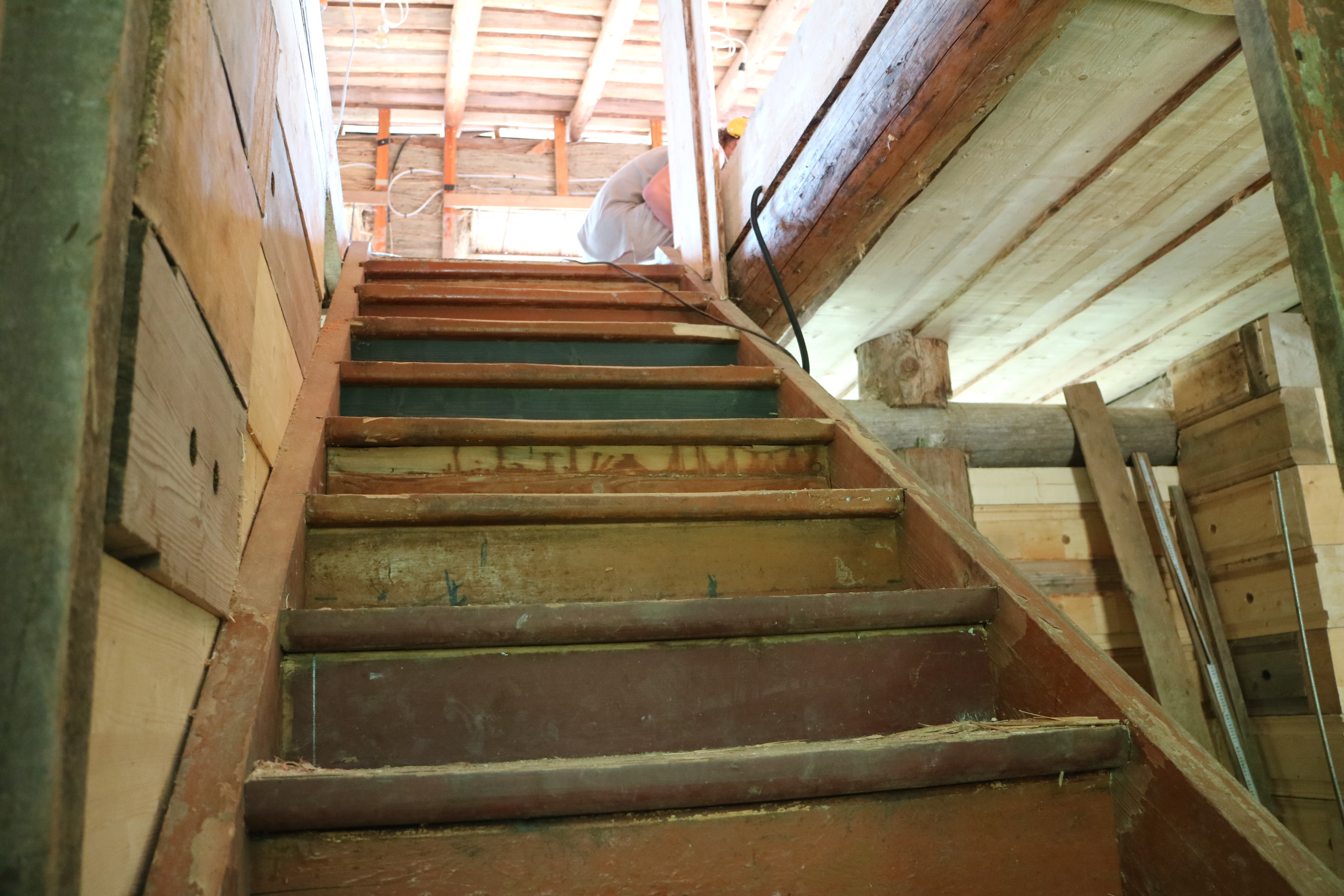
We created a profile on Workaway, through which we began hosting international volunteers. In October, by a happy coincidence, architect Albert and engineer Charlotte ended up with us. It was time for an expert eye on our build! Nothing was terribly wrong — we mostly received lots of good advice on how to build everything even more solid and strong. By the beginning of winter, the walls were fully stuffed, and a staircase was finished — a staircase that used to be someone else’s staircase.
Thanks: Rob, Harri, Egon, Henno, Agnes, Peeter, Tauno, Oskar, Filipp, Berk, Alejandro, Kätlin, Martin, Krista, Tauri, Rees, Indrek 2, Asko, Merill, Birgit, Peter, Elkke, Madis, Albert, Charlotte, Max, Britte, Omar, Valeria, Jake, Elizabeth
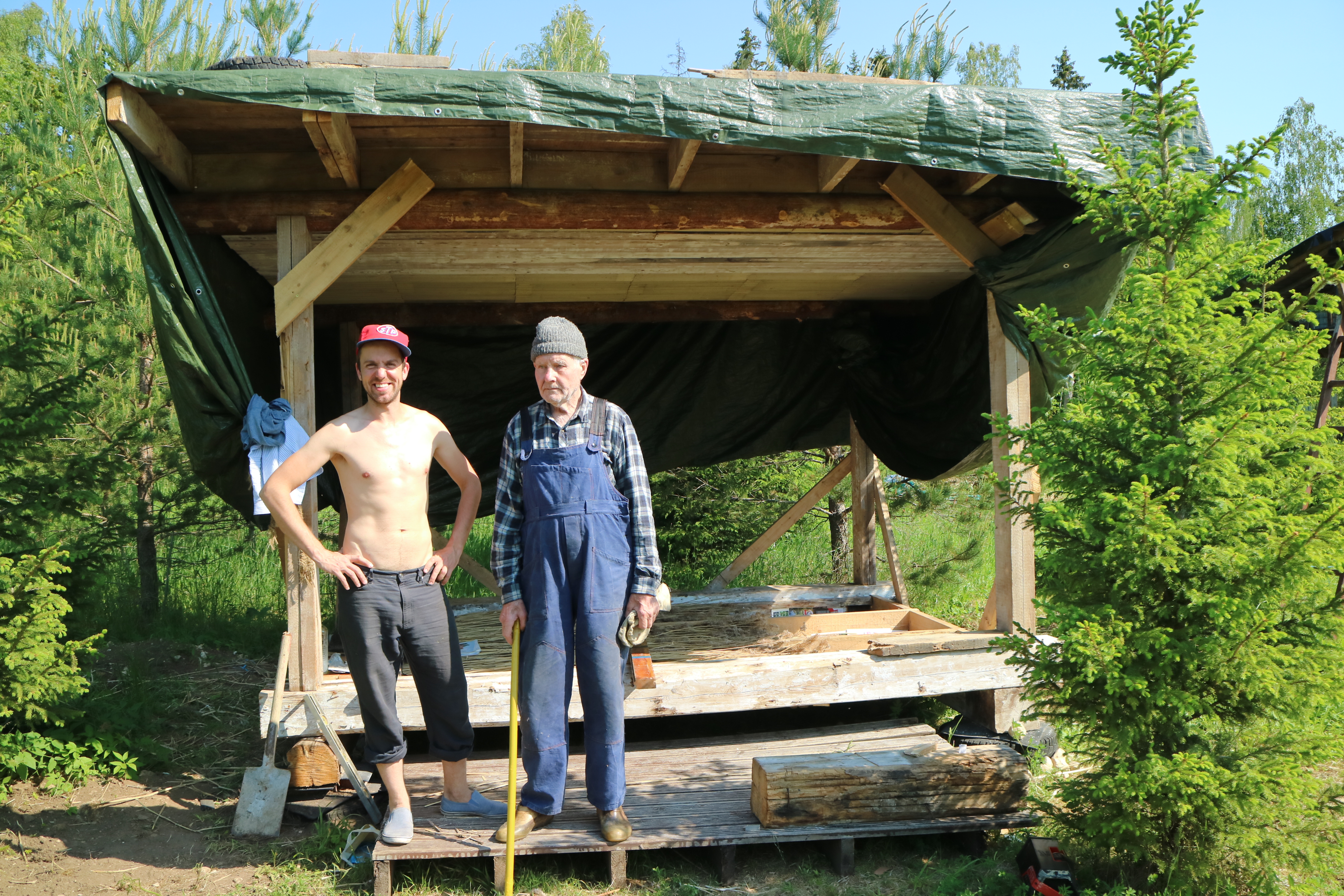
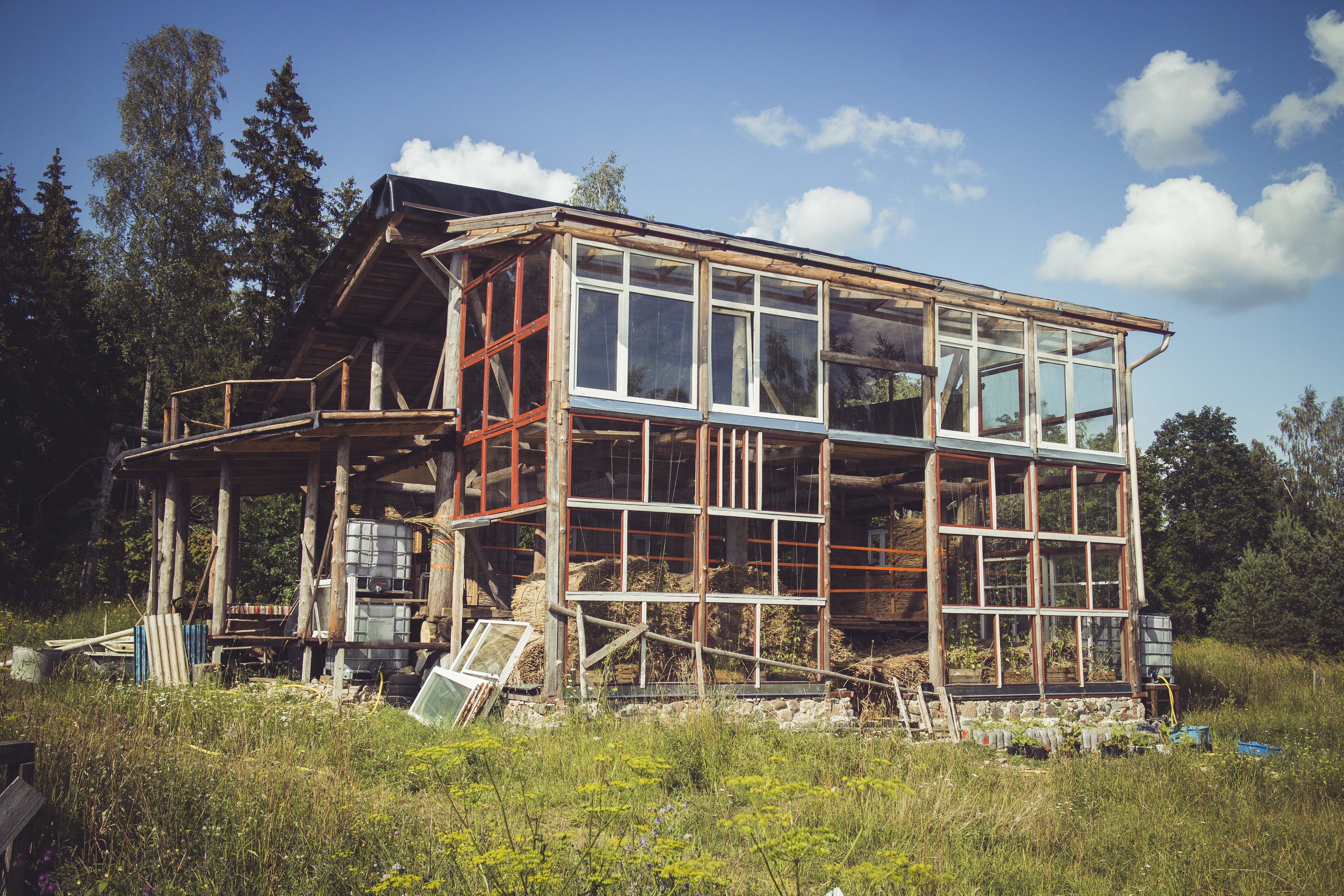
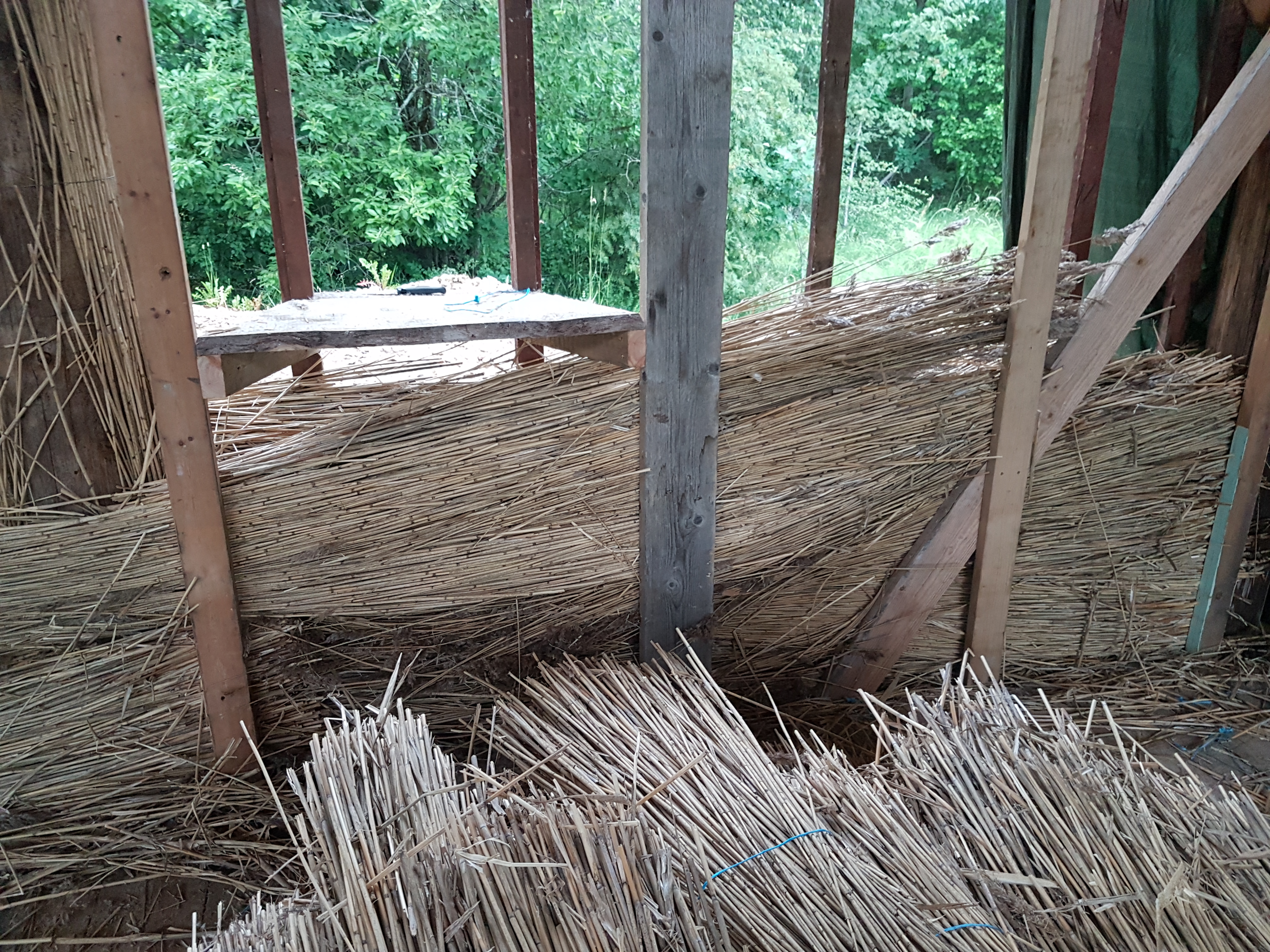
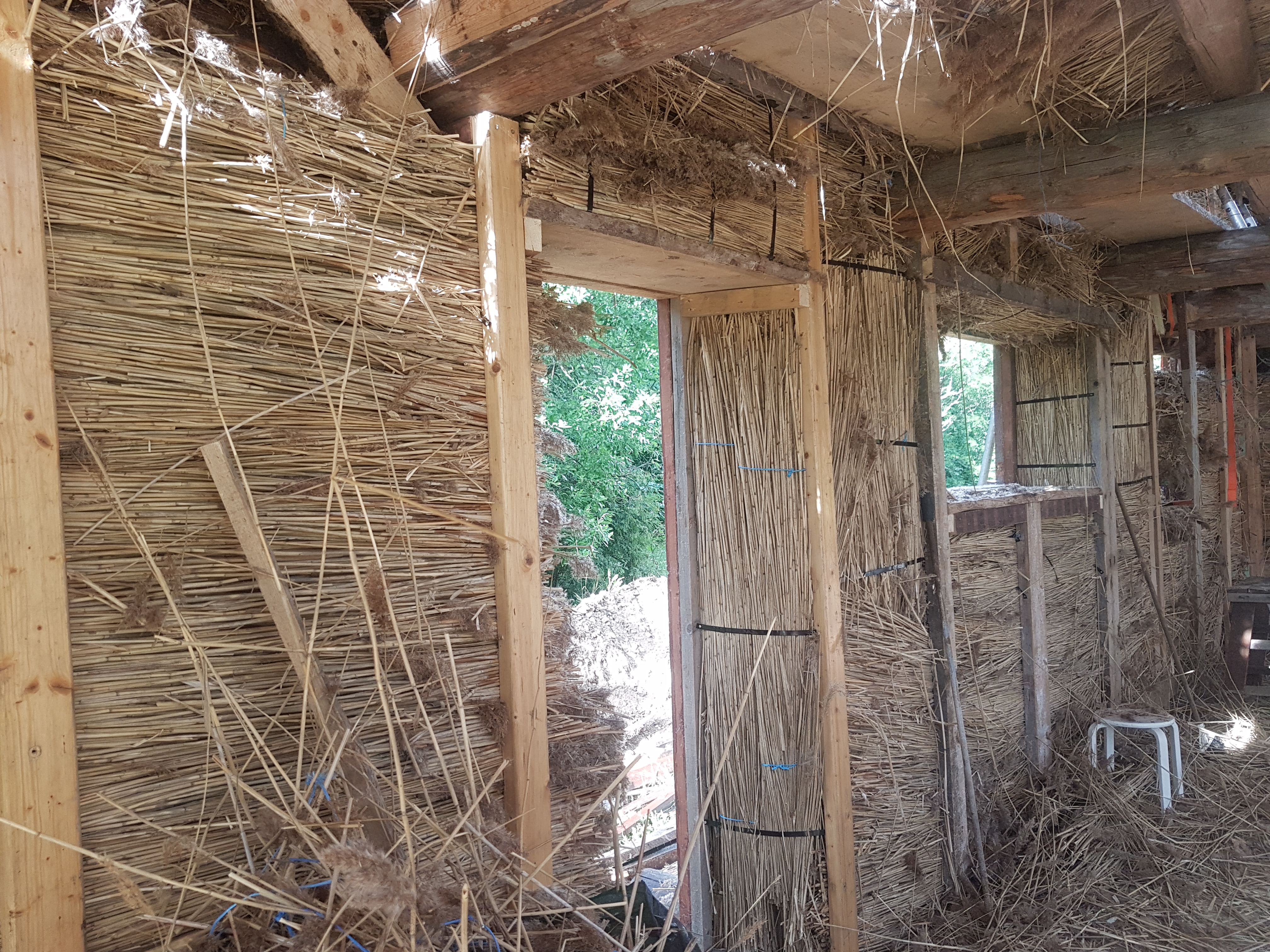
.JPG)
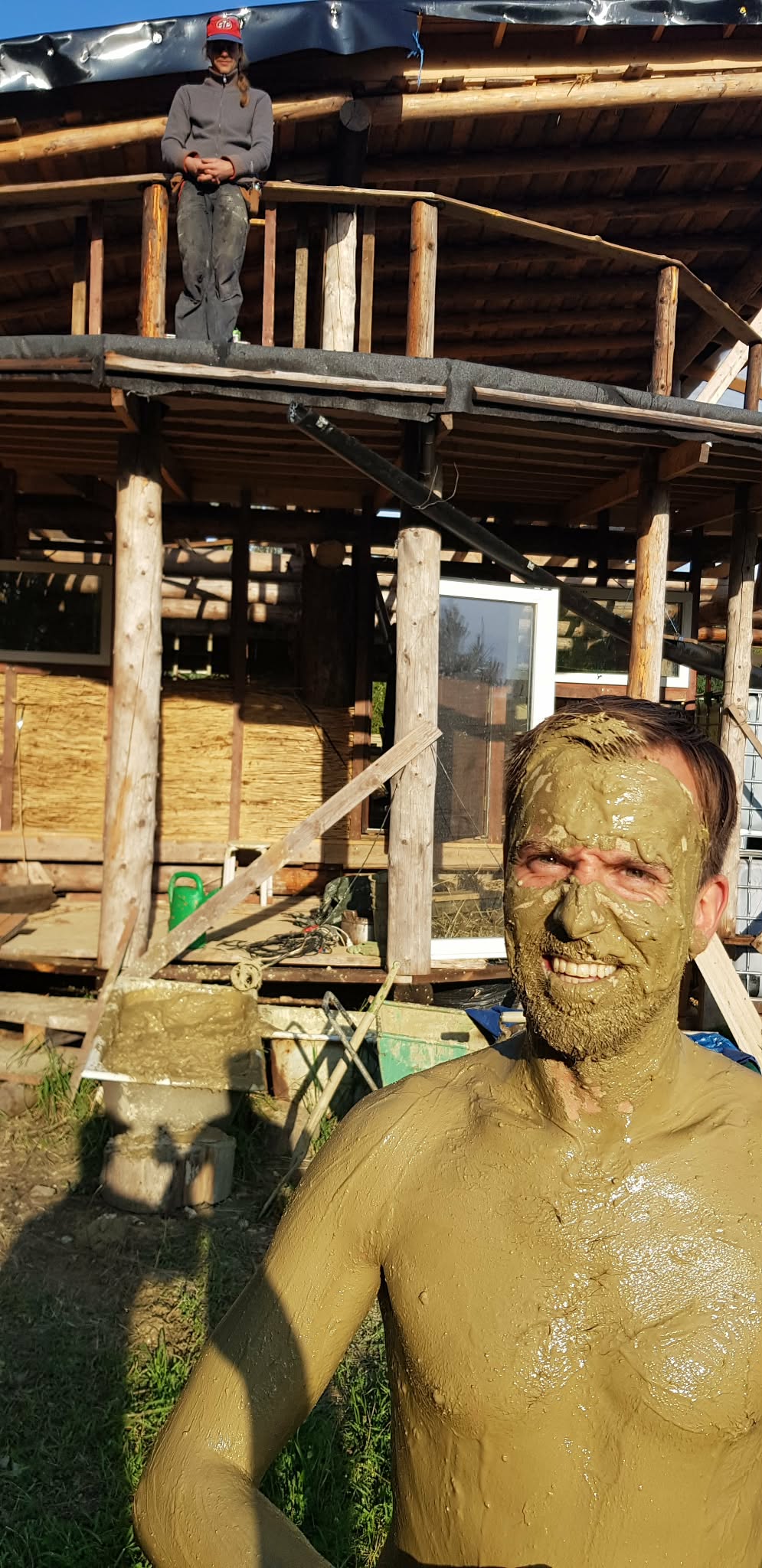
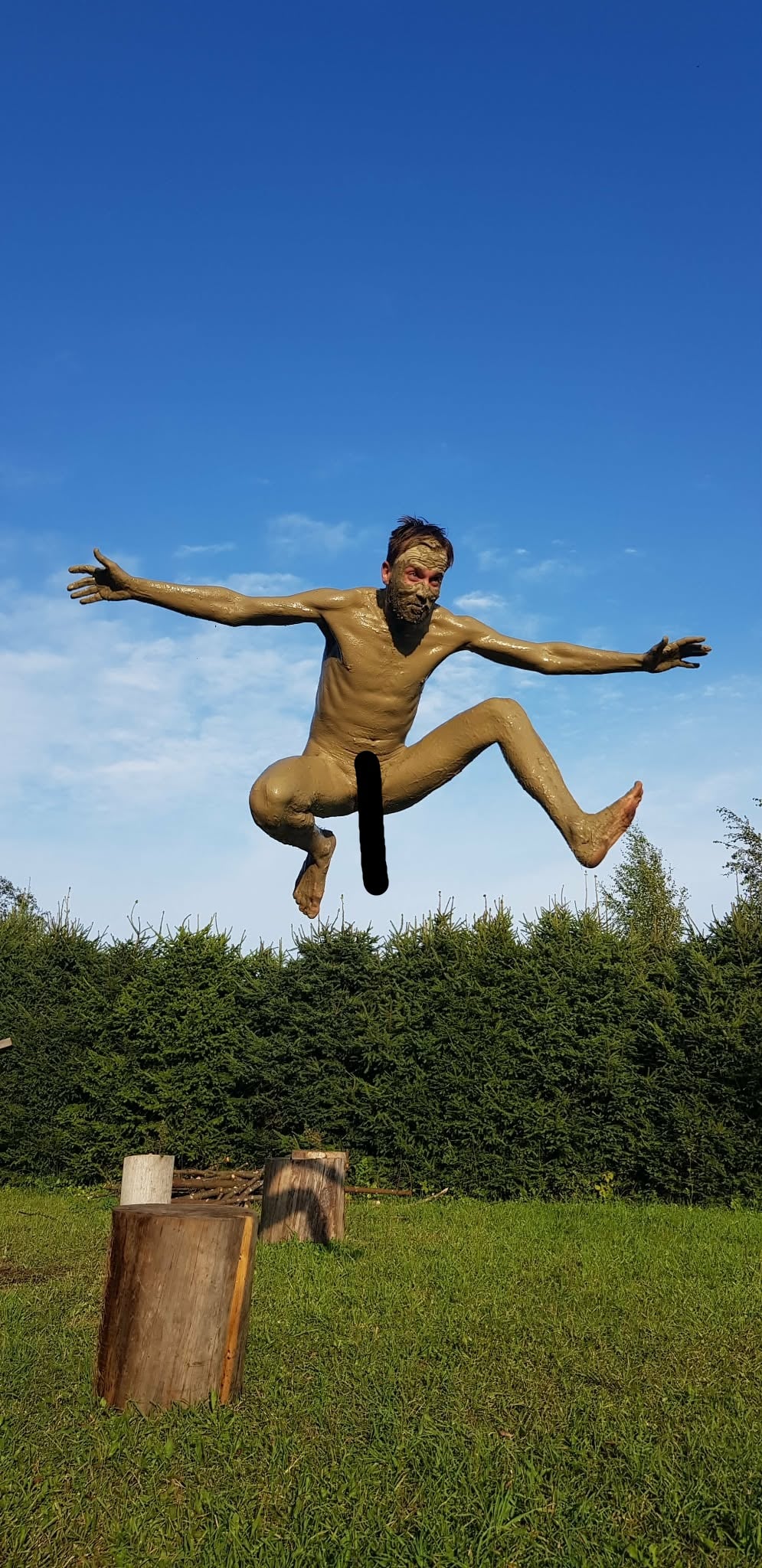
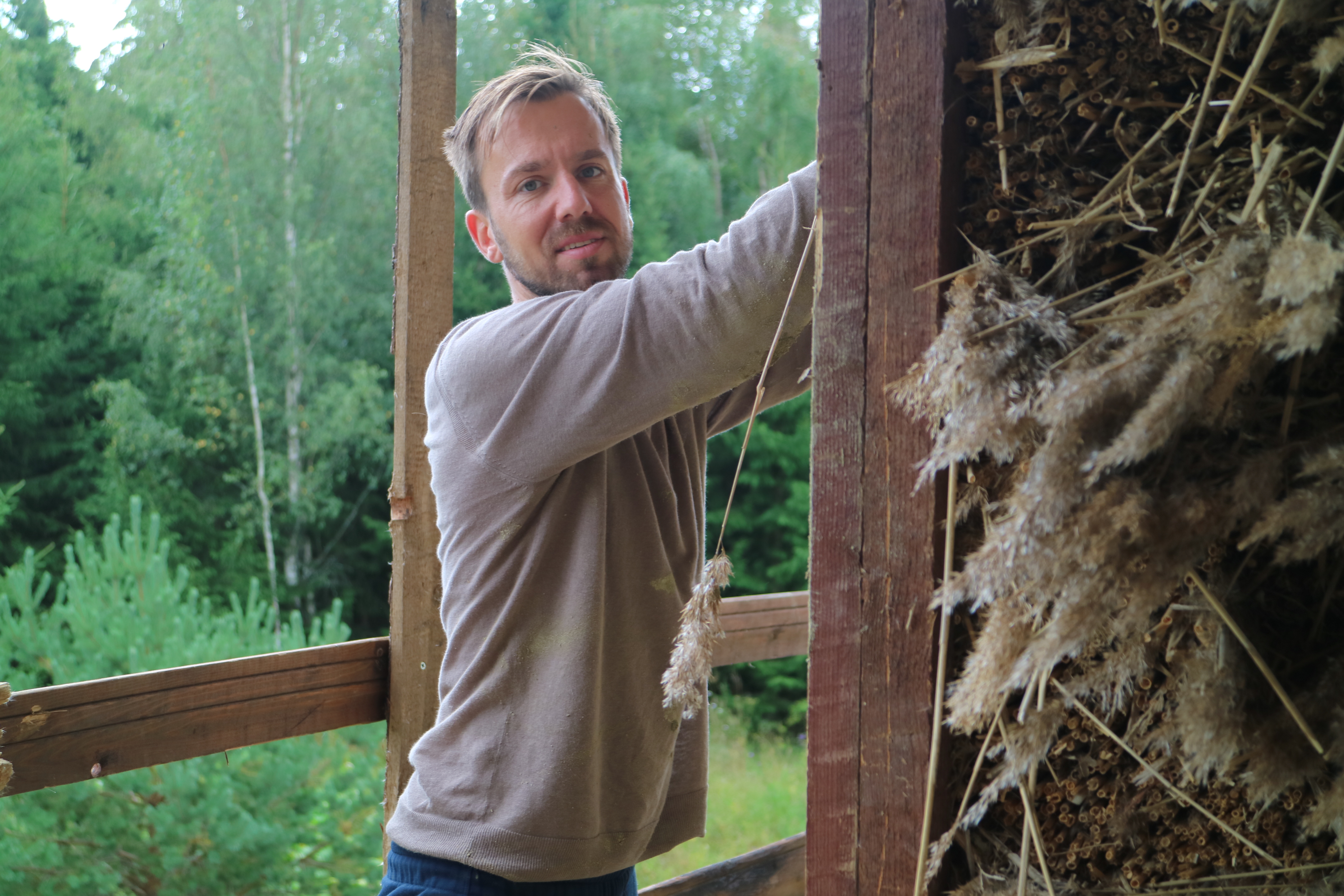
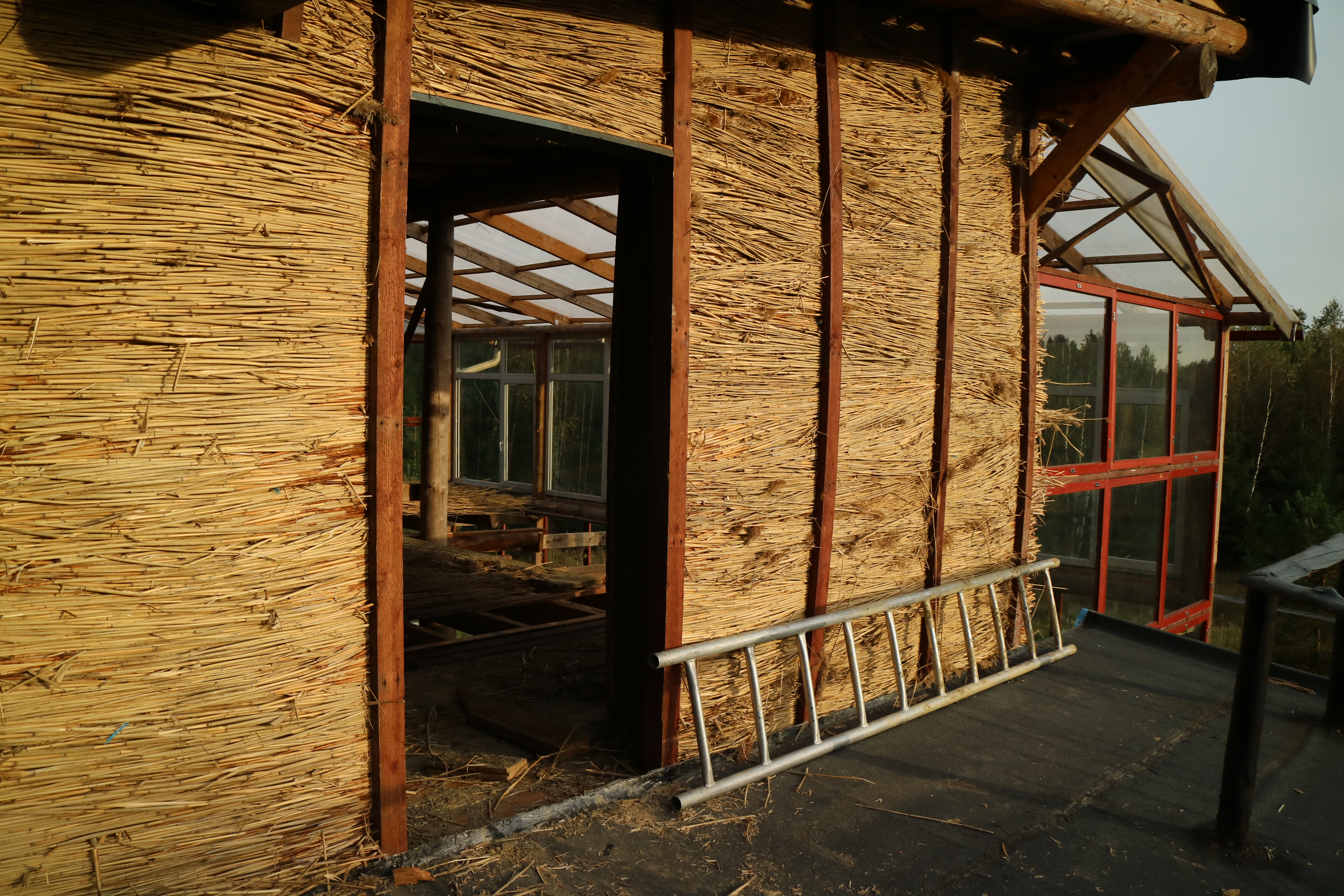
Leave a comment
2020 — The move-in year
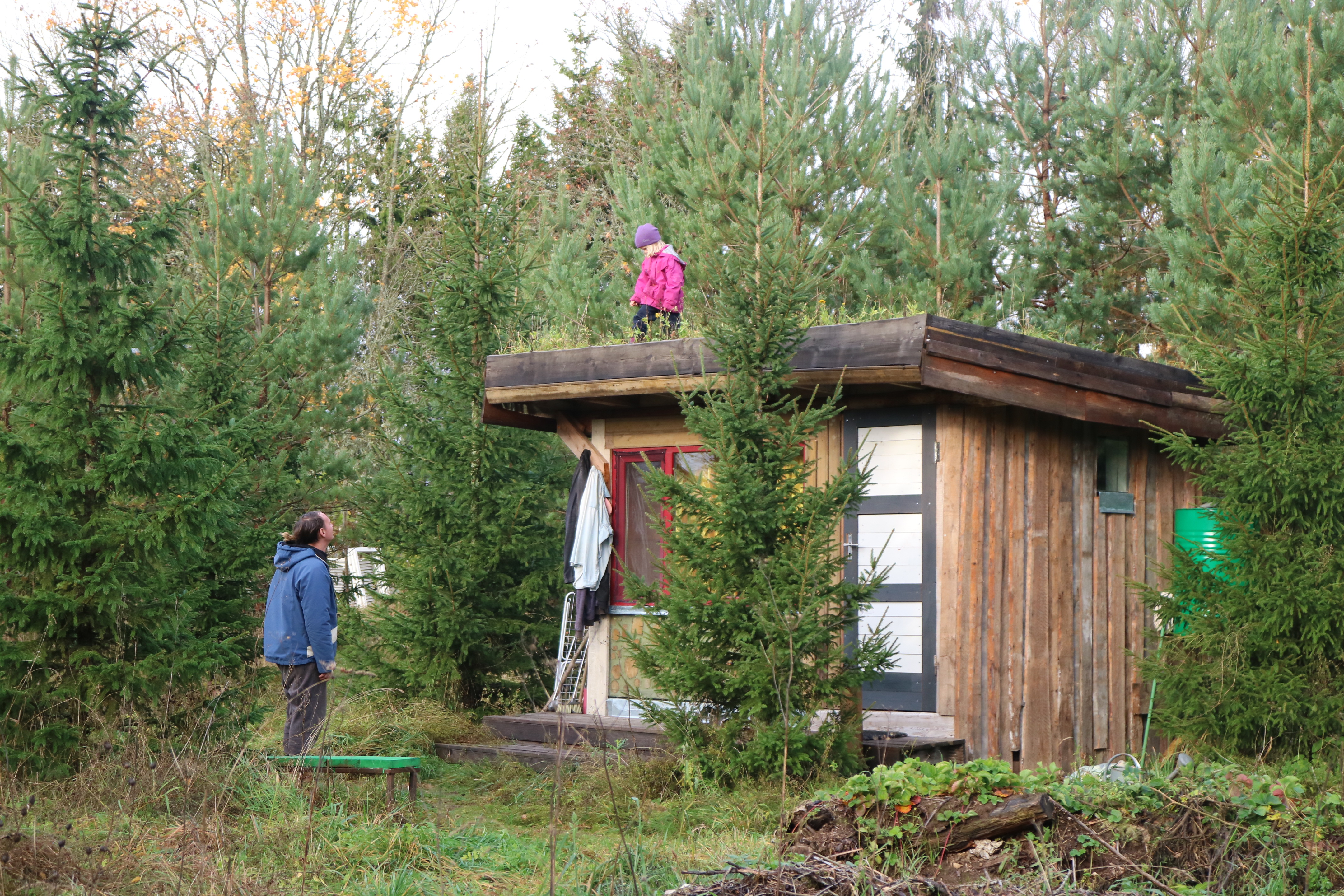
In early March, Corona reached Estonia. We came to the countryside early and decided that we would not go back to the city at all — by next winter we wanted to move into our own house! First we finished the little house Egon had started, and soon the first resident moved in. Through Workaway we hosted Tanel as a farmhand for the whole summer.
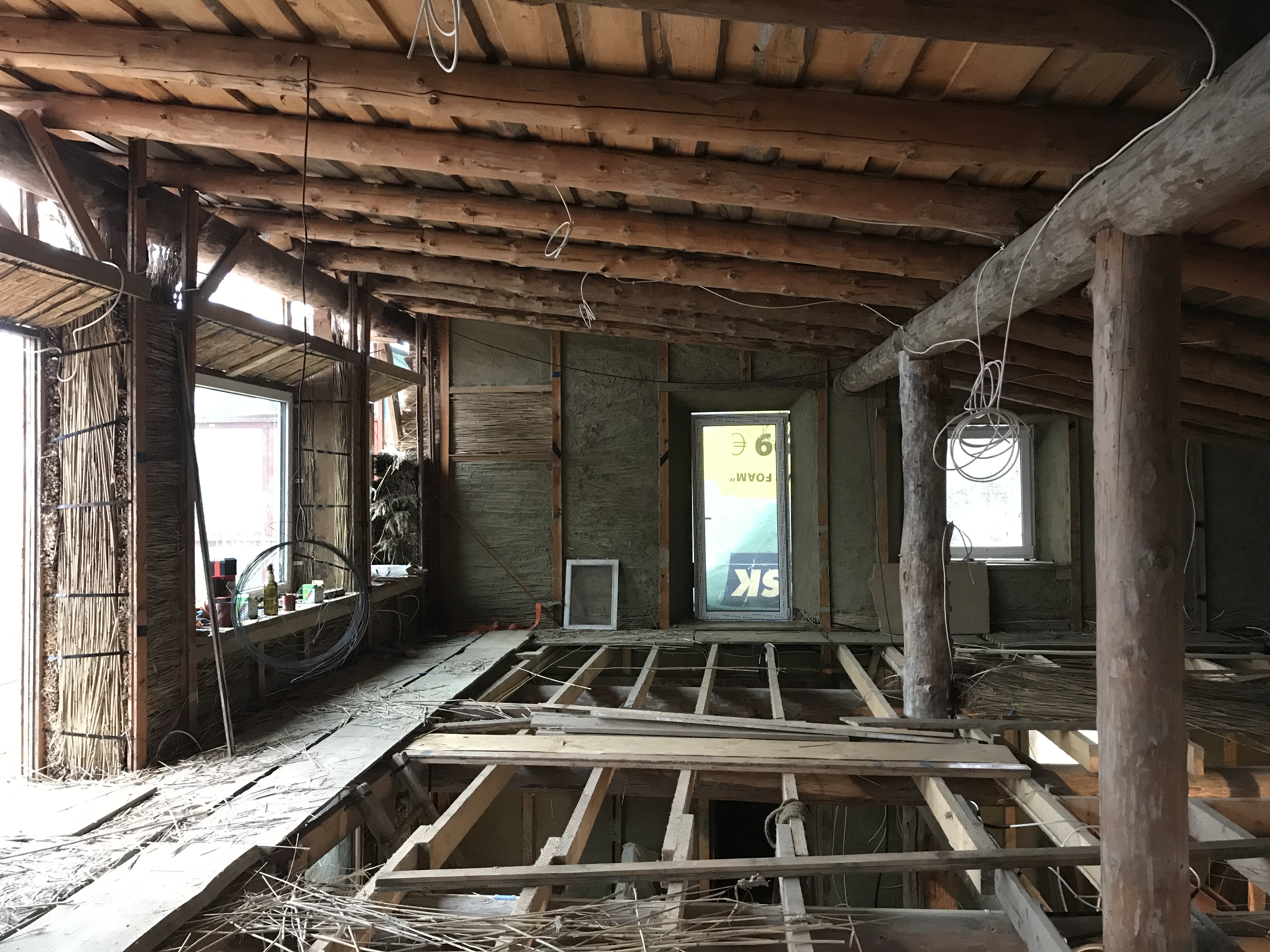
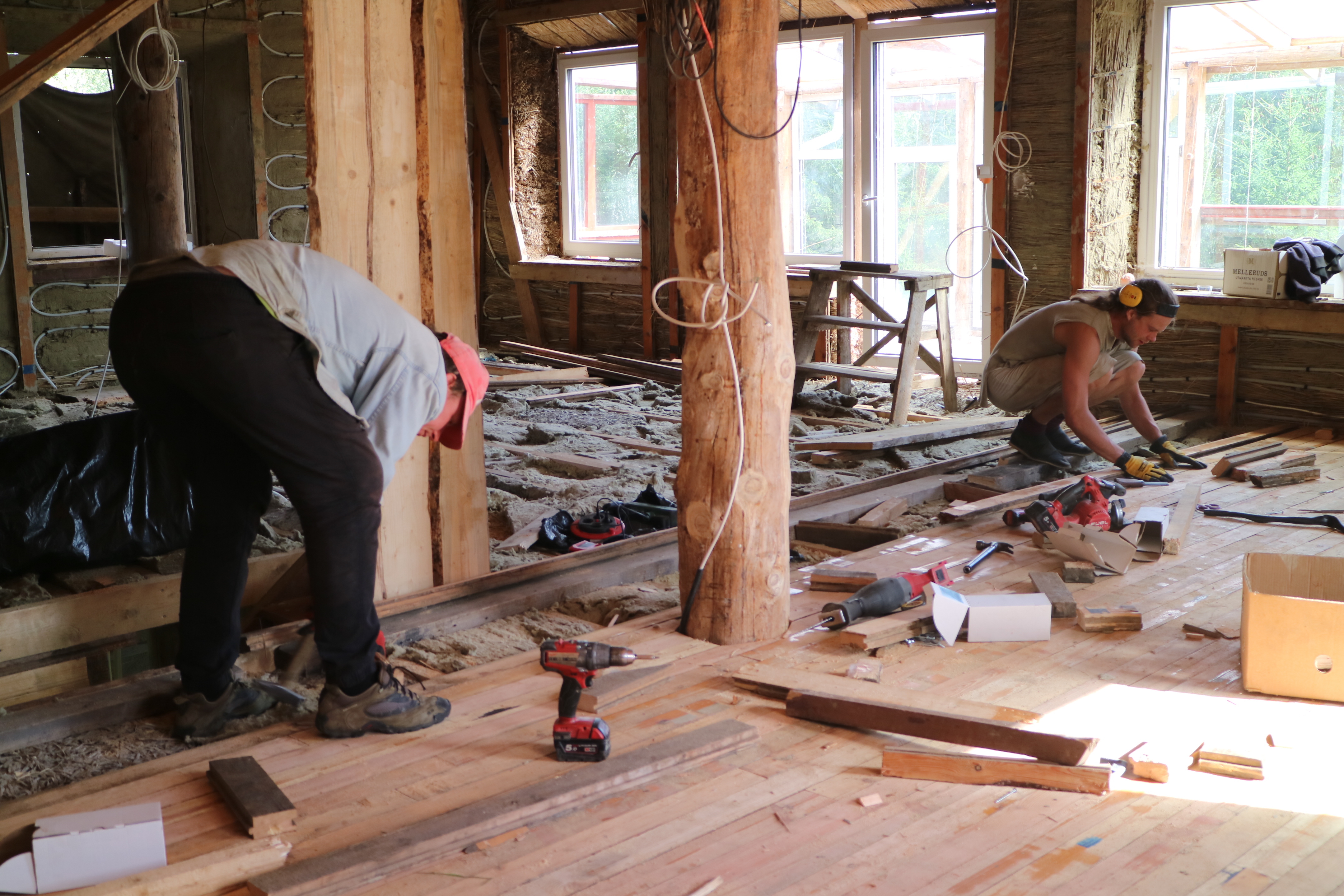
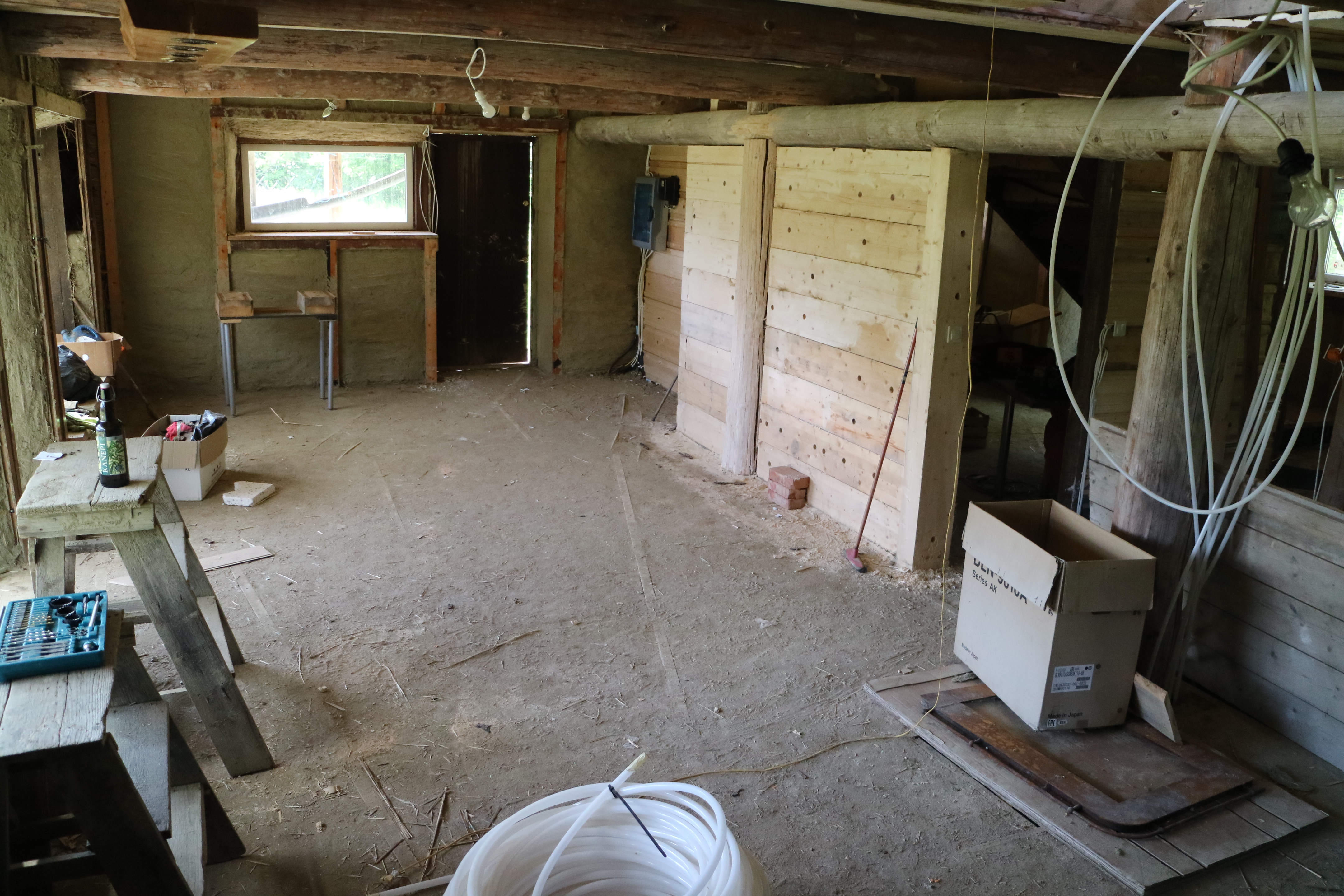
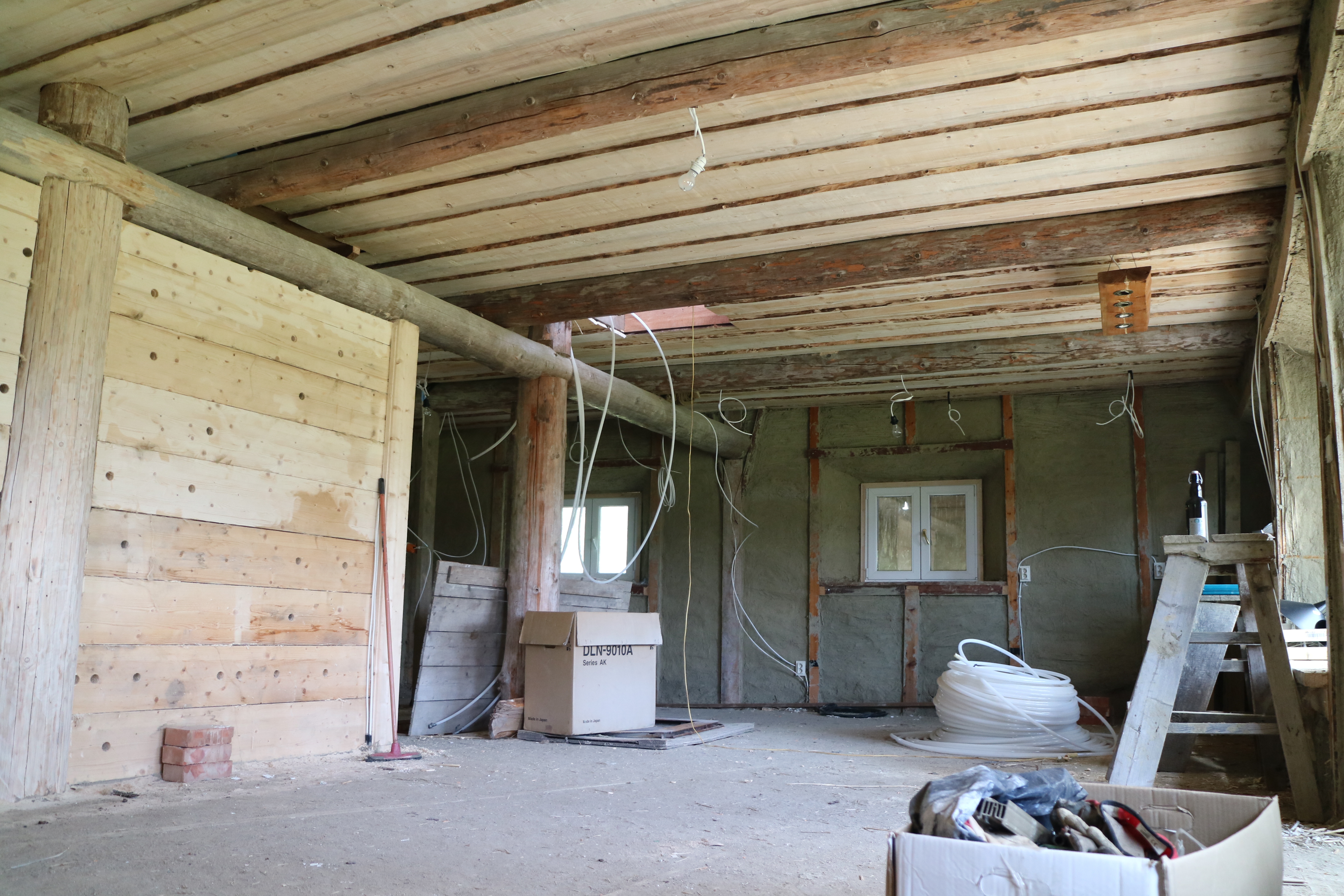
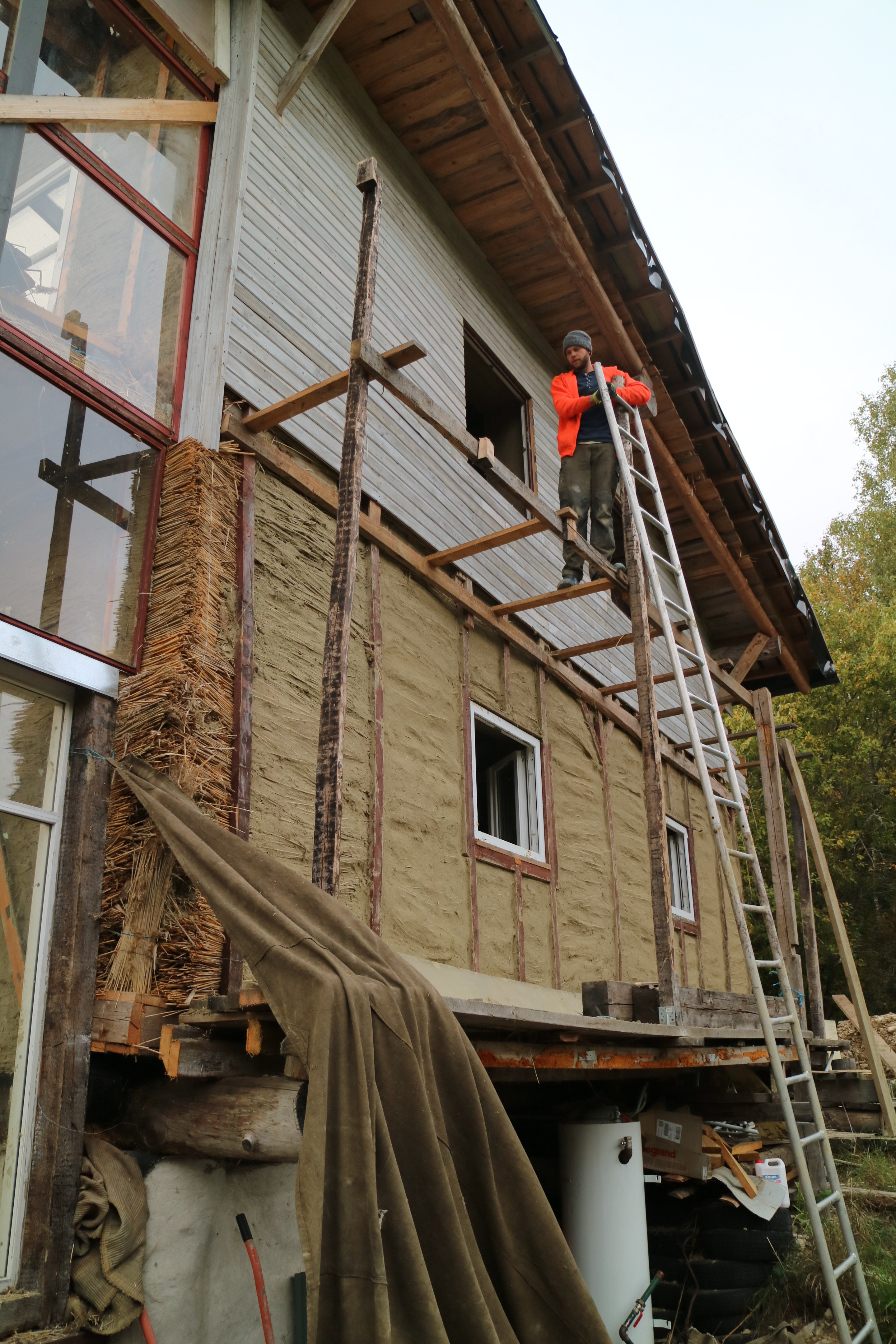
There was still a lot to do before moving in: a drilled well, water system, sewage, electricity, partitions, the second floor, a wood stove for the kitchen, a central-heating boiler in the basement, a chimney, endless plastering, and stuffing all kinds of holes and cracks. We had €7000 left in savings. We did not yet know how everything would unfold and how it would become possible, but based on our previous experience we knew it would work out in the end — we would find the right materials and the right people would show up.
And so it did. Help and support came mainly from family, relatives, and close friends. But also from neighbours, a local plumber, an acro-friend electrician, and friends of friends — people who, for example, were replacing their house cladding or kitchen equipment.
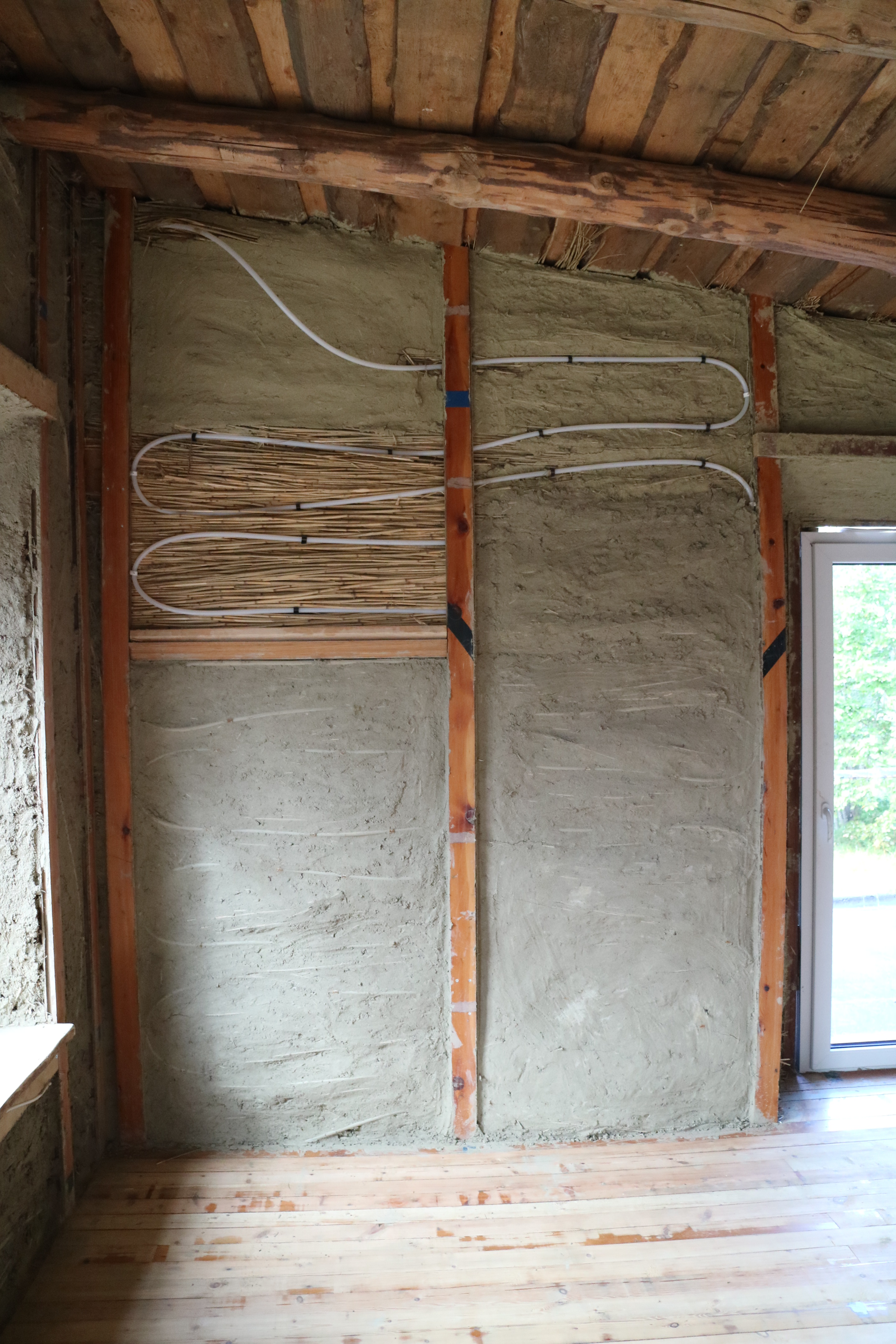
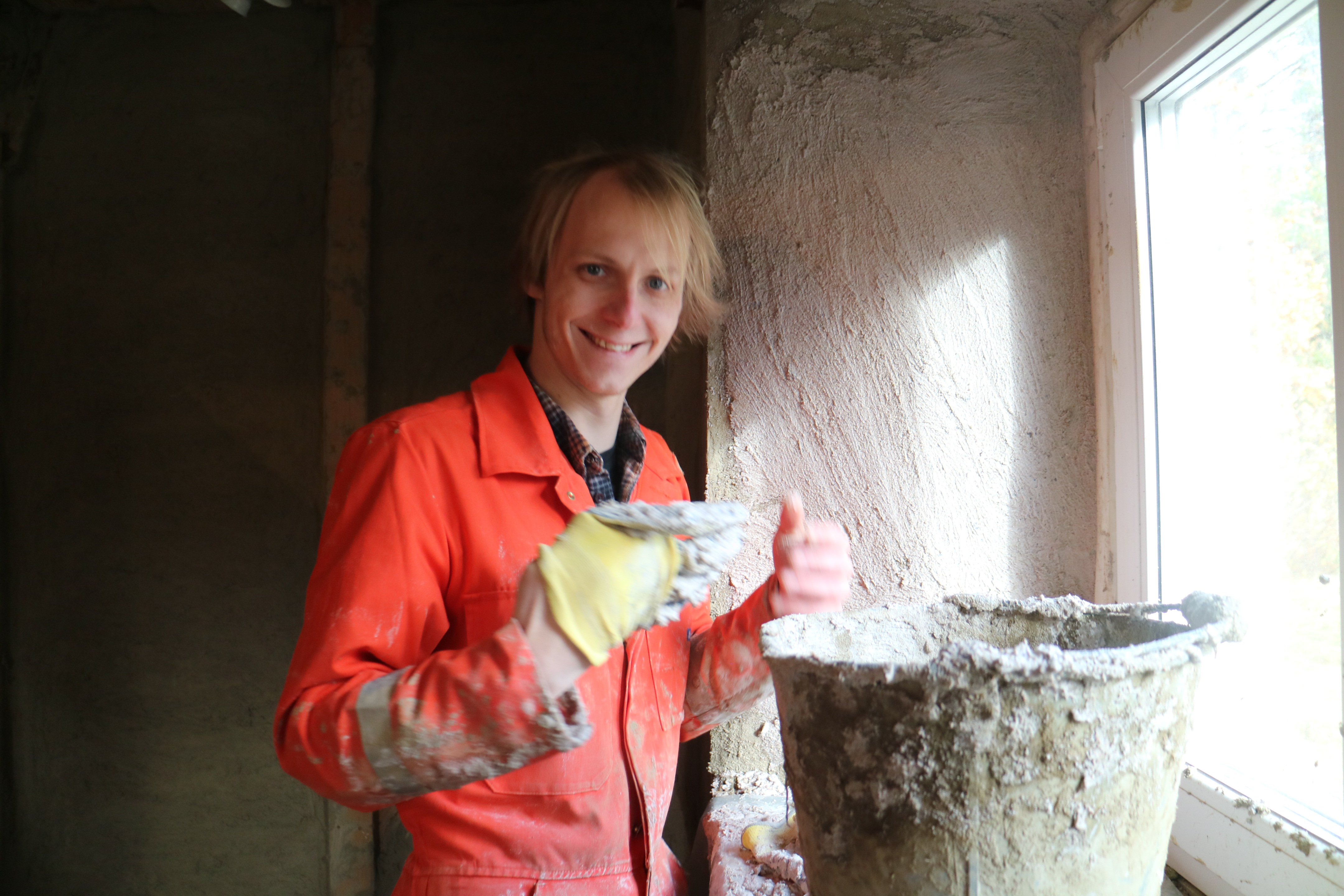
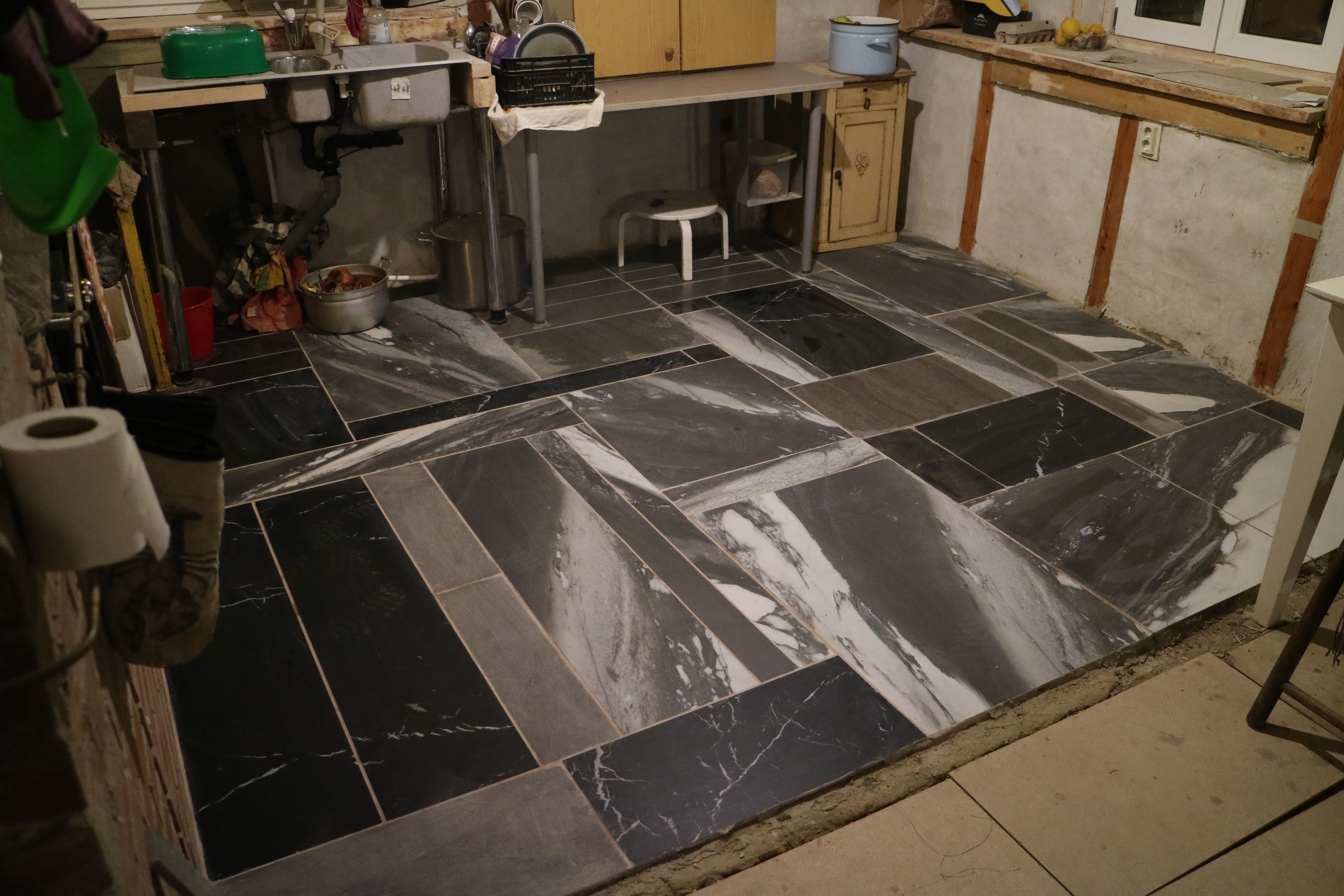
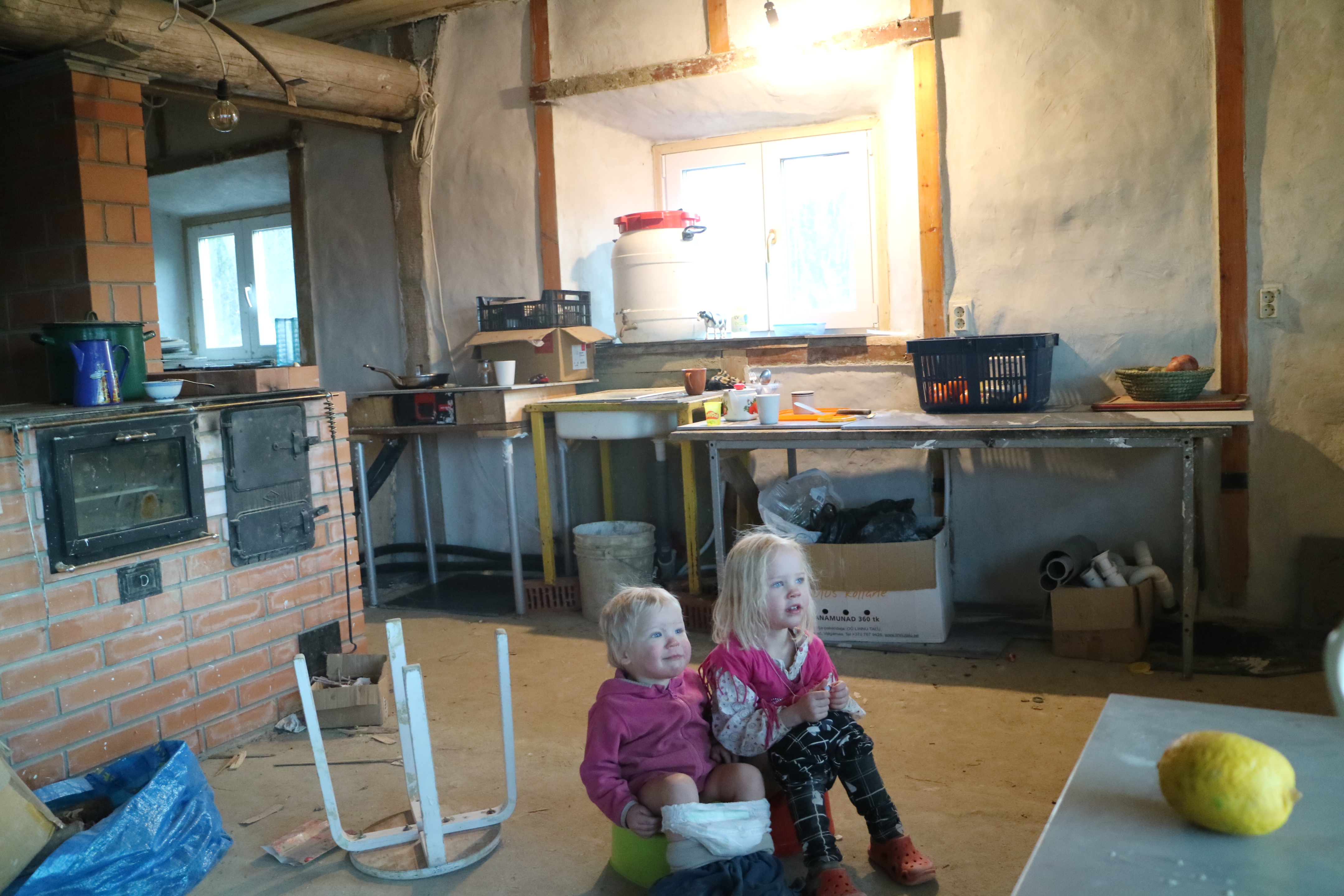
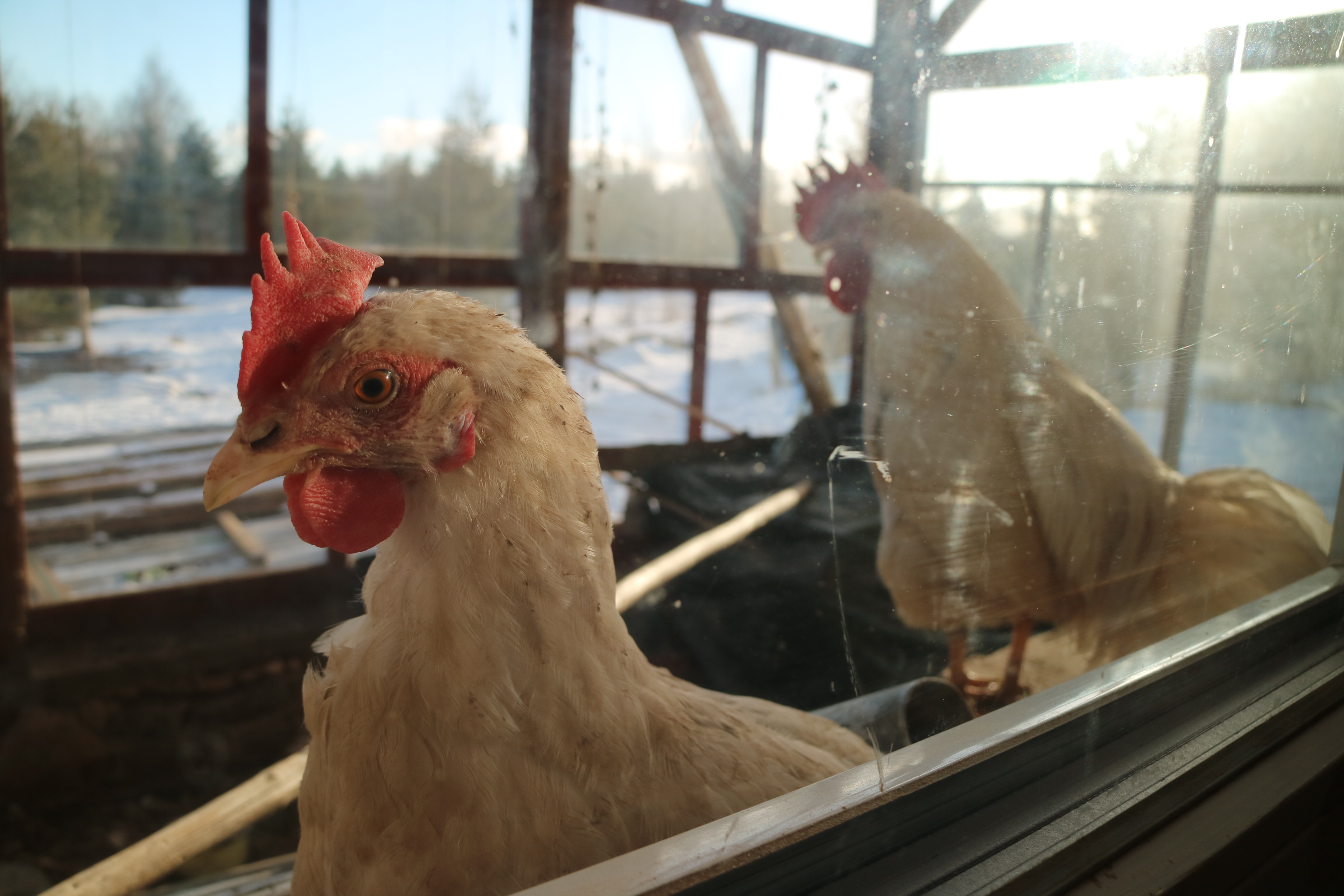
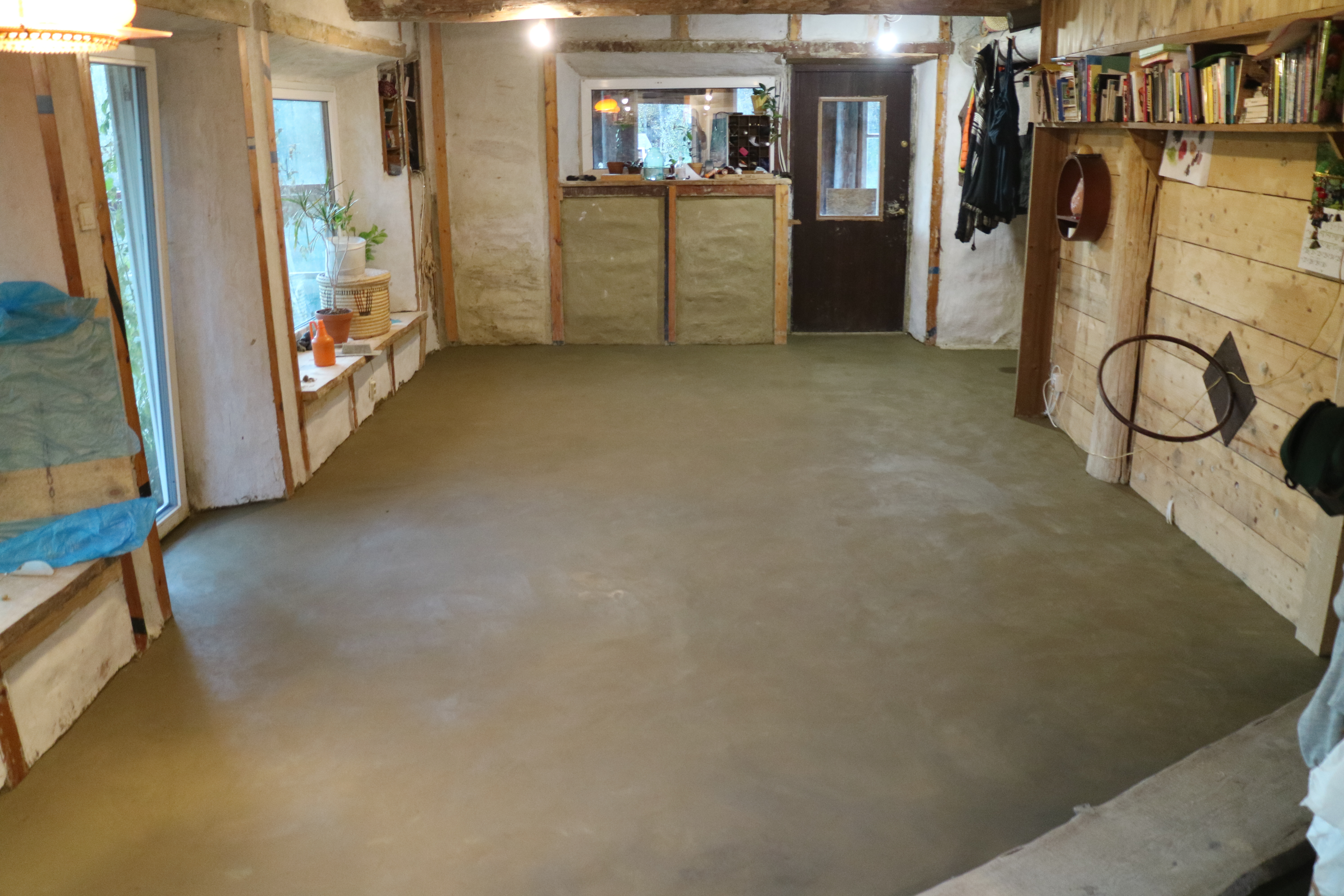
December 2 — move-in day. Along with our family of four, the new home also housed chickens (in the basement), two rabbits (in the winter garden), lots of flies (they came through every crack), and, interestingly, several butterflies. Everything was completely unfinished, but the room was warm. At first we carried water in buckets from the Kuusiku well. The only permanent kitchen fixture was the stove. There was still no toilet. The clay floor was dusty and crumbling because we had not yet added the finishing layer. BUT! It still felt very luxurious and sometimes even exotic. Just a couple of weeks later we drilled the well and cold water started flowing from the tap — life became even more luxurious! Soon the heating system in the basement was connected too, and warm water began circulating through our clay floors and walls. We made it through the winter just fine. There was still a mountain of work to do, and our house would not be finished for years. We did not get bored either. With every small improvement, life kept getting better.
Thanks: Tanel, Ingmar, Sven, Tiiu, Egon, Rob, Maarja, Peeter, Agnes, Jaan, Simona, Bibbi, Oskar, Mirell, Tinnu, Karl, Daimi, Rety, Villem, Hegle, Ege, Liis, Siret, Kätlin, Kaili, Thomas, Margus, Üllo, Urmas, Tanel
Leave a comment
2021 — Living the Dream (and Still Building)
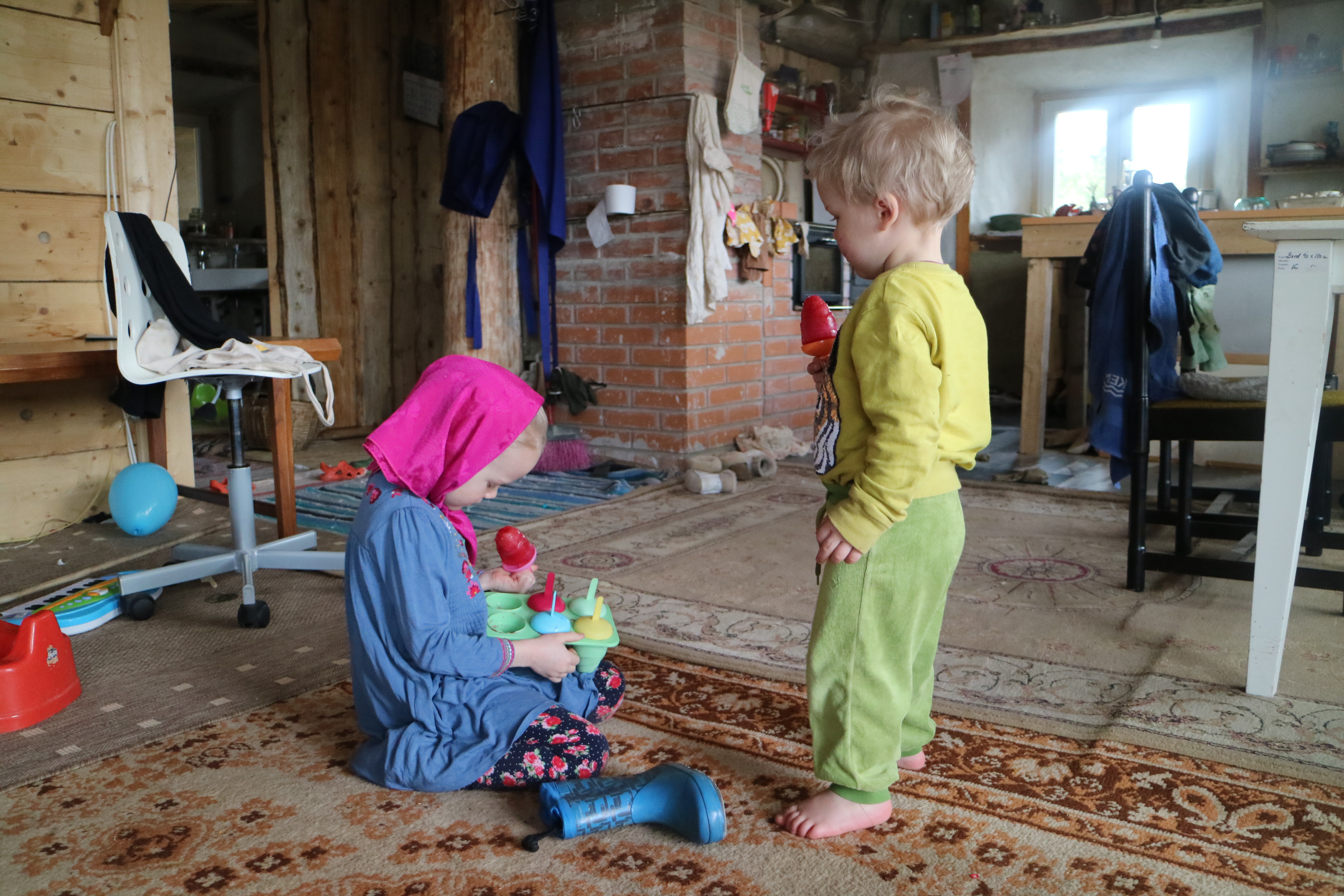
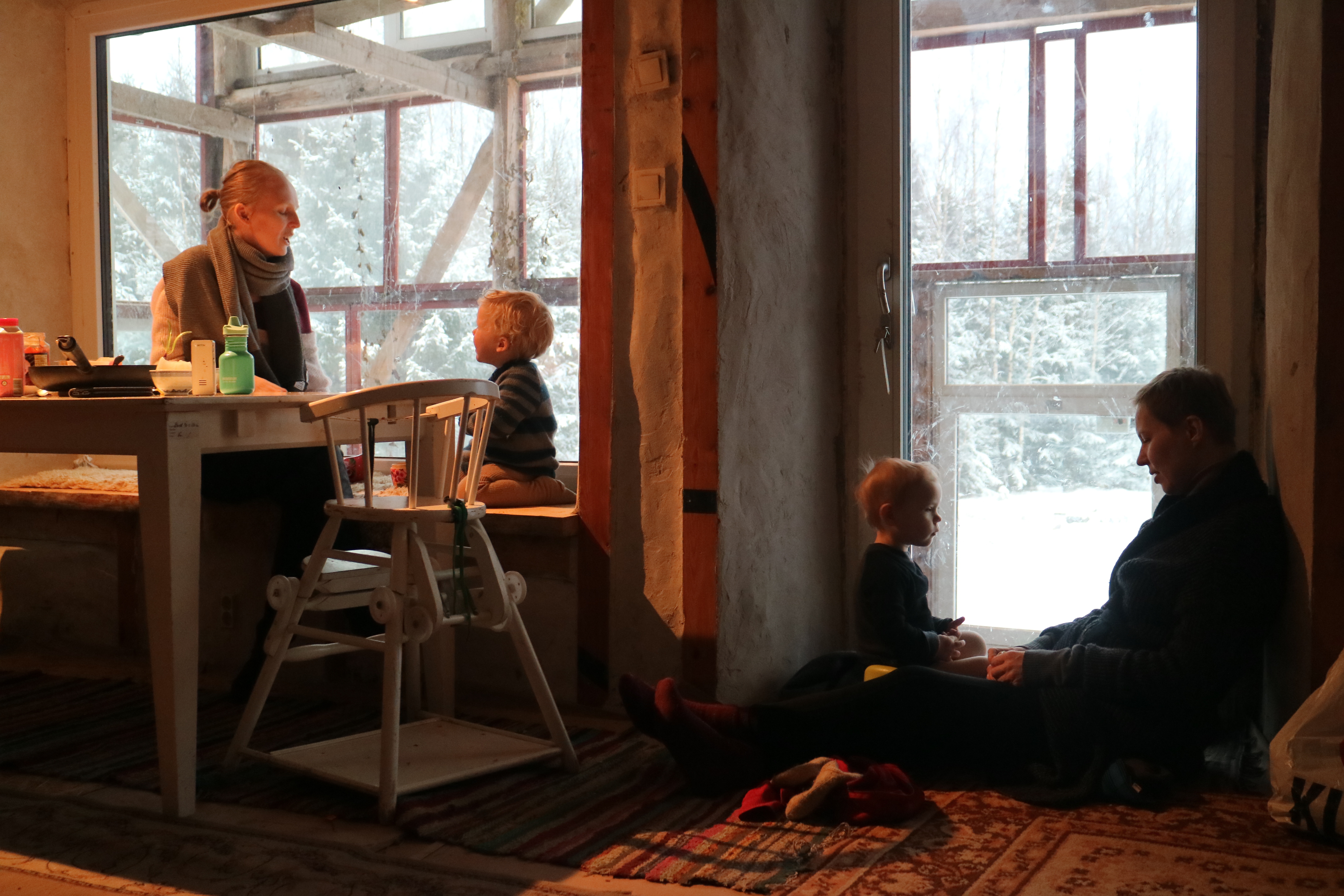
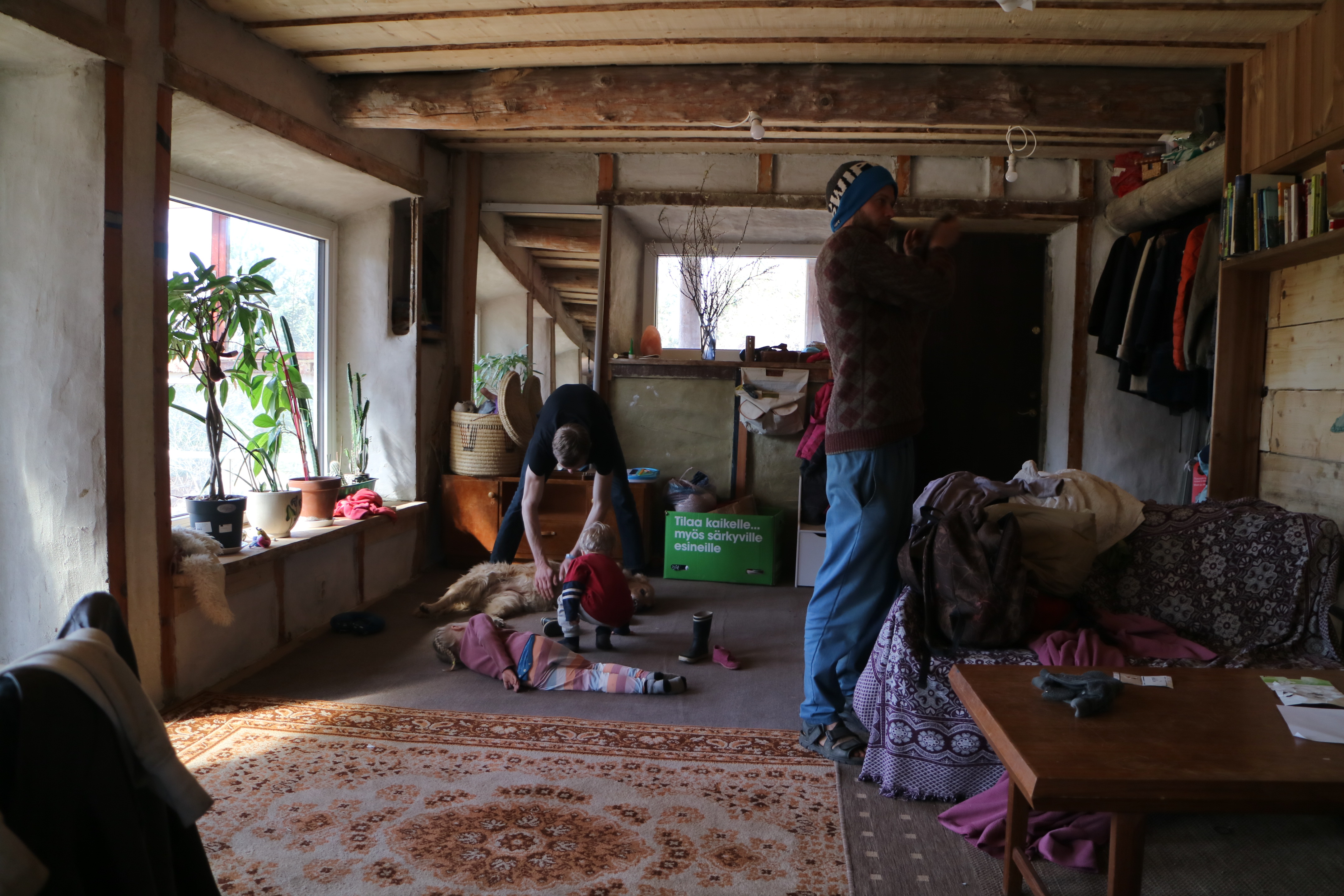
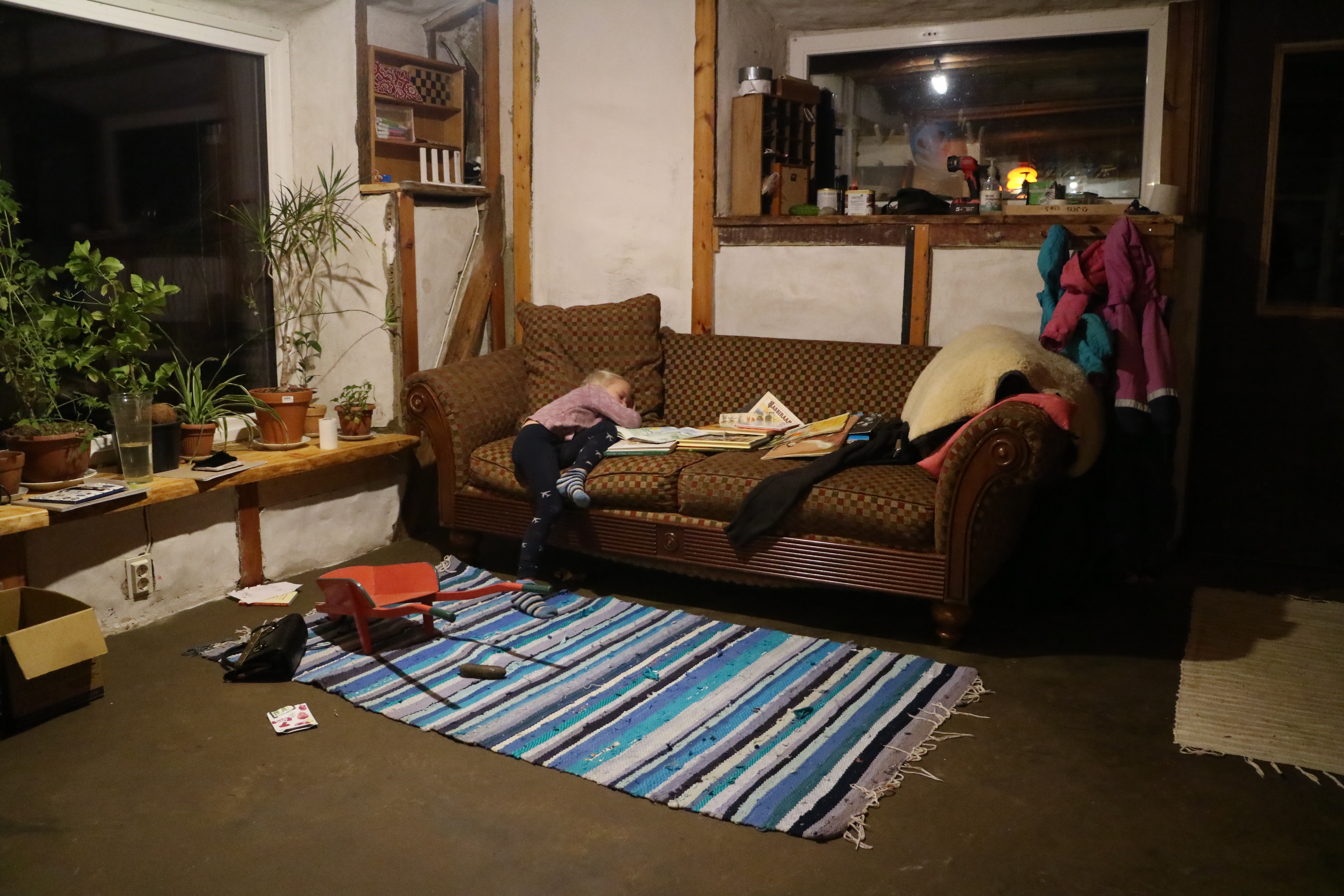
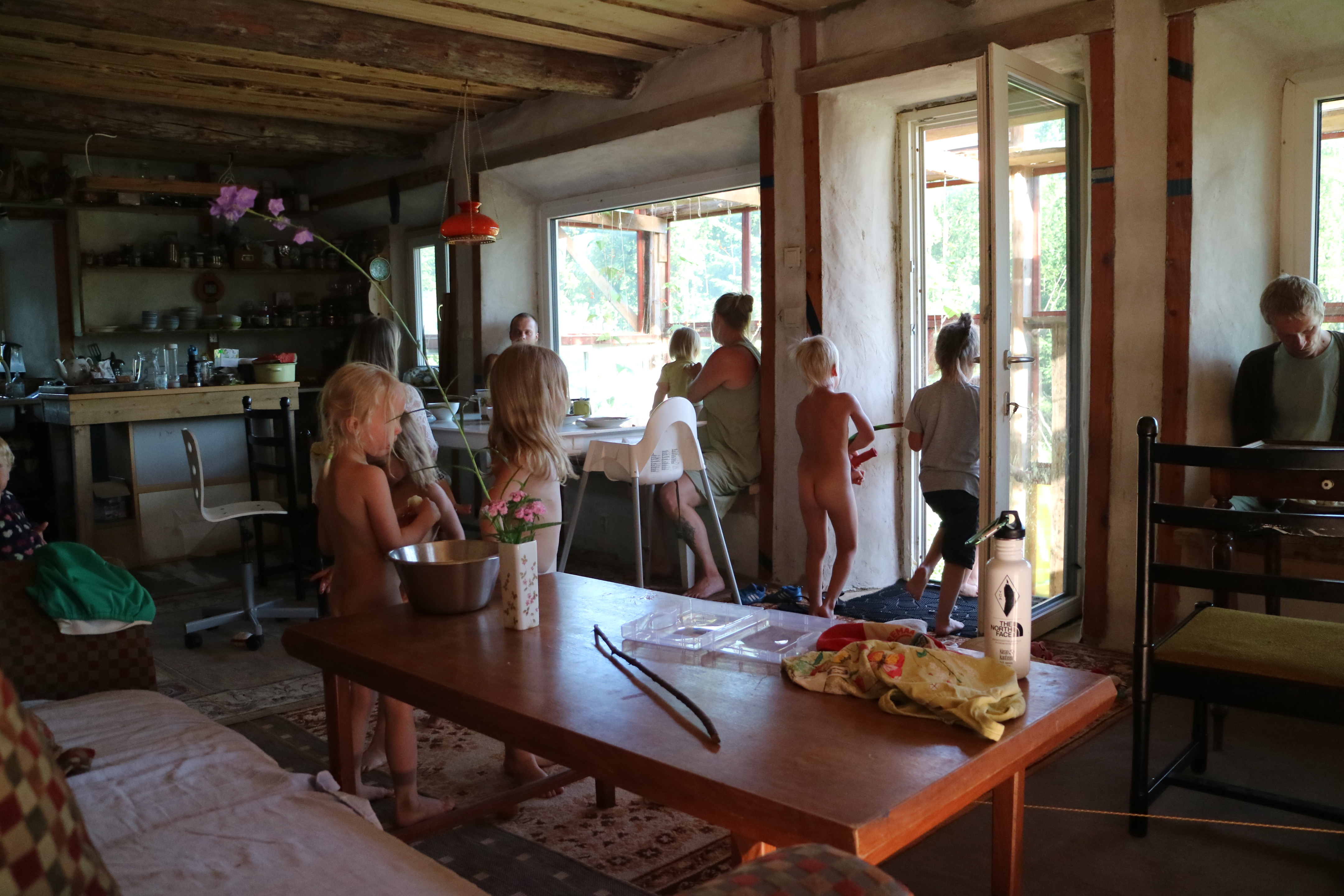
It still feels unbelievable that we actually get to live here. For many years it felt as if we were working on some kind of interesting, experimental art project — not building a house that we would one day truly live in. But now we do.
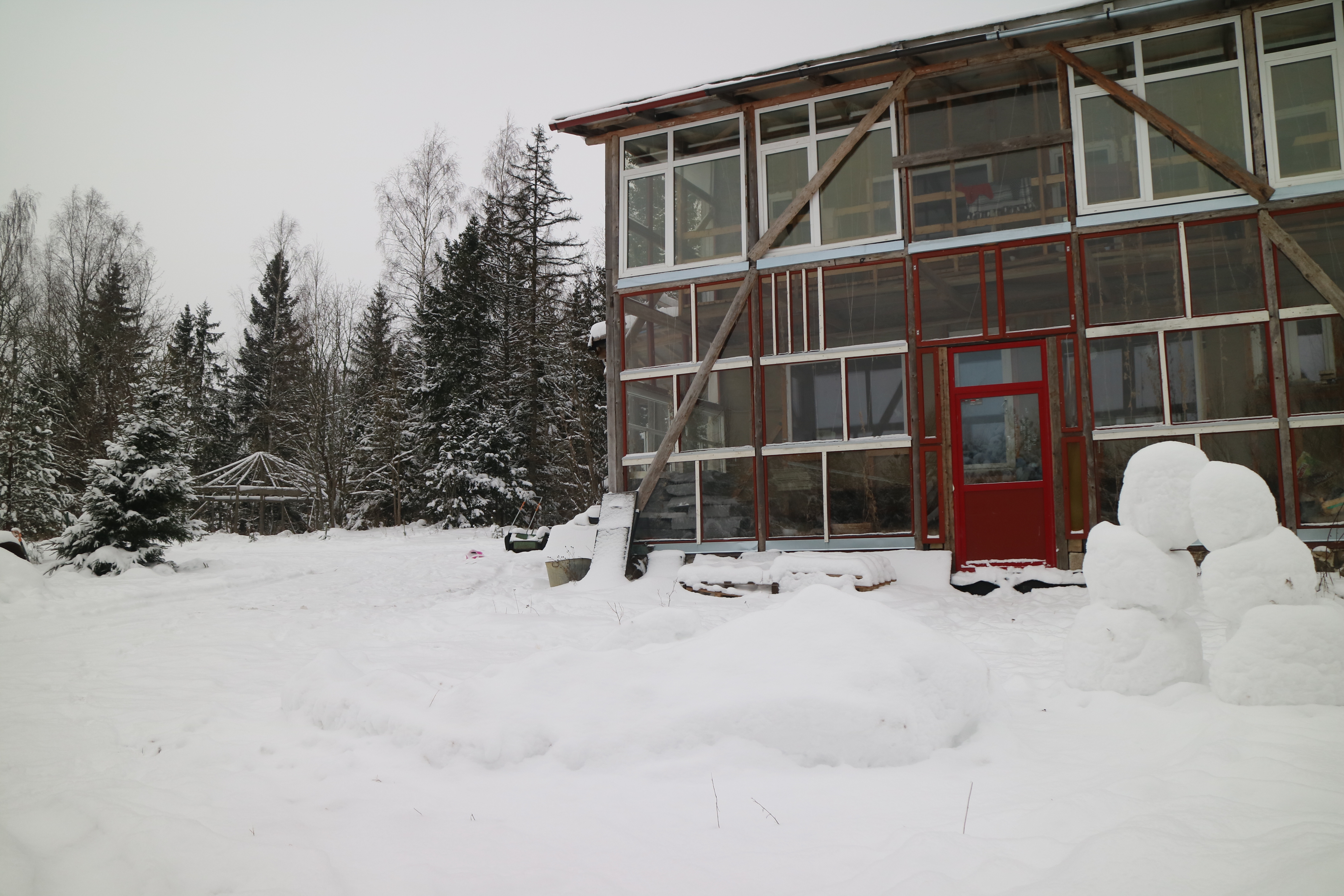
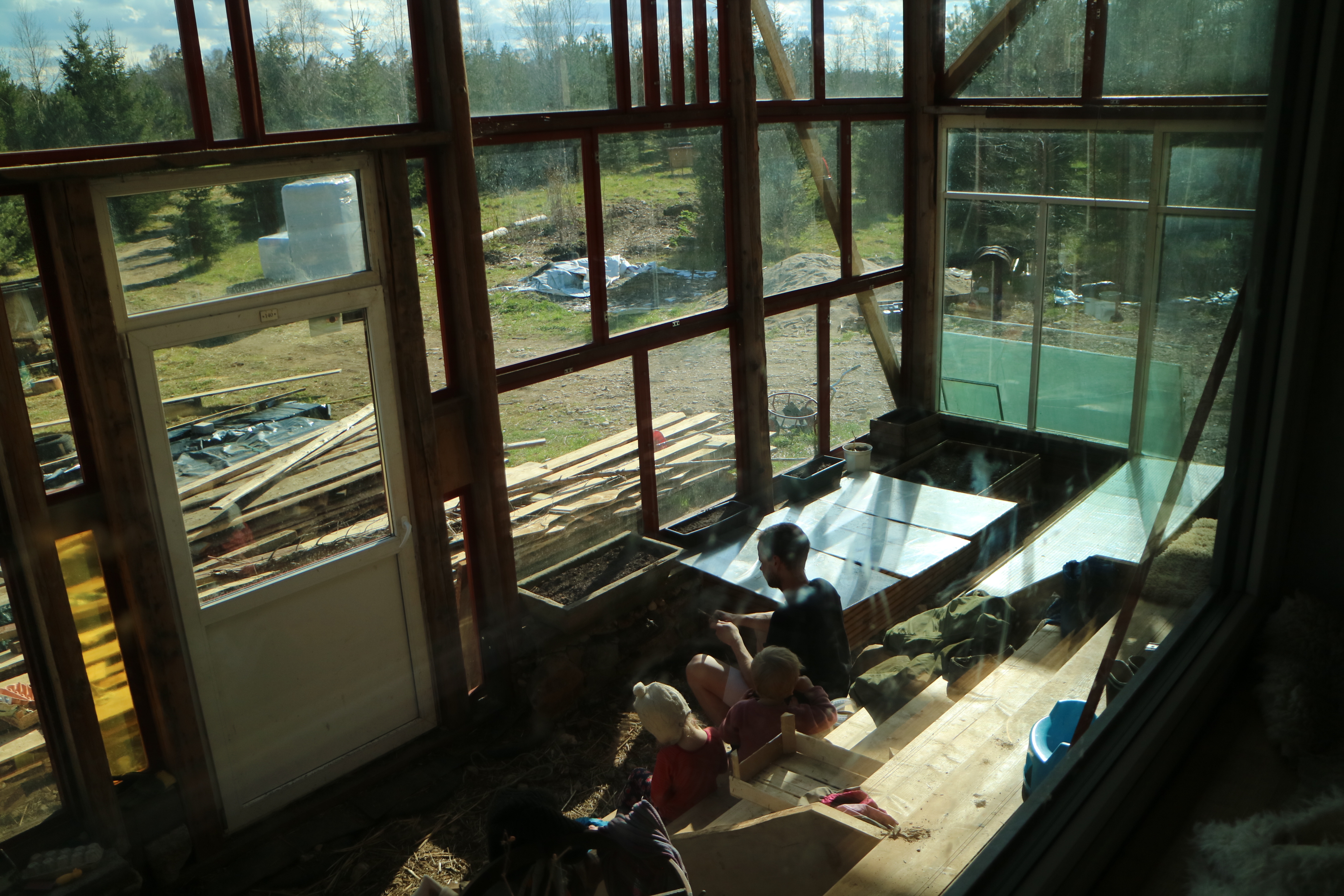
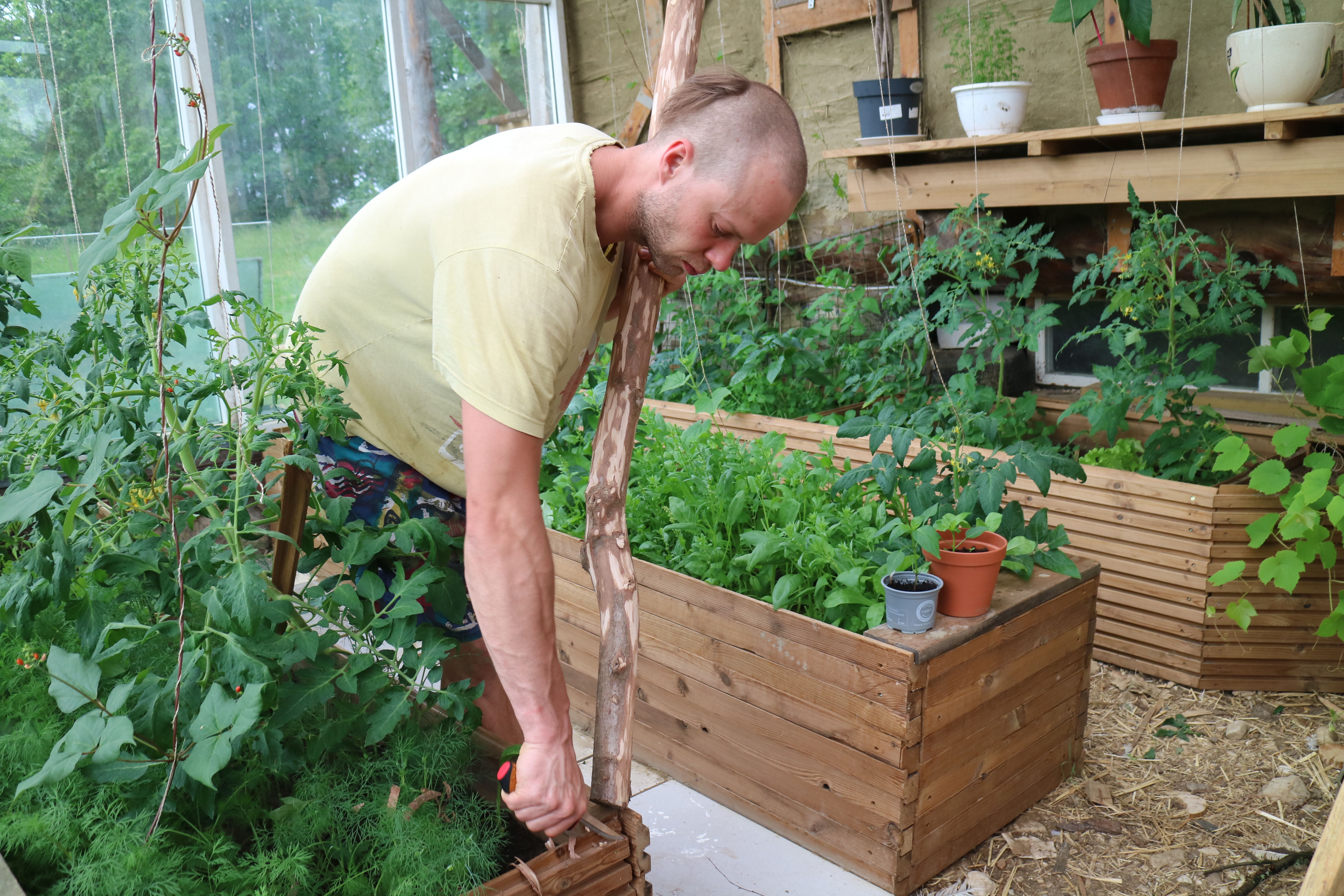
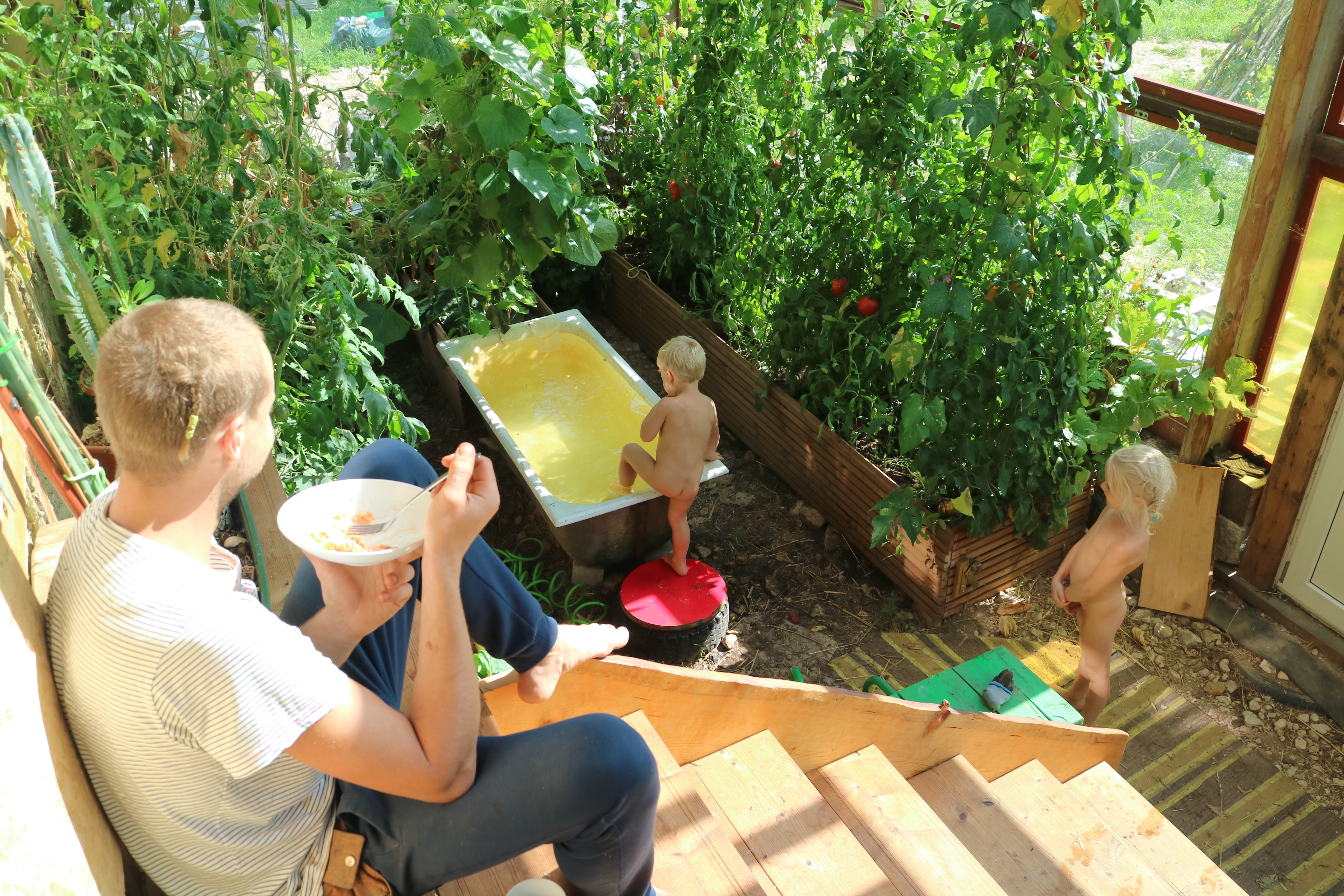
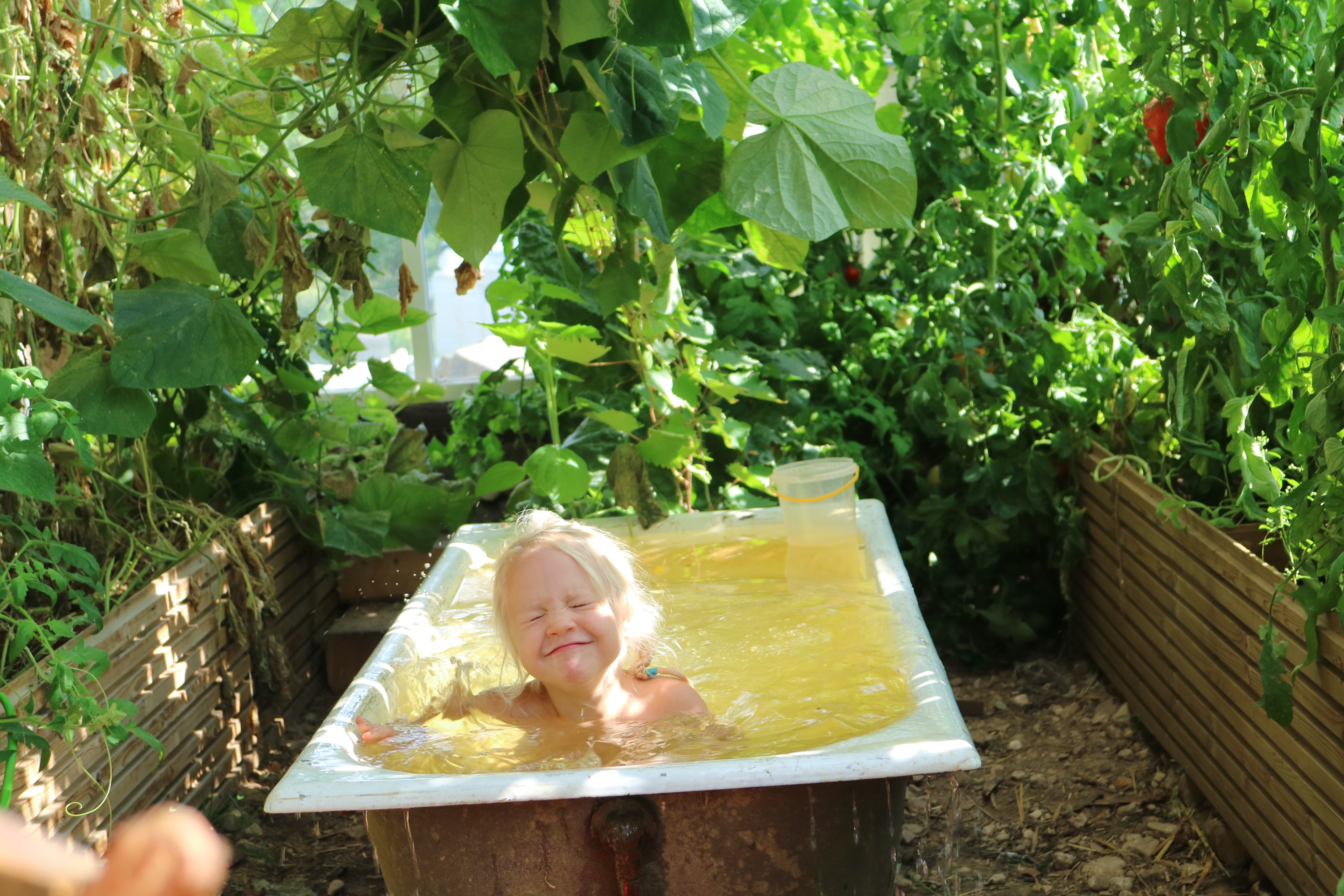
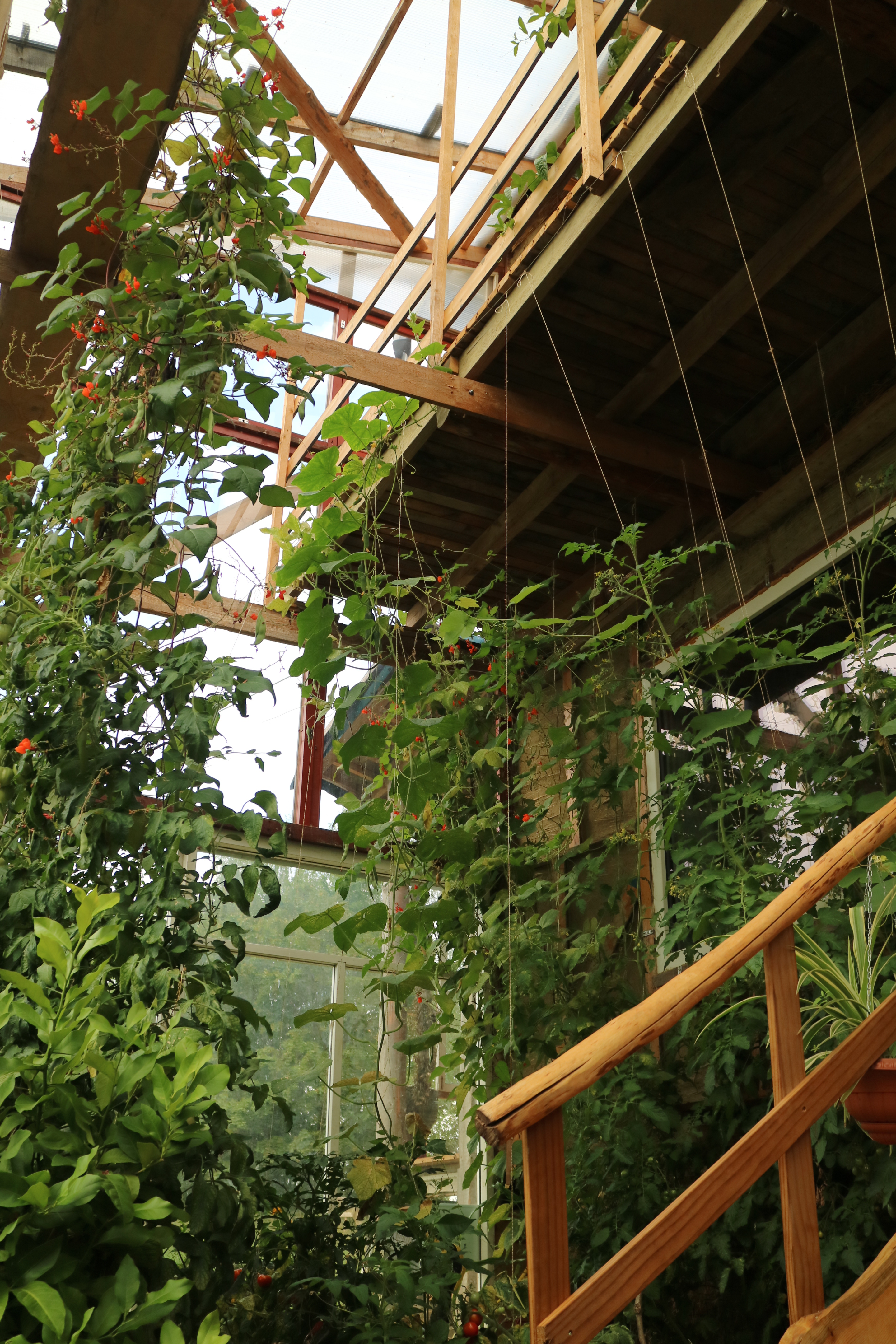
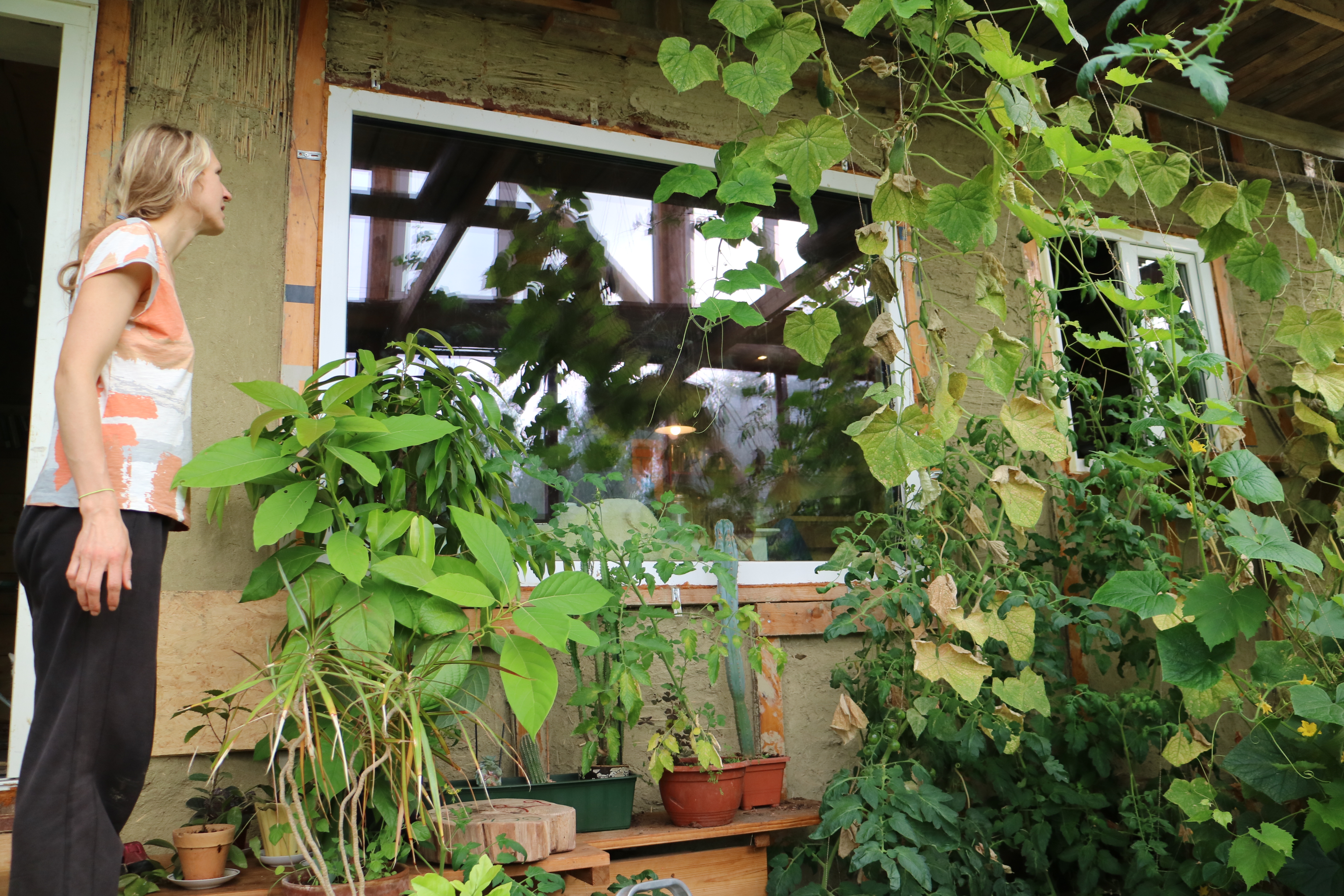
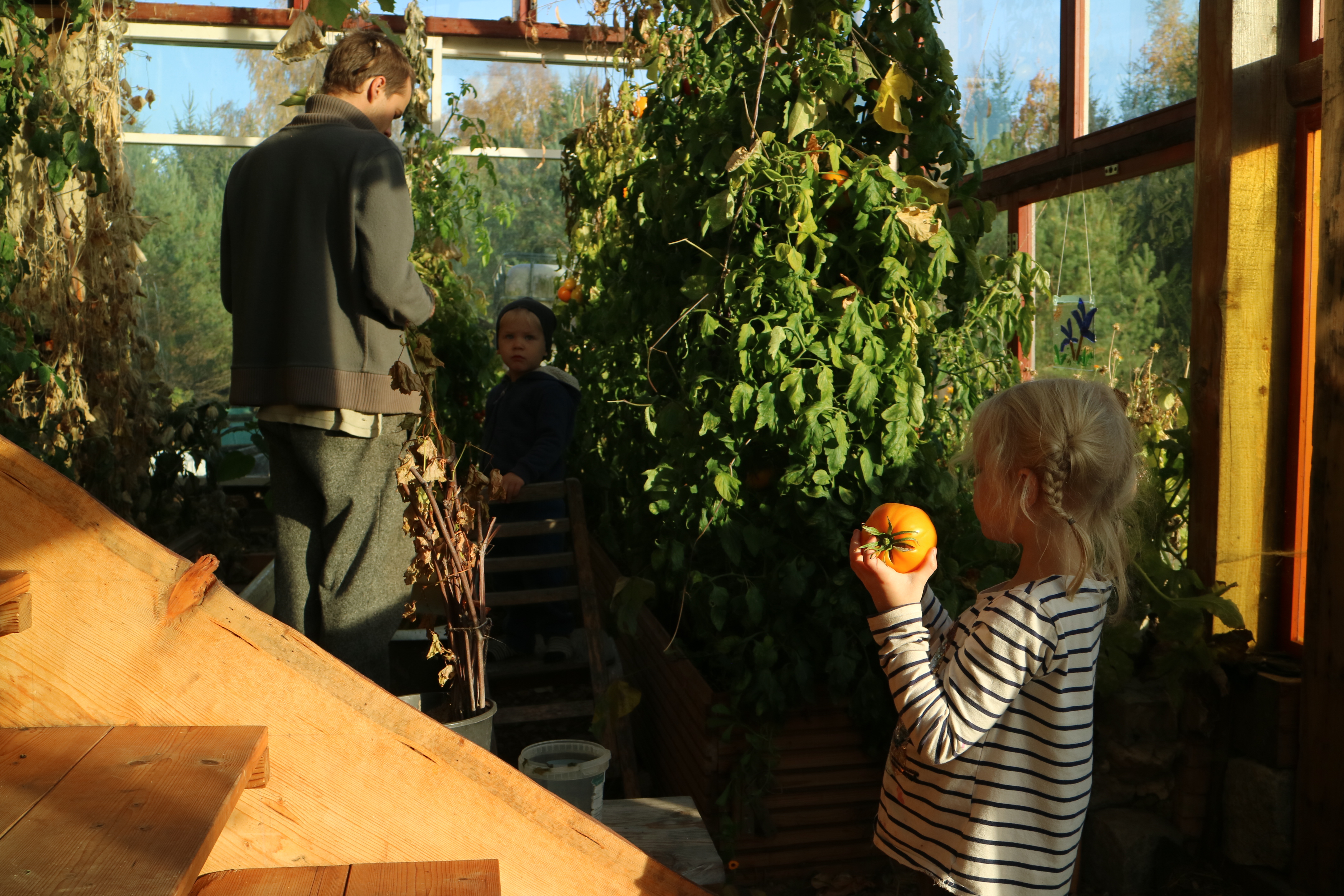
In spring the seeds go into the soil early and we finally see the full potential of our greenhouse. Even before making other construction plans, we knew we wanted a greenhouse covering the entire southern side of the house — and it does not disappoint. Already in early spring the sun heats the space so much that we can keep the doors and windows open and use it as additional heating for the house.
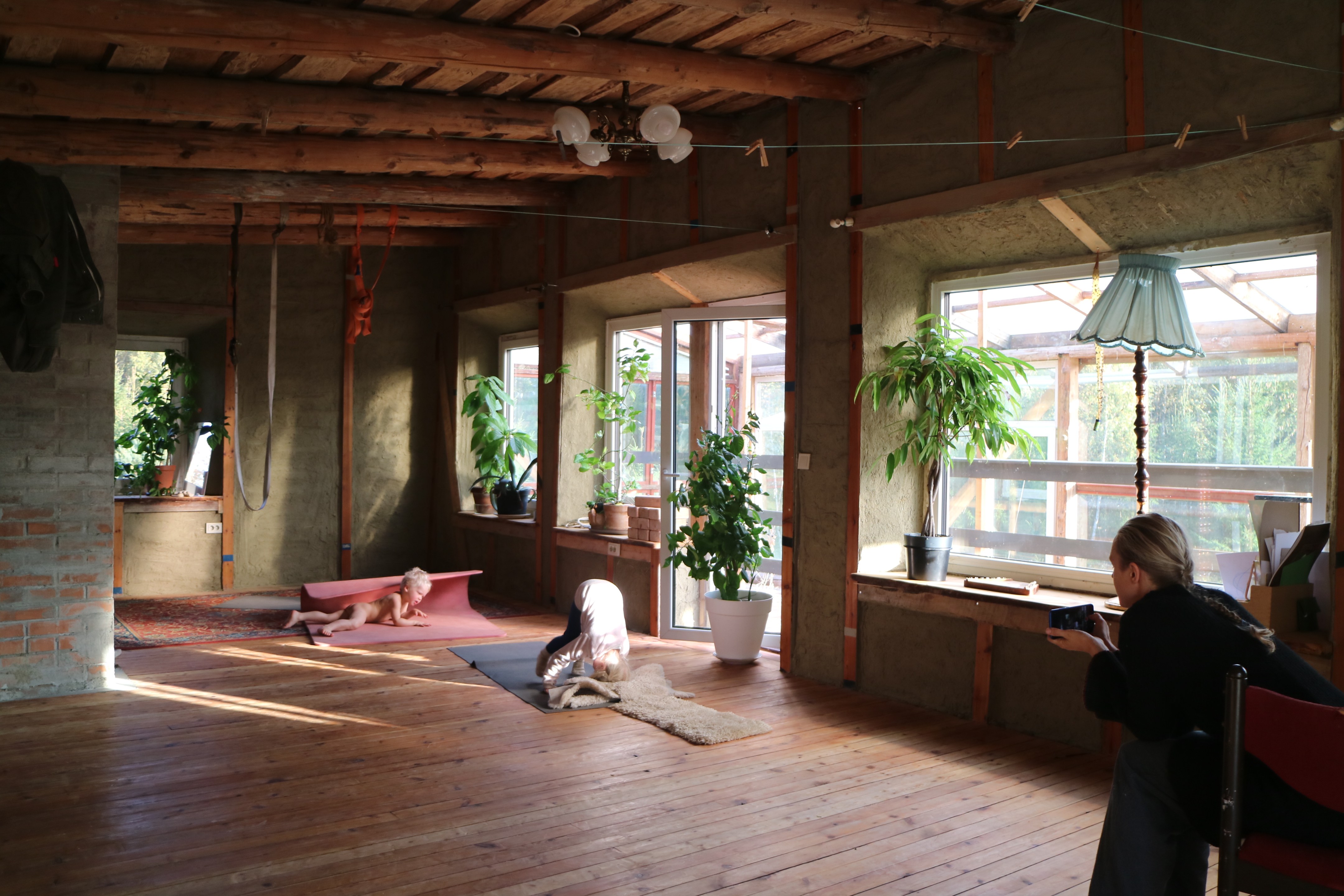
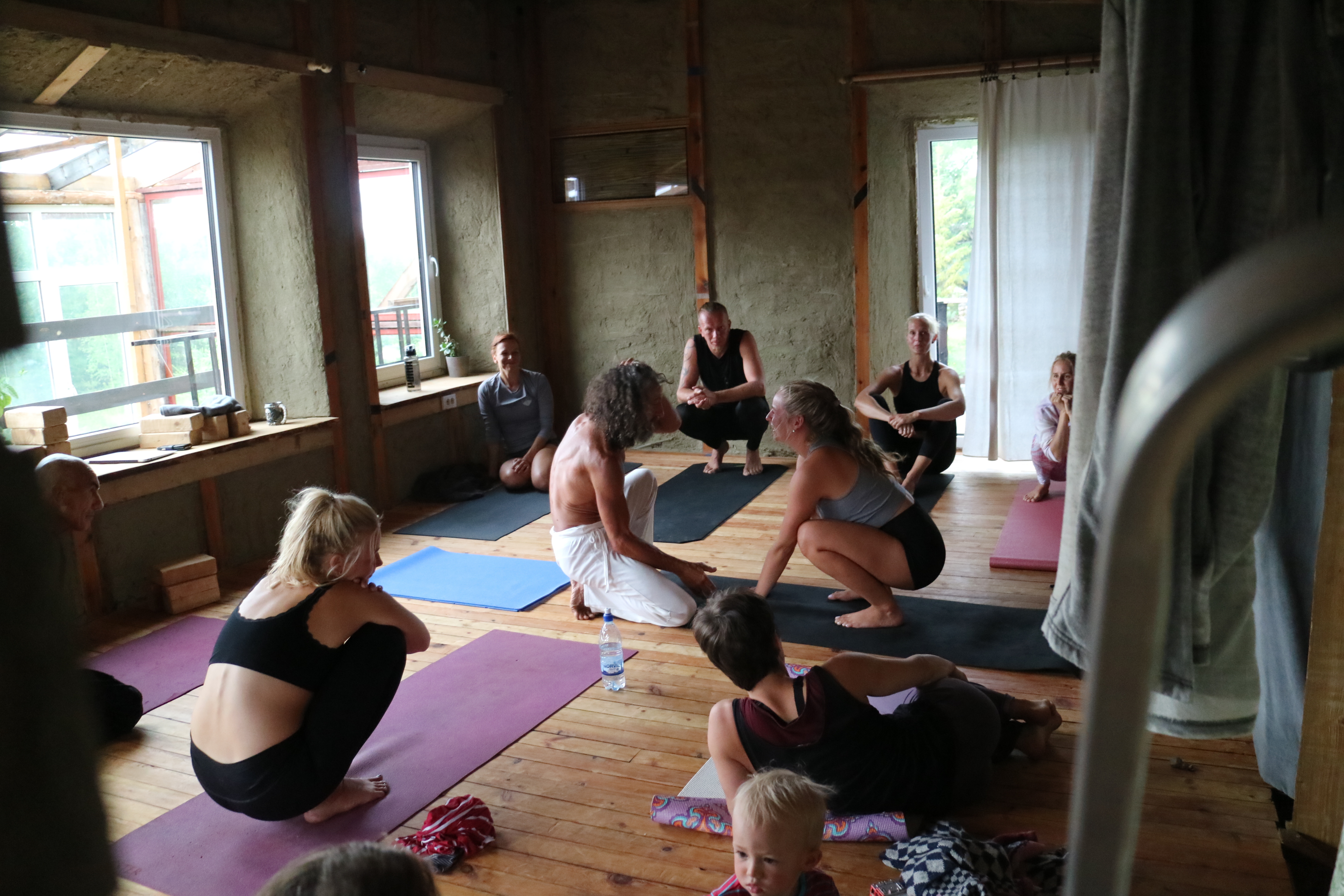
This summer AcroFestonia takes place for the seventh time. Some of the workshops are held on the second floor of our house.
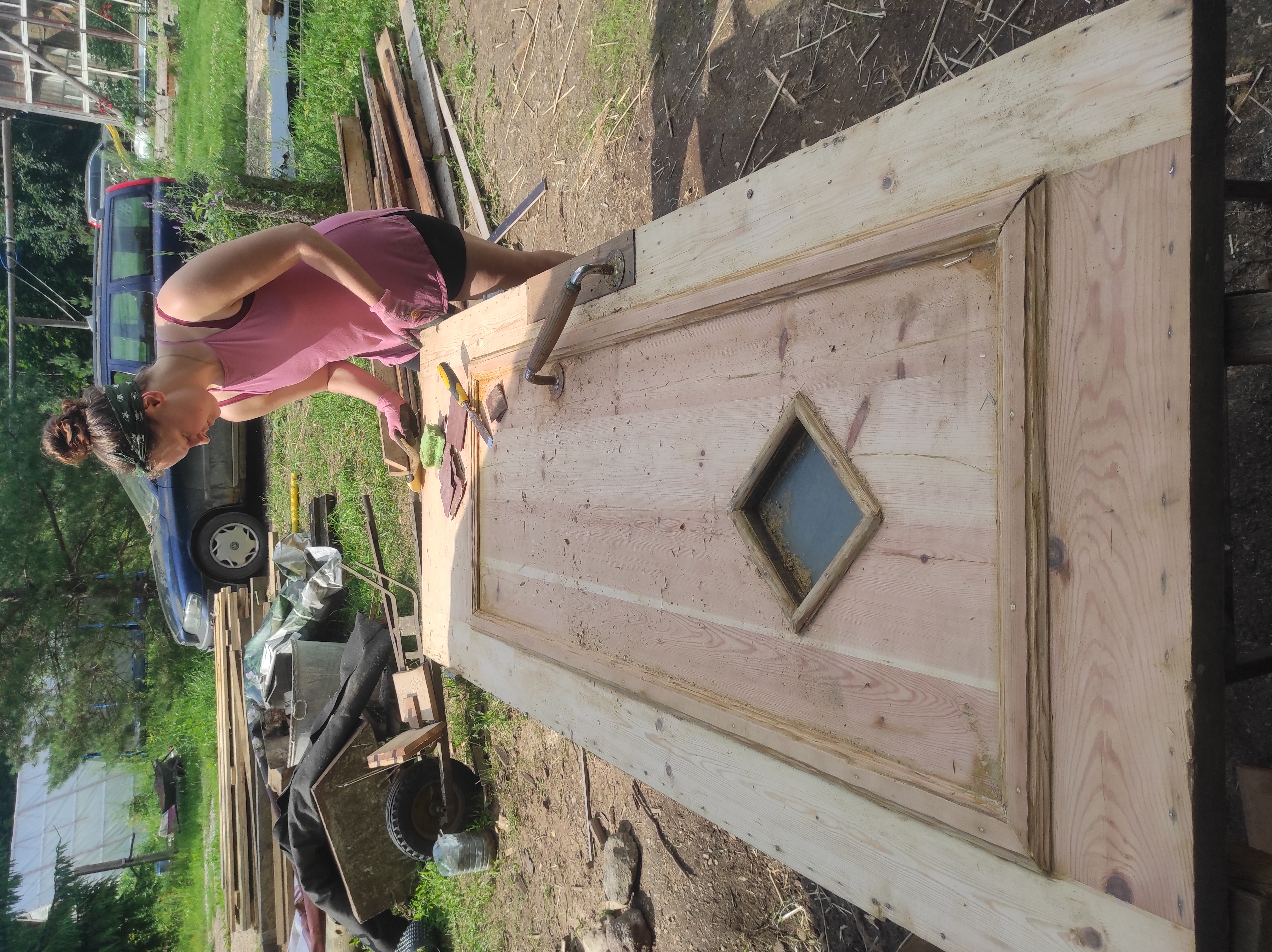
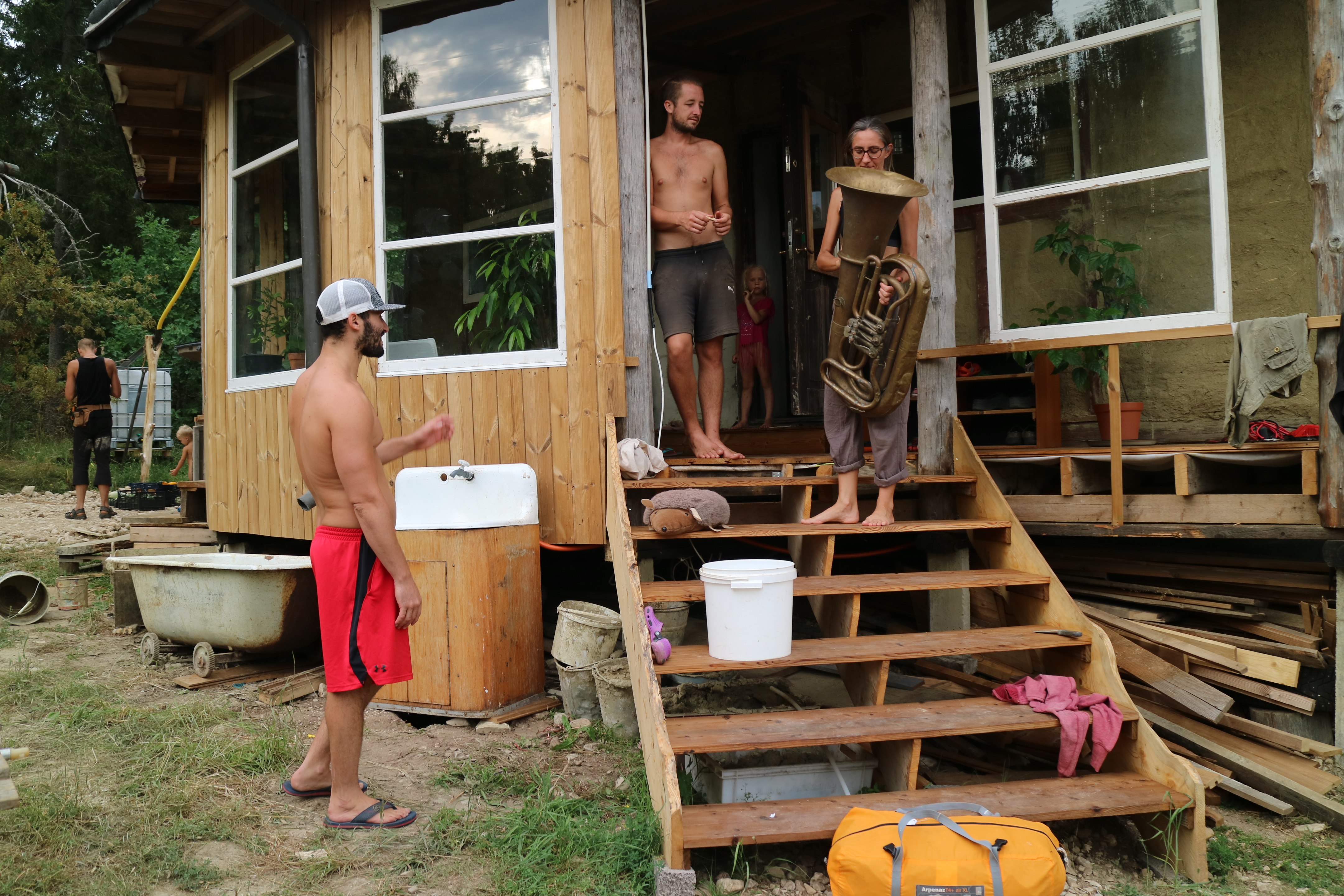
Construction and small improvements continue constantly. During the summer the entrance hall finally gets its walls and windows. The windows, of course, were found nowhere else than behind the barn.
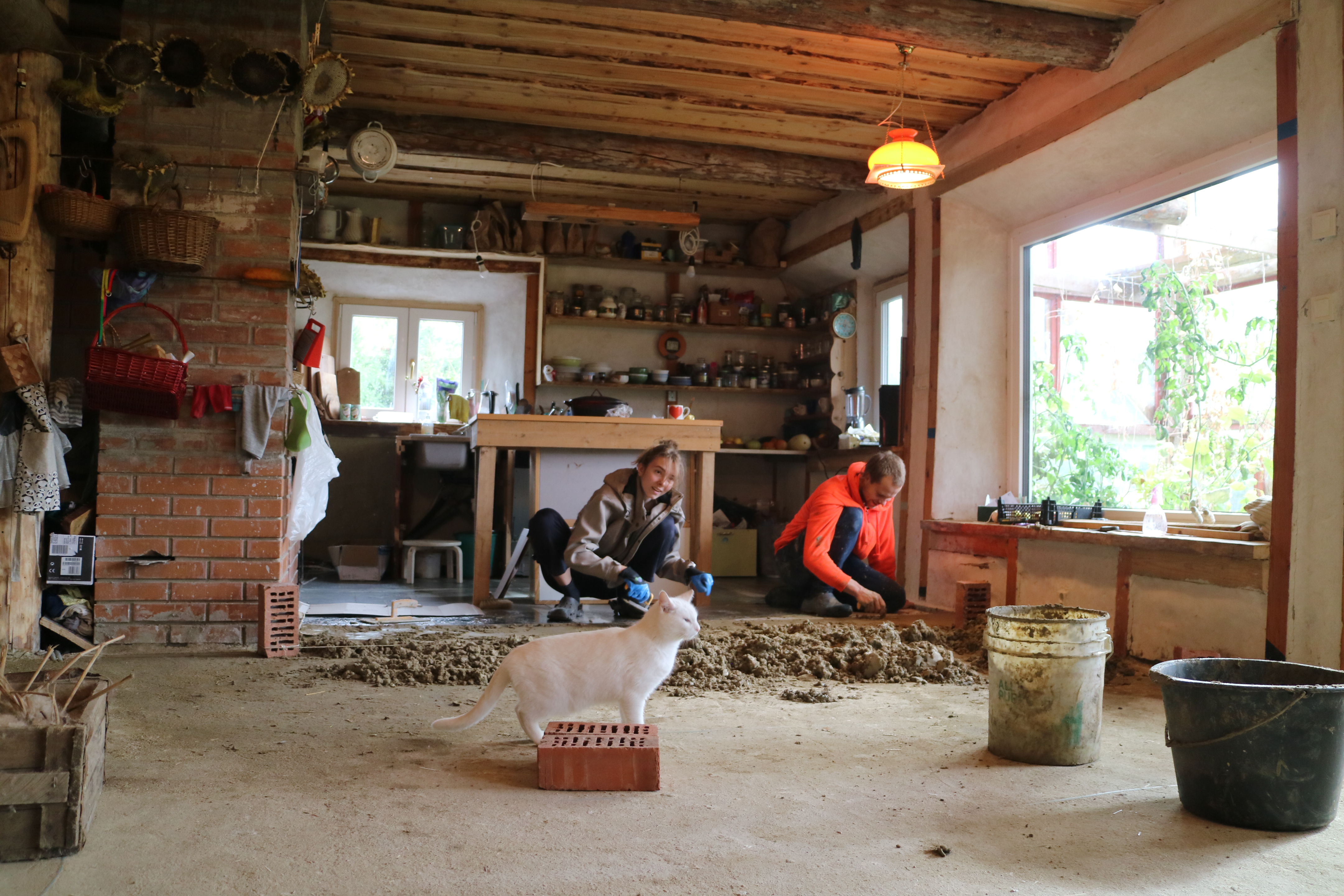
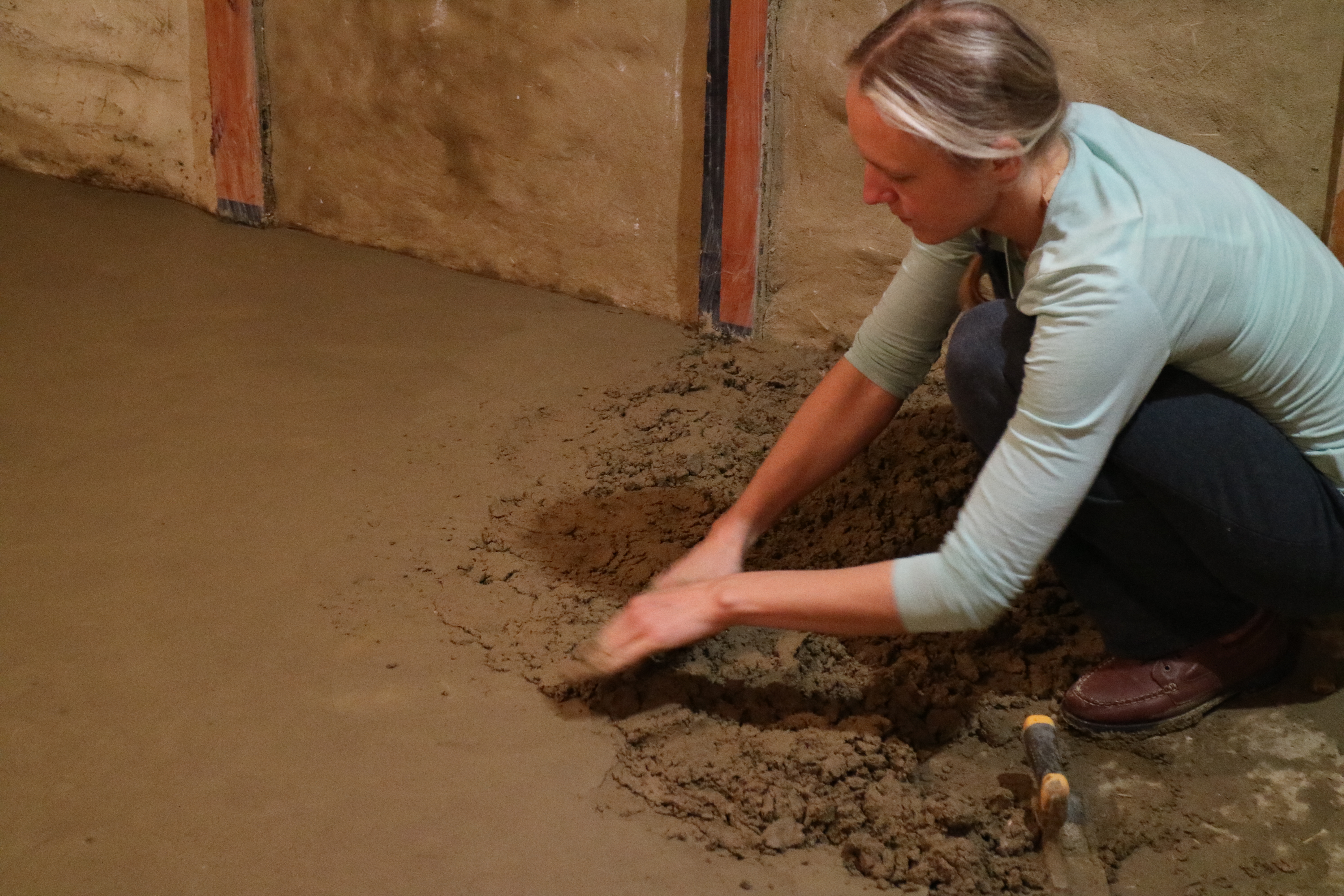
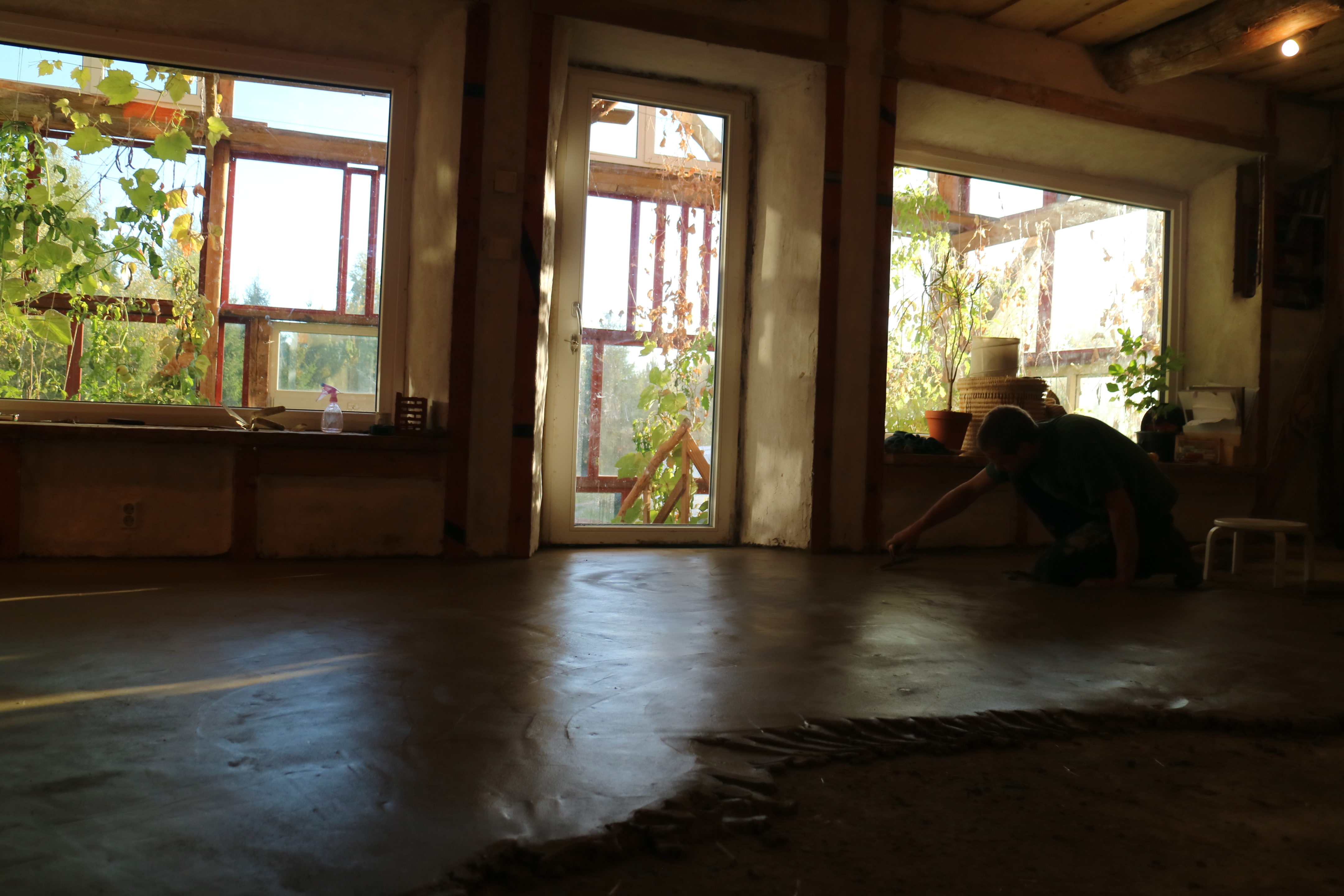
In autumn the first-floor clay floor finally receives its final finishing layer. Once again there is a lot of inventing and experimenting, as there are simply no clear instructions for making a floor like this.
Thanks: Carmel-Ann, Romet, Ingvar, Joshua, Natalia, Joosep.
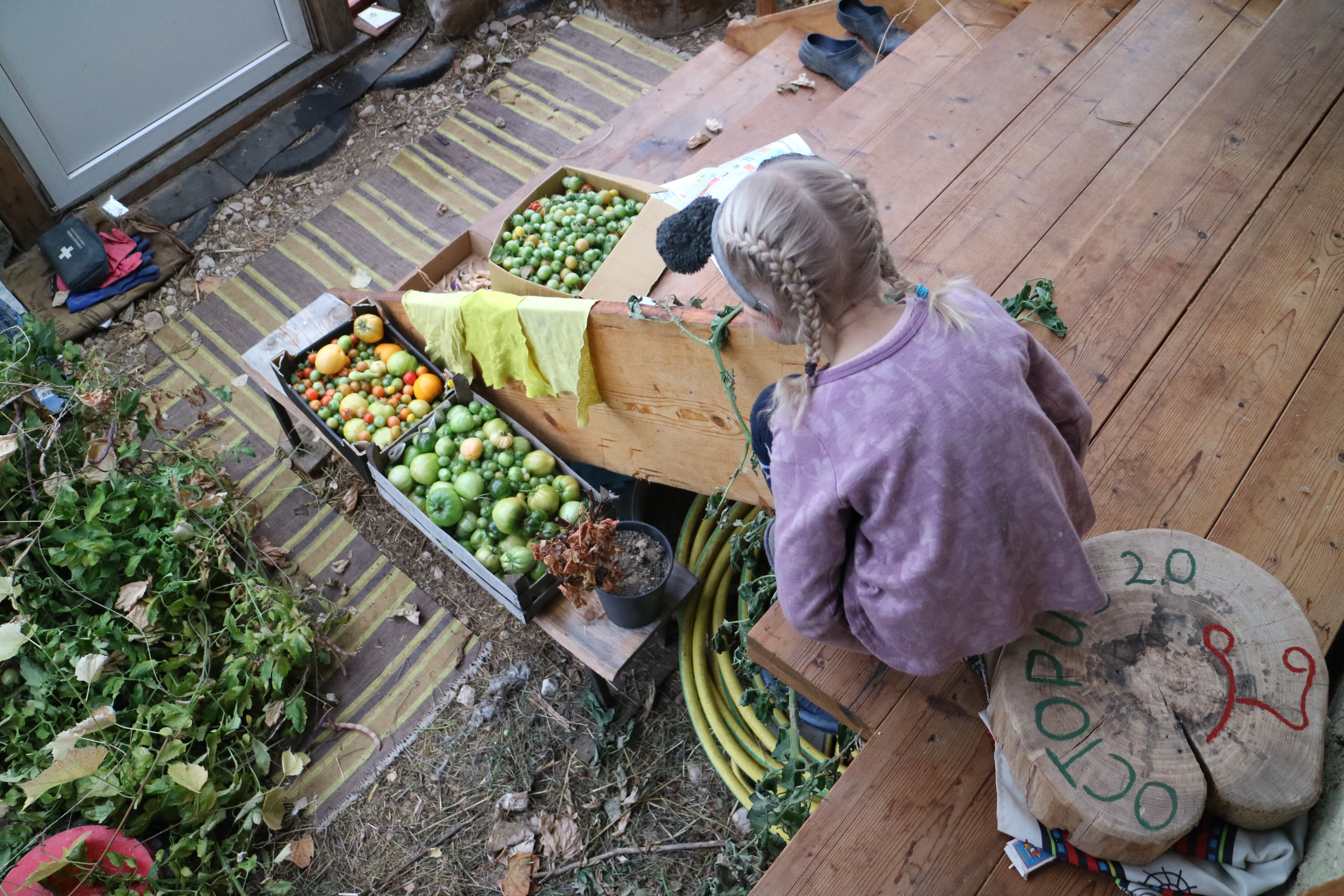

Leave a comment
2022 — Octopus 2.0
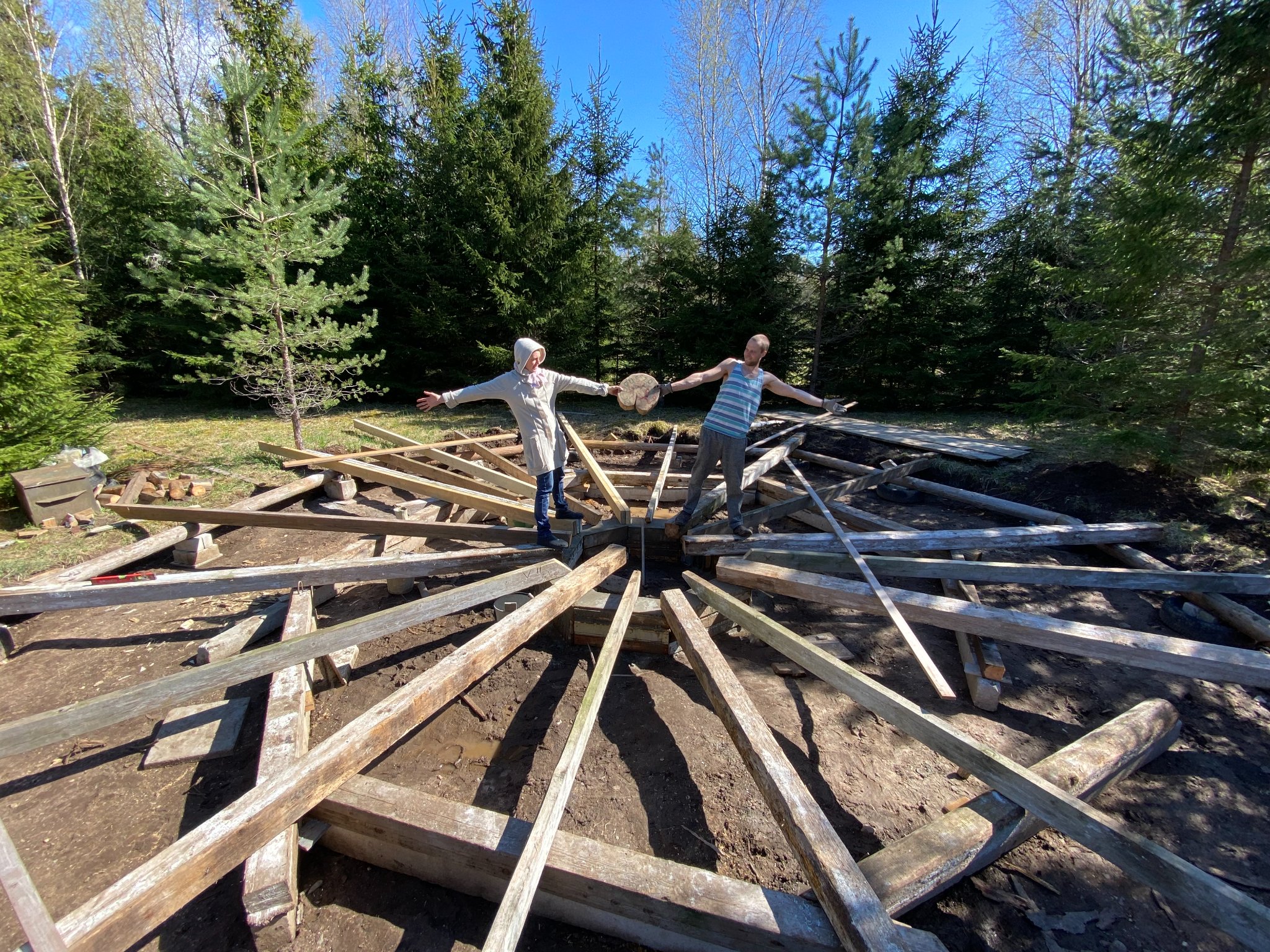
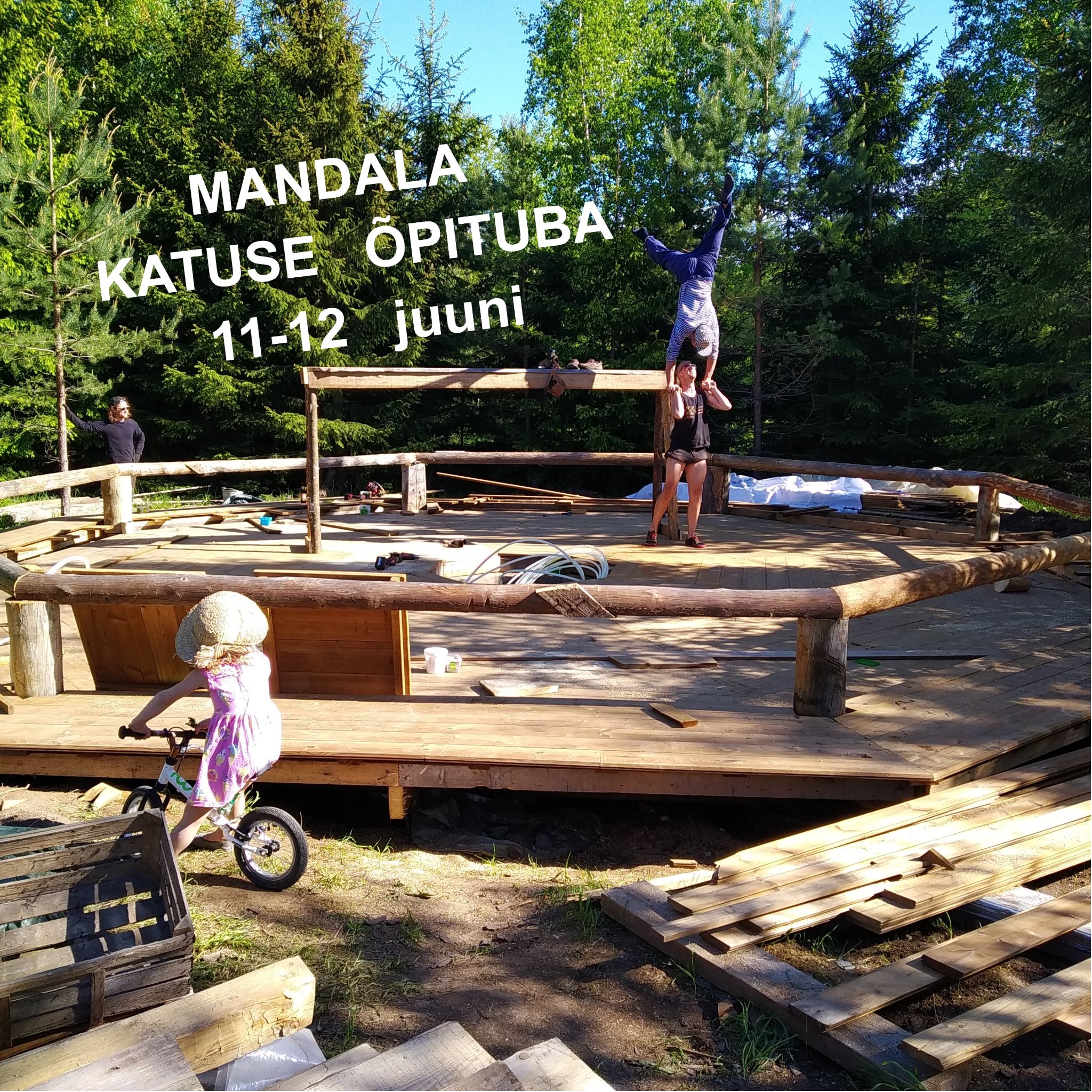
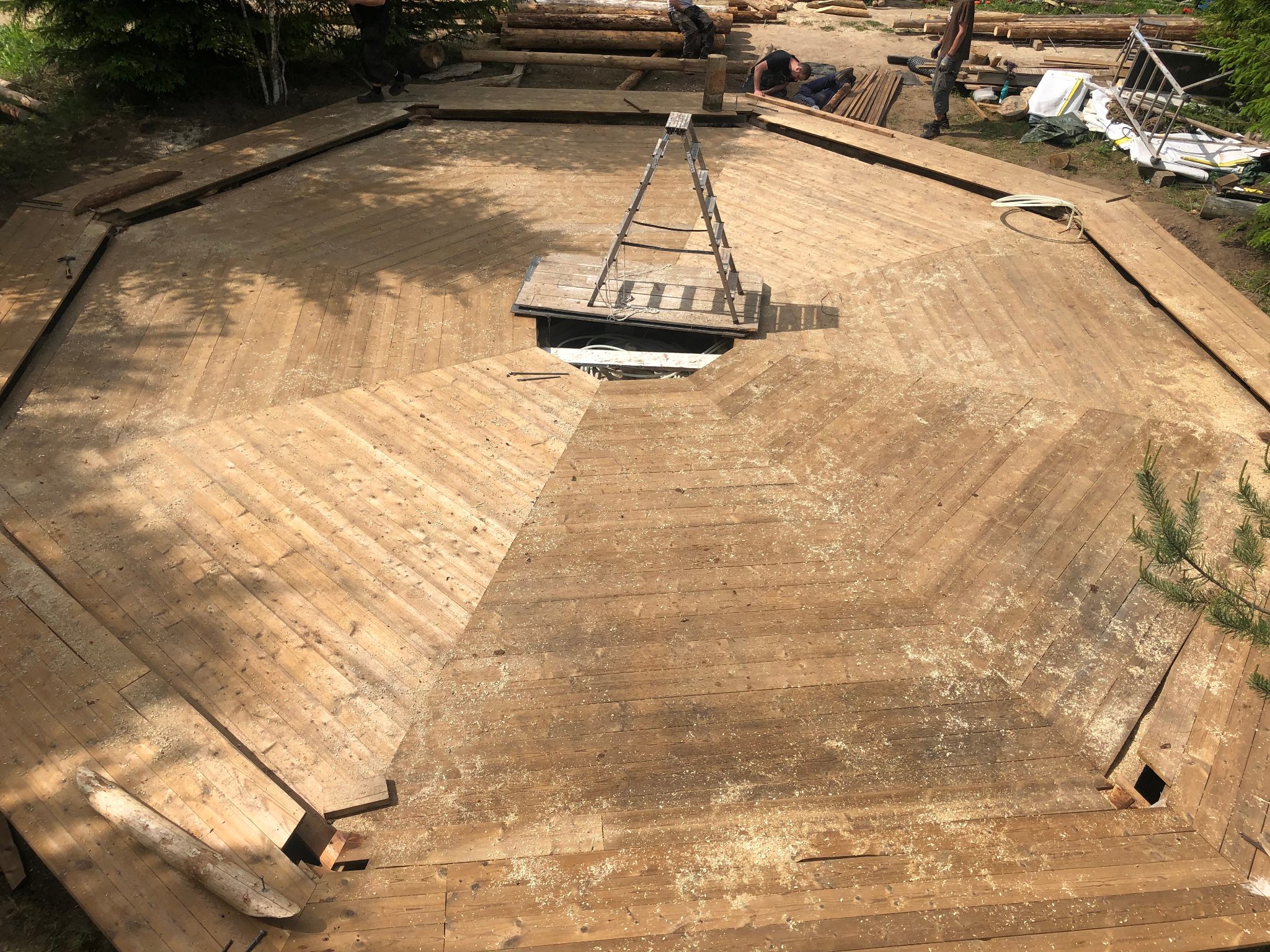
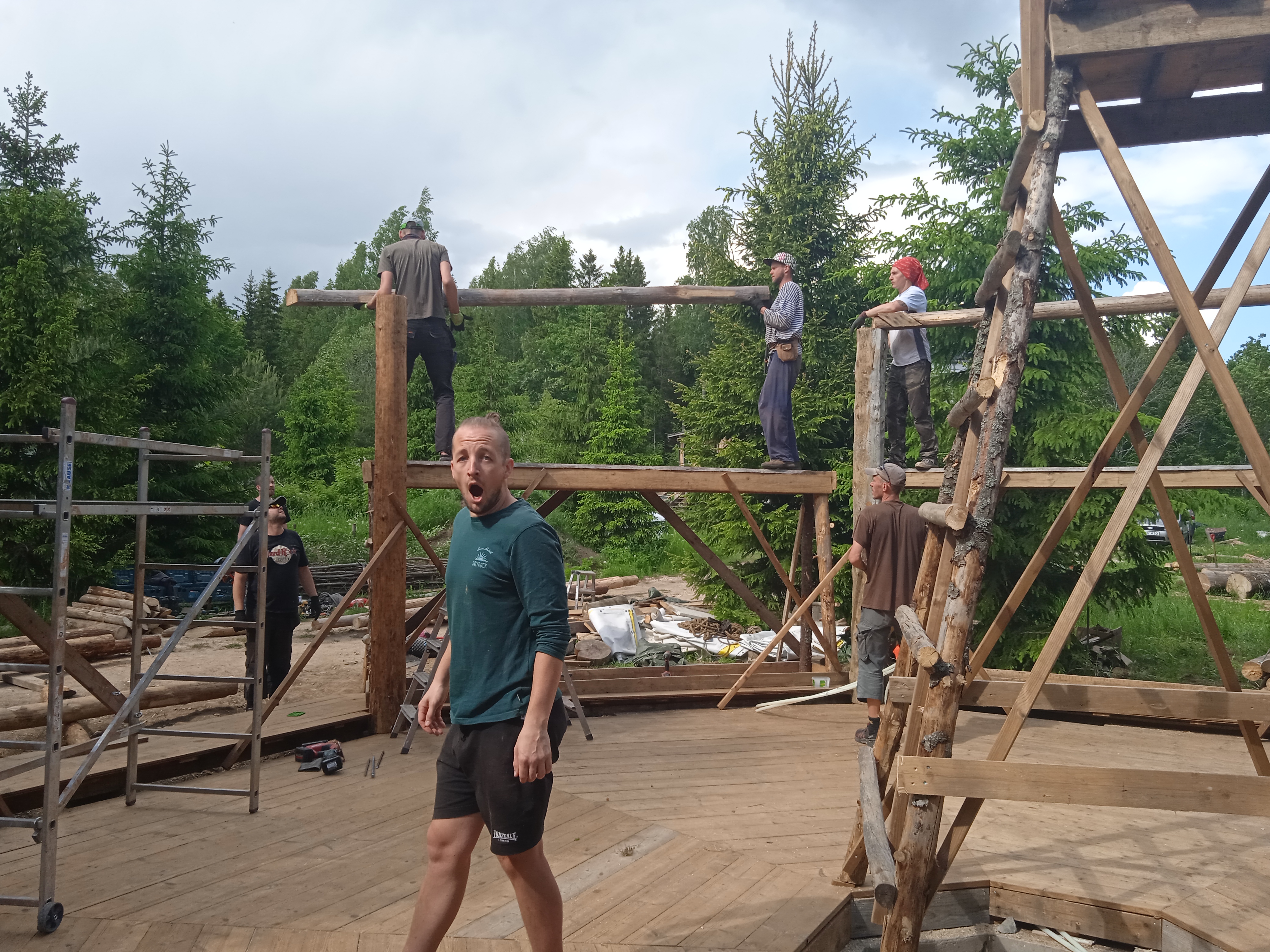
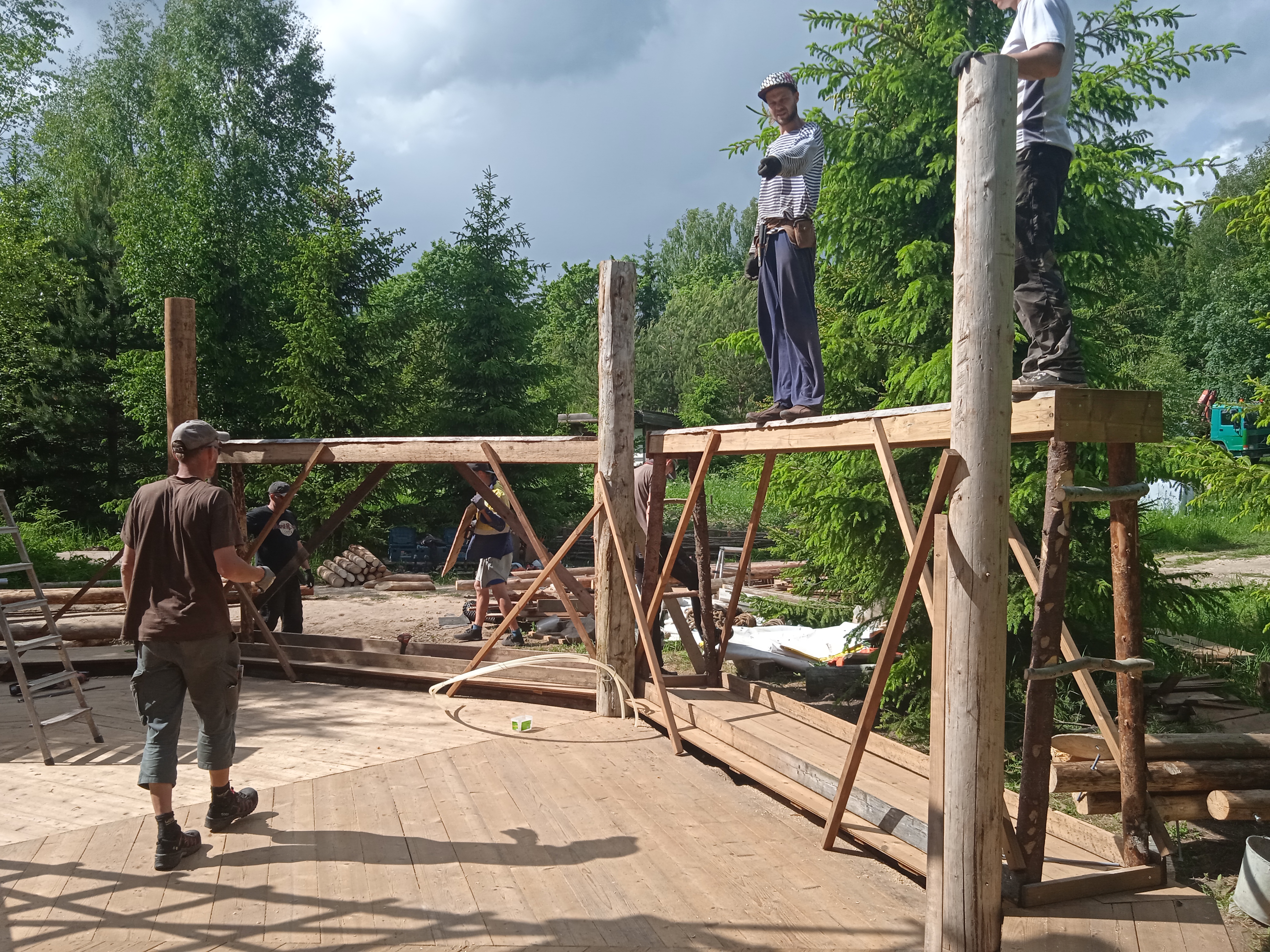
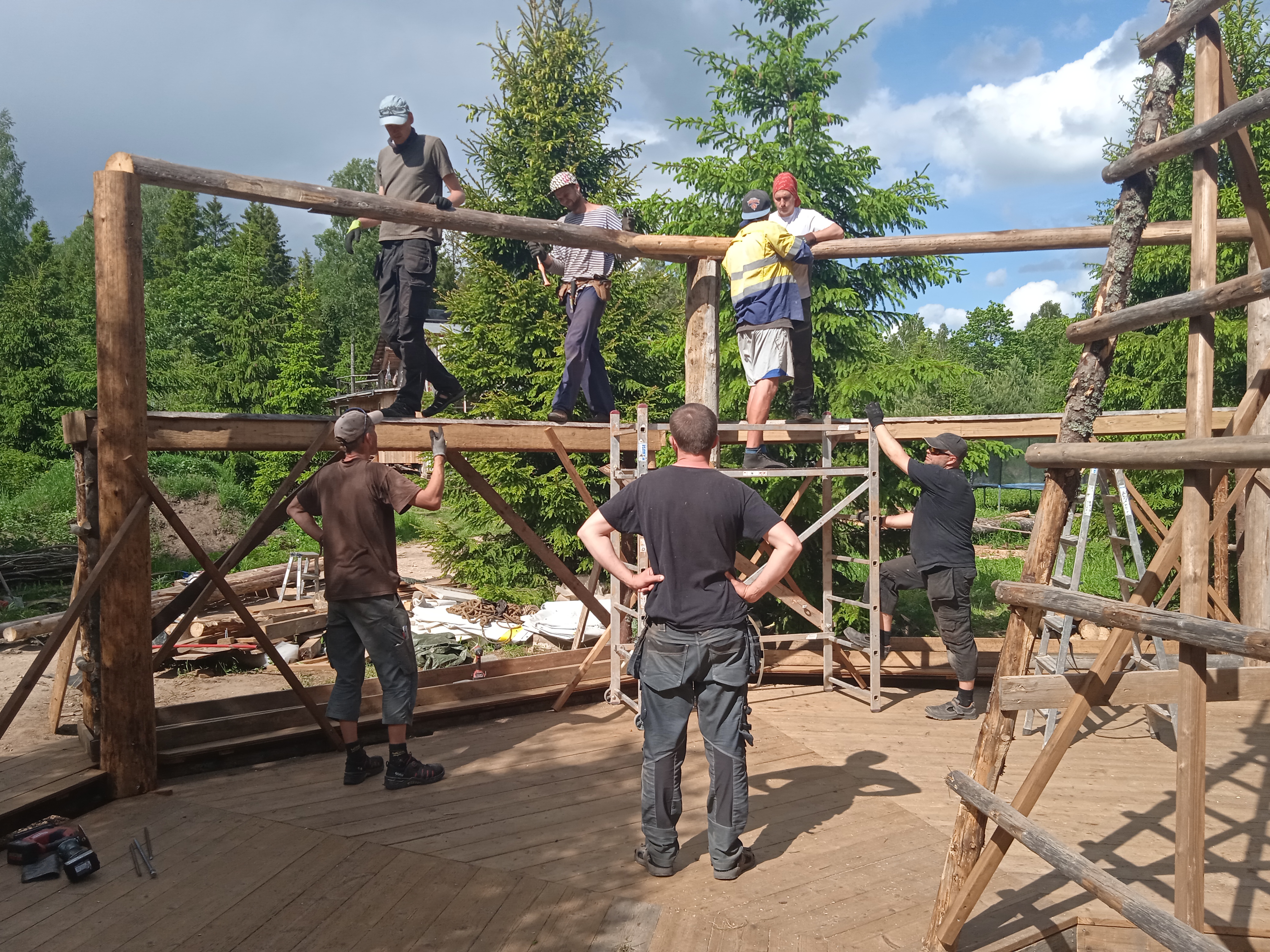
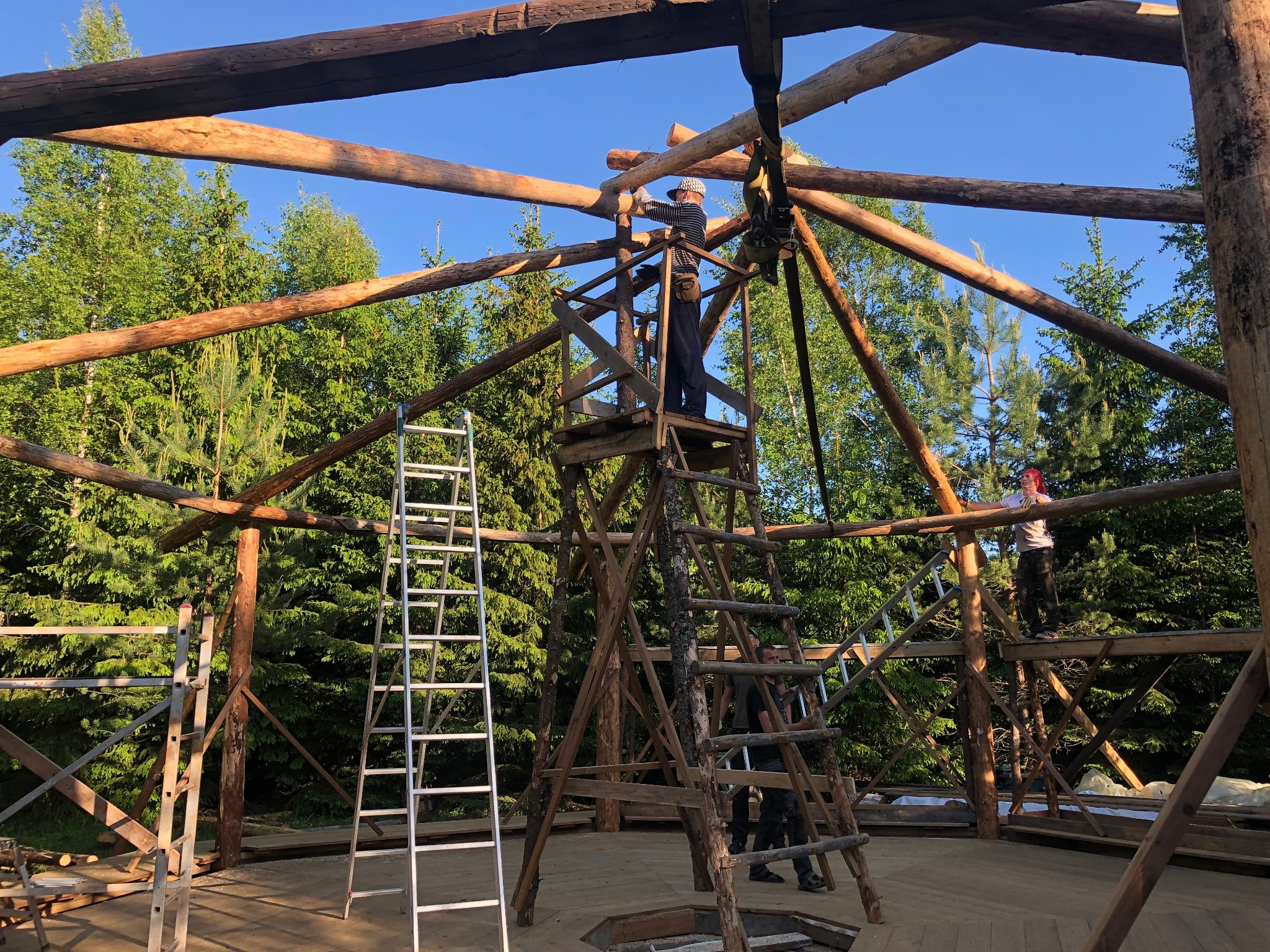
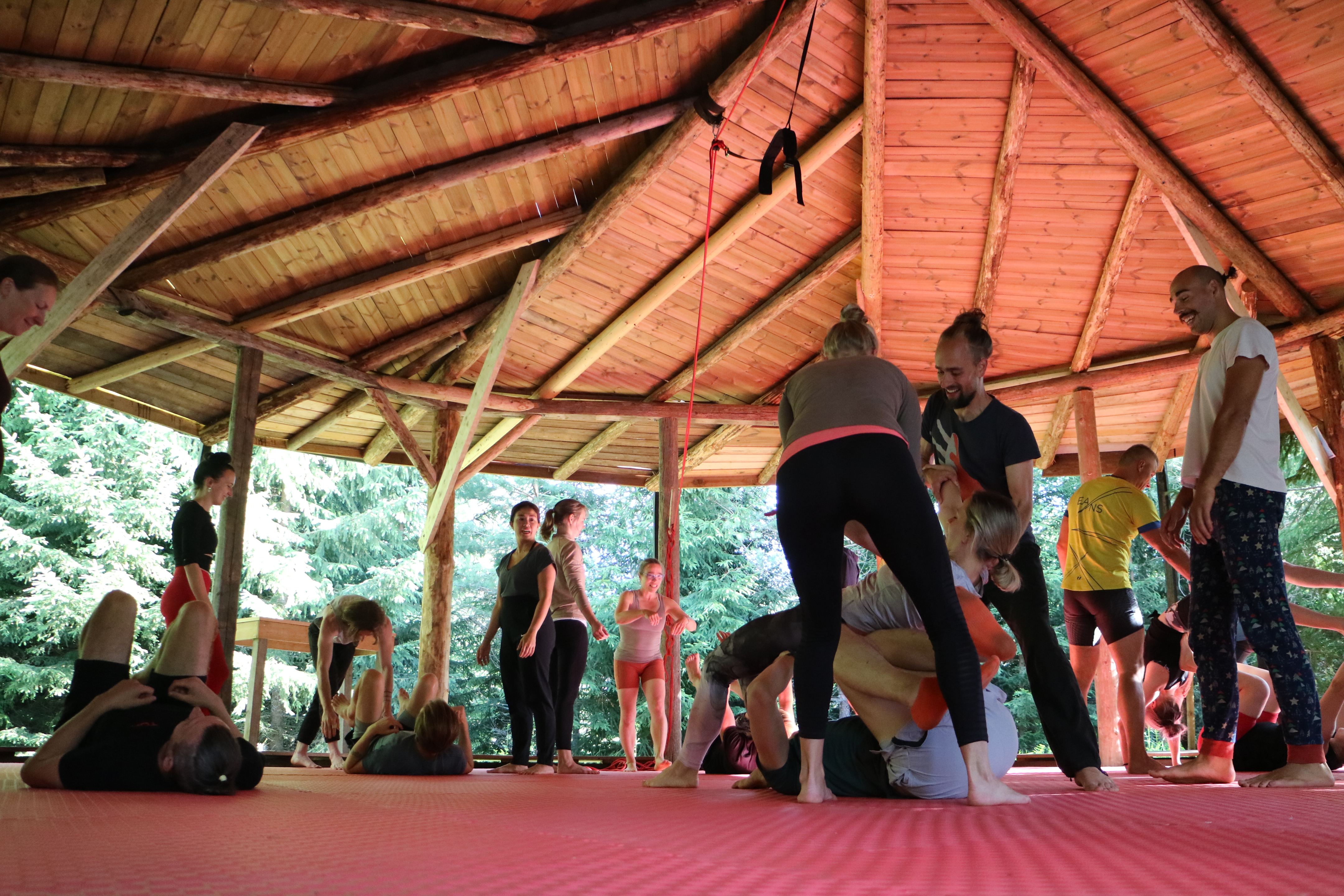
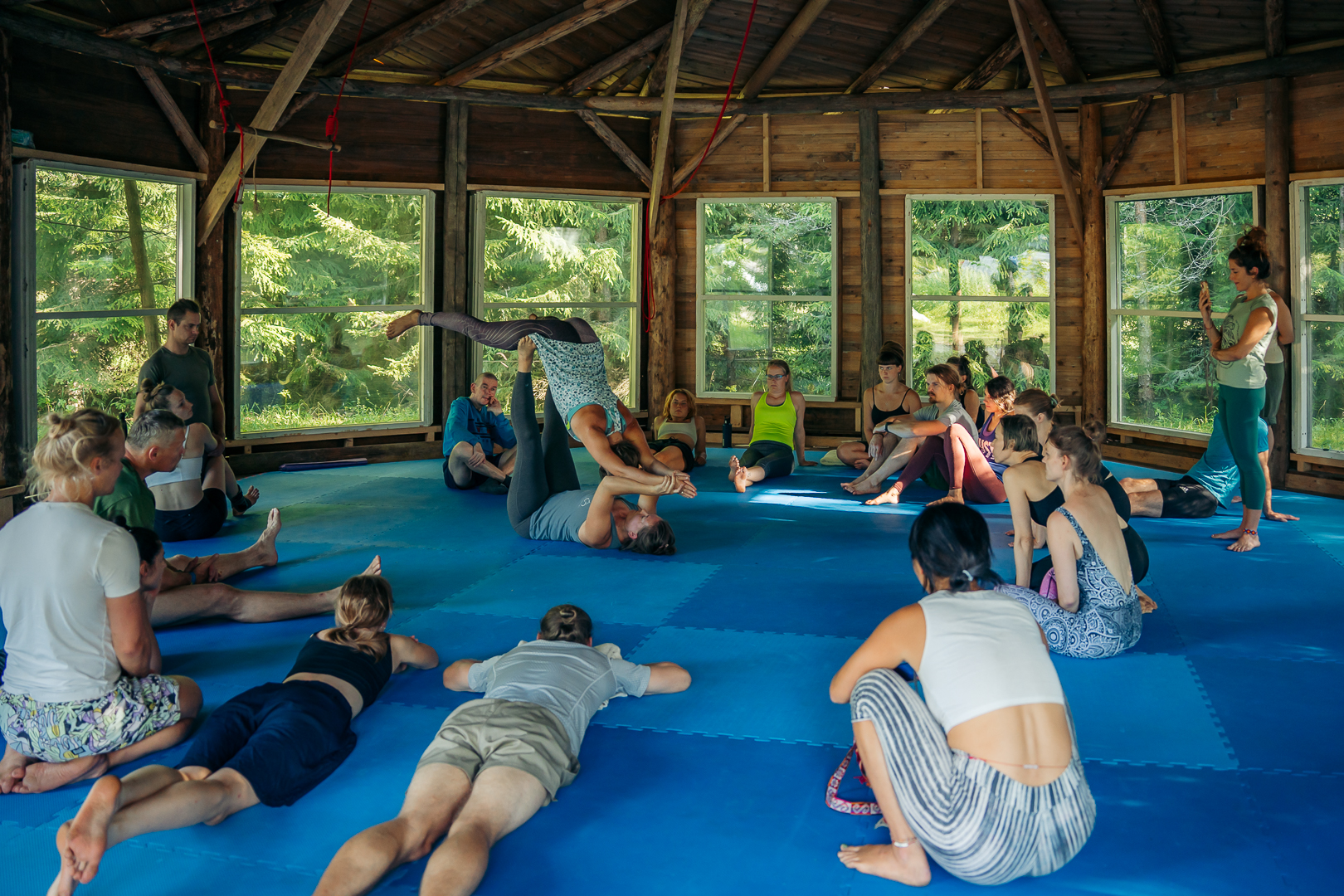
Last summer the Acrofestonians destroyed the Octopus we had built five years earlier as a “temporary workshop space”, because continuing to use it would no longer have been safe. Since we plan to keep the festival going, we needed a new and more solid structure — Octopus 2.0. Luckily, two people who were partly responsible for taking down the previous Octopus arrived early — Natalia and Joshua. Yes, I know: our own house isn’t even finished and we’re already starting new projects? Realistically, our house won’t be finished in the next ten years anyway (optimistically speaking), so why not do something else interesting in the meantime!
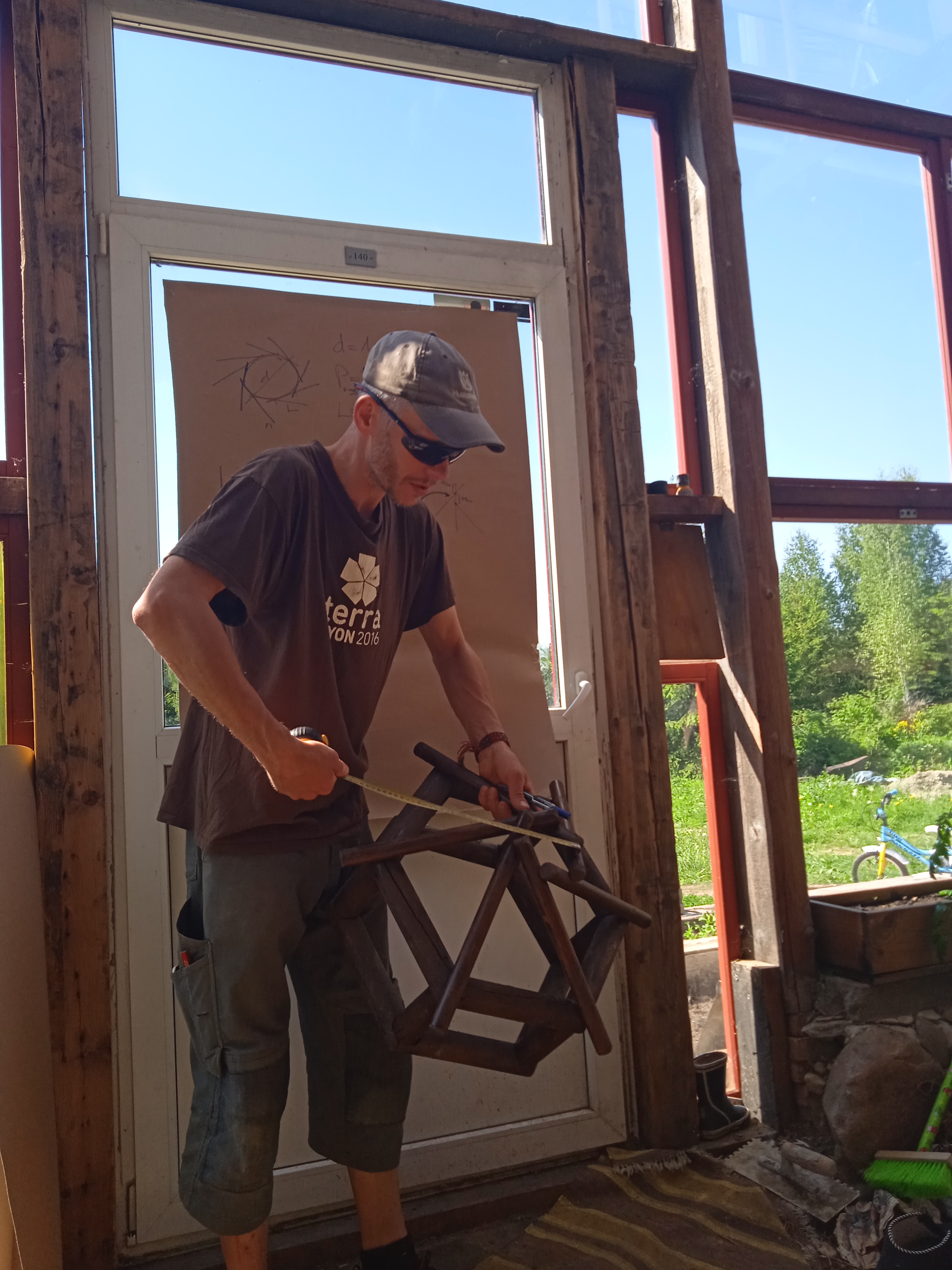
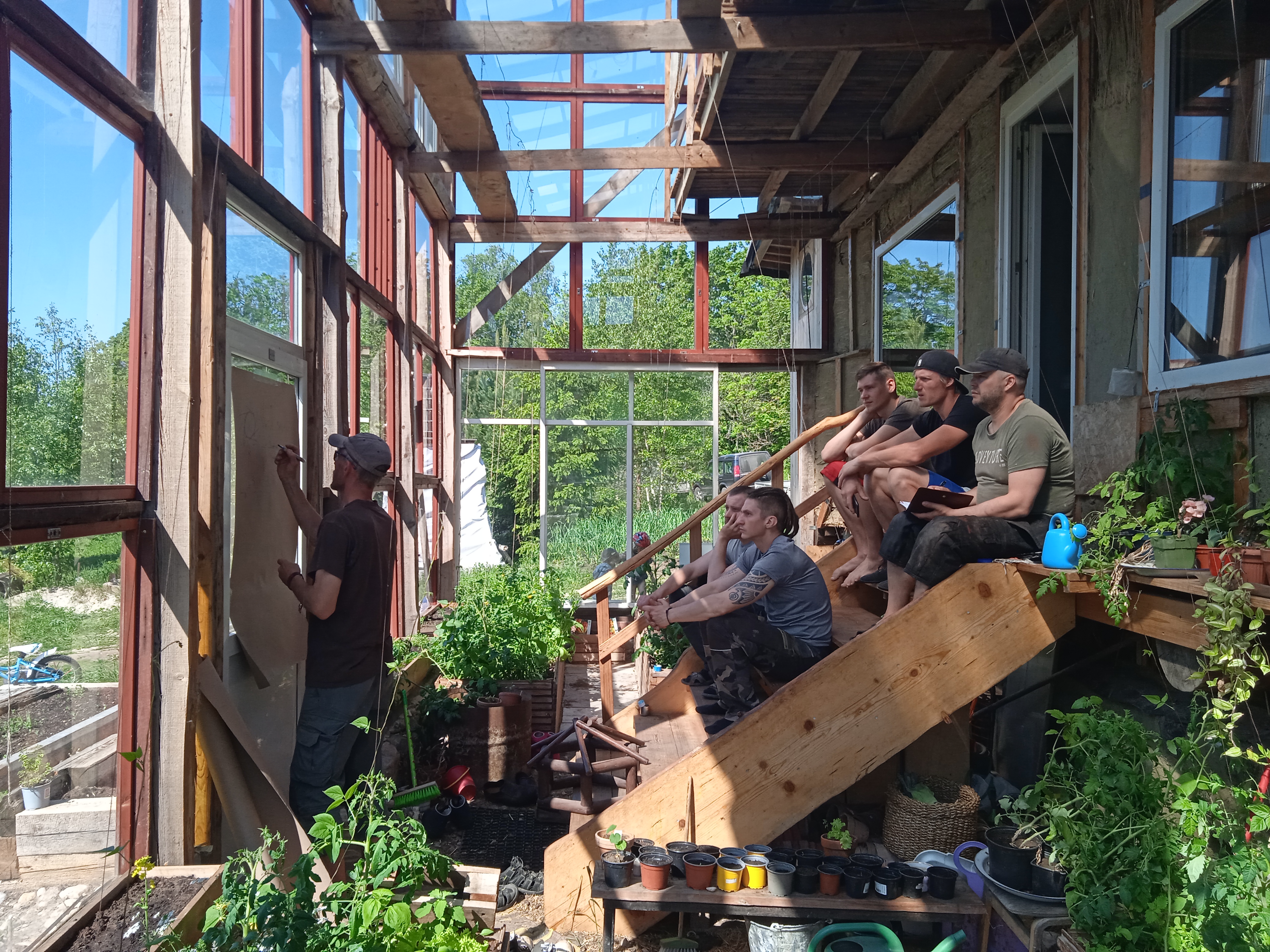
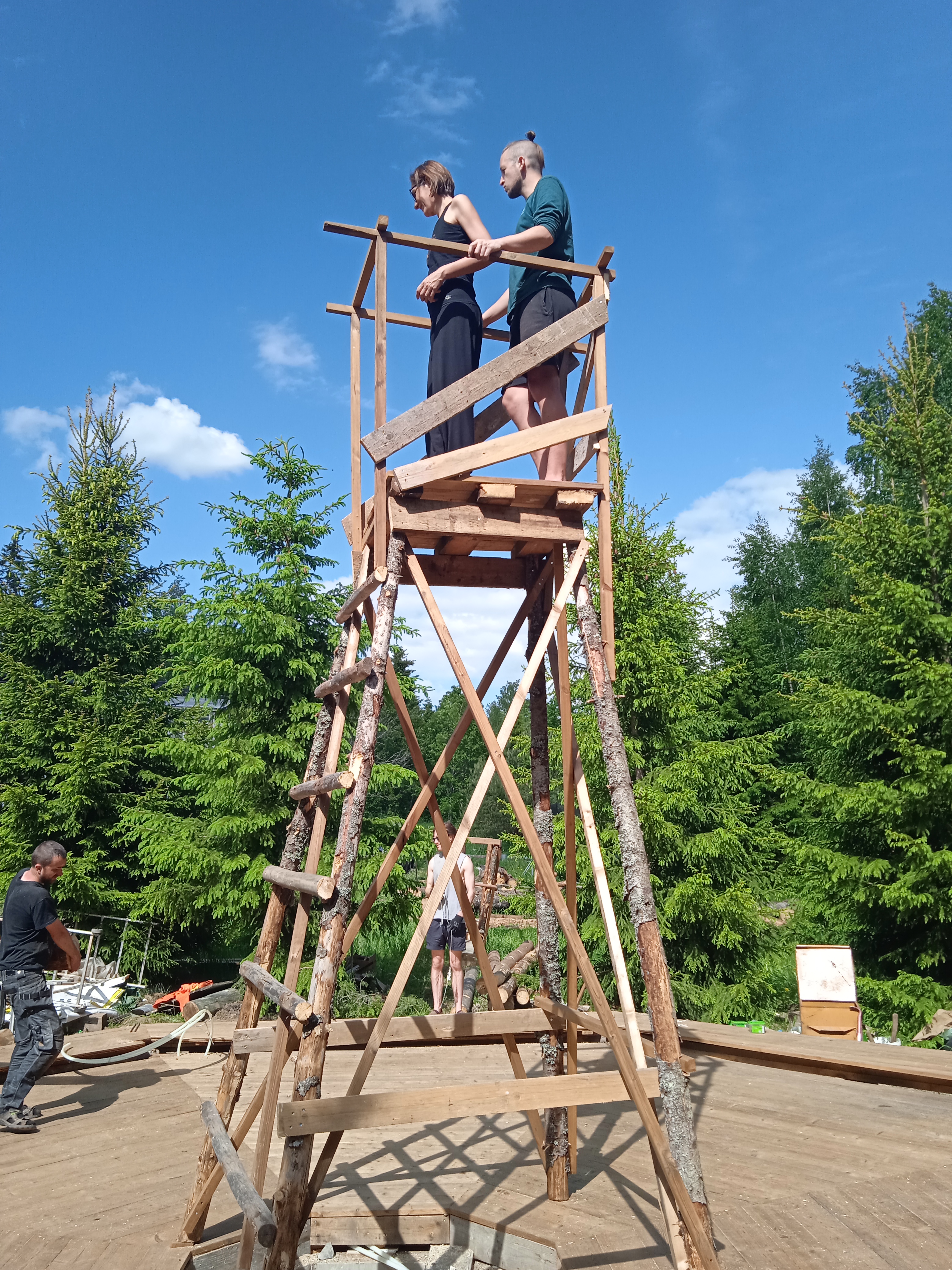
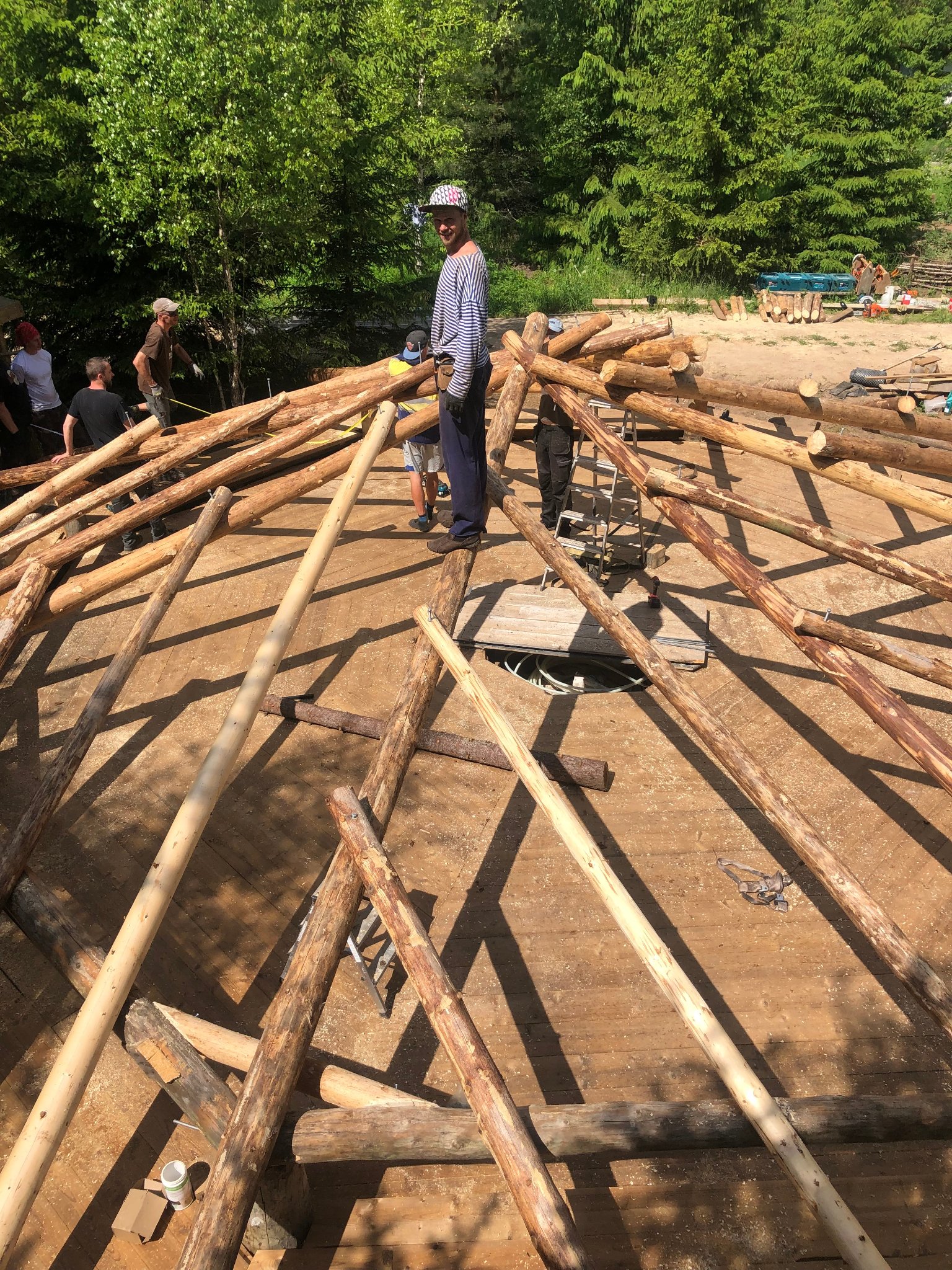
Especially when the conditions are perfect: helpers are motivated; from dismantling the Oru Manor barn we get beams, posts and logs that are over 100 years old; some “nepotism” brings several truckloads of “reject” thermowood to our yard at firewood prices; and natural-building guru Sven Aluste agrees to build a reciprocal roof for the new building during a training course. And off we go. By the end of July, when acro tricksters from all corners of the world arrive, the open-sided outdoor studio is ready enough to host workshops.
In autumn, Kohila Gymnasium replaces its windows and the old ones are carefully placed into a container. Once again, we’re reminded of the proverb that has carried us this far: “No one gets hit for asking.” Soon, the Octopus has beautiful big windows for walls.
Deep bows to the helpers: Joshua, Natalia, Adam, Heikki, Sven, Asko, and everyone who joined the training.
Leave a comment
2025 — Can't stop building!
We’ve occasionally daydreamed about building a small sauna in our yard — someday, in some vague future, when there’s more time and money. Now the situation is different: we need to do it now. This year we’re organizing Acrofestonia for the tenth time, and we’re expecting around 150 guests. More than ever before, a lot will happen right here in our yard, and the Kuusiku sauna won’t be enough for that crowd.
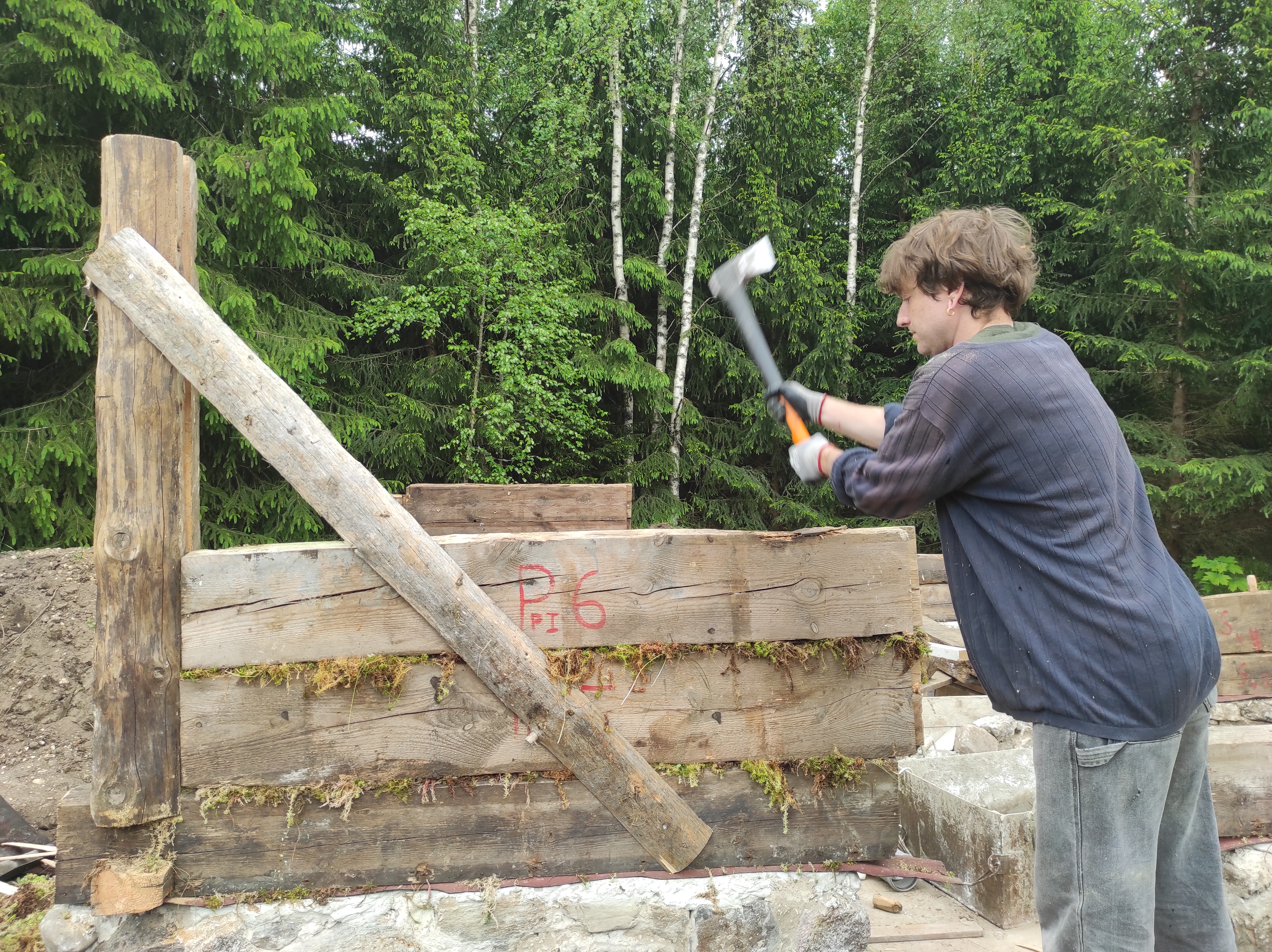
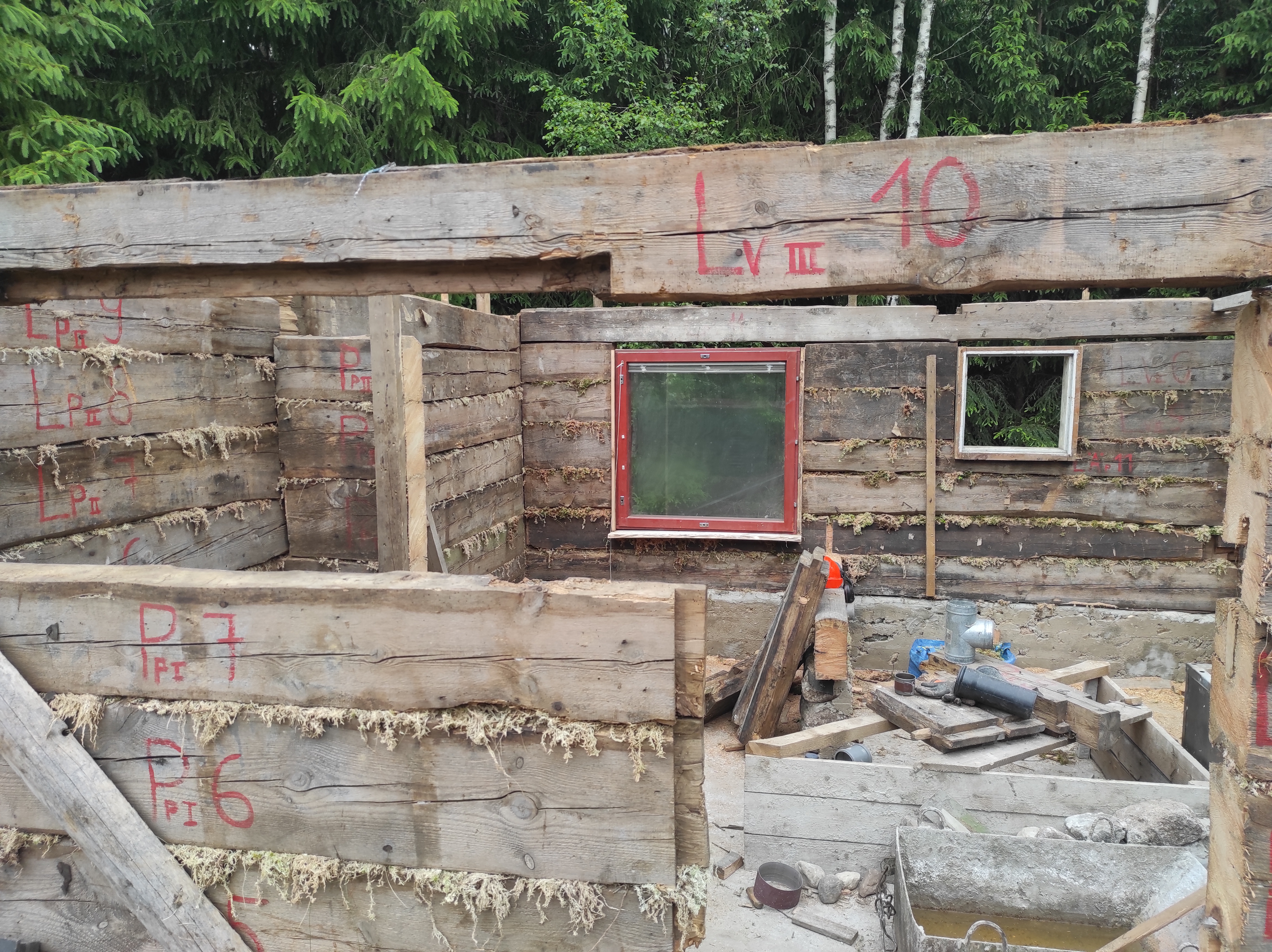
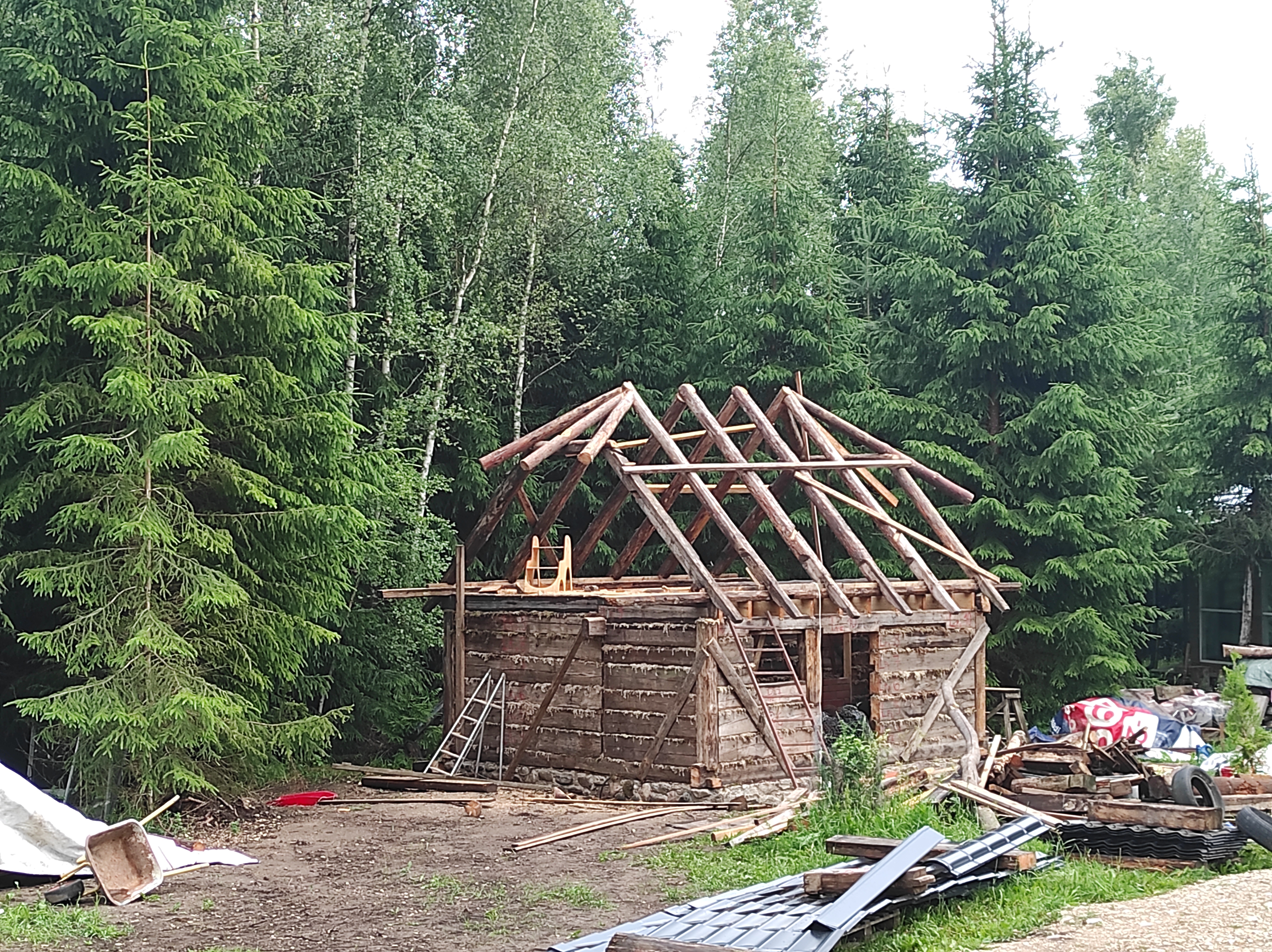
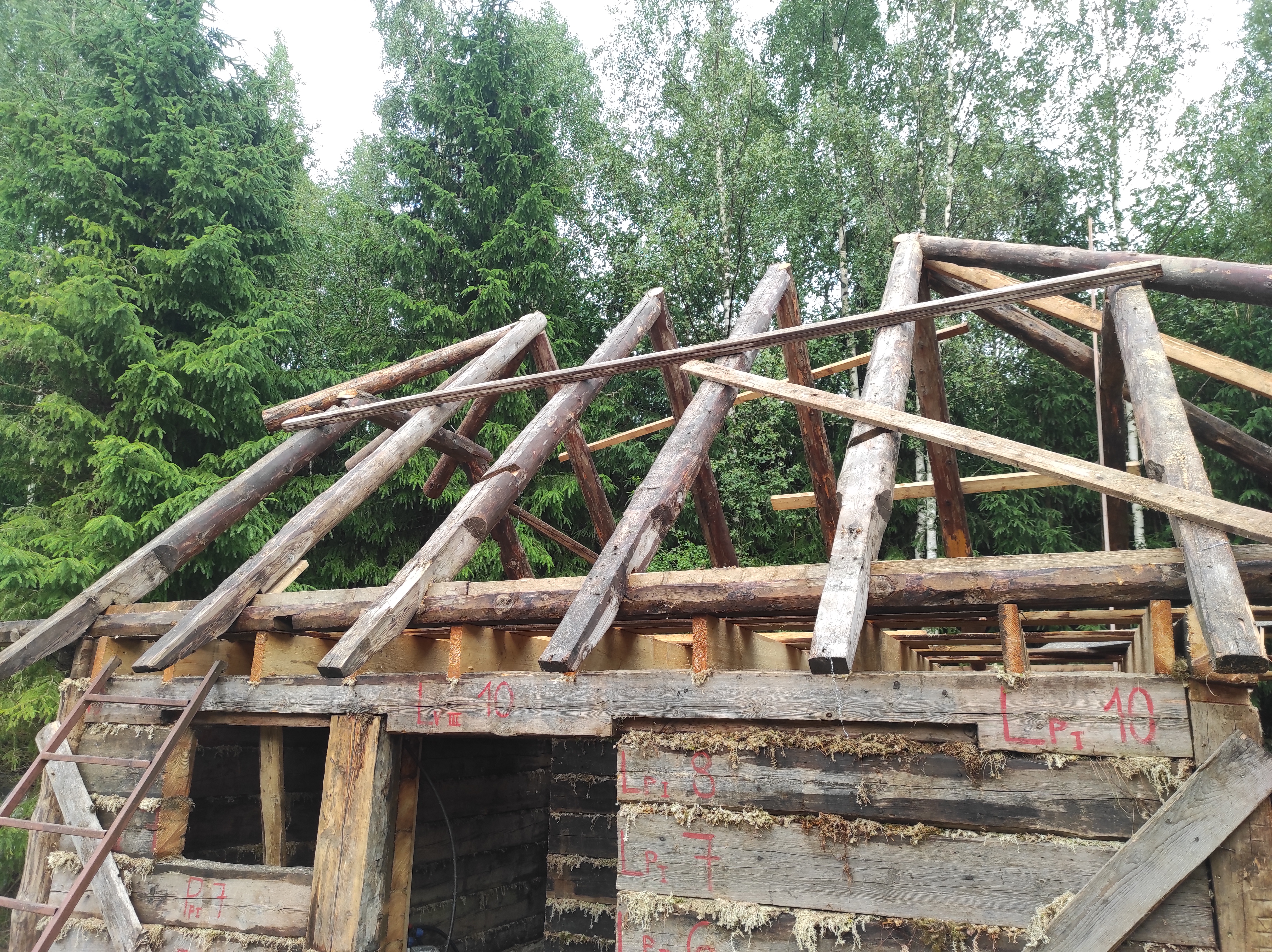
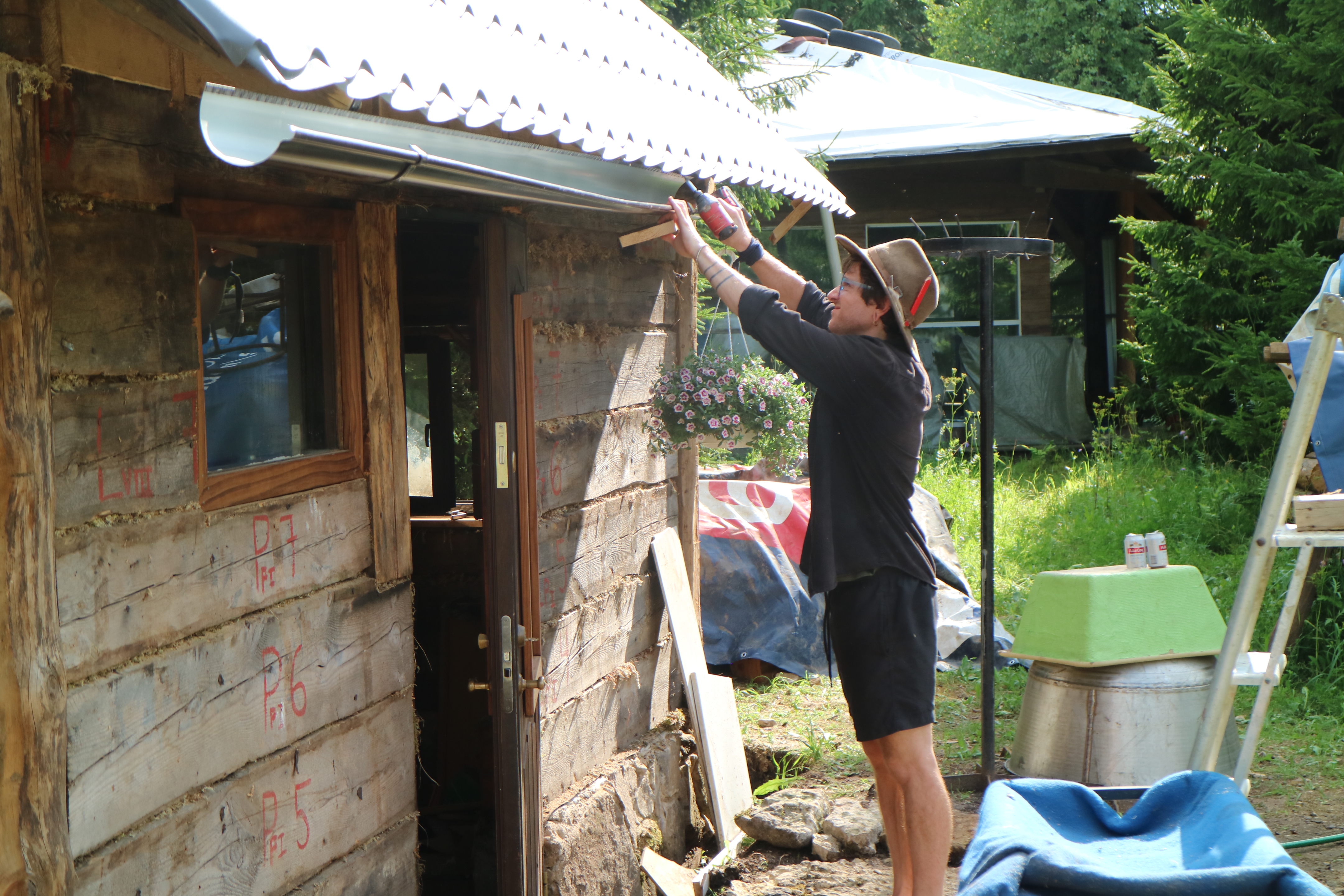
Once again, the build becomes possible thanks to a lucky set of circumstances: our friend Adam from England wants to practice building so he can someday build his own house; we’re offered an old log house that has already been taken apart, numbered, and stacked. Adam arrives in early May and is ready to build for three straight months so that by the end of July — when the big event happens — the sauna will be saunable.
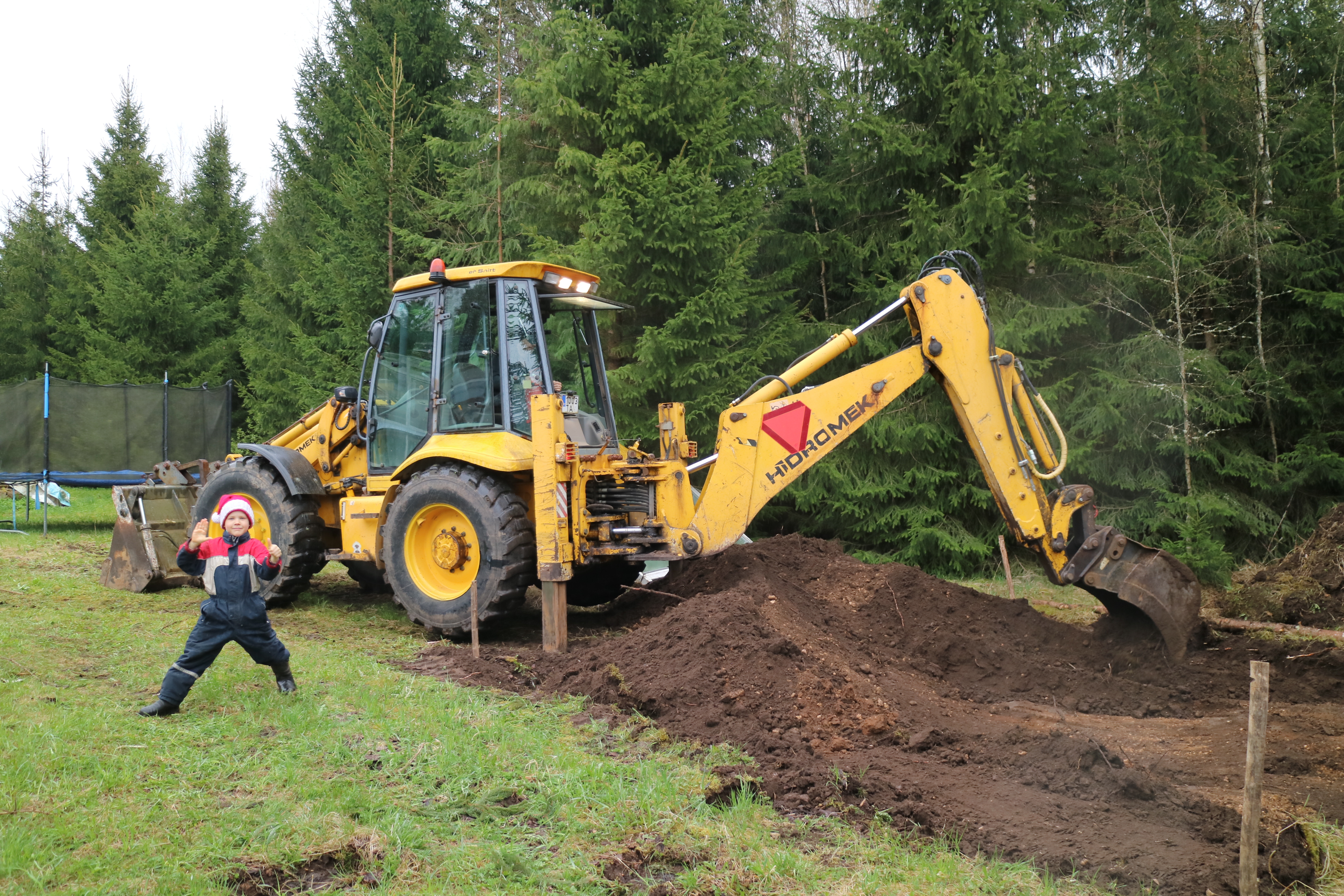
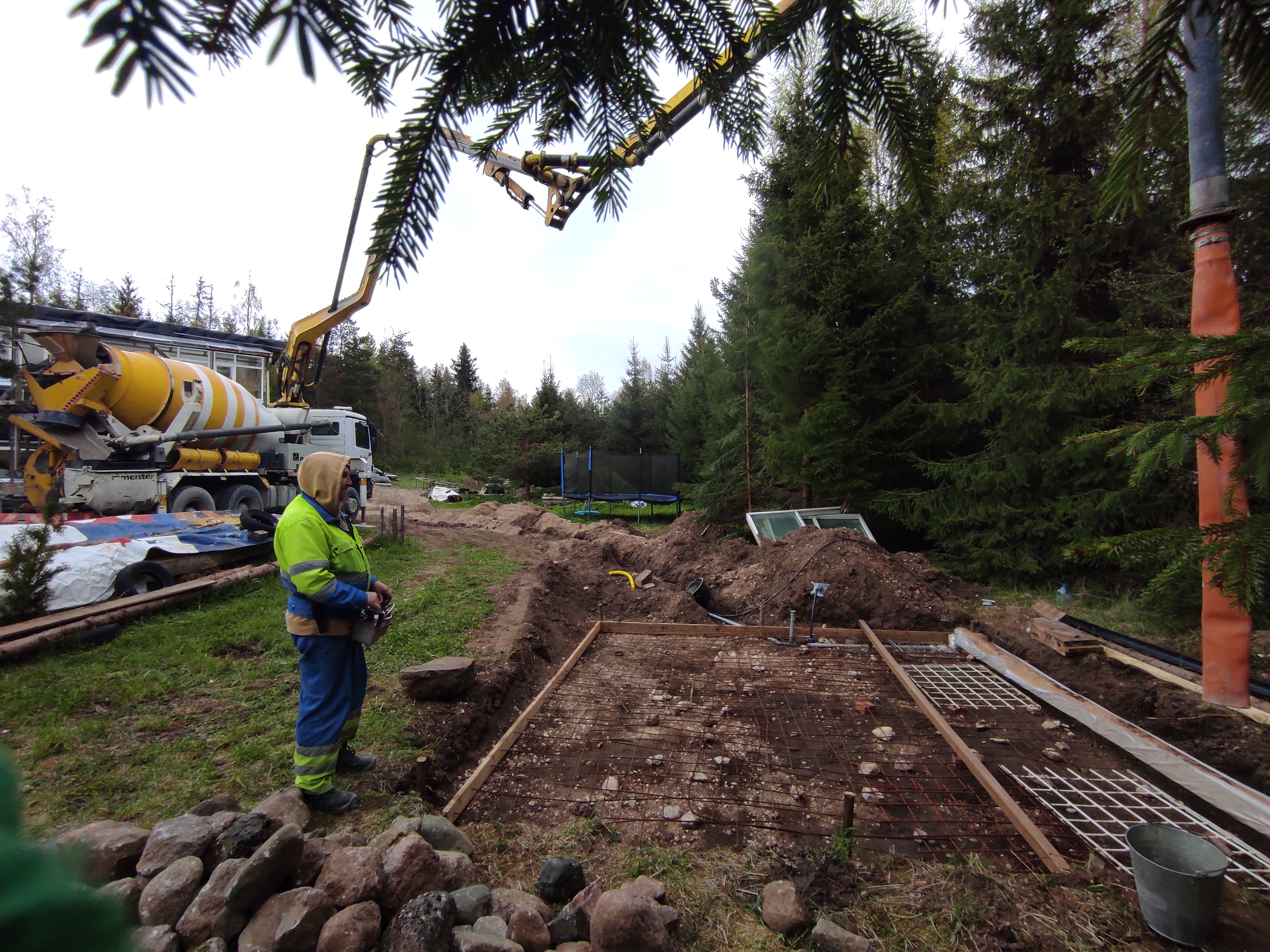
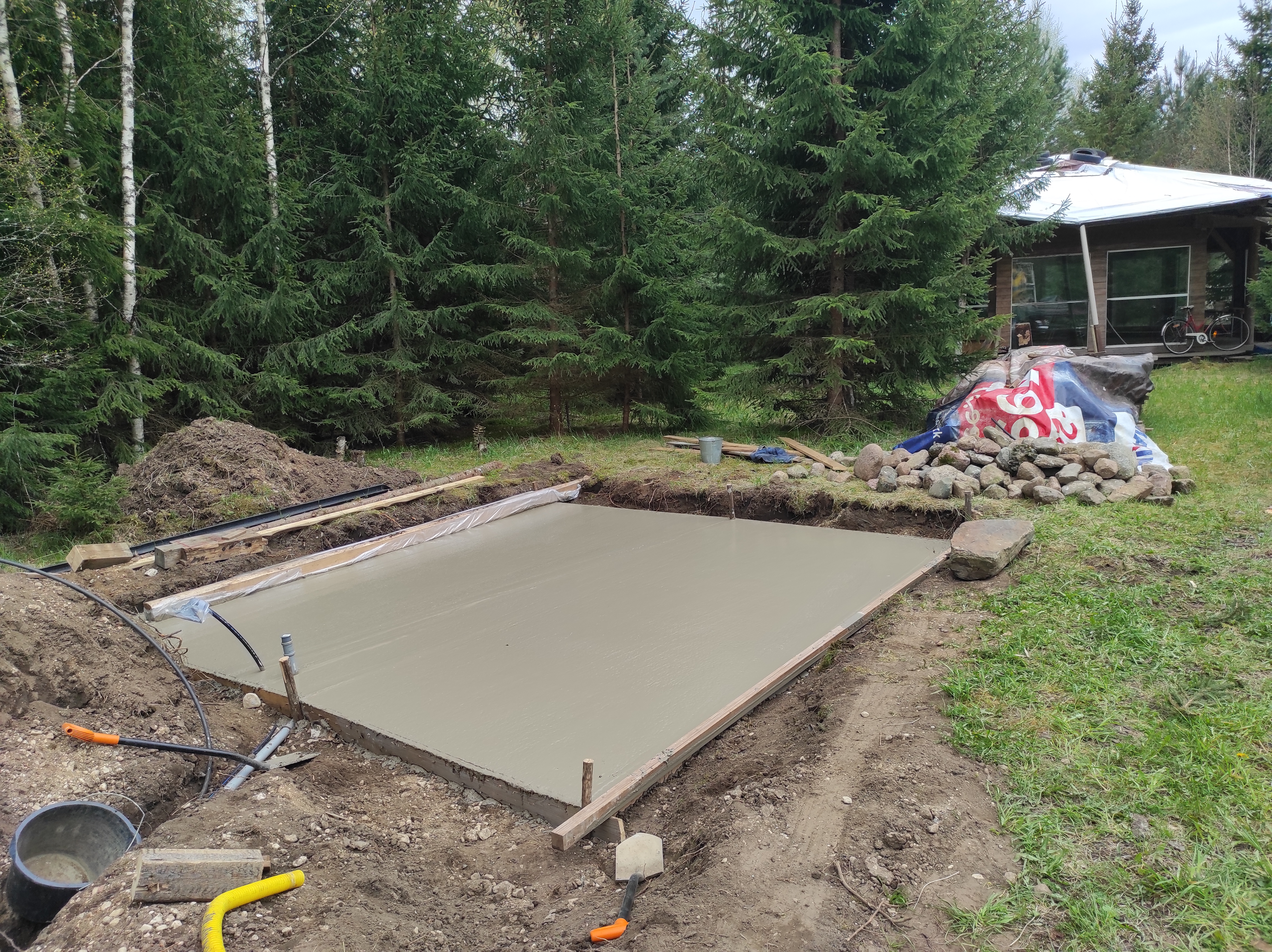
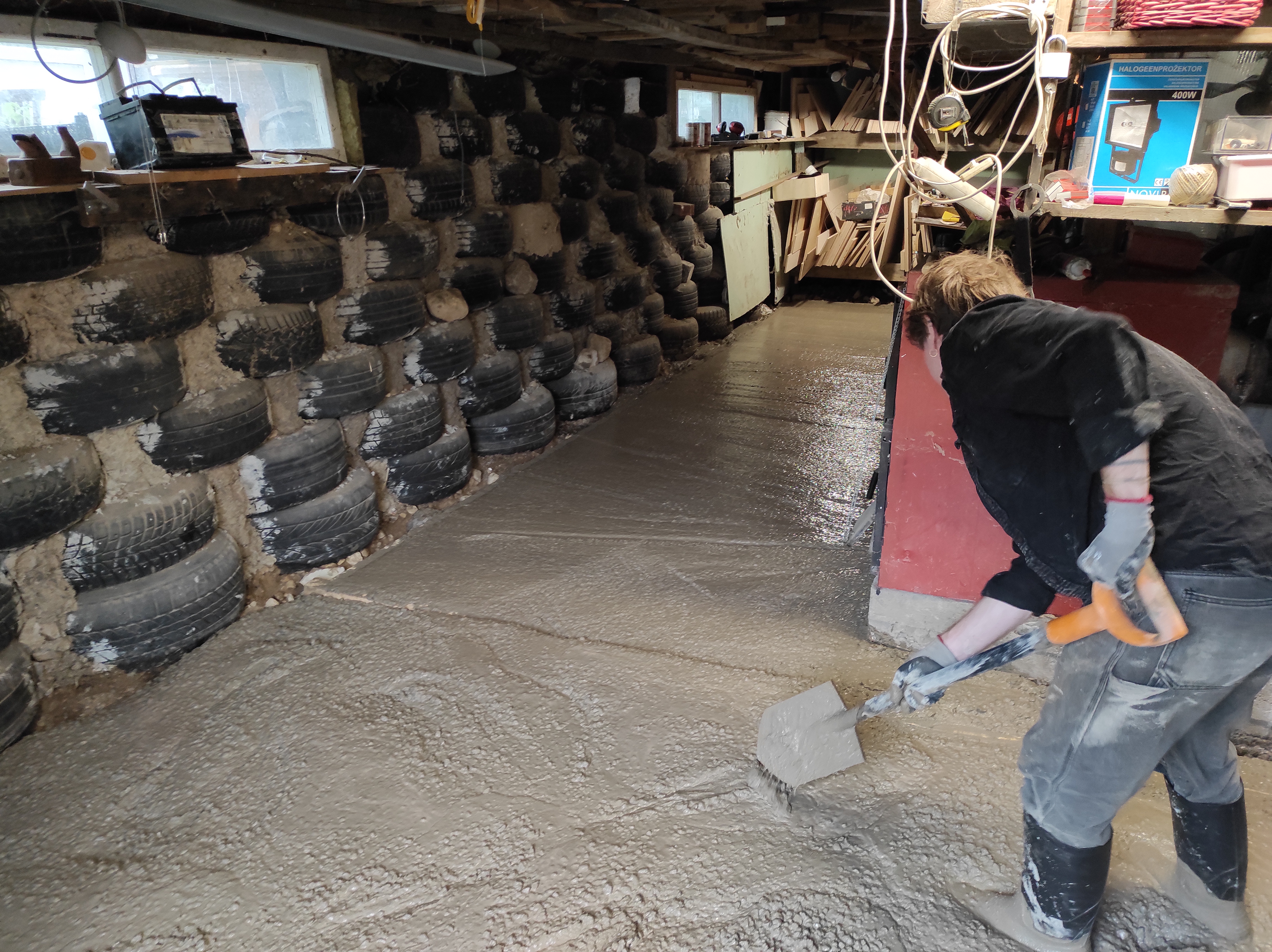
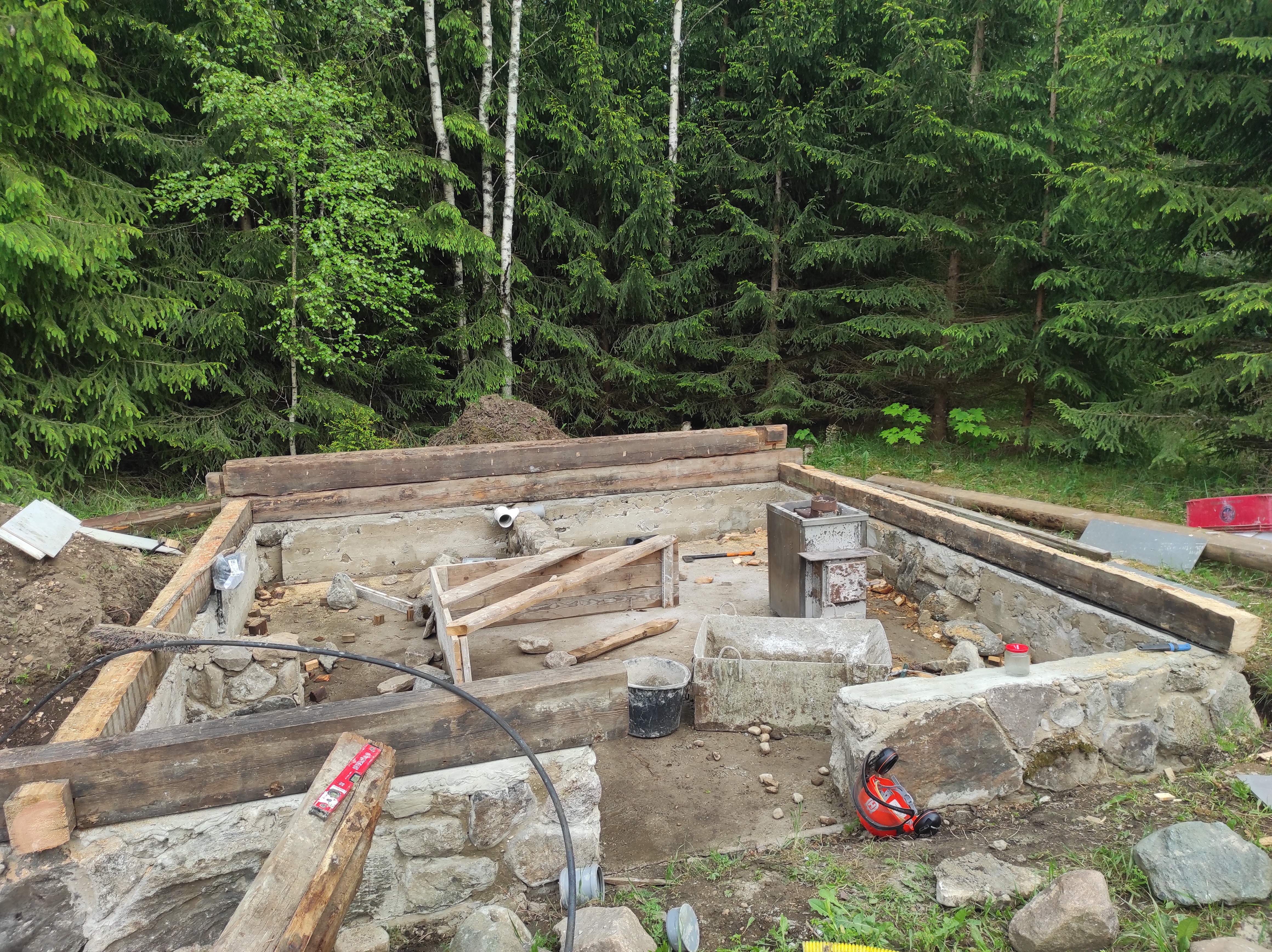
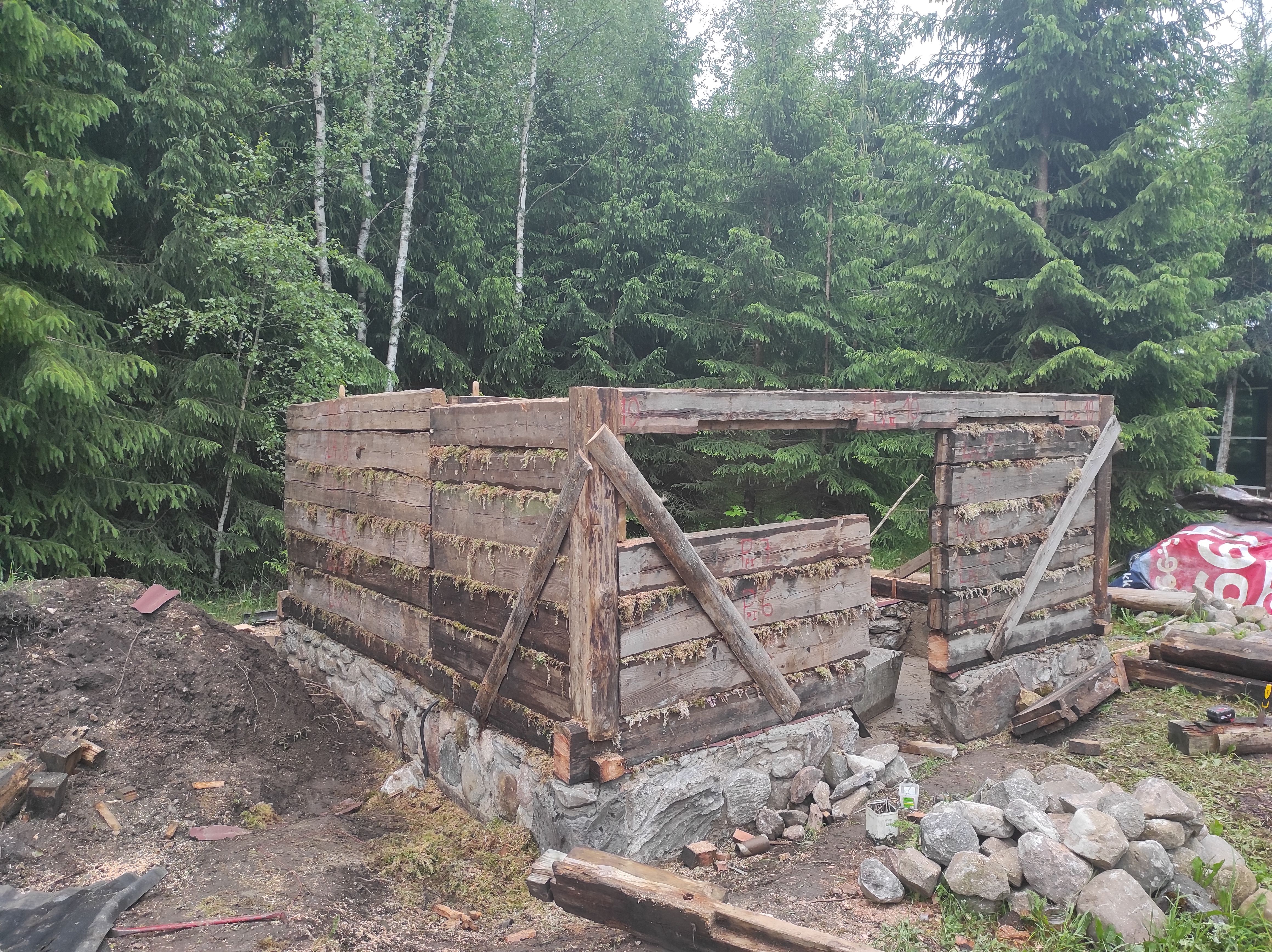
Because there’s no time to waste, the foundation will be our most conventional one yet: a huge slab of concrete pumped straight out of a mixing truck. Half the basement floor gets poured at the same time.
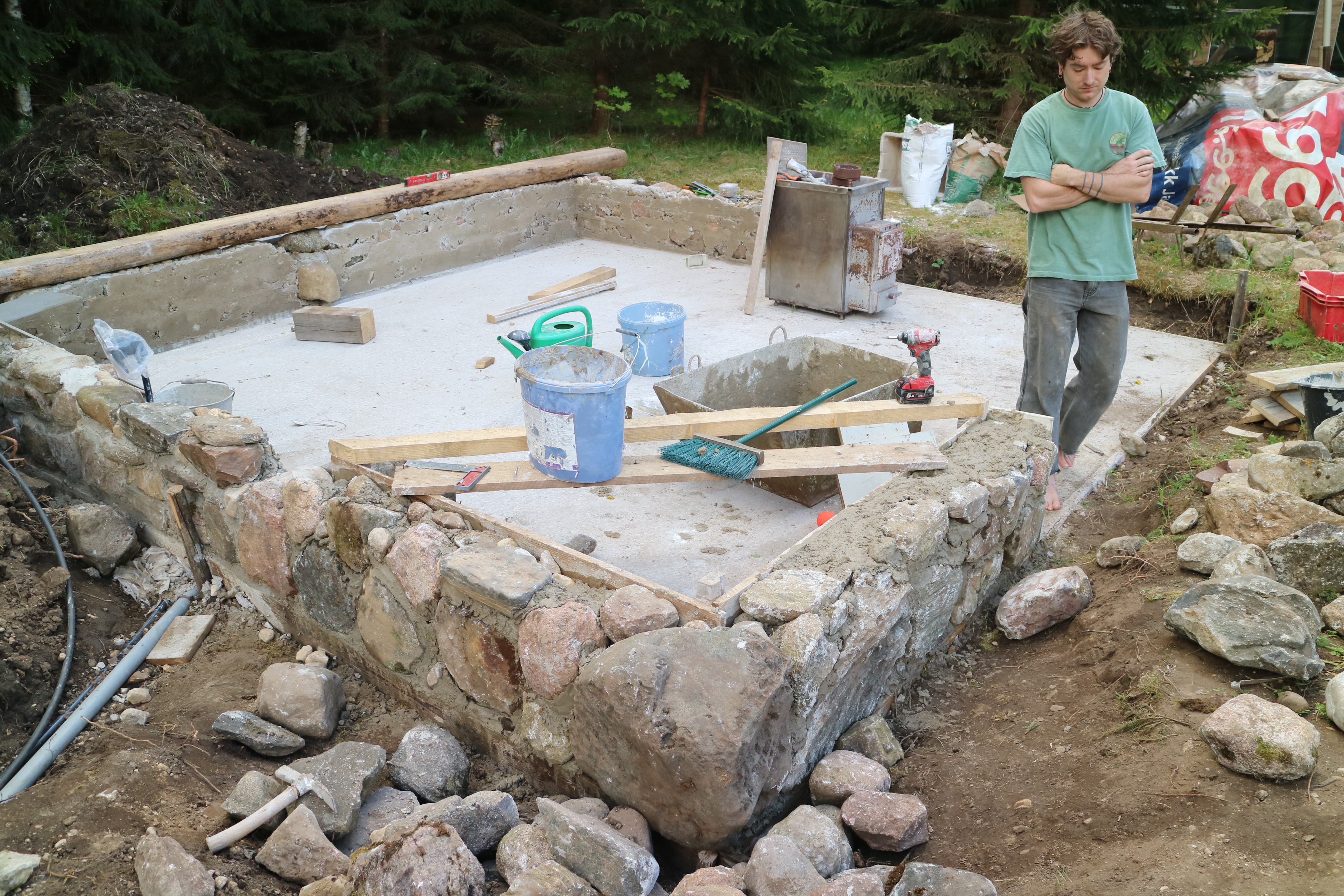
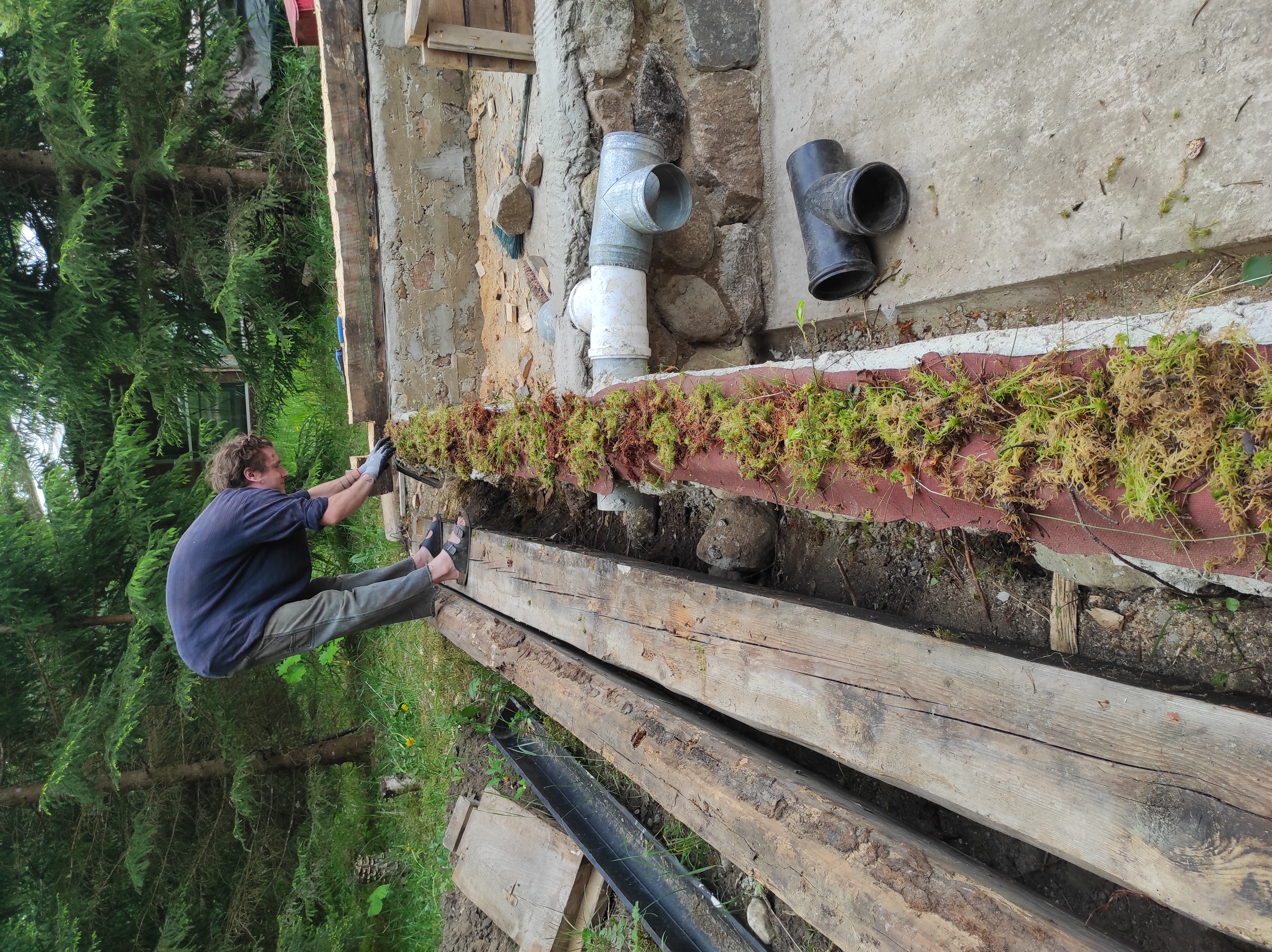
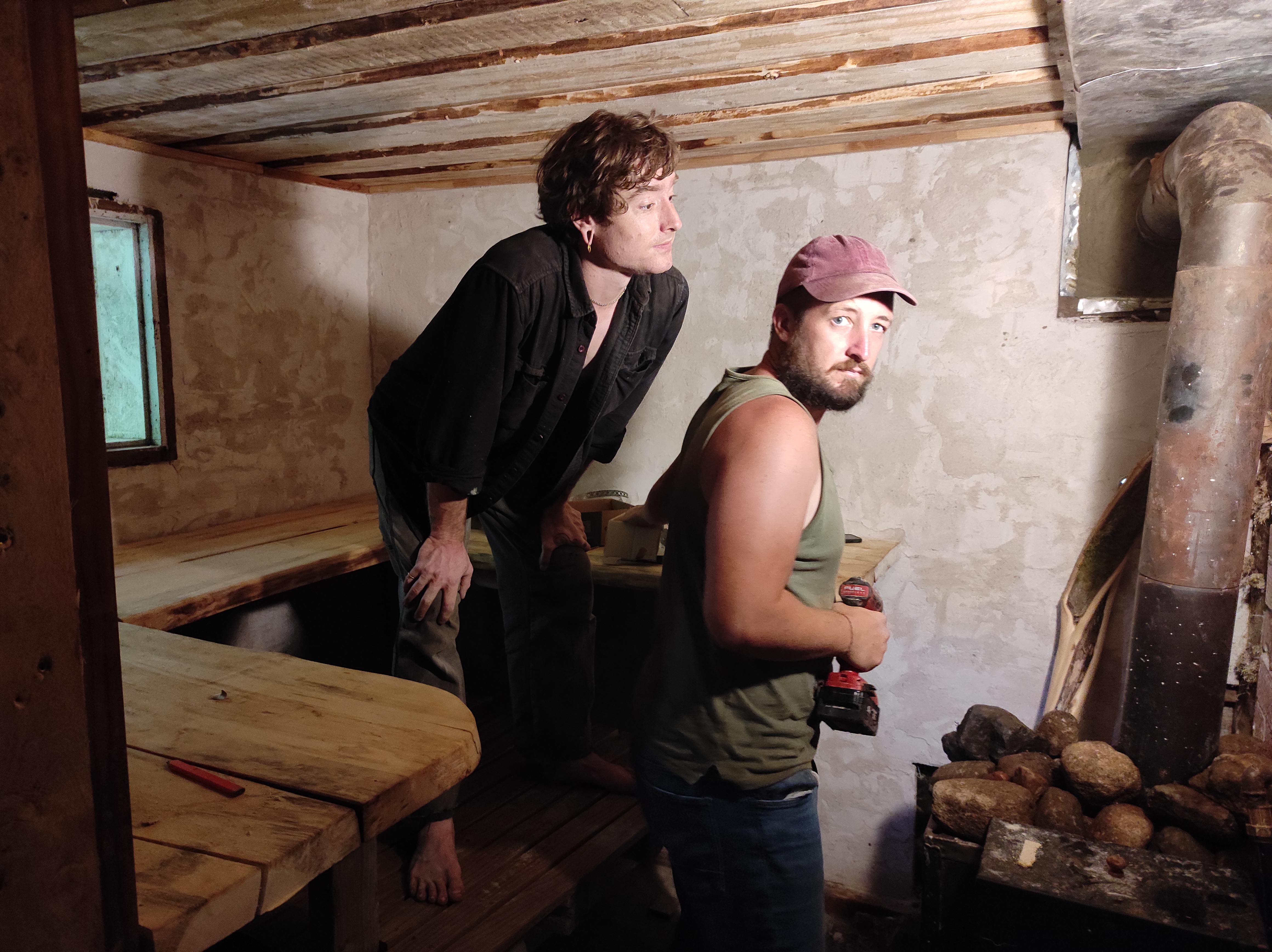
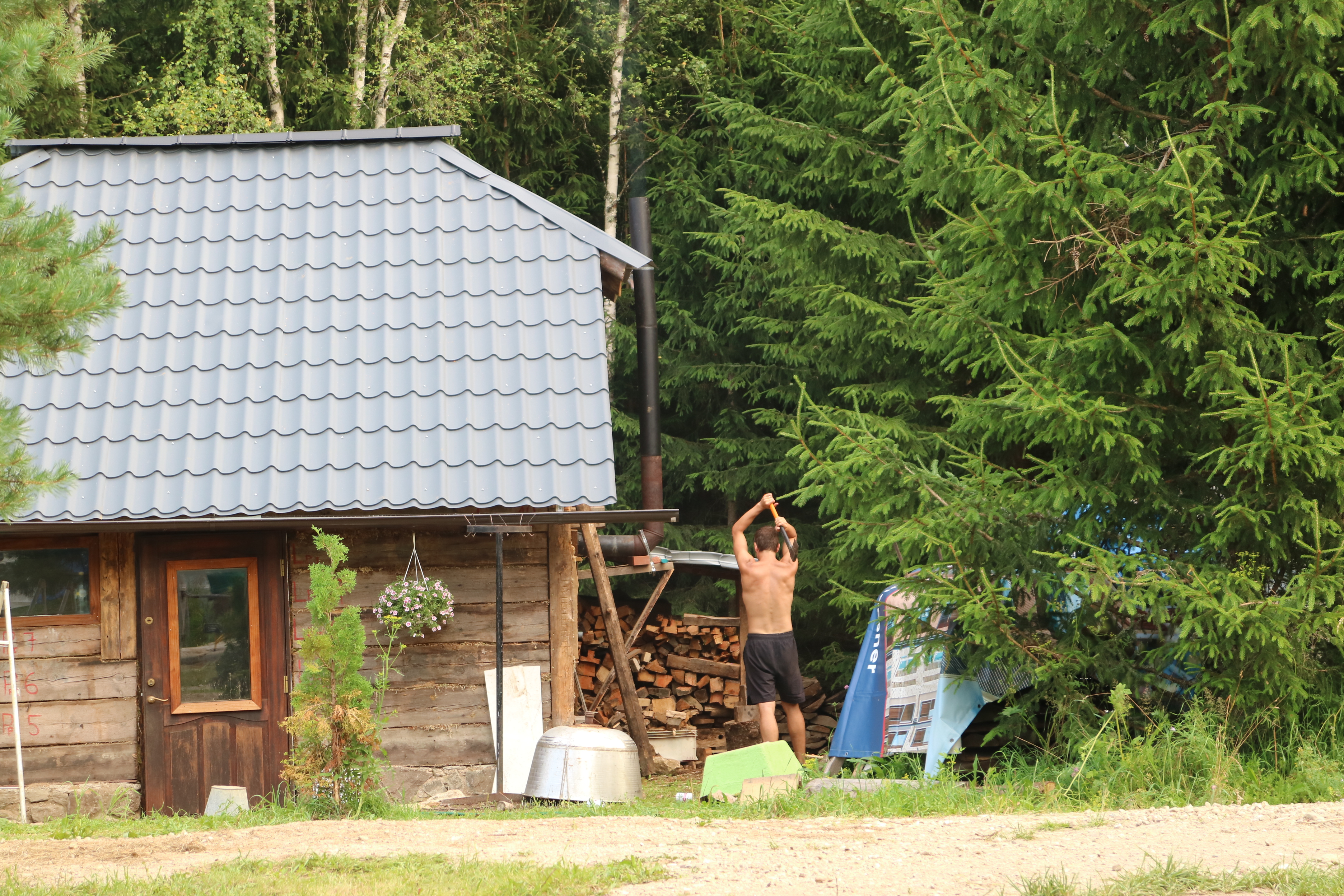
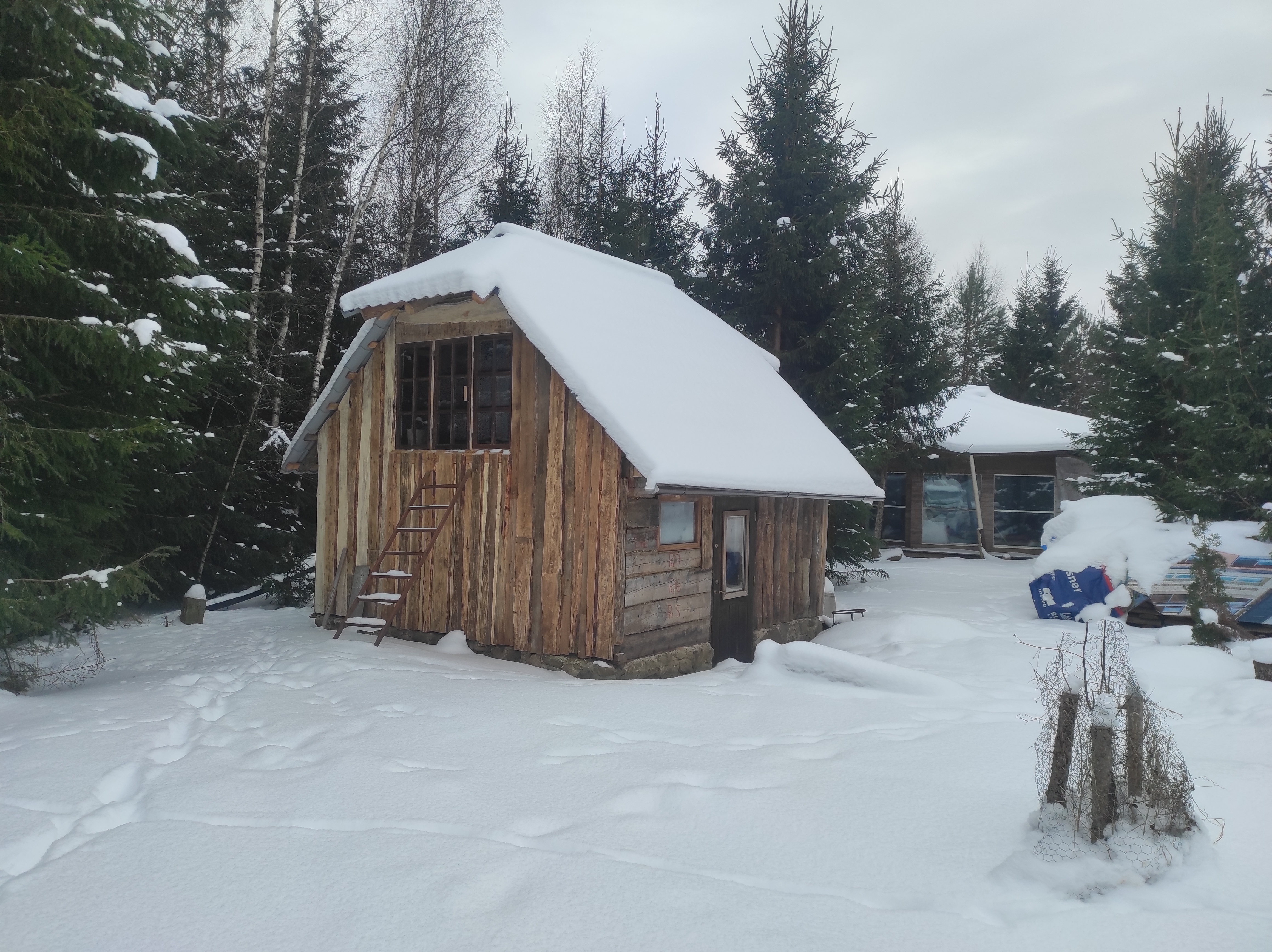
The next stage is the opposite — slow and labor-intensive — because on top of the foundation we lay a rock wall. The logs had been stored outside under covers for years, and many had deteriorated, especially the lowest rows; the rock wall replaces those. We mostly use the logs in their original order, but all corner joints are made new. We use everything that’s even remotely usable; only the worst rotten bits end up as firewood. Traditional peat moss goes between the log courses. Three months pass in intense building mode, and by festival time the sauna is indeed saunable - it is heated heavily every day for a week and the brand new seats see a lot of butt and sweat! Of course, the building continues…
Endless thanks: Adam, Joshua, Maria, Dora, Danny, Harry, Adam